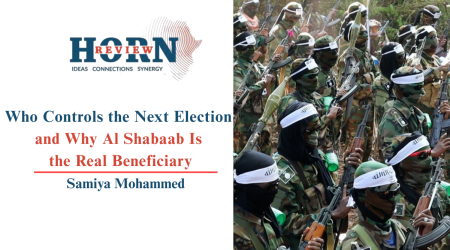
The Ugandan drawdown from Lower Shabelle, the political crisis surrounding the contested extension of President Hassan Sheikh Mohamud’s mandate and the termination of the United Nations political mission after more than three decades of continuous presence are not discrete events. Assessed collectively they have an inflection point in Somalia’s conflict with Al Shabaab and a single interlocking configuration of retrenchment articulated through the discourse of sovereignty and national ownership. The proposition this configuration yields is both straightforward and disquieting which shows Somalia is being propelled into a higher risk phase of the war while remaining politically disintegrated and militarily incomplete and the external support system that has sustained the state is being dismantled before any credible indigenous substitute has come up.
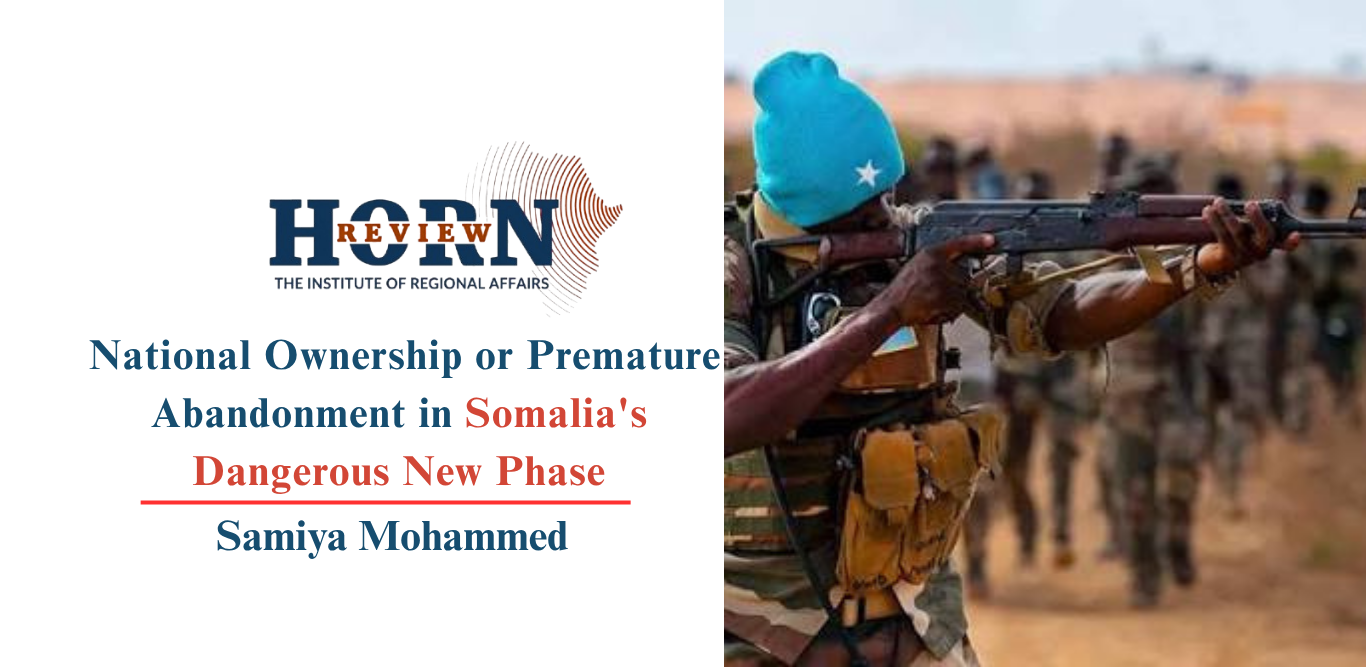
With the military dimension because it is the most immediately consequential Uganda has been the largest and longest serving contributor to the African Union mission since 2007 and its forces both under AUSSOM and through bilateral arrangements have held key positions across Lower Shabelle. The river towns and forward operating bases around Barawe, Bulo Marer, Qoryoley and Janaale constitute the main western buffer for Mogadishu. The first batch of roughly one hundred and nine troops departed and bilateral elements are exiting faster still with the full Ugandan drawdown targeted for completion by late 2027 or August 2027 in earlier statements.
President Museveni explicitly rejected Mohamud’s request to delay the withdrawal. The reality is that Ugandan units have repeatedly been the difference between holding ground and losing it. The Somali National Army has a record of struggling to hold territory. Al Shabaab ran an offensive in 2025 across Middle and Lower Shabelle taking towns close to the capital before some were clawed back with Ugandan, SNA, American and Turkish support.
Rural areas and many supply corridors remain under Al Shabaab influence or contested. Removing the main reliable force from the critical space raises the odds of further gains by the insurgency, more ambushes on convoys and greater pressure on Mogadishu’s perimeter. This is not an orderly and capability matched handover. It is donor and troop contributor fatigue meeting an unfinished fight.
The political crisis compounds the military vulnerability and the two cannot be analysed in isolation. Mohamud’s term formally expired in mid May 2026 under the prior constitutional reading. Parliament passed amendments extending presidential and parliamentary terms to five years which his government treats as extending his mandate to May 2027. The opposition including the leaders of Puntland and Jubaland, former presidents and others rejects this as illegitimate and disputes the 2027 election timetable. There has been violence in Mogadishu over the issue earlier in and a Supreme Court challenge remains pending. Museveni reportedly pressed Mohamud on dialogue with the opposition while linking continued presence to political progress.
The Russia and Africa Summit trip was cancelled amid a deadly Al-Shabaab ambush that killed dozens of SNA soldiers in Bay and the southwest plus these domestic pressures and the foreign minister led a lower level delegation instead. The reality here is that security and politics are linked. A divided federal government cannot generate coherent national forces, mobilize clans effectively against Al Shabaab or sustain pressure in the field. Foreign partners Uganda included see the political paralysis and reduce commitment. Al-Shabaab thrives on exactly this combination of governance gaps, elite squabbling and selective federal regional tensions. The withdrawal of Ugandan troops is a political signal that says the principal security guarantor has concluded that its continued presence is not justified by the political path of the recipient state.
Into this void steps the termination of the United Nations political mission. UNTMIS closed on 31 October 2026 after a two year transition requested by the Somali government ending more than three decades of continuous UN political presence stretching from UNPOS through UNSOM to UNTMIS. Functions transfer to Somali institutions and to remaining UN agencies, funds and programs. The UN notes progress on institutions while underlining the Al Shabaab threat and continued support through other channels. AUSSOM is a separate military mission.
This is largely optics and national ownership language. The political mission’s departure removes a layer of external mediation and coordination at the exact moment political legitimacy is contested and the military transition is incomplete. Agencies stay for aid and technical work but the dedicated political structure is gone. The mediation capacity that once convened federal and regional leaders, that monitored political agreements and that provided a neutral venue for dispute resolution has been dissolved precisely when the dispute over the electoral timetable and the legitimacy of the presidency is at its most acute. National ownership is a worthy aspiration but ownership presupposes a functioning owner. Somalia’s federal institutions remain contested, its regional states pursue divergent strategies and its parliament has become the instrument of a contested mandate extension rather than a forum for national consensus.
The structural logic connecting these three developments is Uganda’s departure weakens the military buffer. The political crisis erodes the legitimacy that any military effort requires. The closure of the UN political mission removes the external mediation that might have bridged the political divide. Each development reinforces the others. A government that cannot convene its own regions cannot coordinate a national counterinsurgency. A military that cannot hold ground without foreign partners cannot fill the gap left by departing Ugandan units.
Somalia is still heavily dependent on external military and logistical support against Al Shabaab that controls or influences large rural stretches of the center and south. The insurgency does not require a decisive military victory to profit from this moment. It requires only that the gaps widen, that convoys grow more vulnerable, that clan militias hedge their loyalties and that the government’s authority contract to the neighbourhoods of Mogadishu it can still control.
Security and politics are linked and neither can be sequenced ahead of the other. A government that lacks legitimacy cannot mobilize the population against an embedded insurgency. An insurgency that offers governance, taxation and dispute resolution in the countryside will outcompete a distant and divided state. Somalia is being left more to its own devices before it has demonstrated the capacity to secure the territory that matters most. The language of national ownership is not false in its aspiration but it is premature in its application. The political mission’s departure, the Ugandan drawdown and the unresolved constitutional crisis together constitute that the Somali state can absorb responsibilities it has not yet shown it can discharge. The higher risk phase of the war has begun and it has begun while Somalia remains politically divided and militarily incomplete.
By Samiya Mohammed, Researcher, Horn Review