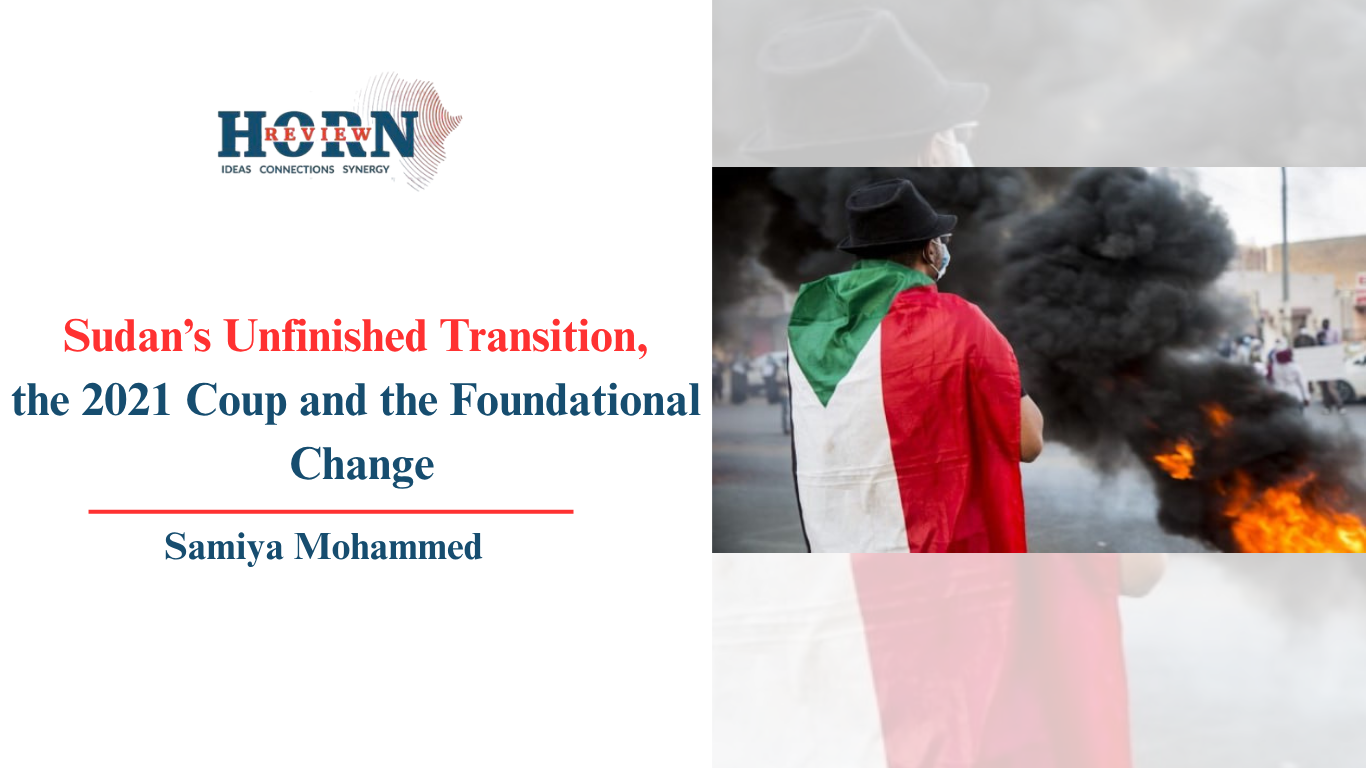
The concept of political party dissolution in post authoritarian transitions is rarely a legal or administrative procedure. In Sudan following the popular revolution of December 2018–April 2019 the dissolution of the National Congress Party and the associated project of political reconstruction came to signify a foundational break with the Islamist military regime that had governed since 1989. The transitional authorities understood that removing Omar al-Bashir from the presidency did not by itself dismantle the dense networks of loyalists within the military, the security apparatus, the civil service, the judiciary and the economy. At the same time, the November 2019 Dissolution Law and the establishment of the Dismantling Committee formally the Committee for Dismantling the June 30, 1989 Regime and Recovering Public Funds presented a deliberate attempt at Sudanese style “de-Baathification a wholesale restructuring of the political field to permit the emergence of a democratic, civilian led order.
This project remained incomplete, contested and ultimately reversed by the military coup of October 25, 2021. That coup widely seen within the literature on Sudanese politics as the latest manifestation of a recurring pattern of military intervention did not come from a void. It was rendered possible precisely because the old regime’s Islamist networks had not been thoroughly excised from the state’s commanding heights. Moreover the coup’s aftermath saw the restoration of NCP affiliated personnel to bureaucratic and judicial positions, the return of seized assets and the deepening of an alliance between the Sudanese Armed Forces and Islamist militias. This compels a sober re evaluation of the dissolution reconstruction link rather than an optional radical measure a credible process of party dissolution and institutional reconstruction appears as a necessary also insufficient condition for breaking Sudan’s coup tradition.
Unlike conventional military dictatorships, Bashir’s rule was built upon a symbiotic partnership between the armed forces and the National Islamic Front later reconstituted as the National Congress Party .The regime’s operating doctrine was tamkeen a systematic policy of empowerment whereby loyalists were placed across all state institutions. This was not a matter of just patronage but a coherent ideological project in the Sudanese Islamist movement’s conviction that state capture was the only reliable mechanism for preserving an Islamic political order in a deeply diverse society.
Under tamkeen, the military, security services, intelligence agencies, state owned enterprises, universities, and the judiciary became extensions of the NCP’s institutional machinery. Political parties were permitted to exist only as tolerated decorations, subjected to periodic repression, co-optation or fragmentation. By 2019 the NCP had constructed deep state with identifiable Islamist characteristics a parallel structure capable of surviving the removal of its titular head. The December revolution’s demand for freedom, peace, and justice could not be satisfied by electoral reforms or a change of cabinet. The very plan of political representation required demolition and reconstruction.
However, the dissolution process was implemented unevenly. The military component of the Sovereignty Council resisted any deep vetting of SAF or Rapid Support Forces personnel. Economic sanctions and a severe liquidity crisis constrained the Dismantling Committee’s investigative capacity. Moreover the civilian political forces themselves were disintigrated with factions of the FFC accusing one another of compromising with remaining Islamist networks. By mid-2021, it had become evident that dissolution had been applied selectively primarily against visible NCP figures in civilian sectors while leaving the military Islamist alliance largely intact.
The military coup of October 25, 2021 was justified by its leaders as a corrective to political chaos, civilian incompetence and the alleged hijacking of the transition by unrepresentative factions. From the perspective of dissolution advocates, the coup was not JUST a setback but a predictable outcome of incomplete reconstruction. Because former NCP affiliated officers and civilian administrators remained in place, they provided the military with ideological justification, logistical support and a ready made governance apparatus to replace the civilian led institutions.In the post coup period, the reversal of dissolution accelerated. Islamist legal figures were reinstated to the judiciary.
Sudan’s coup tradition is not a cultural idiosyncrasy but a structural outcome of the configuration of political power. Since independence in 1956 no civilian government has successfully completed its term and transferred power to an elected successor without military interruption. This pattern persists because the military has never been subjected to genuine security sector reform. Rather, successive coups have produced military led governments that reproduce the same institutional logic like the armed forces act as the ultimate arbiter of politics intervening whenever civilian authority threatens military autonomy or the material interests of the officer corps.
The 2021 coup fits squarely within this tradition but with a distinctive Islamist coloration. Unlike the 1989 coup which brought an explicitly Islamist project to power, the 2021 intervention was framed as a neutral technocratic act. In practice however it served as a vehicle for the return of Islamist influence by default since the military could not govern alone, it relied on the only organized civilian network available namely the remnants of the NCP. Thus incomplete dissolution did not just fail to prevent a coup and it actively shaped the coup’s post-intervention, pushing Sudan back toward the Bashir era equilibrium of military Islamist cohabitation.
The outbreak of the war in April 2023 has fundamentally altered the conditions under which any future dissolution and reconstruction might occur. Sudan is no longer in a transition but a violent disintegration with multiple armed actors controlling distinct territories. Nonetheless the core argument remains relevant that any post-war settlement that does not dissolve the NCP’s successor networks and reconstruct Sudan’s political party system on a new foundation will just reproduce the conditions for another coup or another civil war. Reconstruction must include a binding constitutional provision for civilian supremacy over the military an independent vetting mechanism for all senior security and judicial appointments and a realistic timeline for competitive elections that excludes former regime figures from high office for at least a transitional decade. Sudan’s coup tradition will not be broken by elections or pacts alone. It requires a foundational restructuring of the political party system, the security sector and the relationship between civilian authority and military power. Without such reconstruction each transition will just become a prelude to the next intervention.
By Samiya Mohammed, Researcher, Horn Review