Global stakeholders keep praising the securitization of the seas, pointing to multinational naval task forces that patrol the Gulf of Aden and Red Sea to shield shipping lanes from Houthi attacks and the stubborn remnants of Somali piracy. Regional governments in Mogadishu and Hargeisa jump into these international initiatives, framing them as state-centric enforcement paired with outside help that supposedly bolsters coastal governance. But peel back the layers, and a troubling tension emerges: these short-term fixes for global logistics are quietly reshaping local economies and power structures in ways that could breed longer-term chaos. By focusing so heavily on secure corridors for container ships and naval ops, the model sidelines the informal social contracts that once kept grievances from feeding groups like Al-Shabaab. What we get is a vicious feedback loop, securing the sea ends up making the land more vulnerable than ever.
In this high-stakes arena, the Horn of Africa has turned into a full-blown base-race playground, where foreign naval powers plant forward outposts that quietly rewrite coastal rules. The United Arab Emirates has locked in major influence by pouring money into Berbera in Somaliland and Bosaso in Puntland, turning these spots into dual-use hubs complete with deep-water docks, military support zones, and airstrips that tie straight into wider Emirati networks across the Gulf of Aden and even Yemen’s offshore islands. Turkey, not to be outdone, has pushed deeper with a sweeping defense and economic pact that hands Ankara real operational say over Somali territorial waters, naval training, and revenue splits, covering everything from Laas Qoray upgrades to the TURKSOM base in Mogadishu and fresh counterterrorism muscle. China holds its line with the Djibouti base and Belt and Road port plays, while fresh diplomatic twists, like Israel’s 2025 recognition of Somaliland and the shifting Turkey-Egypt-Saudi alignments, pour fuel on the fire. Ethiopia’s swing toward Assab in Eritrea after Somaliland talks fizzled just shows how fast the map is redrawing itself amid Red Sea rivalries.
Governments in Mogadishu and Hargeisa see real upsides here: instant legitimacy on the world stage, tech transfers, shiny new infrastructure, and solid counterterrorism backup. Maritime protection zones and concessions slot neatly into frameworks like the Djibouti Code of Conduct, pulling in aid and investment while letting these governments look like they actually control their fragmented territories. On paper, it all projects strength. Yet zoom in and these “Phantom Ports” reveal themselves as extra-territorial nodes, enclaves where international security rules trump local fisheries or trade ministries, carving out de facto foreign authority right under the flag of national control. Satellite shots and on-the-ground reporting confirm the pattern: expanded perimeters at Berbera and Bosaso that feel more like gated foreign compounds than shared national assets.
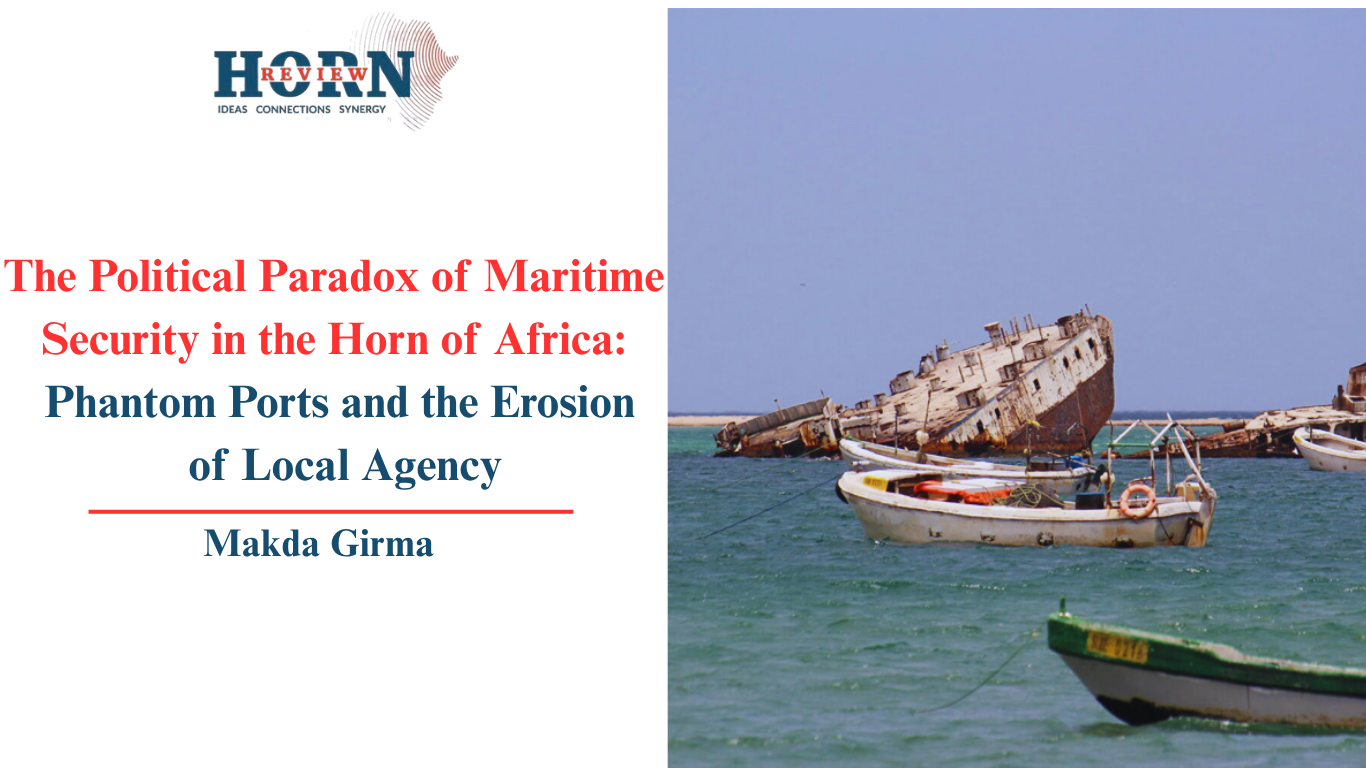
This enclosure goes far beyond concrete walls, it’s regulatory and economic too, and that’s where the securitization trap snaps shut. Phantom Ports act like shadow states at sea, with foreign navies or contractors calling the shots and bypassing already-weak local institutions. Fisheries and trade ministries in Somalia’s federal setup lose real influence as partners obsess over counter-piracy metrics, arms interdiction, and logistics flows. A seized dhow or off-limits fishing ground stops being a clan negotiation and becomes an external ruling, quietly dismantling the informal deals that once kept disputes from turning violent. The dhow trade, those timeless wooden vessels moving goods, remittances, and small-scale catches across the Indian Ocean, now chafes under “modern” standards that demand compliance but ignore lived reality. History repeats with a twist: earlier IUU fishing by outsiders displaced fishermen and sparked armed “protection” that morphed into piracy; today’s rules push operators into black-market lanes that insurgents happily tax.
The AIS Paradox drives this technology gap home with brutal clarity. Insisting that 15th-century dhow traditions, wind, currents, clan knowledge, adopt 21st-century surveillance like Automatic Identification System transponders, without meaningful subsidies or grace periods, is economic eviction dressed as progress. Small operators see AIS not as a lifeline but as a “digital target” that broadcasts their position to pirates, rivals, or tax collectors. Equipment costs plus licensing fees and exclusion zones put legal trade out of reach, funneling activity into the shadows where Al-Shabaab and others collect tens of millions yearly through checkpoints, port fees, and extortion. Instead of starving insurgents, securitization feeds their shadow economy.
The coastline becomes a logistics superhighway for global tankers while local artisanal fishing and informal trade, lifelines for food security and jobs, erode fast. Puntland and southern coast reports show shrinking catches for small boats amid foreign fleets and red tape, feeding urban migration and insurgent recruiting pipelines. Great-power games from U.S.-China rivalry to Gulf-Turkish proxies drive the enclosures, but the onshore fallout, joblessness, amplified grievances, undoes the very stability navies brag about delivering.
Nowhere does this trap bite harder than in the lived experiences of coastal communities, starting with the Bajuni. This seafaring people, spread across southern Somalia and northern Kenya, built their world on artisanal fishing tied to reefs and demersal stocks, governed by clan norms and seasonal rights that once insulated them from radicalization. Maritime zones and foreign vessels have turned those traditions into obstacles. Persistent IUU fishing alongside security patrols exposes the mismatch: navies chase high-seas threats but leave small operators exposed to gear destruction and prime-ground exclusion. Bajuni families speak of sliding into smuggling or city displacement, fraying the very social fabric that once held extremism at bay. When a fisherman loses traditional waters during a UAE exercise, it’s not just lost income, it’s lost dignity that can steer the next generation toward insurgent patronage.
Bosaso sharpens the contradiction even more. Once a buzzing Puntland hub for dhow fleets and beach fishing, the port now anchors Emirati-backed naval infrastructure and blue-economy zones. Local fishermen talk of a perfect storm: unaffordable licenses and transponders, direct competition from industrial trawlers in tuna- and lobster-rich waters, and rising vessel attacks that shatter trust in formal security. Lifelong operators are quitting; families pivot to illicit streams or internal displacement. Coastal IDPs from the south, who had carved out niches in Puntland’s fisheries, now face the same squeeze again. Puntland’s own fisheries pushes, backed by international partners, nod at the problem, but real fixes stay piecemeal against the backdrop of port militarization. The Bosaso story lays bare how Phantom Port logic elevates global logistics over community access, eroding not just livelihoods but the legitimacy of governance itself.
Turkey’s maritime push adds its own layer of discomfort. The Mogadishu pact cleverly hedges against UAE-Egyptian sway while locking in Turkish drones and training. Yet it also raises the uncomfortable question of sovereignty for sale: by ceding operational control over territorial waters, Somalia trades immediate capacity for long-term external oversight. Is this genuine state-building, or a subtler blue colonialism where Phantom Ports become nodes in someone else’s security grid? The same pattern repeats in Berbera and Bosaso, foreign perimeters that limit artisanal work while the state claims credit. These deals look great in counter-piracy spreadsheets for international audiences, but they quietly breed the resentment insurgents love to exploit.
Taken together, maritime policy in the Horn stays stubbornly top-down and blind to the land. It treats the sea as an extension of state or foreign power projection, detached from the shoreline where livelihoods, identity, and grievance resolution actually meet. Policymakers cannot keep ignoring the friction: Phantom Ports may lock down chokepoints for global shipping, but they risk planting the seeds of fresh unrest. If governance keeps favoring “secure corridors” for tankers over “secure access” for dhows, the Horn edges toward a coastal insurgency, not the old profit-driven piracy, but something born of dispossession and alienation. Displaced communities could easily buy insurgent narratives that paint foreign presence as neo-colonial extraction. Al-Shabaab successors would feast on those economic vacuums, turning marginalization into fresh recruits and shadow taxes.
The way out demands a genuine “Social Contract of the Sea.” Move past naval perimeters and weave artisanal fishers’ rights into national plans through real co-management: community fisheries associations, fair revenue shares from port deals, and hybrid governance that mixes international eyes with local knowledge. International partners must stop imposing extraterritorial zones and start delivering practical capacity, affordable AIS kits, transitional subsidies, licensing that protects rather than crushes informal channels. Center human security, food, inclusion, dispute resolution, in maritime rules, and states can rebuild the eroded social contracts. True security in 2026 cannot rest on predator drones alone; it must start with the fisherman on the pier, the trader, the dhow captain. Only by putting local agency at the heart of global strategy will the Horn finally escape this political paradox: securing the seas without hollowing out the shores. That human-centered blue security is not wishful thinking, it is the hard-nosed requirement for counterterrorism that works, trade that lasts, and stability the region desperately needs.
By Makda Girma, Researcher, Horn Review