
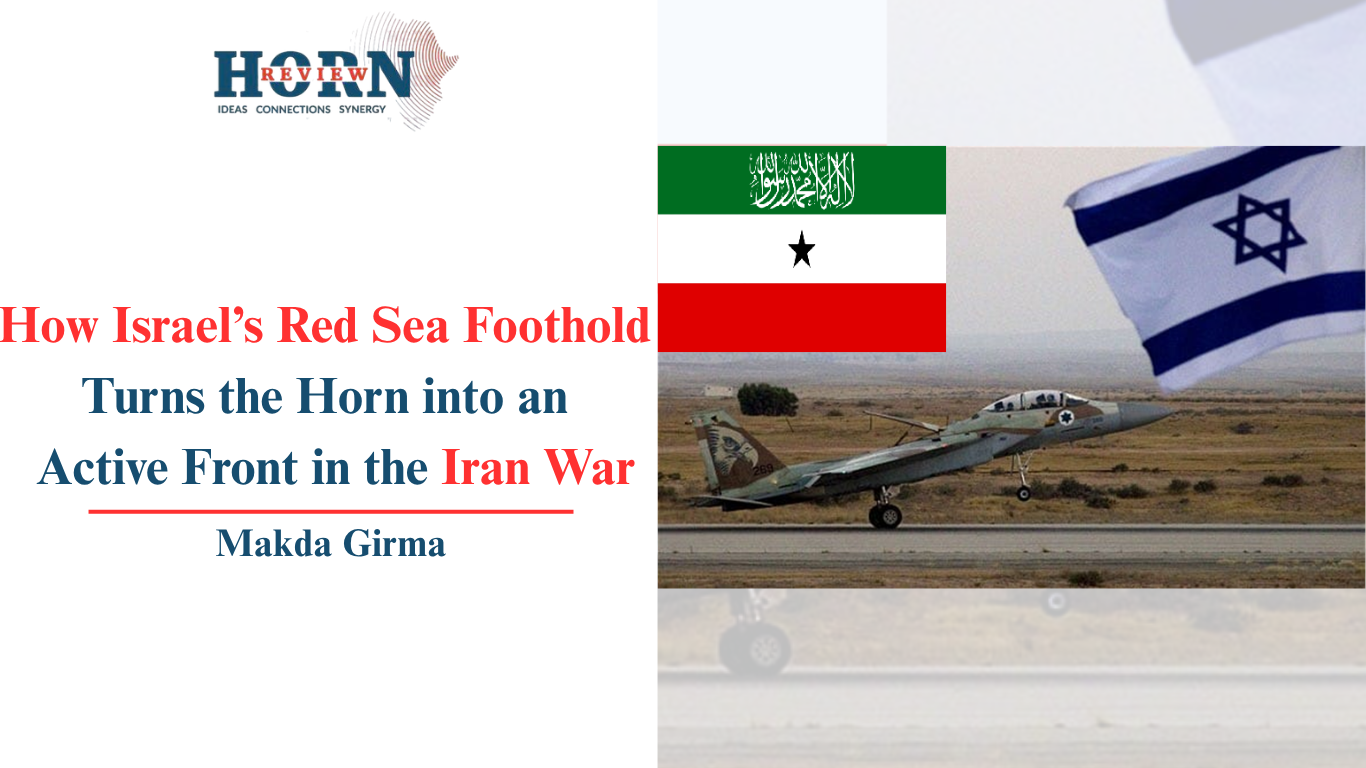
How Israel’s Red Sea Foothold Turns the Horn into an Active Front in the Iran War
Two weeks on from the joint U.S.-Israeli strikes that hit Iran on 28 February 2026 and took out senior figures including Supreme Leader Ayatollah Ali Khamenei, something quietly shifted on African soil that most outside observers are still missing. What started as Israel’s bid for a forward base near Berbera in Somaliland, sold as a smart way to keep the Houthis in check just across the narrow Bab el-Mandeb, has flipped into something far riskier. The same stretch of coast that was meant to project power outward is now sitting there like a magnet for low-cost Iranian retaliation, pulling the whole Horn straight into the war without anyone having to hit Tel Aviv or Riyadh directly.
The sequence unfolded fast. Israel formally recognised Somaliland on 26 December 2025, the first UN member state to do so. President Abdirahman Mohamed Abdullahi signed the declaration in Hargeisa, and within weeks Israeli Foreign Minister Gideon Sa’ar was in town talking about security. By early March this year, teams had already walked the ground, high ridges about a hundred kilometres west of Berbera and spots right inside the port area. Somaliland’s own Minister of the Presidency, Khadar Hussein Abdi, came out and said the deal covers intelligence sharing and possible operations against the Houthis, maybe even a small facility. Right next door, the UAE’s Berbera complex, that big military port, deep-water dock and four-kilometre runway, has been ready for heavy use since the upgrades finished years ago. Ethiopia’s 2024 MoU, which gave Addis 20 kilometres of coastline in return for quiet backing on recognition, now sits right on top of all this new Israeli activity. It looked like a neat win-win at the time. Now it feels like the trap was built into the geography from day one.
Houthi leader Abdul Malik al-Houthi didn’t waste a second. The day recognition was announced he called any Israeli assets in Somaliland “legitimate military targets.” So far they’ve held back, Saudi quiet diplomacy and the need to keep their powder dry while the main fight is in the Gulf probably explain that, but the hardware gap is tiny. Their drones and missiles have already flown 1,800 kilometres to hit Israeli airspace and shipping. A hop of 150-200 kilometres across open water is nothing. And because Somaliland isn’t formally recognised, the diplomatic fallout would be far lighter than if they struck Camp Lemonnier in Djibouti or proper Emirati soil. One drone, maybe a Mohajer-6 or a Samad variant slipped out of western Yemen, could do three things at once: show Tehran they’re still in the game, use Somaliland’s legal grey zone, and make the entire Horn play in a conflict happening three thousand kilometres away.
What isn’t often addressed in external briefings is how this lands inside Somaliland itself. This isn’t a blank slate waiting for foreign bases; it’s a place held together by clan deals, the Guurti elders, and thirty-four years of solitary rule. Plenty of people in Hargeisa see Israeli recognition as the first real breakthrough after decades of being ignored by the African Union and Arab League. Waddani party figures have defended the ties openly, saying Hargeisa simply had no other doors left to knock on. President Abdullahi has framed it as the route to proper passports and trade. But dig a little deeper and the unease is real. The Horn still feels the Israel-Palestine question in its bones. Former president Muse Bihi Abdi spoke publicly in support of Palestine, and in the eastern regions where Sool and Sanaag are still contested, plenty of ordinary Somalilanders, and especially the traditional elders, quietly worry that hosting Israeli hardware crosses a line. The Guurti hasn’t given any blanket green light.
If a Houthi strike lands and civilians are hurt, the domestic picture could swing hard. Support for the president might crumble if it’s spun as the inevitable cost of “selling out” to Tel Aviv. Or it could harden into defiance if people decide this is just another outside power trying to bully Somaliland’s hard-won independence. Either way, the internal variable adds a layer of unpredictability that no amount of Israeli or UAE planning can fully manage. The “price of recognition” stopped being abstract the moment missiles became part of the equation. Somalilanders may soon have to decide, in very concrete terms, whether a seat at the UN is worth the risk of shrapnel in Berbera.
That same unrecognised status is exactly what makes the legal and technical side so slippery, and so attractive to Tehran. Article 51 of the UN Charter, the bit about the right to self-defence after an armed attack, doesn’t apply cleanly here because Somaliland isn’t a member state. A strike on Berbera wouldn’t automatically pull in the collective defence machinery that protects Djibouti or Ethiopia.
Defence would fall back on whatever ad-hoc deals exist with Israel and the UAE, and those deals are untested in real time. Would Israel actually share Iron Dome or Arrow radar data with a non-state actor whose territory could, in a bad moment, slip into clan fighting or al-Shabaab infiltration? The technology-leakage risk is obvious; one set of compromised signatures and the same precision tools could end up with the very groups Iran is arming. Even the day-to-day command-and-control between the UAE-run port, potential Israeli sensors and Somaliland’s own small forces is a patchwork that hasn’t been stress-tested. The legal fog itself becomes part of the weapon: Iran can hit, claim it was just targeting “Israeli assets,” and know the international reaction will be muted precisely because the target sits in a grey zone. This isn’t accidental. It’s the studied exploitation of Somaliland’s liminal place in the international system.
Step back and the “why now” question sharpens the picture. In the current Iran war climate, Tehran doesn’t want to hit Haifa or Dubai directly and trigger a full-scale American response or a unified Gulf retaliation. Berbera offers a smarter diversionary theatre. A single low-signature strike tests how solid the Red Sea coalition really is, signals loyalty to the broader Axis, and harasses Israeli forward positions without burning escalation ladders in the main fight. The Eritrea wildcard makes deniability even easier. Tehran’s ties with Asmara go back decades and have warmed up again since 2024.
Satellite tracks and flight data show Iranian cargo planes, Fars Air Qeshm 747s and Belarusian IL-62s
landing at Massawa and Assab with drones, munitions and technicians. Mohajer-6s have already moved through Asmara on their way to Sudan. The old IRGC-linked Saviz platform used those same ports to support the Houthis. In a crunch, a drone could slip out of an Eritrean “ghost site,” get a quick top-up at Assab, then cross into Yemeni airspace. Attribution becomes messy. Israel wouldn’t know whether to hit Yemen or risk striking Eritrean soil and dragging Asmara deeper into the mess. Eritrea’s own balancing act, pushing out some UAE interests while keeping Iranian flights coming, puts it in the awkward spot of being both possible launchpad and potential victim. Any blowback would also ripple straight into Ethiopia, where post-Tigray relations with Asmara are still fragile.
For Ethiopia the stakes are brutally practical. Abiy Ahmed’s 2024 MoU with Somaliland was meant to be the landlocked country’s long-awaited outlet to the sea. Berbera traffic had already jumped 30 percent in the two years before the MoU; an Ethiopian stake promised even more. Now that same port sits under a potential missile shadow. The recent tripartite meetings in Djibouti and Abiy’s trips to Abu Dhabi were hedging moves, but they still treated the Israeli angle as political noise rather than a live-fire threat. One strike and Ethiopia’s maritime gamble turns into a security headache at exactly the moment its Gulf partners are busy defending their own skies. The implicit recognition piece that Somalia has already legislated against would become instant collateral.
Mogadishu sees the same event through a very different lens. Backed by Turkey and Egypt and dead-set against Somaliland’s independence, the federal government has warned repeatedly that foreign bases on “its” territory are unacceptable. A Houthi strike could be repackaged at home as standing up for Somali sovereignty, quietly opening doors for Iranian technical know-how to reach al-Shabaab. Links between the Houthis and al-Shabaab, smuggling routes, training, occasional coordination, have been documented since at least 2024. Precision components trickling south would give Somali militants a new edge. The Ankara Declaration that paused the Ethiopia-Somalia row never actually fixed the underlying grievances; a kinetic incident at Berbera would reignite everything with fresh momentum. Mogadishu’s leaders could utilize the wave of public anger while quietly accepting help that strengthens their hand against both Somaliland and Addis.
Eritrea rounds out the triangle in its usual opaque way. Those Iranian logistics corridors through Massawa and Assab, already on the record, suddenly matter a lot more. Any strike routed through Eritrean territory stitches the Sudan shadow war directly onto the Somaliland front and forces Asmara to juggle its Tehran ties against the danger of Israeli or Ethiopian retaliation.
None of this overlaps neatly with the two big Red Sea stories analysts have been chewing over for months. The idea that the Houthis might eventually target Djibouti carries much heavier costs, multiple foreign bases with real collective-defence guarantees. Somaliland’s grey status gives Tehran cleaner deniability and softer tripwires. The broader “economic vacuum” talk, disrupted trade, resurgent piracy, refugee waves, is still relevant, but it’s the background noise. The Somaliland trap is tighter, quicker, and tied directly to the messy politics of unrecognised territory. External risk shops already flag Berbera as a live flashpoint; one symbolic hit would internationalise fault-lines that have been simmering for years.
The irony sits right at the heart of Horn-style geopolitics. Israel and the UAE thought they were containing the Axis on the Arabian side. Instead the war has been exported into Africa. The same fragmented governance that let Somaliland host the base without full scrutiny now leaves the whole region exposed. Gulf backers are stretched thin defending their own capitals; their ability to shield Berbera is limited precisely when it matters most. If the Houthis finally drop the restraint they’ve shown so far, and the longer the Iran war drags on, the more plausible that looks, the Horn will face a new kind of test: shielding itself from precision strikes launched from a Yemeni-Iranian axis instead of the usual piracy or al-Shabaab threats.
The practical response has to match the reality. Regional early-warning systems and integration efforts that the Horn has pushed for years now need to stretch further. Practical air-defence sharing focused on the Berbera-Bab el-Mandeb corridor, using the radar assets already in place, shared maritime surveillance that brings Somaliland, Ethiopia, Djibouti and Eritrea into the same picture, and quiet diplomatic feelers to keep Somaliland off the target list, all of that can be done without forcing formal recognition. Parallel work to block Iranian tech from reaching al-Shabaab through Turkish and Egyptian channels is equally urgent. None of it requires big treaties. It just requires admitting that Somaliland’s geography and internal politics now shape the stability of the entire region.
The Horn has ridden out proxy fights, port rows and great-power games before. This time the spark is smaller but the fuse runs straight through Berbera and the domestic debates inside Somaliland. The trap was set by December 2025 diplomacy and March 2026 planning, and it is no longer hypothetical. Public statements, satellite tracks, drone ranges, legal ambiguities and open assessments all line up. The only sensible path is shared vigilance, honest deconfliction, and a clear-eyed look at the internal variables that outsiders keep overlooking. The base was built to push power outward. In this war it risks becoming the channel that drags the whole Horn inward. That reversal, baked into the very fragmentation that once looked like an advantage, now needs urgent recalibration before the first missile crosses the water and forces everyone to pay the real price of recognition.
By Makda Girma, Researcher, Horn Review

RELATED
Posts
12
Oct
The Recurring Script of Eritrea’s Invasion-Victim Cycle
In the Horn of Africa, history under Isaias Afwerki does...
12
Oct
Under the Banner of Red Sea Security, Egypt Encircles Ethiopia
Reports of Egyptian naval movements toward the southern Red...
12
Oct
Egypt's Attack on Sudan's Gold Mines and the Long Road That Led to It
The airstrikes that tore through the artisanal gold mining...
9
Oct
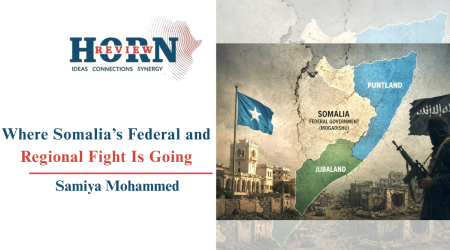
Where Somalia’s Federal and Regional Fight Is Going
The 2012 federal settlement was less a constitutional order...
9
Oct
Eritrea’s Post-Pretoria Strategy and the Escalation in Ethiopia
Our latest report examines Eritrea’s post-Pretoria trajectory and how selective...
8
Oct
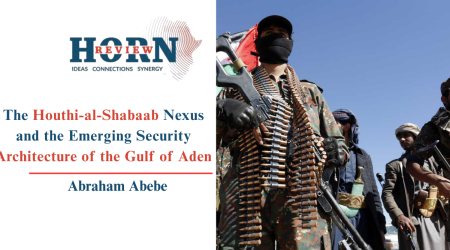
The Houthi-al-Shabaab Nexus and the Emerging Security Architecture of the Gulf of Aden
The growing relationship between Yemen’s Houthi movement and Somalia’s al-Shabaab...
7
Oct
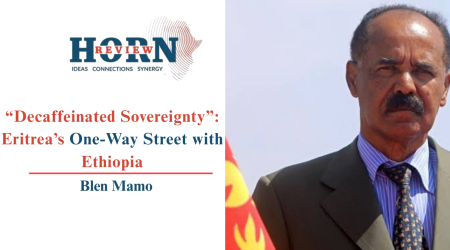
“Decaffeinated Sovereignty”: Eritrea’s One-Way Street with Ethiopia
There is a peculiar contradiction at the heart of Eritrea’s...
7
Oct
Leaked Documents Allege Sudanese Army Weapons Pipeline to TPLF-Aligned Forces as Tigray War Reignites
Leaked documents alleging a Sudanese army weapons pipeline to TPLF-aligned...
7
Oct
Eritrea Has Officially Invaded Ethiopia, Says Government Communication
Ethiopian Government Formally Condemns Eritrean Territorial Incursion as Its Forces...
7
Oct
Turkey, Somalia and the Transactional Reading of Alamein
The Alamein Declaration functions less as a coherent framework...