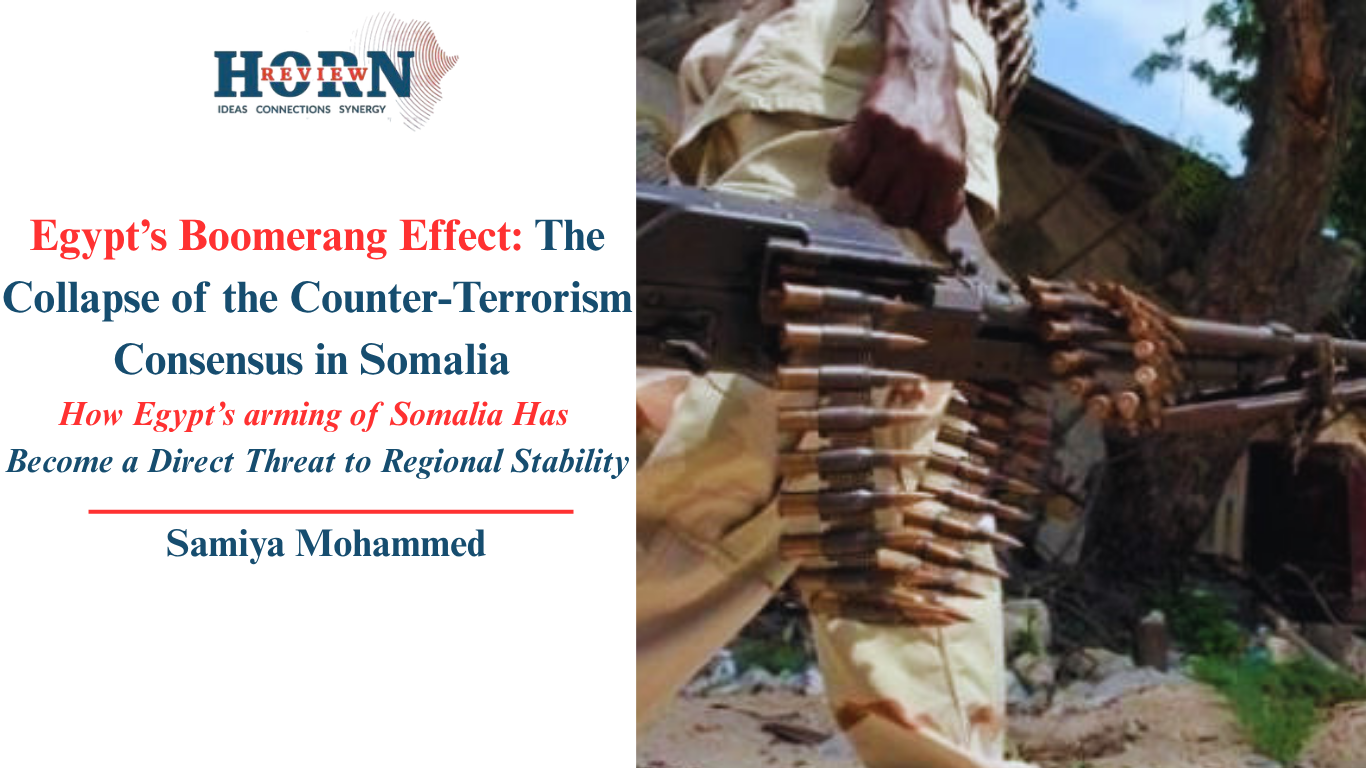
How Egypt’s arming of Somalia Has Become a Direct Threat to Regional Stability
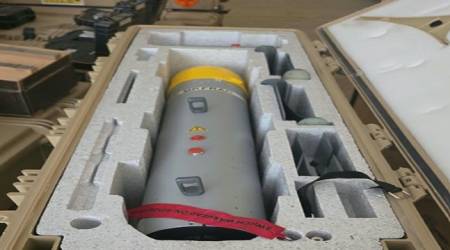
The Ministry of Internal Security of Somalia’s Southwest State issued a warning that cuts to the core. In a statement that eschewed diplomatic ambiguity for an alarm the Ministry alleged that weaponry supplied by Egypt to Somalia’s federal government had been systematically diverted to militias associated with extremist elements referred to in the statement by the term Khawaariij a designation historically applied to Al-Shabaab and its ideological affiliates and was being deployed against both the territorial integrity of Southwest State and the Ethiopian peacekeeping forces stationed within its borders.
What was initially heralded by Somalia and Egypt as a legitimate military partnership aimed at eradicating the Al-Shabaab has according to the authorities in Baidoa metamorphosed into a tangible threat to the very forces mandated to stabilize the country. This official accusation transforms a bilateral defense pact into a regional crisis. It substantiates a long held concern among neighbouring states that the uncoordinated injection of advanced military hardware into Somalia’s politics has not only failed to enhance security but has actively created a deep and immediate risk for the region. If the allegations presented by Southwest State are accurate, Egypt has whether through will full negligence or design introduced a destabilizing variable that threatens to unravel the gains made against extremism and ignite a proxy conflict on the doorstep of the Horn.
The genesis of the current crisis lies in the defense agreement finalized between Egypt and the Federal Government of Somalia in mid 2024. Cairo positioned itself as Mogadishu’s preeminent military patron. The pact facilitated a steady flow of arms, equipment and critically the deployment of Egyptian troops intended to form part of the African Union Support and Stabilization Mission in Somalia. Officially the purpose of this military build up was unambiguous to bolster Somali forces in the war against Al-Shabaab, to secure key infrastructure, and to ensure a stable transition. However, the political geography of Somalia complicates any narrative of unified national defense. Southwest State which hosts Sector Three of the African Union peacekeeping mission an area historically patrolled by Ethiopian forces has consistently voiced opposition to federal moves that it perceives as encroachments upon its regional authority.
The formal accusation from the Southwest State Ministry of Internal Security elevates these political tensions to a matter of international security. According to the statement the Egyptian origin weaponry has been diverted from its stated counter terrorism purpose. The Ministry specifically alleged that these arms have been transferred to militias with documented links to extremist factions with a charge that carries devastating weight in a region where the distinction between clan militia, political proxy and Al-Shabaab operative is often lethally fluid. This accusation is not isolated and aligns with previous statements from the Southwest State parliament speaker who publicly accused federal authorities of channelling Egyptian-supplied equipment to the Geeleed militia in the Buurhakaba district for use against the region’s civilian administration.
The military logic underpinning the SWS warning are when weapons procured under the auspices of a counter terrorism mission are diverted to sub-national actors accused of collusion with extremists the operational framework collapses. The line between counter insurgency and intra-state warfare disappears. If the Ethiopian peacekeepers stationed in Sector Three the principal ranpart against Al-Shabaab’s expansion in the region are now facing firepower supplied by a foreign power to a rival faction within Somalia then the African Union mission itself is rendered untenable. The SWS warning effectively declares that the Egyptian military presence and its associated materiel have ceased to be an asset in the fight against terrorism and have become a direct vector of instability and a challenge to the existing security order.
For the neighbouring countries of the Horn this development constitutes the materialization of a worst case scenario. This is not just a diplomatic irritant however a fundamental threat to the viability of regional security cooperation is. The proliferation of these arms beyond the control of either the federal government or the African Union command structure creates a classic security dilemma. Weapons introduced to stabilize a nation are now at high risk of being used to destabilize its neighbours either through direct conflict or through the inevitable leakage to non-state actors.
The risk of proliferation is compounded by the nature of the Somali conflict ecosystem. Historically, externally supplied arms in Somalia have demonstrated a tendency to outlast the political alliances for which they were intended. Stockpiles intended for the federal army have repeatedly found their way into the hands of clan based militias and from there sometimes to Al-Shabaab through defections, corruption or outright seizure. Egypt’s recent military intervention characterized by a high volume of shipments over a compressed timeline amplifies this risk exponentially. The assertion by Southwest State that these specific weapons are now being utilized against regional administrations suggests that the diversion is not just a matter of poor oversight but a deliberate weaponization of these assets for political leverage.
The actions of Cairo constitute a de facto intervention that carries with it the seeds of a wider conflagration. By positioning itself as the primary security guarantor for the federal government, Egypt has assumed a role that historically has been fraught with peril. Whether the diversion of arms was an unintended consequence of hasty logistics or a calculated strategy from the perspective of regional stability a distinction without a difference. The outcome is the same with a region now faces an additional layer of external meddling, armed proxies, and loyalties.
The current crisis however is distinguished by its immediacy and its proximity to active peacekeeping operations. The Egyptian-supplied weapons now allegedly circulating in the hands of militias hostile to Southwest State and its Ethiopian security partners present more than a bureaucratic lapse in oversight. They show a failure of the security framework designed to protect Somalia’s transition from chaos.
If the allegations by the Southwest State Ministry of Internal Security are substantiated or even if they just reflect the perceived reality on the ground the conclusion is inescapable. In its pursuit of influence in the Horn Egypt has introduced a variable that has shifted from a potential risk to an active threat. What was intended to be a show of force against terrorism has been compromised into a source of internecine conflict. For the neighbours of Somalia who have long borne the consequences of instability emanating from its borders, the message is the unchecked proliferation of arms into Somalia’s politics has created a situation where the tools of counter-terrorism are now being wielded to undermine the very structures required for peace and this is no longer a matter of regional politics and it is a matter of regional security and the cost of inaction will be measured in the lives of peacekeepers and the stability of a nation already stretched to its breaking point.
By Samiya Mohammed, Researcher, Horn Review