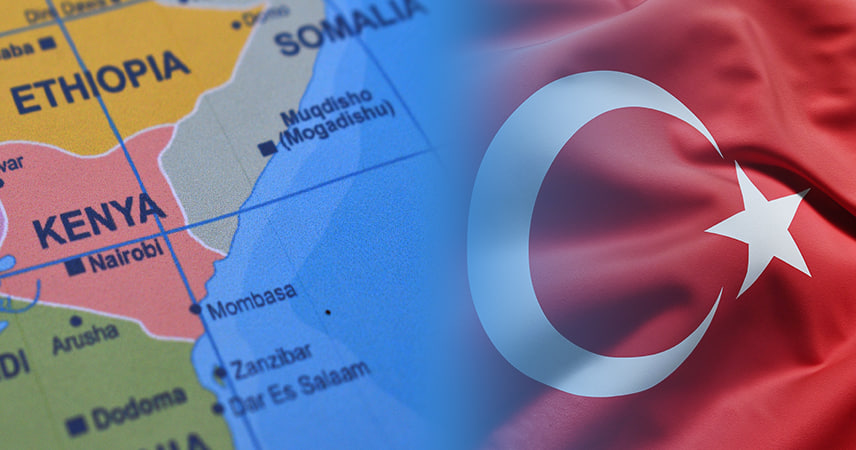
Turkey’s engagement in Somalia has significantly deepened since 2011, evolving from primarily humanitarian aid to a comprehensive strategy encompassing development, military, and economic cooperation. This multifaceted approach, characterized by substantial investments in infrastructure, healthcare, and education, aims to build trust and establish a favorable environment for Turkey’s broader strategic interests. The central question arises: What is truly behind Turkey’s deepening involvement, particularly its focus on Puntland?
Puntland, which was established on August 1, 1998, declared itself an autonomous region and, on March 31, 2024, announced that it no longer recognizes the authority of the Federal Government of Somalia until a mutually agreed federal constitution is in place. Some scholars have suggested that Turkey’s presence is driven by oil power and influence and that Puntland as the only functioning federal member state with an independent stake can counter the influence of a weakened central government that in early 2024 granted Turkey a thirty percent share of revenue from Somalia’s exclusive economic zone a move many Somalis viewed as a breach of national interest.
While Turkey officially recognizes Puntland as an autonomous member state of Somalia and not as a separate entity, Turkey maintains a strong relationship through various forms of cooperation, notably trade and security. Turkey signed two major agreements with the central government of Somalia on February 22, 2024, a comprehensive maritime and defense memorandum of understanding, and on March 7, 2024, an offshore oil and gas cooperation agreement. These accords carry implications beyond Somalia as Ankara’s expanding presence in Mogadishu and Bosaso has drawn attention, given Turkey’s long history of engagement in the Horn of Africa. The federal government of Somalia may face opposition from other member states or Puntland’s independent stance, complicating Turkey’s long-term resource exploitation strategies.
An increase in fighting and the influence of militant groups in Somalia continues to impede any major steps forward for national prosperity. However, Puntland has maintained a capable security apparatus, political stability, and effective governance exemplified by Operation Hilaac against ISIS and Al Shabab launched in November 2024 with crucial support from the United States and the United Arab Emirates. This success demonstrated Puntland’s capacity when compared to the central government’s ongoing struggles against insurgents and positions Puntland as a credible negotiating partner.
Building on decades of soft power initiatives, humanitarian aid infrastructure projects, and cultural diplomacy, President Erdoğan has layered a hard power element atop Somalia’s fragmentation. Camp TURKSOM in Mogadishu, Turkey’s largest overseas military base, opened in 2017 to train Somali officers. Reports of a new Turkish training facility in Bosaso remain unverified in open sources. The deployment of seismic research vessels off Bosaso’s coast signals Turkey’s readiness to pursue hydrocarbon exploration before its rivals can stake their claim.
This twofold approach not only reinforces Erdoğan’s image as the protector of Muslim majority states but also turns Puntland into a laboratory for testing neo-Ottoman ambitions under the guise of partnership. Yet the strategy carries inherent contradictions. By brokering maritime boundaries favorable to itself, Ankara has exacerbated tensions between Mogadishu and Puntland, deepening the risk that Somalia’s fragile federation may fracture entirely. Puntland’s leadership now faces a dilemma: accept Ankara’s terms and cede effective control of maritime wealth, or resist and provoke a security clampdown backed by Turkish assets. Either outcome threatens regional stability.
Should Puntland align more closely with Gulf backers such as the United Arab Emirates or Saudi Arabia the Horn of Africa could see a formal contest pitting Turkey against a Gulf Arab coalition for influence over Somali waters and ports Beyond Somalia’s borders these maneuvers ripple across the region Ethiopia eager to counterbalance Egypt’s involvement in Somaliland and safeguard Red Sea access watches Ankara’s advances warily Djibouti host to American Chinese and French bases now contends with Turkey’s bids to join the mix Eritrea and Sudan which have alternately courted and clashed with Ethiopia may be drawn into a broader security architecture shaped by Ankara’s initiatives Erdogan’s vision extends far beyond Puntland’s shoreline he seeks corridors of influence linking Somalia’s ports to Kenya’s burgeoning trade routes and ultimately to Turkey’s growing network of African embassies and commercial outposts.
In the coming years several scenarios are possible for Turkey’s investment in Somalia In the best case Ankara’s security investment defeats piracy weakens Al Shabab sufficiently and enables hydrocarbon exploration under joint venture contracts that reward Somali stakeholders more equitably A renegotiated hydrocarbon contract possibly brokered through the World Bank could channel billions into the budgets of Mogadishu and Puntland purchasing domestic credibility and allaying concerns about external encroachment It would strengthen Somali federal institutions and reward Turkey with a reputation as a reliable development partner.
A more likely scenario tilts toward renewed fragmentation If exploration wells prove dry or yields disappoint Ankara may double down militarily deploying private security contractors or tightening its grip on port revenues Puntland’s administration could then pivot fully into the Gulf orbit seeking Emirati vessels at Bosaso and Saudi patronage in Garowe Mogadishu’s center might fracture further accelerating a slide toward de facto partition among Somaliland Puntland and the southern regions In that case Erdoğan’s Horn Gambit would secure influence but at the cost of Somalia’s unity potentially igniting localized conflicts over land and maritime rights.
For the Horn of Africa as a whole Turkey’s growing role underlines a shifting paradigm of external engagement Gone are the days when Western powers set terms unilaterally today regional players such as Turkey the United Arab Emirates Egypt and Kenya shape security pacts and resource deals on equal footing This multipolar competition can spur investment and fill governance gaps but it also risks turning the region into a proxy battleground where local grievances are amplified by foreign agendas Erdogan’s ambition rooted in both economic pragmatism and ideological outreach may prove a double edged sword offering infrastructure and training yet accelerating a scramble for influence that tests the resilience of fragile states.
Ultimately Somalia and its neighbors must navigate these currents with strategic foresight Robust transparency in deal making inclusive consultations with regional administrations and a calibrated balance between external security assistance and domestic capacity building are essential safeguards Only by forging a shared vision of sovereignty one that harnesses foreign capital and expertise without surrendering control can the nations of the Horn turn great power competition into lasting stability and prosperity Erdogan’s next moves will reveal whether Turkey becomes a benevolent partner or seeks enduring dominion over Somalia’s destiny.
By Surafel Tesfaye , Researcher, Horn Review