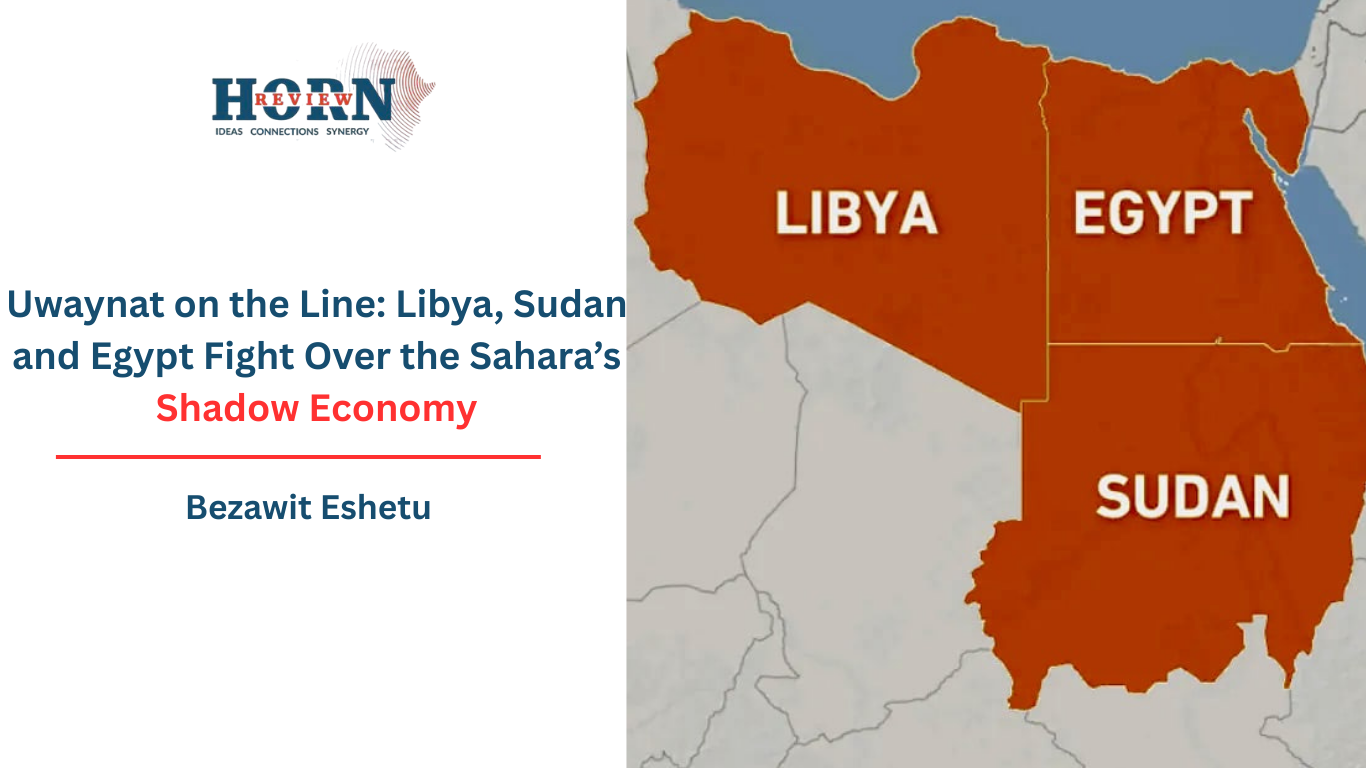
The Uwaynat Triangle has emerged from its historical status as a neglected Saharan wasteland to become the strategic peak of North African geopolitics, representing a crucial landscape where the future of state sovereignty and resource security is being contested. This 1,500-square-kilometer expanse, anchored by the imposing 1,934-meter Gabal El Uweinat, serves as the geographical hinge between Egypt, Libya, and Sudan.
While colonial-era agreements once dismissed this region as economically insignificant, the contemporary collapse of central authority in the borderlands has transformed it into a critical conduit for hybrid warfare. The Triangle’s significance is no longer defined by its isolation but by its capacity to enable non-state actors to bypass formal borders, creating shadow economies that sustain protracted conflicts. This desert enclave exemplifies a broader shift in modern warfare, where peripheral territories are transformed into essential assets for those capable of mastering their rugged terrain and legislative vacuums.
The historical foundations of the Triangle’s strategic value are rooted in the clash of imperial ambitions and the desert’s inherent resistance to cartographic control. In 1923, the Egyptian explorer Ahmed Hassanein Bey first mapped Jebel Uweinat, identifying its permanent oases and ancient rock art as evidence of its role as a prehistoric crossroads. This discovery briefly piqued colonial interest, leading to the 1934 Italo-British-Egyptian Accord, which formalised the borders of the “Sarra Triangle”, a wedge of territory including the vital wells of Ma’tan as-Sarra.
At the time, Britain viewed the cession of this land to Italian Libya as a minor diplomatic concession, dismissing it as a barren liability. However, for Mussolini’s Italy, the Triangle was a vital logistical bridge intended to connect Libya to the broader ambitions of East Africa. This historical miscalculation by the British Empire created a precedent for viewing the region as a “sovereignty vacuum,” a theme that has persisted into the 21st century as post-colonial states continued to ignore the Triangle, allowing informal and illicit networks to flourish in the absence of institutional patrols.
The military utility of the Uwaynat Triangle was validated decades before the current Sudanese crisis during the “Toyota War” and the broader Chadian-Libyan conflict of the 1980s. Muammar Gaddafi’s forces utilized the Ma’tan as-Sarra airbase within the Triangle as a primary staging ground for projecting power into the Sahel, demonstrating that the region was the only viable waypoint for sustaining mechanized desert warfare. The devastating 1987 Chadian raid on this base proved that control over these remote desert oases was the prerequisite for regional hegemony; the loss of the Triangle effectively signaled the collapse of Libya’s southern ambitions.
This historical precedent, where a remote desert outpost determined the outcome of a state-level conflict, mirrors the current reality. Long before the Rapid Support Forces established their foothold, the Triangle had already been solidified as a laboratory for desert mobility, where the mastery of hidden tracks and water points superseded the formal authority of the capitals in Cairo, Tripoli, or Khartoum.
The June 2025 seizure of the Uwaynat Triangle by the Rapid Support Forces (RSF) marked a definitive rupture in the regional status quo, shifting the center of gravity of the Sudanese civil war from the streets of Khartoum to the desert frontiers. By overrunning the Karab el Tum oasis, Mohamed Hamdan Dagalo’s forces secured a logistical throat that connects the gold mines of Darfur to international markets via Libyan networks.
This tactical shift was facilitated by the opportunistic cooperation of the Libyan National Army (LNA) under Khalifa Haftar, particularly through the Kufra district. For the RSF, the Triangle is not merely a territorial gain but a self-sustaining engine of war. It provides the necessary camouflage for convoys ferrying fuel, weapons, and mercenaries which is often supported by Emirati-aligned networks, allowing the militia to maintain a resilient military machine that is largely immune to traditional international sanctions and the blockades imposed by the Sudanese Armed Forces.
This “gold pipeline” underscores a paradigm shift toward decentralized, militia-driven economies that monetize territorial control in real-time. The Uwaynat region serves as the primary collection point for artisanal gold smuggled from Darfur, which is then laundered through LNA-protected routes into Libya before reaching refineries in the United Arab Emirates. Estimates suggest these operations generate hundreds of millions of dollars annually, creating a financial autonomy that complicates peace efforts by entrenching economic incentives for continued instability.
The imperviousness of these flows undermines global traceability, as the Triangle provides the physical space needed to transform conflict minerals into legitimate capital. This economic dimension has created a profound rift between the UAE’s extractive interests and Egypt’s state-centric security requirements, illustrating how resource wealth in fragile borderlands can unravel regional stability.
The escalating friction between Cairo and the Haftar family throughout late 2025 and into January 2026 reveals a fundamental divergence in how regional powers perceive the RSF. While Khalifa Haftar and his sons, Saddam and Khaled, view the RSF as transactional partners capable of facilitating lucrative smuggling routes, Egypt views the paramilitary group as a terminal threat to its national security.
This tension culminated on January 9, 2026, when the Egyptian Air Force conducted unprecedented airstrikes on an RSF convoy within the Triangle, destroying armored vehicles and fuel tankers linked to LNA logistics. These strikes were a form of kinetic diplomacy, signaling to both Haftar and his patrons in Abu Dhabi that Egypt will no longer tolerate the use of Libya as a destabilizing sieve. For President Abdel Fattah el-Sisi, the stabilization of the Triangle is not an act of regional altruism but a desperate necessity to preserve the integrity of the Nile Valley.
Cairo’s strategic fixation on the Uwaynat Triangle stems from a “Nile Security Doctrine” that prioritizes Egypt’s dominance over the river’s resources, far beyond the surface-level dynamics of the Sudanese civil war. This doctrine is fueled by profound anxiety over potential disruptions to the Nile’s flow, which sustains Egypt’s agriculture, economy, and population.
Egyptian leaders perceive a Rapid Support Forces (RSF) victory as a dangerous shift that could empower Ethiopia in the protracted Grand Ethiopian Renaissance Dam (GERD) dispute, potentially altering water distribution in ways that challenge Cairo’s historical control. The RSF’s pragmatic ties with Addis Ababa raise fears in Cairo that a militia-led Sudan might fracture the traditional Cairo-Khartoum bloc on water issues, exposing Egypt to upstream decisions that could diminish its Nile allocation.
This underlying anxiety drives Egyptian strategists to view the Uwaynat Triangle as a critical leverage point over Sudan’s interior, where maintaining influence is seen as essential to countering Ethiopian advancements. Allowing RSF dominance in the area is equated in Cairo with risking greater Ethiopian sway over the Nile, prompting Egypt to position the paramilitary as a proxy threat that must be neutralized to preserve upstream containment. Consequently, Egypt’s military moves in the tri-border zone, including airstrikes on RSF convoys, act as an assertive barrier, aimed at limiting Ethiopia’s regional gains and reinforcing Cairo’s oversight of Nile-related developments, even at the cost of escalating tensions.
Compounding this is Egypt’s “ring of fire” outlook, where encirclement by volatile neighbors and evolving alliances amplifies water security fears, framing any instability as a direct peril to the Nile. The RSF’s incursion into Sudan’s Northern State via Uwaynat is interpreted as a vulnerability that could indirectly bolster Ethiopian positions, threatening zones Egypt relies on as buffers for its own interests. Through these interventions, Cairo seeks to impose control over these borders, often prioritizing containment of Ethiopia’s influence over collaborative stability, which risks further inflaming regional divides.
This posture was evident in the January 2026 visit of Saddam Haftar to Cairo, timed right after Egyptian airstrikes, signaling an attempt to pressure Libyan figures into aligning against shared rivals. By urging a shift away from Emirati-linked gold operations toward Egypt’s security demands, Cairo leverages such diplomacy to tighten its grip, deploying advanced drones and militarizing the southwestern Al Uwaynat desert to oversee northern Sudan’s western edge amid the Sudanese Armed Forces’ struggles.
Additionally, the Uwaynat Triangle has become a focal point for testing Egypt’s management of state-paramilitary dynamics in the Sahel, where anxieties over the Nile manifest in efforts to control key assets like the Nubian Sandstone Aquifer and mineral deposits. As a vital corridor for desert transit and power projection, the area heightens Cairo’s drive for hegemony, leading to alliances with Saudi Arabia and Somalia to disrupt RSF supplies and redirect flows.
Ultimately, the Uwaynat Triangle is the crucible where the future of the Egyptian state and the broader Saharan order will be decided. The transition from diplomatic warnings to active military interdiction suggests that the window for a negotiated settlement that includes the RSF is closing in the eyes of Cairo. This remote desert intersection has proved that in an era of interconnected crises, no region is truly peripheral.
By Bezawit Eshetu, Researcher, Horn Review