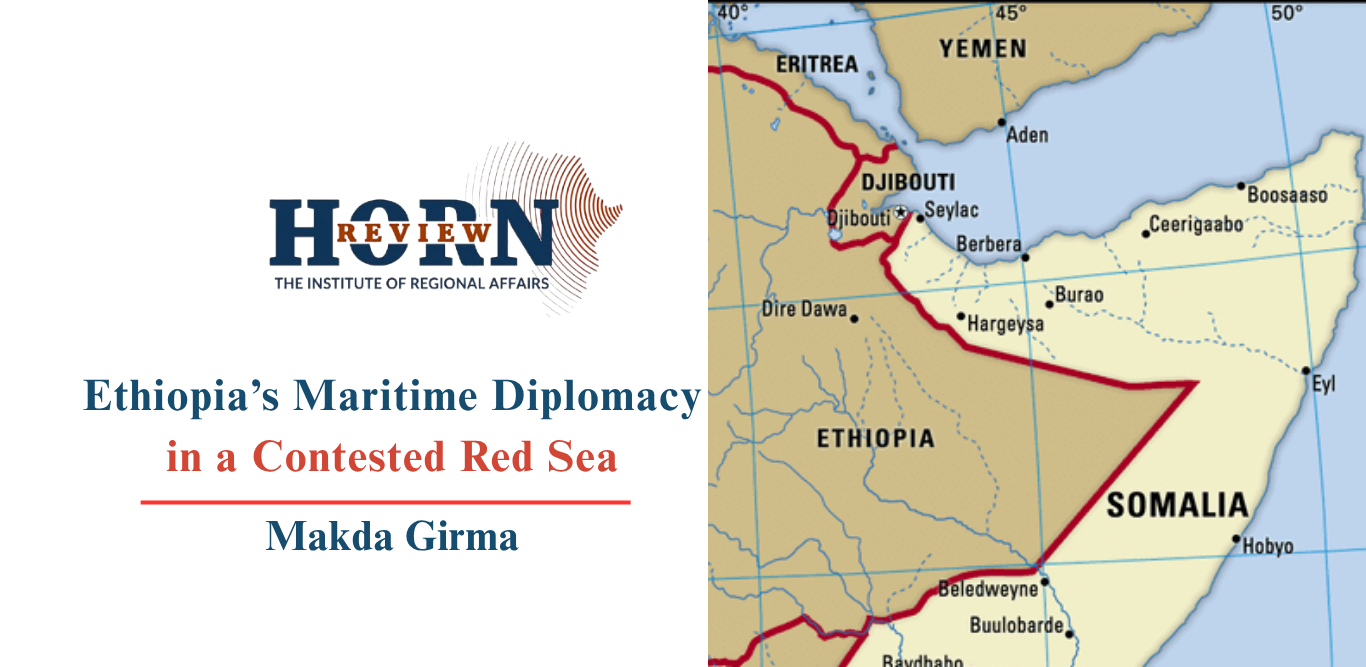
On October 26, 2026, Addis Ababa hosted a gathering that would ordinarily be expected to take place in a coastal capital. Naval commanders and maritime representatives from Yemen, Oman, Djibouti, Somaliland and Puntland joined the Ethiopian Navy for a four day workshop on maritime search and rescue, information sharing and regional security. The meeting, which concludes on October 29, brought together authorities connected to some of the most strategically important coastlines in the Red Sea and Gulf of Aden. According to coverage of the Ethiopian National Defense Force announcement, the discussions aimed to strengthen coordination and improve responses to maritime emergencies. Beyond these immediate objectives, however, the gathering offers an opportunity to examine Ethiopia’s growing engagement with a region from which its geography has long separated it.
Since Eritrea’s secession in 1993, Ethiopia has relied on neighboring countries for maritime access. This dependence carries considerable economic consequences. According to the World Bank, Djibouti handled approximately 95 percent of Ethiopian imports and exports at the time of its assessment, demonstrating the importance of a single corridor to the country’s external trade. Diversification through Berbera and other regional ports has therefore become increasingly important. Yet access to port infrastructure addresses only part of Ethiopia’s maritime concerns. The security of shipping routes, the reliability of regional partners and the institutions responsible for managing maritime emergencies also affect the country’s economic interests.
The Addis Ababa meeting becomes particularly interesting when placed against the competing diplomatic arrangements emerging around the Red Sea. In January 2020, eight countries established the Council of Arab and African States Bordering the Red Sea and Gulf of Aden. Its members include Saudi Arabia, Egypt, Eritrea, Sudan, Somalia, Djibouti, Yemen and Jordan. Membership was organized around coastal geography, leaving Ethiopia outside a forum concerned with the security of waters through which much of its international trade passes.
This exclusion has acquired greater political significance as regional countries develop closer security relationships. On October 4, 2026, the leaders of Egypt, Eritrea, Somalia and Sudan met in New Alamein and adopted a joint declaration affirming that Red Sea governance should remain the exclusive responsibility of littoral states. The declaration also rejected recognition of Somaliland and addressed disagreements concerning the Nile. These positions reveal an approach to regional governance that places significant emphasis on coastal sovereignty and territorial integrity.
For Ethiopia, the challenge is clear. Its economic and security interests are tied to the Red Sea, yet some of the emerging regional arrangements provide no formal place for a landlocked country. The Addis Ababa workshop does not overturn these restrictions, nor does it establish a competing maritime alliance. It does, however, demonstrate that Ethiopia can engage coastal authorities through other forms of cooperation. Maritime governance is not confined to political councils; information sharing, emergency response and professional coordination also provide opportunities for meaningful participation.
The composition of the gathering is particularly relevant in this respect. Djibouti remains Ethiopia’s principal gateway to international markets, making cooperation between the two countries essential to regional commerce. Somaliland, meanwhile, has become important to Ethiopia’s efforts to diversify its transport corridors through the development of Berbera port and its associated infrastructure. Puntland’s geographical position along the Gulf of Aden gives it an important role in maritime affairs near the approaches to the Indian Ocean. Their participation demonstrates that Ethiopia already maintains channels of communication with authorities responsible for maritime areas directly connected to its commercial interests.
These relationships should not be mistaken for unconditional political support. Somaliland’s unresolved international status and Puntland’s disagreements with Somalia’s federal government introduce complications that cannot be ignored. In March 2024, Puntland announced that it would no longer recognize the authority of Somalia’s federal institutions following disputed constitutional amendments. Ethiopia’s own relations with Mogadishu were strained by the January 2024 memorandum of understanding with Somaliland, before the Ankara Declaration of December 2024 established a framework for pursuing mutually beneficial maritime arrangements while respecting Somalia’s sovereignty.
Somalia’s federal government was notably absent from the list of participants, although it remains unclear whether Mogadishu was invited. Still, Ethiopia’s engagement with Somaliland and Puntland does not necessarily have to come at the expense of its relations with Somalia. Addis Ababa has an interest in maintaining ties with all three, particularly given their importance to security along the Gulf of Aden. The challenge will be to strengthen these relationships without deepening existing political disagreements.
The participation of Yemen and Oman extends the meeting’s relevance beyond the Horn of Africa. Yemen occupies a critical position near Bab al Mandeb, where instability can disrupt shipping between the Indian Ocean and the Red Sea. However, Yemen’s internal fragmentation limits what cooperation with its internationally recognized authorities can accomplish. As a 2026 British parliamentary assessment explains, the Houthi movement controls much of northwestern Yemen and has expanded its influence along parts of the Red Sea coastline. Oman brings a different perspective through its position along the Arabian Peninsula and its connections to the wider Indian Ocean.
For Ethiopia, engagement with these authorities offers opportunities for communication, maritime safety cooperation and professional exchanges. It does not guarantee their support for Ethiopian naval basing or sea access negotiations. Nevertheless, regular contact can help build the confidence required for more substantial agreements. Relationships established around less contentious matters may eventually support discussions on broader economic and security interests.
The meeting also forms part of an established international framework rather than an exclusively Ethiopian initiative. As reports on the workshop indicate, the event is associated with the European Union supported Crisis Response Project for the Red Sea and Western Indian Ocean, alongside CRIMARIO and Expertise France. These initiatives emphasize maritime awareness, information sharing and improved coordination. Ethiopia’s contribution lies in hosting regional representatives and participating in a wider system of cooperation supported by international partners.
Importantly, Ethiopia’s involvement in maritime security predates the current meeting. The country was among the original signatories of the Djibouti Code of Conduct in 2009, which established a framework for cooperation against piracy and armed robbery at sea. More recently, an International Maritime Organization workshop held in Addis Ababa in August 2026 produced a roadmap for establishing a National Maritime Information Sharing Centre. The proposed institution would improve coordination among Ethiopian agencies and strengthen their connections to regional maritime information networks.
This is perhaps the clearest evidence of practical progress. A functioning information sharing centre could help Ethiopia monitor developments affecting its commercial interests, coordinate responses to maritime incidents and maintain contact with regional partners. Such capabilities would not resolve the logistical difficulties of operating a navy without a sovereign coastline. Naval deployment still requires access to suitable ports, maintenance facilities and operational infrastructure. Nevertheless, institutional capacity and diplomatic relationships are necessary components of any credible maritime strategy.
Ethiopia’s interest in the Red Sea should therefore be understood through both its ambitions and its existing opportunities. The country has legitimate economic reasons to seek dependable maritime access, while neighboring states have their own sovereignty and security concerns. Cooperation offers a means of pursuing these interests without treating them as necessarily incompatible. Ethiopia’s commercial demand, transport infrastructure and regional relationships can provide incentives for arrangements that also benefit coastal partners.
For Ethiopia, this is an encouraging beginning. Its maritime future cannot rest solely on negotiations over a particular port or coastline. It will also be shaped by the relationships it builds with neighboring countries and its contribution to the security of the region. The lasting impact of the October gathering remains to be seen, but its immediate significance should not be dismissed. In a region where competing political interests often dominate discussions of the Red Sea, cooperation offers Ethiopia an additional path through which to advance its economic interests, strengthen diplomatic relationships and establish a more enduring role in regional maritime affairs.
By Makda Girma, Researcher, Horn Review