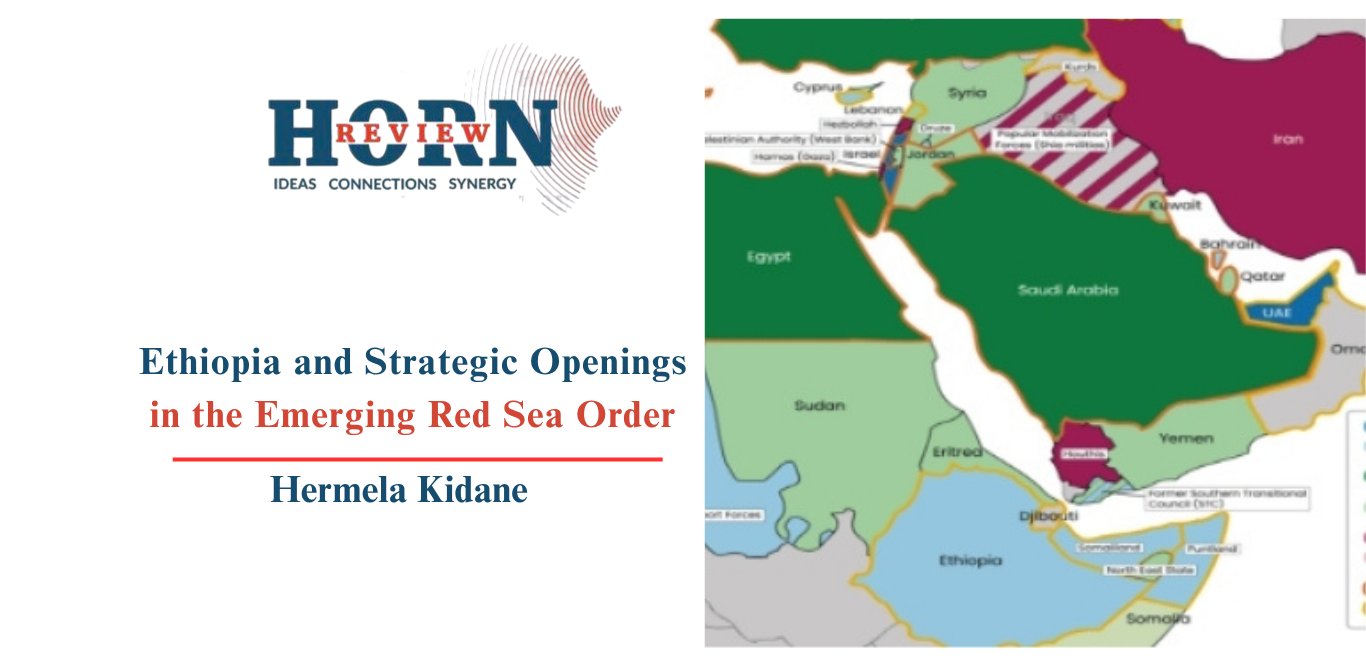
The presentation of a geopolitical map by Israeli Prime Minister Benjamin Netanyahu in mid October 2026 marked a notable shift in how regional alignments are publicly framed. The map placed Ethiopia alongside Greece and parts of India among territories considered friendly to the Israel and UAE grouping while grouping Egypt, Turkey and Saudi Arabia within a separate rival grouping. For Ethiopia this cartographic recognition carries practical weight. It reflects the erosion of a pattern of constraint centered on Egypt and signals a potential opening for more secure access from the Nile basin toward the Red Sea. This opening arises in an environment of heightened instability linked to Iranian and Houthi activities that are reshaping security around the Strait of Hormuz and Bab el-Mandeb.
Oman has long maintained a distinctive position as a neutral intermediary among Iran, Western capitals and Arab states. Recent developments associated with the broader confrontation involving Iran appear to be testing that neutrality. Analyses indicate that the Houthi movement having consolidated influence in parts of Yemen has directed attention eastward toward the Hadramout and Al-Mahrah governorates. Oman shares an extended and relatively porous border with these areas. As a result the possibility has grown that Omani territory could face increased use for logistical and dual use transfers supporting Houthi operations. Assessments further suggest that Oman’s limited military capacity relative to sustained pressure from Sana’a and Tehran raises the risk that its traditional autonomy could be gradually undermined through internal and border related pressures rather than conventional invasion. Such a path would diminish the mediating role Muscat has historically performed.
The Houthi expansion itself appears connected in part to efforts to secure supply lines and respond to Israeli linked activities in Somaliland. Israel’s formal recognition of Somaliland in late 2025 and subsequent reports of cooperation involving the port of Berbera and other coastal positions have altered local assessments. In this environment the Houthis movement eastward may aim both to protect maritime disruption capabilities at Bab el Mandeb and to complicate external presence along the Gulf of Aden approaches. Reports also note Israeli and UAE interest in establishing monitoring and defensive infrastructure in Berbera and on islands such as Socotra intended to counter threats to commercial shipping. Eritrea’s reluctance to align with these efforts combined with its focus on containing Ethiopian influence has left certain regional options narrower than they might otherwise have been.
These activities have reduced the intensity of external pressure that previously constrained Ethiopian maritime ambitions. Egypt occupied with supporting Saudi Arabia against Houthi missile and drone activity directed at Saudi and energy infrastructure has directed substantial attention and resources toward the Arabian Peninsula. This shift has limited Egypt’s capacity to project influence into the Horn of Africa with the same consistency as in prior years. The resulting space has renewed the strategic rationale of the January 2024 Memorandum of Understanding between Ethiopia and Somaliland. What once faced coordinated diplomatic resistance now operates in a context where external actors seeking reliable partners against Houthi naval disruption view Ethiopia’s demographic weight, institutional military structure and reported naval procurement efforts as assets. Ethiopia’s re establishment of naval capabilities and acquisition of vessels position it as a potential indigenous stabilizer in the Gulf of Aden and southern Red Sea.
For Ethiopia the core national interest remains consistent and legitimate reliable sovereign access to the sea that ends the vulnerabilities of landlocked status. Deployment of Ethiopian naval assets along relevant maritime routes would serve as a practical counter to any future attempt at maritime restriction in the Horn. It would also allow Ethiopia to contribute to the broader interest in secure commercial passage through Bab el-Mandeb an interest shared by multiple external parties. In this sense alignment with the security priorities reflected on the Netanyahu map functions less as ideological commitment and more as a pragmatic convergence of interests. Ethiopia’s value lies in its capacity to act as a stable regional anchor rather than a dependent partner.
The same map that identifies Ethiopia as friendly also associates the Rapid Support Forces in Sudan with the broader grouping. Ethiopia’s long term interests are best served by preserving independent judgment and avoiding entanglement in conflicts or relationships that could import instability or damage its international standing. Internal cohesion and careful management of relations with Eritrea constitute the most important foundations for translating external opportunity into durable national gain. External alignments can open doors they cannot substitute for domestic stability or strategic clarity about Ethiopia’s own priorities.
The current regional fragmentation therefore presents Ethiopia with a measurable window. The distraction of key regional actors the search by Israel and partners for dependable local capacity in the Horn and the formal recognition of Ethiopia’s potential place in emerging security arrangements combine to make secure maritime access more attainable than at any point in recent decades. Realizing that access will require disciplined diplomacy continued investment in naval and logistical capacity and a consistent focus on Ethiopian national interests above the agendas of any external coalition. The map has registered a change in regional perceptions. Ethiopia’s task is to convert that change into concrete sovereign outcomes along the corridor from the Nile to the Red Sea acting as a decisive regional actor rather than a passive beneficiary of others rivalries.
By Hermela Kidane, Researcher, Horn Review