For a landlocked nation, maritime access is rarely a matter of simple commerce; it is an existential variable that dictates economic survival, sovereign autonomy, and strategic viability. When a country’s geographic bottleneck is policed by a deeply militarized dictator with no clear economic vision, the resulting friction transcends ordinary bilateral disputes, elevating infrastructure into a primary casus belli. No regional dynamic illustrates this geopolitical chokehold more acutely than the volatile relationship between Ethiopia and Eritrea.
For decades, international observers have viewed Ethiopia’s quest for a seaport through a purely commercial lens, equating it as a matter of trade balances, shipping tariffs, and economic optimization. But as the Red Sea rapidly transforms into one of the most volatile, hyper-militarized maritime corridors on the planet, this perspective is dangerously obsolete. For Ethiopia, a nation of over 130 million people, permanent and reliable access to the sea is no longer just an economic aspiration. It is an existential imperative for national security and survival.
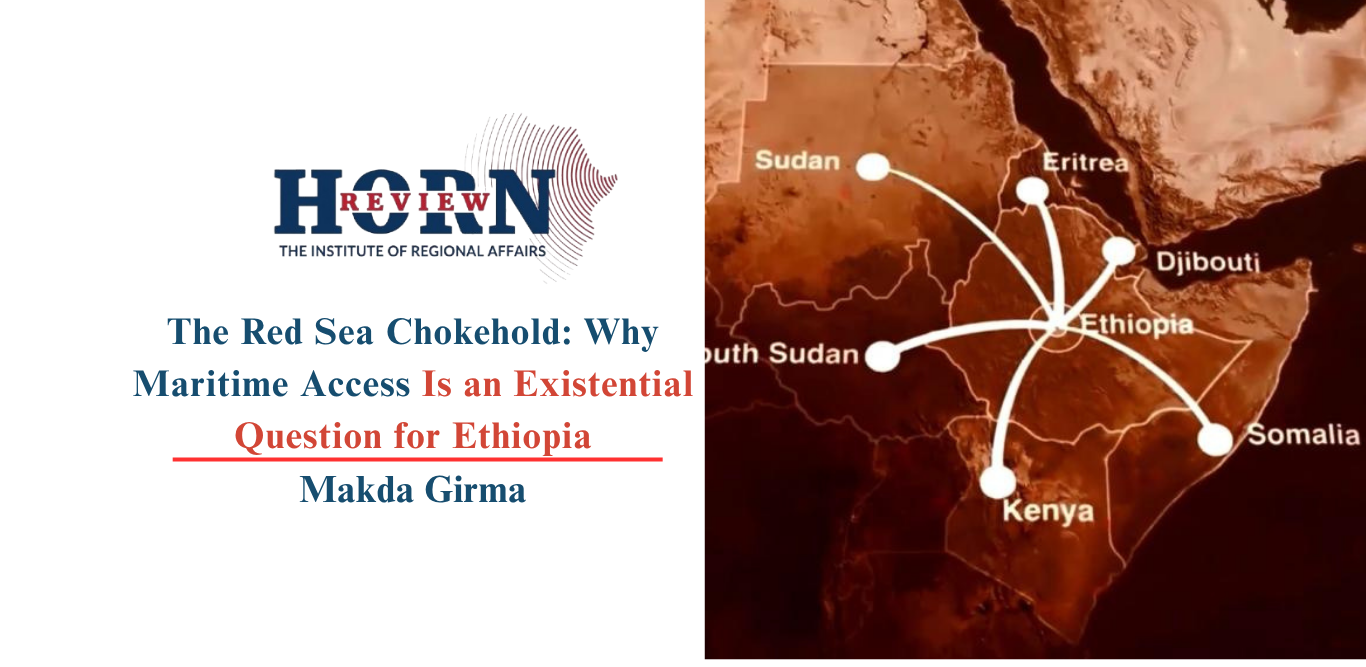
This assertion makes sense if viewed critically beyond a shallow attempt to reduce the looming danger to a simple expansionist ambition. One must always reconsider the facts on the ground while analyzing the conundrum in the Horn of Africa. Ethiopia, a country that is only 60 kms from the Red sea, is the most populous landlocked country in the world, whose significant portion of the population is youth and in active pursuit of job opportunities. According to recent IMF reports, the country is also home to the fastest growing economy in the entire sub-Saharan Africa. This is not merely a statistical trivia point framed for political purpose; rather it is a profound strategic vulnerability. Every piece of medicine, fuel, and technology that enters the country, and every single product exported to sustain its economy, depends entirely on the political whims and stability of its coastal neighbors.
Currently, Ethiopia relies on Djibouti for roughly 95% of its trade, paying upwards between $1.5 to $2 billion annually in port fees. This single door dependency is an economic chokehold. No sovereign state can safely anchor its future on a single corridor that is vulnerable to external influences. For countries like Ethiopia, the highly volatile security situation in its surrounding doubles down the impact, without mentioning the challenges associated with the growing number of military bases in the region. Should political instability or hostile foreign influence freeze the docks of Djibouti, the Ethiopian economy would collapse triggering an internal humanitarian catastrophe of unprecedented scale.
This is what makes Ethiopia’s concern undeniably legitimate and fuels its determination to address what it perceives as an existential threat through any means available. Just as a drowning person instinctively tries every possible option to stay afloat. A nation of 130 million people cannot be trapped in a geographic cage at the mercy of volatile, highly militarized autocratic coastal regime. A stable, secure Horn of Africa is impossible if its largest engine of population and economic powerhouse is kept in a state of permanent anxiety and artificial suffocation. Securing a permanent and dependable commercial and naval gateway to the Red Sea is not an empire building ambition or a luxury. For Ethiopia, it is becoming a simple, legitimate right to breath and it is the only way to bring peace and security in the entire Horn.
Encirclement, Exclusion, and Ethiopia’s Security Imperative
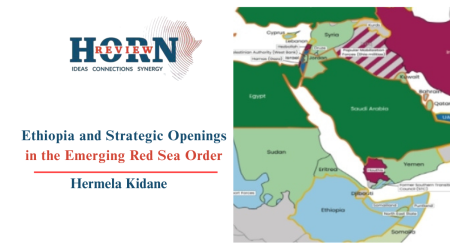
The urgency underpinning Ethiopia’s vulnerability has been sharply accelerated by the growing securitization of the Red Sea. What was once an open global trade route has become an arena for geopolitical chess, dominated by state coalitions and non-state actors from near and afar. Global and regional powers increasingly framing the vital corridor as a critical national security priority rather than just a commercial shipping lane. Driven by the need to safeguard chokepoints like the Bab el Mandab Strait from asymmetric threats, piracy, and regional conflicts, world powers have rapidly expanded their footprint through a dense concentration of military bases along the coastline. Djibouti has become the primary epicenter of this militarization, uniquely hosting overlapping naval facilities for both the United States (Camp Lemonnier) and China, alongside presence from France and Japan. Concurrently, nations like Russia have sought access, while regional actors such as Saudi Arabia, the UAE, Turkye, and Israel are all vying for influence via port logistics and security pacts along the broader Horn of Africa. While these external militaries provide short-term protection for international shipping, their crowding presence has ultimately transformed the Red Sea into a complex arena of overlapping geopolitical rivalries and proxy vulnerabilities, weakening the prospects for a self-sustaining regional security framework and brutally doubling down on Ethiopia’s unique vulnerability.
As if these threats are not enough, Ethiopia is alarmed by a recent development of an architectural web of alliances orchestrated explicitly to isolate it from its own geographic backyard. The creation of the El Alamein Joint Declaration by Egypt, Eritrea, and Somalia is not as a routine diplomatic pact, but a deliberate strategy of encirclement. By codifying that Red Sea governance belongs exclusively to coastal states, regional adversaries seek to permanently deny landlocked Ethiopia a seat at the table. Proofing that the danger felt by Ethiopia is eminent beyond perception and this could potentially leave the country to consider every option to break the chokehold before it is too late. The action Ethiopia should take would be determined based on the scale and level of threats the country is faced with, as the end justifies the means.
This encirclement is amplified by Egypt’s aggressive forward deployment rhetoric in the region. Driven by tensions over the Grand Ethiopian Renaissance Dam (GERD), Cairo is trying to weaponize Ethiopia’s landlocked status by forming tight military and logistical alliances with Eritrea and other states bordering Ethiopia. From the Ethiopian perspective, it is quite clear. Hostile foreign militaries are aspiring to setting up base camps right on its borders, holding the keys to the very maritime gates that feed the Ethiopian population. This is a recuring dangerous move. Previously, when multinational coalitions form to protect Red Sea shipping lines from asymmetric threats like piracy and militant groups, Ethiopia is routinely excluded. Addis Ababa is being forced to watch from the sidelines while its primary economic lifeblood is policed by an alliance sympathetic to its rivals. It is profoundly naïve to expect Ethiopia to remain passive while such a perilous scheme is being orchestrated to threaten the lives of its entire population and its very survival.
This reality underscores Ethiopia’s existential need to secure a reliable maritime corridor through which it can establish dependable port services and maintain a sovereign naval capability. Such a capability is essential to safeguard its national interests, protect its flag-bearing vessels, and guarantee its unhindered right to innocent passage under international law.
Ethiopia has consistently expressed its preference for cooperation and has repeatedly advanced frameworks centered on mutual economic integration, shared prosperity, and regional interdependence. However, while Ethiopia remains committed to peaceful collaboration, coastal states, particularly Eritrea, should recognize that legal technicalities or strategies aimed at regional containment cannot serve as sustainable solutions to a matter that directly concerns the livelihood, security, and future of such burgeoning population. When the survival and long-term interests of the entire nation is at stake, it is unrealistic to expect Ethiopia to remain passive. It will undoubtedly pursue all the necessary strategic measures to secure its legitimate access to the Red Sea and protect its vital national interests. In doing so, it will ensure that its sovereignty, security, and economic future are safeguarded both on land and at sea.
In conclusion, Ethiopia’s demand for access to the sea must be understood by its neighbouring countries as a legitimate strategic and economic and security concerns that deserves serious, constructive, and peaceful consideration. Why would Ethiopia’s quest to establish a military base along the Red Sea coast be considered unacceptable when countries from far beyond the region already maintain military bases and enjoy strategic access to the same coastline? Is it just to deny a neighbouring country with vital security and economic interests in the region an opportunity to negotiate such access, while external powers are permitted to establish a military presence there? The issue should not be approached through double standards or geopolitical rivalries, but through constructive dialogue, mutual respect, and negotiated arrangements that uphold the sovereignty of coastal states while addressing Ethiopia’s legitimate interests.
IGAD and the African Union must urgently take their leadership responsibilities by facilitating inclusive regional dialogue and developing a practical framework that addresses Ethiopia’s legitimate aspirations while safeguarding the legitimate interests of neighbouring states. External actors outside the Horn of Africa should be discouraged from pursuing their agendas by fostering hostility and division, rather than promoting cooperation, dialogue, and regional stability.
The international community, including the United Nations and other influential partners, should also intensify diplomatic engagement and support a negotiated settlement before the situation deteriorates into a dangerous confrontation with far reaching consequences for the Horn of Africa and beyond. The time to act is now: through timely diplomacy, mutual understanding, and political courage, regional leaders and international stakeholders can transform a potential source of conflict into an opportunity for cooperation, shared prosperity, and lasting peace. Failure to act decisively today risks allowing tensions to spiral into a devastating conflict that the region and the wider world can ill afford.
By Makda Girma, Researcher, Horn Review