The path of Ethiopia and Somalia relations since the mid 1980s offers a clear illustration of how conflict management mechanisms in the Horn of Africa have adapted to changing regional conditions. A comparison of the IGAD facilitated process that produced the 1988 agreement with the Turkish brokered Ankara Declaration of December 2024 reveals both the continuity of Ethiopia’s core security interests and the shifting diplomatic environment in which those interests are pursued.
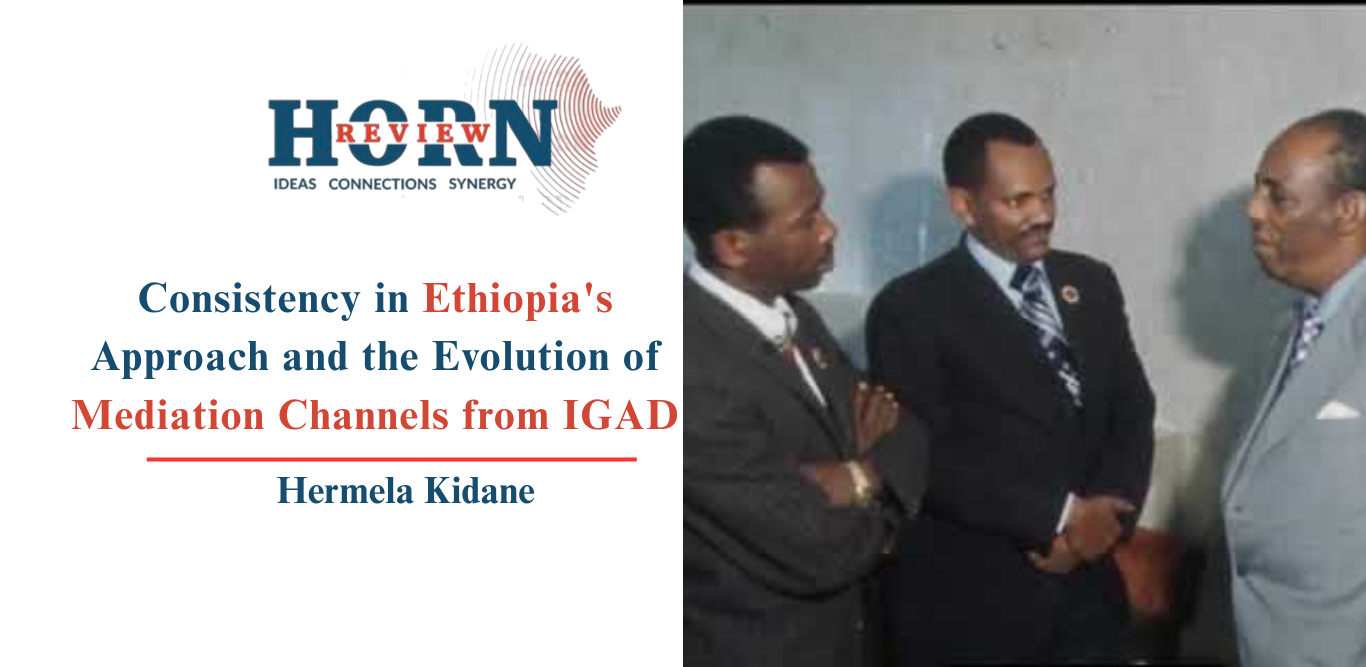
The confrontation that shaped the 1980s negotiations originated in the aftermath of the 1977–78 Ogaden War. Somalia continued to assert territorial claims over the Ogaden region of Ethiopia. Mutual destabilization compounded by internal pressures on both regimes produced a protracted period of tension short of renewed full scale interstate war. At the inaugural IGAD summit in Djibouti in January 1986 Ethiopian leader Mengistu Haile Mariam and Somali President Siad Barre established a joint ad hoc ministerial committee to examine the sources of bilateral discord. Although the committee was formally joint Ethiopia’s representatives led at key sessions by Foreign Minister Lt-Col. Goshu Wolde consistently prioritized recognition of existing international boundaries and the cessation of support for anti Ethiopian groups. This agenda setting approach shaped the substance of the talks. Somalia preferred to sequence confidence building measures troop disengagement restoration of diplomatic relations and prisoner exchanges before addressing the boundary question.
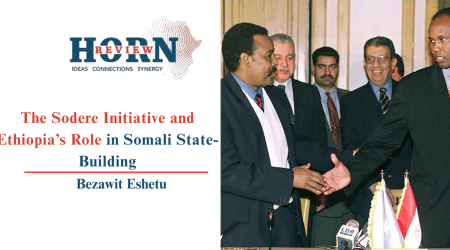
Three principal ministerial sessions took place in May 1986 August 1986 and April 1987. Progress remained limited because of these differing priorities. A further meeting between the two heads of state on the margins of the March 1988 IGAD summit in Djibouti provided the decisive political impetus. The resulting agreement formalized after talks in Mogadishu on 3 and 4 April 1988 restored diplomatic relations provided for the withdrawal of security forces from the border ended hostile propaganda terminated mutual support for insurgent groups and arranged the exchange of prisoners of war. Both sides agreed to discuss the boundary question at a later date. In practice the accord ended active Somali claims on the Ogaden and secured Ethiopia’s south eastern frontier freeing Ethiopian resources for pressing internal challenges. The 1988 agreement demonstrated that a regional structure could deliver tangible results when the parties shared a pragmatic interest in stabilizing a disputed border and when one party Ethiopia articulated its security requirements with clarity and consistency.
No open interstate war between Ethiopia and Somalia occurred after 1988. Somalia’s subsequent state collapse created a different environment. Under Prime Minister Meles Zenawi Ethiopia engaged constructively in efforts to rebuild Somali institutions helping to shape the transitional federal structure that emerged in the absence of a functioning central authority. This engagement responded first to immediate security concerns arising from the political space along Ethiopia’s border. At the same time it reinforced Ethiopia’s standing as a constructive regional actor. When the Islamic Courts Union consolidated control over much of southern Somalia in 2006 and posed a direct security challenge Ethiopia intervened in support of the Transitional Federal Government. Limited deployments earlier that year preceded full scale action in December 2006. That intervention reflected continuity rather than rupture Ethiopia acted to prevent hostile forces from establishing themselves in adjacent ungoverned space.
Serious bilateral tension re emerged only in 2024 following the January memorandum of understanding between Ethiopia and Somaliland concerning commercial and naval access to the sea. Somalia denounced the arrangement as a violation of its territorial integrity, recalled its ambassador and explicitly rejected African Union mediation efforts conditioning any engagement on Ethiopia’s retraction of the memorandum. This stance effectively limited the immediate scope for regional bodies including IGAD to facilitate dialogue on a dispute touching core sovereignty claims. The political climate had become more transactional with parties weighing concrete exchanges of interests rather than operating within the denser shared outlooks of earlier periods.
The Ankara Declaration of 11–12 December 2024 facilitated by Turkish President Recep Tayyip Erdoğan, produced a de escalation. The leaders reaffirmed respect for each other’s sovereignty, unity and territorial integrity. They acknowledged the potential benefits of Ethiopia’s assured access to and from the sea while affirming that any commercial arrangements would operate under the sovereign authority of the Federal Republic of Somalia. Technical negotiations were scheduled to begin no later than the end of February 2025 and to conclude within four months with Turkish facilitation available as needed. IGAD welcomed the declaration as a constructive step toward regional stability that external facilitation can complement rather than displace regional mechanisms when circumstances require additional diplomatic weight.
In the mid 1980s member state cohesion a bipolar international context that channeled regional diplomacy and a shared interest in border stability enabled IGAD to serve as an effective vehicle. Ethiopia acting within that institutional framework advanced outcomes consistent with its security requirements. Three decades later protracted state fragility in Somalia internal challenges across several Horn countries and the proliferation of external actors with diverse interests altered the diplomacy. Regional organizations continue to perform important roles however on certain sovereignty laden disputes their immediate leverage may be constrained.
Ethiopia’s posture has remained consistent across these decades safeguarding the south eastern frontier preventing the establishment of hostile actors in adjacent ungoverned spaces and securing reliable access to the sea. The instruments joint committees under a regional umbrella support for transitional governance calibrated military engagement when necessary and pragmatic external facilitation have adapted to changing conditions. In 2024 Turkish mediation filled a temporary institutional vacuum created by the particular constraints facing regional mechanisms on this sovereignty sensitive question. The 1988 accord and the 2024 Ankara Declaration both illustrate that durable progress depends less on the formal identity of the mediator than on the alignment of core interests and the availability of credible channels for dialogue.
By Hermela Kidane, Researcher, Horn Review