Federal authority in the Bay region is contracting in a manner that has now become difficult to reverse and the principal beneficiaries of that contraction are the forces aligned with the ousted South West State leader Abdiaziz Laftagareen whose fighters have retaken Buurhakaba and Qansahdhere and thereby threatened the road linking Baidoa to the capital in a development that exposes the limits of the federal government’s military reach and its political writ. What was intended as a decisive consolidation of Mogadishu’s control over Baidoa has instead produced a reversing contest in which the federal administration installed with Mogadishu’s backing is under sustained pressure, the political settlement that was supposed to follow Laftagareen’s resignation has not materialized and the ousted camp has demonstrated an ability to regroup, resupply and retake ground that Mogadishu’s forces cannot hold without local buy in which is the definition of collapsing federal authority rather than a single defeat.
The Bay is no longer a clean federal success story but an open contest in which the federal government’s authority has been reduced to a series of contested positions and uncertain alliances and the Laftagareen camp retains both initiative and territorial reach in a way that makes the region the most visible measure of Mogadishu’s limited capacity to impose outcomes through force alone in which a limitation that is as much political as it is military because the federal government has not built the local coalitions that would allow its authority to hold without constant external reinforcement.
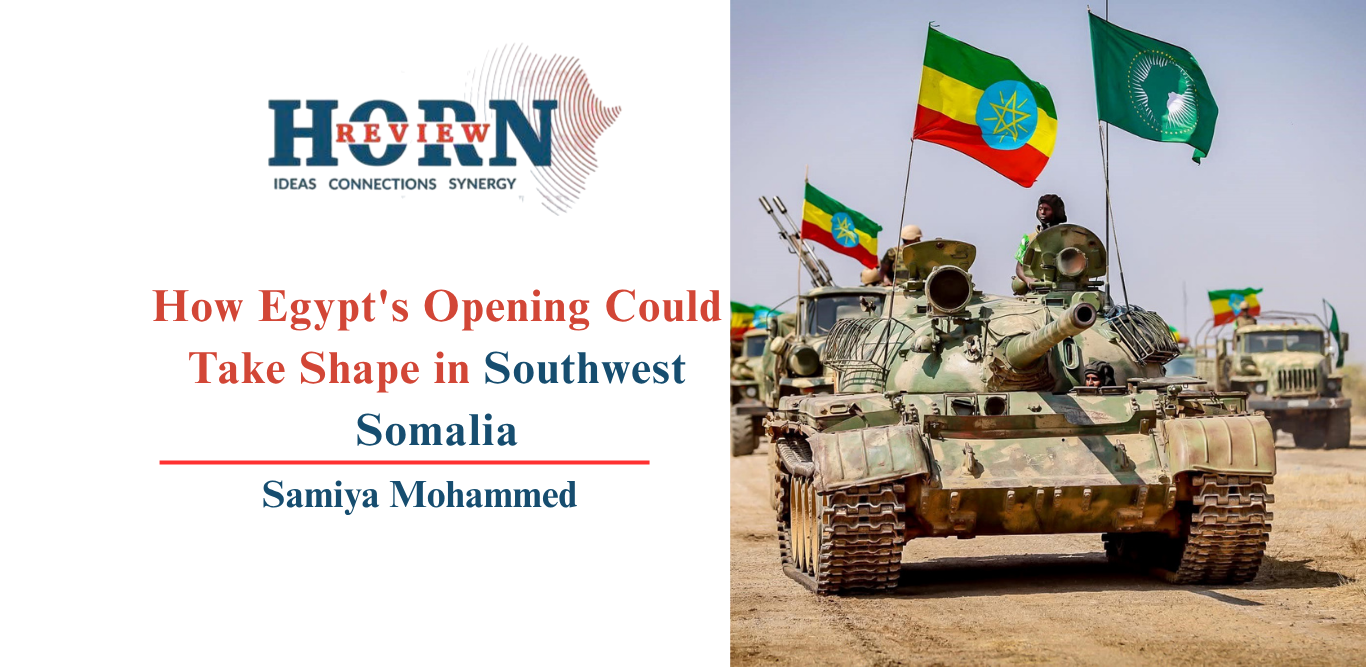
Ethiopia’s posture in this internal fight has been one of non enforcement, and Ethiopian forces deployed under AUSSOM in Sector 3 with positions in Baidoa and across the broader South West area have declined to convert their presence into an instrument of Mogadishu’s factional war despite pressure to do so. When the federal government sought to frame the Laftagareen aligned forces as functionally merged with Al-Shabaab and thereby bring Ethiopian troops into urban combat under a counterterrorism mandate, Ethiopia did not accept the brief and its distinction has been consistent in holding that Al-Shabaab is the common enemy while a Somali factional dispute over federal authority is a separate matter that Somali actors must resolve among themselves. That position is not a sign of weakness or retreat but a refusal to be recruited as the enforcer of one Somali faction against another and it preserves Ethiopia’s operational focus on the counterterrorism and frontier logic that has defined its long presence in the region while protecting Ethiopian forces from being drawn into a war whose political outcomes they cannot control and whose costs would be borne by Ethiopian soldiers rather than by those who set the mandate.
This restraint creates the space that Egypt is now occupying and has moved decisively to deepen its military and diplomatic presence in Somalia with an eye trained firmly on Ethiopia rather than on the stabilization of the Bay itself. Egypt’s AUSSOM contribution publicly framed as support for Somali stability and territorial integrity includes troops, armored vehicles and aviation assets with Egyptian officers and trainers preparing for an expanded presence and the deployment follows the elevation of Egypt and Somalia relations to a partnership and a bilateral military cooperation protocol while coinciding with loud rejection of any recognition of Somaliland in a diplomatic package that is carefully assembled to appeal to somalia’s own grievances.
On the surface this is a story of a state answering a request from Somalia and the African Union but beneath the surface it is opportunistic positioning against Ethiopia executed while Ethiopia declines to be drawn into Somalia’s internal fights and Egypt is not filling a space left by Ethiopian weakness so much as exploiting a political opening created by Ethiopian restraint and Somali fragmentation in a way that defines the nature of Egypt’s engagement as leverage seeking rather than stabilizing. The distinction matters because Egypt is not stabilizing the Bay where federal authority continues to erode but is instead positioning itself for influence over Somalia’s alignments at a moment when Mogadishu is actively shopping for partners and is prepared to offer access in exchange for support which makes the relationship a calculated exchange between two governments rather than a case of one state being preyed upon by another.
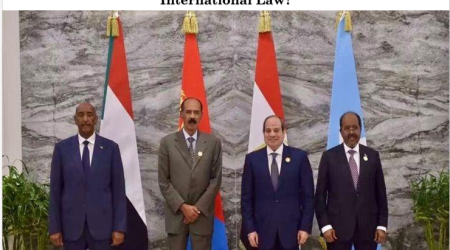
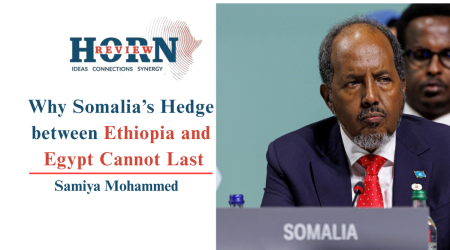
The quadrilateral framework announced at Alamein in October 2026 crystallizes this alignment in a form that is carefully worded but unmistakable in its structure and the summit bringing together Egypt, Sudan, Eritrea, and Somalia produced a document that affirms Somali unity and territorial integrity, rejects recognition of Somaliland, calls for sustainable AUSSOM funding and invokes international law on transboundary rivers without naming the dam or Ethiopia itself. The communiqué’s significance lies less in what it says than in what it establishes which is a standing consultative mechanism among four states whose interests converge on constraining Ethiopia’s regional position and which does so while Mogadishu sits at the table and Somalia’s participation days after President Hassan Sheikh Mohamud visited Ethiopia is a signal of hedging rather than rupture even as the direction of travel becomes clear in Egypt’s assembly of a diplomatic alignment that places Somalia in a camp structurally opposed to Ethiopian positions on the Red Sea and Nile. That mechanism can be activated as needed with Somalia formally inside it.
Egypt is forcing a formal break between Somalia and Ethiopia directly because the more effective strategy is gradual and deniable in a way that deepens military cooperation, training arrangements and diplomatic coordination while Ethiopia stays out of Somalia’s internal wars and thereby allows Egypt to gain leverage without bearing the costs of a rupture. Each Egyptian training team, each bilateral defense consultation and each joint declaration adds a layer of dependency and alignment that narrows somalia’s room to move toward Ethiopia and the base presence in the Southwest whether framed as AUSSOM infrastructure or bilateral training facilities serves the same purpose by establishing a persistent presence with political consequences even if it is not a formal base in the way that Djibouti hosts foreign forces. Egypt is using Somalia’s weakness, its fragmented federal authority and its need for security partners to build a position that would be far more difficult to achieve through direct confrontation with Ethiopia and this is opportunistic positioning against Ethiopia rather than pure altruism toward Mogadishu because Egypt’s interests are not Somali interests and the alignment is transactional on both sides in that Somalia needs security partners and diplomatic cover while Egypt needs a presence and a vote in regional forums where Ethiopia’s positions are contested.
The risk is not hypothetical and further Egyptian military presence even under the AUSSOM umbrella increases the chance that Somalia becomes a sharper proxy arena in which external patrons seek local clients and local factions seek external patrons in a mutually reinforcing dynamic. The Bay region is already a contested space in which federal forces, Laftagareen aligned fighters and Al Shabaab all operate and introducing a more pronounced Egyptian role through training, advisory support or direct security cooperation with Mogadishu adds another layer of external interest to an already crowded field in which the lines between counterterrorism, factional politics and external alignment are becoming harder to distinguish. Egypt’s priority is the constraint of Ethiopia’s regional influence, Red Sea approach and the downstream leverage on Nile questions and Somali stability is a means to those ends rather than the end itself which is not altruism but strategy and a strategy that carries inherent escalation risks when pursued in a fragmented state with multiple armed factions.
Ethiopia’s position remains structurally sound precisely because it refuses to be drawn into the enforcement role that Mogadishu has sought to assign it and Ethiopia maintains its AUSSOM presence on counterterrorism terms, declines to fight Laftagareen aligned forces under a stretched mandate and does not treat Somali factional politics as a loyalty test in a way that protects Ethiopia from being blamed for the outcome in Baidoa while preserving its relationships across Somali regions and keeping its military focus on the threat that matters most. That posture also denies Egypt the clean narrative it would prefer of Ethiopia as the destabilizing actor and Egypt as the stabilizing partner and Ethiopia’s restraint is not passivity but the refusal to accept a role that serves another state’s political agenda by declining to enforce Mogadishu’s factional preferences while keeping its options open and preserving its credibility as a counterterrorism partner. By not being drawn into the Bay’s factional contest, Ethiopia avoids the trap of being held responsible for a political outcome it did not design and that is a defensible and sustainable position that keeps relationships with Somali actors intact even as Mogadishu’s authority in the region erodes and even as Egypt builds the relationships that will shape Somalia’s alignments for years to come.
The Egyptian alignment and Cairo’s deepening presence in Somalia are connected developments in a single regional shift in which Egypt is using the moment to build a coalition of convenience toward Ethiopia and Somalia is being drawn into that coalition not through coercion but through the offer of military support and diplomatic attention that Mogadishu has actively sought and bargained for. Egypt gains leverage without yet forcing a formal rupture between Somalia and Ethiopia but the accumulation of Egyptian military presence, training relationships, and diplomatic frameworks makes that rupture more likely over time and the danger is not a single break but the slow hardening of lines until Mogadishu’s room for independent balancing disappears in an outcome that would serve Egypt interests without necessarily serving Somalia’s. The Bay is the test case in which federal authority is collapsing in favour of the ousted Laftagareen camp and Egypt is quietly building the relationships and presence that will shape Somalia’s alignments and the federal government’s weakness in the Bay is the condition that makes Egypt’s opening possible. The question is not whether Egypt is acting opportunistically because it is but whether the Bay’s contested status becomes the template for a wider proxy competition that Somalia’s own political class has helped to create and that no external partner will resolve on Somalia’s behalf.
By Samiya Mohammed, Researcher, Horn Review