
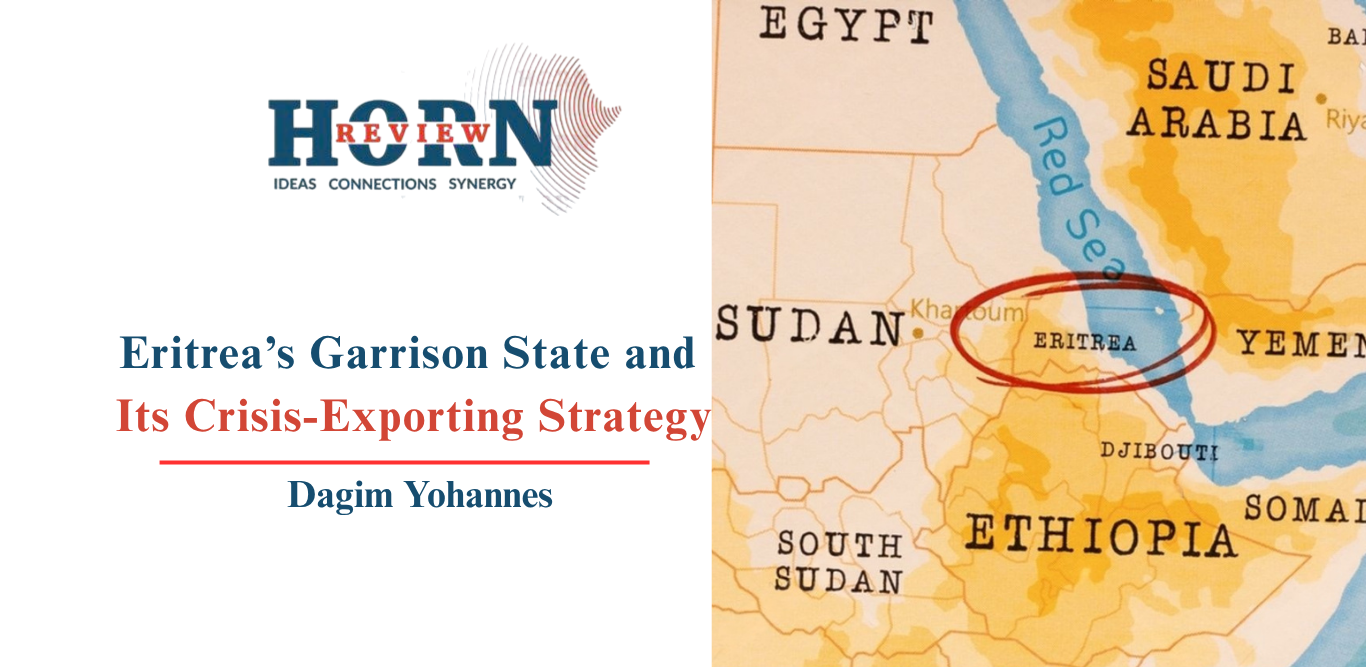
Eritrea’s Garrison State and Its Crisis-Exporting Strategy
The Eritrean People’s Liberation Front did not simply inherit a state in 1991; it institutionalised the operational repertoire of a clandestine liberation movement that had survived by cultivating external alliances, opening secondary fronts, and treating neighbouring territories as usable strategic depth. Once formalised as the People’s Front for Democracy and Justice under Isaias Afwerki, those habits hardened into a durable foreign-policy instrument. Across three decades the regime has managed threats to its survival by projecting instability outward, supporting armed opposition movements, offering sanctuary and training, and, when opportunity or necessity dictated, inserting its own forces beyond its borders. This is not random opportunism. It is a structural pathology of a garrison state: a chronically resource-poor, diplomatically isolated actor that systematically weaponises regional chaos as a form of asymmetric deterrence against larger neighbours, above all Ethiopia. In the language of subaltern realism, Asmara converts its own weakness into a source of leverage by ensuring that no regional hierarchy can consolidate without first absorbing the costs of Eritrean-sponsored disruption.
The logistical foundation of this strategy has always required operation beyond conventional state-to-state channels. During periods of United Nations arms embargoes, Eritrean networks constructed procurement pipelines that reached into the residual defence industries and weakly regulated stockpiles of post-communist Eastern Europe. Intermediary companies, third-country end-user documentation and commercial cut-outs exploited regulatory arbitrage in grey markets still flush with Cold War inventories. Small arms, ammunition and, on occasion, heavier equipment were acquired not merely for domestic rearmament but for redistribution to preferred partners in Ethiopia, Sudan or Somalia. The same logic appeared in the more distant Sri Lankan case. Eritrean facilitation of arms transfers, including the use of sovereign end-user certificates, allowed Chinese weapons to reach the Liberation Tigers of Tamil Eelam. These were not peripheral commercial activities. They constituted the shadow logistics that kept the proxy architecture solvent when formal international restrictions sought to starve it of matériel. Geography reinforced the pattern. A state with limited industrial capacity but residual sovereign documentation and diaspora commercial networks could monetise its position in illicit supply chains precisely because it remained outside the regulatory reach of major powers.
At the centre of the architecture stands Ethiopia. The pre-independence collaboration between the EPLF and the Tigray People’s Liberation Front against the Derg created shared military networks that proved brittle once both movements held state power. The collapse of that relationship into the 1998–2000 border war marked the decisive turn. Confronted with a conventional military contest it could not win on the battlefield alone, Asmara opened additional fronts by providing sanctuary, training and material support to Ethiopian armed groups whose grievances predated the interstate conflict. Records establish that Eritrea supplied arms, training and financial assistance to the Ogaden National Liberation Front as part of its military strategy during the war, with the explicit aim of forcing Ethiopia to redeploy forces from the northern front. Parallel support for elements of the Oromo Liberation Front followed the same logic.
The same logic of secondary fronts reappeared after the 2018 rapprochement unravelled. As Ethiopia under Abiy Ahmed publicly pursued maritime access, framed by Addis Ababa as a commercial and developmental necessity and perceived in Asmara as a potential threat to Eritrean sovereignty, relations deteriorated. Eritrea responded by cultivating relationships with Ethiopian armed opposition groups. It established contacts and provided support to hardline elements within the TPLF, the very force it had fought against only a few years earlier, and extended facilitation to certain Amhara Fano factions. Independent reporting has documented these contacts, converging interests, and logistical assistance. The pattern is consistent with the established repertoire: when conventional pressure or diplomatic isolation proves insufficient, Asmara opens or reactivates internal fronts inside Ethiopia in order to keep its larger neighbour contested and constrained.
Sudan supplies the purest illustration of reciprocal proxy debt and its later conversion into mediation leverage. The 1994 rupture in diplomatic relations rapidly evolved into mutual sponsorship of each other’s armed opponents. Eritrea hosted and armed components of the National Democratic Alliance, including the Sudan People’s Liberation Army, the Sudan Alliance Forces and the Beja Congress, providing bases, training and, in some operations, tank crews and reconnaissance units on Eritrean territory. Sudan responded by sheltering Eritrean Islamic Jihad and residual Eritrean Liberation Front factions. Human Rights Watch documented both directions of the exchange with unusual clarity, including the physical presence of opposition fighters and Eritrean army units near the border. What distinguishes the case is the subsequent monetisation of that military relationship: Eritrea’s mediation of the 2006 Eastern Sudan Peace Agreement demonstrated that armed clients could be converted into diplomatic capital when the strategic environment shifted.
The same instrumental approach remains fully operational in the current Sudanese civil war. Since late 2023 Eritrea has hosted and facilitated training camps on its territory for fighters drawn largely from eastern Sudanese communities, Beja, Beni Amer and related groups. Multiple Sudanese sources, including commanders and the leadership of the Popular Front for Liberation and Justice, have confirmed the existence of these camps in the Gash-Barka region. Several eastern Sudanese movements have trained there before deploying in support of the Sudanese Armed Forces. Discussions between Abdel Fattah al-Burhan and Isaias Afwerki have explicitly addressed the future of these Eritrea-trained forces. The pattern is unambiguous: Eritrea is once again using its territory to prepare and project Sudanese armed actors whose deployment serves Asmara’s regional calculations. Reciprocal destabilisation continues to function as mutual leverage that neither side can easily abandon without conceding advantage.
Somalia functioned as the asymmetric containment of Ethiopian strategic depth. United Nations monitoring Group reporting, particularly the 2011 assessment, traces Eritrean engagement from support for factions associated with Hussein Mohamed Farah Aydid through political and material assistance to the Islamic Courts Union and the subsequent Asmara-based Alliance for the Re-liberation of Somalia. The explicit rationale recorded by the monitors was the desire to complicate Ethiopian military and political influence inside Somalia. Early UN Monitoring Group reports alleged that Eritrea provided financial and other assistance to Somali armed opposition groups, including individuals identified as members of Al-Shabaab. However, subsequent investigations repeatedly failed to establish conclusive evidence of continued Eritrean support for the organisation, and the Security Council lifted its sanctions on Eritrea in November 2018. The evidence therefore supports distinguishing the documented history of Eritrean involvement with Somali opposition movements from the narrower and contested allegation of sustained state support for Al-Shabaab. The more recent decision to train thousands of Somali National Army personnel for the federal government underscores the regime’s capacity for rapid realignment once the primary adversary or available partners change. Continuity resides less in the identity of the clients than in the readiness to treat Somali political space as an arena for constraining Ethiopia’s regional reach.
The Democratic Republic of the Congo demonstrates transnational expeditionary reach. Eritrea contributed special forces to the Rwandan-led regional campaign that overthrew Mobutu Sese Seko in 1996–97. Secondary accounts describe a contingent that accompanied the Alliance of Democratic Forces for the Liberation of Congo across more than a thousand kilometres under severe logistical strain. The contribution was secondary within a coalition dominated by Rwanda and supported by Uganda and later Angola, yet it confirms a willingness to project force far beyond Eritrea’s immediate security perimeter when a favourable regional alignment existed. No equivalent confirmed deployment has been documented for the Second Congo War. Participation in a successful coalition operation is established; independent expeditionary capacity on a larger scale is not. The case nonetheless illustrates that the toolkit was never geographically bounded by the Horn.
The Red Sea has furnished both the earliest and the most consequential demonstrations of Eritrea’s willingness to project force and to monetise its geography within a wider security complex. In December 1995, only two years after independence, Eritrean forces launched a rapid amphibious operation against Greater Hanish, one of the disputed islands controlling approaches to the Bab el-Mandeb. The three-day engagement expelled a Yemeni garrison and asserted a claim later rejected by the Permanent Court of Arbitration. Two decades later the same coastline became a convertible strategic capital of a different kind. From 2015 the United Arab Emirates developed Assab into a major expeditionary base supporting coalition operations in Yemen. An expanded airfield, purpose-built dock and logistics infrastructure enabled the transfer of armour, aircraft and personnel across the Red Sea. Eritrea extracted political and material returns, including investment and the indirect diplomatic facilitation that helped produce the 2018 rapprochement with Ethiopia. When Emirati priorities shifted and the base was partially dismantled, Asmara again recalibrated. In both episodes, control of Red Sea real estate was treated not as an end in itself but as an instrument for extracting leverage from the instability of others and for building diplomatic shields amid competing Gulf, Turkish and Egyptian interests in the strait.
Across these theatres five interlocking mechanisms recur. Reciprocal destabilisation is most explicit in the 1990s exchange with Sudan. The deliberate opening of additional fronts is clearest during the Ethiopia–Eritrea war. The cultivation of strategic depth through armed partners, hosting, training and arming groups that share a common adversary without necessarily exercising full operational command appears repeatedly. Bargaining leverage emerges when military relationships are later converted into mediation. Underlying all of them is the regime-survival logic of externalisation. A closed, highly militarised political system whose internal political economy rests on indefinite national service, state-controlled economic extraction and a permanent siege mentality cannot transition to normal state-to-state relations without jeopardising the control mechanisms that keep the garrison state intact. Peace, in this institutional configuration, is an existential threat. Path dependency therefore locks the regime into continued crisis exportation even when the short-term tactical gains are exhausted.
The strategic outcomes have been mixed and often self-defeating. Short-term tactical gains, distraction of Ethiopian forces, leverage over Khartoum, participation in the overthrow of Mobutu, conversion of Assab into temporary geopolitical rent, were purchased at the price of prolonged regional instability, reciprocal support for Eritrean opposition groups, and successive rounds of international sanctions. The core security dilemma with Ethiopia has not been resolved; the recent crisis illustrates how the same logic can escalate from proxy competition into the risk of interstate war. Neighbouring societies have absorbed the heaviest costs in displacement, the militarisation of local politics, and the prolongation of conflicts that might otherwise have been contained.
The regime in Asmara, and those external actors that continue to furnish it diplomatic cover, economic oxygen or military cooperation, therefore occupy a structurally dangerous position in the Horn of Africa and the Red Sea security complex. A political system that treats regional instability as usable terrain rather than a threat to be contained will continue to export crisis for as long as the incentives remain unaltered. The historical record is no longer ambiguous. The EPLF/PFDJ system has repeatedly chosen to manage its own insecurity by destabilising others. That choice is rational within an irrational system: a garrison state whose internal political economy cannot survive genuine de-escalation. As long as external powers continue to treat Asmara as a transactional rent-collector along the Red Sea, the regime faces no meaningful external penalty for maintaining its garrison architecture. Until the cost-benefit structure that sustains this strategy is shattered by coordinated regional pressure, the cycle will simply repeat.
By Dagim Yohannes, Researcher, Horn Review

RELATED
Posts
19
Oct
Eritrea's Incursion and Ethiopia’s Right to Self-Defense: Where Does the Law Stand?
Ethiopia’s recent letter to the United Nations Security Council...
19
Oct
How Egypt's Opening Could Take Shape in Southwest Somalia
Federal authority in the Bay region is contracting in...
19
Oct
Does the El Alamein Declaration's Claim of Exclusive Red Sea Governance Hold Under International Law?
A detailed analysis by Surafel Tesfaye on the El Alamein...
18
Oct
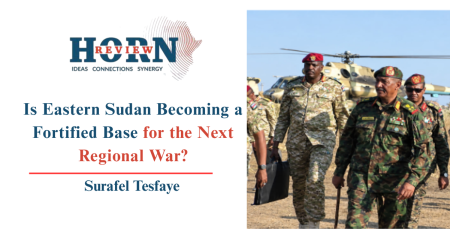
Is Eastern Sudan Becoming a Fortified Base for the Next Regional War?
General Abdel Fattah al-Burhan's recent inspection of the 11th...
18
Oct
The Legal Paradoxes in Eritrea’s AU Complaint to ReInstate its Mission
Ethiopia’s expulsion of ten Eritrean diplomats from Addis Ababa marked...
17
Oct
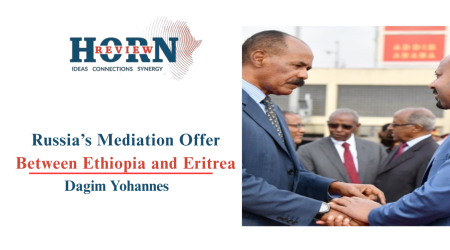
Russia’s Mediation Offer Between Ethiopia and Eritrea
Russia’s decision to offer a platform for contacts between Ethiopia...
15
Oct
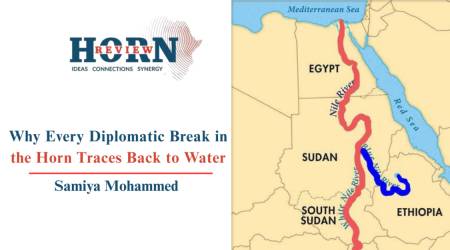
Why Every Diplomatic Break in the Horn Traces Back to Water
Analysis of instability in the Horn of Africa and...
15
Oct
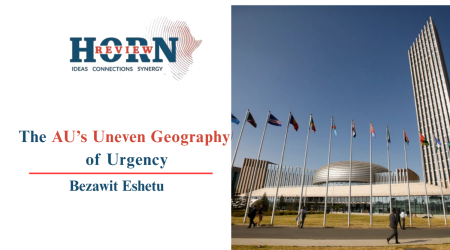
The AU’s Uneven Geography of Urgency
Since Mahmoud Ali Youssouf assumed leadership of the African Union...
15
Oct
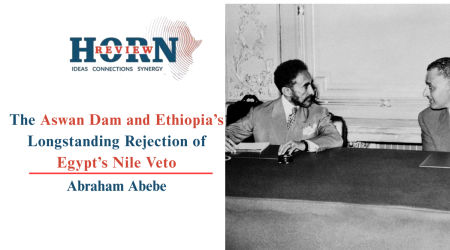
The Aswan Dam and Ethiopia’s Longstanding Rejection of Egypt’s Nile Veto
On 29 May 1956, before construction of the Aswan High...
15
Oct
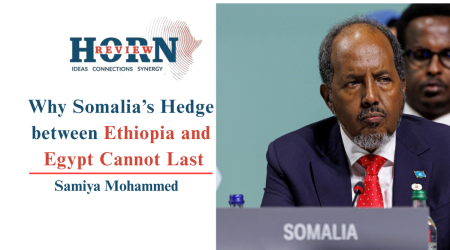
Why Somalia’s Hedge between Ethiopia and Egypt Cannot Last
The public position articulated by Somalia’s Deputy Foreign Minister Hassan...