
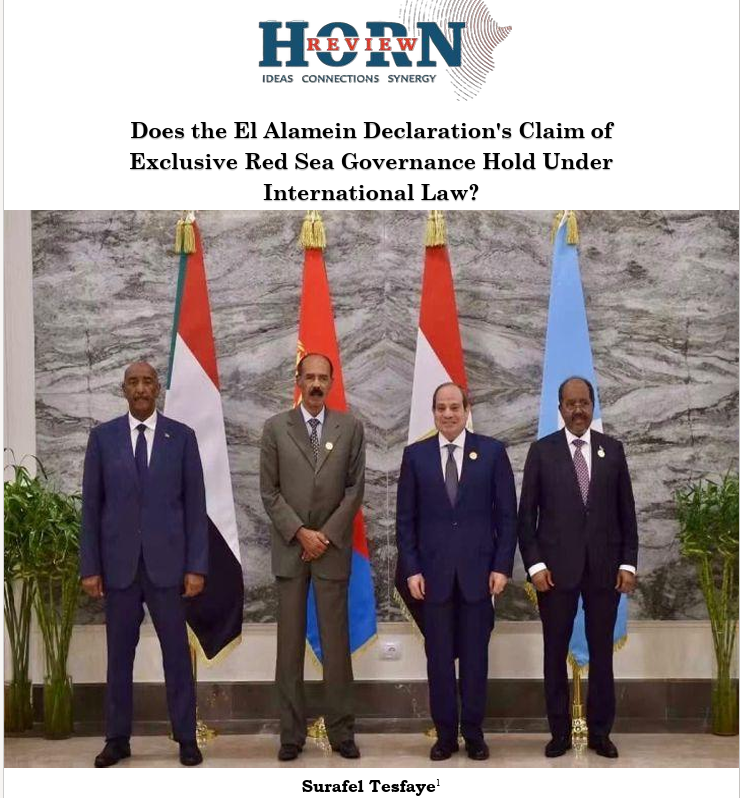


Djibouti’s Foreign Policy Change: From Survival Strategy to Interdependent Regionalism
This paper examines Djibouti’s evolving foreign policy and the deepening...

Can France Be Dragged Into the Sudan War?
Déby's Omnibalancing Strategy, the Russia-France competition, and the Limits...
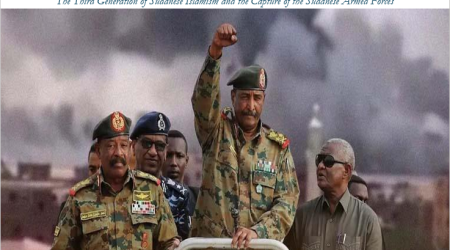
Praetorians of the State: Inside the Ideology of Political Islam in Sudan
The Third Generation of Sudanese Islamism and the Capture...
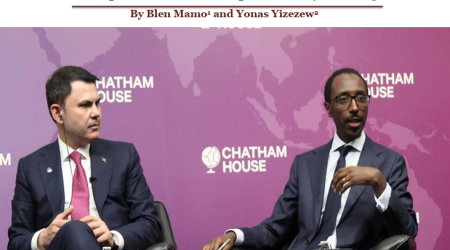
The Politics of Policy Formation and Advancing Ethiopia's Place in European Policy Making
European countries' policymaking is shaped through interconnected institutional structures, political...
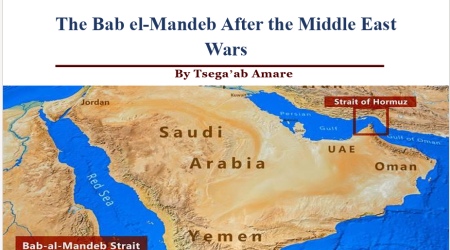
The Bab el-Mandeb After the Middle East Wars
The strait that connects the Red Sea to the Gulf...
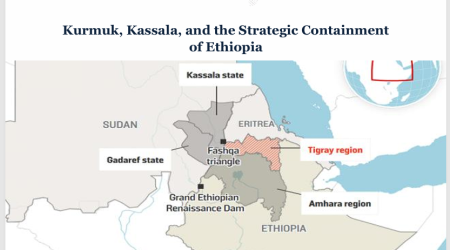
Kurmuk, Kassala, and the Strategic Containment of Ethiopia
What appears to be a battle for Kurmuk may in...
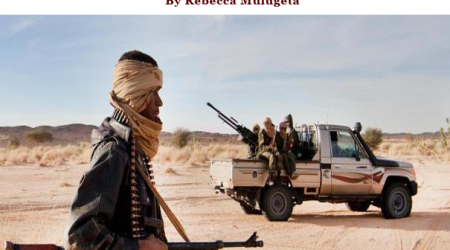
The Sahel’s Transformation and the Architecture of Perpetual Crisis: A Comprehensive Security Analysis
Comprehensive analysis on the Sahel by Horn Review's Rebecca Mulugeta:...
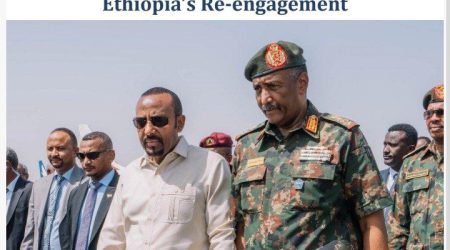
Sudan’s War and the Imperative of Ethiopia’s Re-engagement
A policy brief examining why Ethiopia can no longer afford...
Sudan War Report
A comprehensive mapping of Sudan’s war: factions, foreign influence, proxy...

The Four Meta‑Crisis and Ethiopia’s Readiness: Toward Durable State Formation
The Age of Meta‑Crisis
By Blen Mamo The contemporary international...