
Eritrea’s Incursion and Ethiopia’s Right to Self-Defense: Where Does the Law Stand?
Ethiopia’s recent letter to the United Nations Security Council places important legal principles at issue about the prohibition on the use of force, the protection of territorial integrity and the conditions under which a state may invoke its right to self-defense under Article 51 of the UN Charter. The letter characterizes the deployment of Eritrean regular forces, including mechanized units, up to 60 kilometers into the sovereign territory of northern Ethiopia’s Tigray region. This is described as a blatant act of aggression that leaves Ethiopia with no option other than to defend itself. The legal foundations rest on the documented claims of organized cross-border penetration by regular forces and the sequence of diplomatic efforts for more than a year. This was also culminated with high-level briefings of UN officials on 8 October 2026 itself, the applicable Charter provisions and customary international law, relevant arbitral and judicial precedents, and the broader pattern of related violations.
Article 2(4) of the UN Charter establishes the general prohibition on the threat or use of force against the territorial integrity or political independence of any state. Article 51 provides the principal exception to that article. It recognizes the inherent right of individual or collective self-defense in response to an armed attack until the Security Council has taken measures necessary to maintain international peace and security. Under Article 51, measures taken in self-defense must be reported to the Security Council and do not prejudice the Council’s authority to act under Article 24. Ethiopia has met this procedural requirement by sending its October letter to the Council members, formally bringing the matter before the body responsible for maintaining international peace and security.
Customary international law, repeatedly affirmed by the International Court of Justice, requires that any exercise of the right of self-defense also satisfy the twin criteria of necessity and proportionality. In the Nicaragua case (1986), the International Court of Justice explicitly affirmed these criteria as binding customary law. The Court held that the cross-border invasion by a state’s regular armed forces constitutes the classic form of an “armed attack” required to engage the right of self-defense.
Additionally, gravity is assessed by the scale and effects of the operation. Subsequent jurisprudence, including the ‘Oil Platforms’ case (Islamic Republic of Iran v. United States of America’) and the ‘Armed Activities on the Territory of the Congo’ case (Democratic Republic of the Congo v. Uganda), has confirmed that an armed attack requires a certain threshold of gravity and that attribution to the responsible state must be established.
The factual claims advanced by Ethiopia meet the threshold for an armed attack. According to the Foreign Minister’s letter, residents, independent monitors and conflict trackers, Eritrean forces advanced up to 60 kilometers into Tigray, with mechanized units observed in and around Adigrat and other locations beyond the international frontier. The reported scale of the incursion, involving regular armed forces, heavy weaponry and substantial personnel organized into divisions satisfy the gravity threshold for an armed attack. It constitutes an invasion or attack by the armed forces of one state upon the territory of another.
The reported incursion, involving the penetration of another state’s territory by regular armed forces, falls within the conduct addressed by the international law on aggression. Under Article 3(a) of UN General Assembly Resolution 3314 (XXIX) of 1974, the invasion or attack by one state’s armed forces against another state, including any resulting military occupation, constitutes an act of aggression. Article 1 defines aggression as the use of armed force against another state’s sovereignty, territorial integrity or political independence, contrary to the UN Charter. Under Article 2, the first use of armed force in violation of the Charter constitutes prima facie evidence of aggression, although the Security Council may determine otherwise in light of the relevant circumstances. Article 5(1) provides that political, economic, military or other considerations cannot justify aggression.
Attribution is a further essential element in establishing state responsibility. The reported conduct is attributed to Eritrea on the basis that the forces involved are identified as regular Eritrean army units operating in uniform, organized into infantry and mechanized divisions and equipped with heavy weaponry. Under Article 4 of the International Law Commission’s 2001 Articles on State Responsibility for Internationally Wrongful Acts, the conduct of any state organ, including its armed forces, is attributable to that state. Ethiopia has documented this military presence over an extended period. The sequence of formal diplomatic communications preceding Ethiopia’s October 2026 letter provides further context for assessing the reported escalation.
In June 2025, Foreign Minister Gedion Timothewos wrote to the US Secretary of State Marco Rubio, accusing Eritrea of repeated provocations, territorial occupation and cooperation with a TPLF faction and other armed groups to prepare major offensive operations. He described these actions as violations of international law, called for Eritrean troop withdrawal and an end to support for subversion, and reaffirmed Ethiopia’s preference for peaceful dialogue.
In early October 2025, Foreign Minister Gedion Timothewos wrote to the UN Secretary-General, accusing Eritrea of preparing for war by funding, mobilizing and directing armed groups inside Ethiopia including TPLF. He warned that Ethiopia’s policy of maximum restraint would not continue indefinitely, while reiterating its willingness to negotiate in good faith. On 7 February 2026, a formal letter to his Eritrean counterpart detailed Ethiopia’s further allegations of Eritrean forces occupying Ethiopian territory along parts of the shared border. It also mentioned conducting of joint military maneuvers with rebel groups and providing material support to armed organizations operating inside Ethiopia. It characterized these developments as acts of outright aggression, demanded the immediate withdrawal of Eritrean troops.
These successive communications demonstrate a consistent pattern. Ethiopia repeatedly identified the presence of foreign forces on its soil, documented the support given to proxy armed groups, and demanded withdrawal while simultaneously offering negotiations. Throughout this period Ethiopia publicly emphasized patience, de-escalation and the preference for third-party mediation and facilitation. The most recent diplomatic efforts occurred on 8 October 2026 itself. Foreign Minister Gedion Timothewos met with United Nations Deputy Secretary-General Amina J. Mohammed, briefed her on Eritrea’s continued aggression and its implications for regional peace and security. It also emphasized the urgent need for a clear and principled United Nations response. It again called for the immediate withdrawal of Eritrean forces from Ethiopian territory and reaffirmed Ethiopia’s right to defend its sovereignty and territorial integrity in accordance with international law. On the same day, State Minister Berhanu Tsegaye briefed three senior UN officials on Eritrea’s alleged military involvement along Ethiopia’s northern border and urged the UN to condemn the violations of Ethiopian sovereignty and international law.
Only after this sustained sequence of formal protests, public appeals, and high-level briefings, and only after the reported major advance of mechanized units deep into Tigray, did the Foreign Minister conclude that Ethiopia was left with no other option. This sequence demonstrates that the use of force strictly satisfied the customary international law requirement of necessity, serving as a last resort of individual self-defense after all available peaceful means had been exhausted or proved impracticable. It also aligns with the Charter’s emphasis on the peaceful settlement of disputes under Article 2(3) and the obligation under Article 33 to seek a solution by negotiation, enquiry, mediation, conciliation, arbitration, judicial settlement, resort to regional agencies or arrangements, or other peaceful means of their own choice.
In this context, under Article 51 of the UN Charter and the customary international law principles of necessity and proportionality, Ethiopia’s right to self-defense extends to measures necessary to repel an armed attack. This situation could also go further in order to prevent its recurrence. As Eritrean forces remain entrenched in Ethiopian territory or continue to pose a threat of renewed incursions, Ethiopia has grounds to maintain a temporary buffer zone, provided its scope and duration remain necessary and proportionate to the threat. This concern is compounded by Eritrea’s support for armed groups operating inside Ethiopia. Eritrean territory could serve as a sanctuary from which these groups reorganize, strengthen their military capabilities and prepare attacks against the Ethiopian state. For instance, if elements of the Tigray Defense Forces or any other armed group were to use Eritrean territory as a sanctuary, this could sustain their capacity to threaten Ethiopia’s security.
In addition, the Eritrea–Ethiopia Claims Commission’s Partial Award on Jus ad Bellum of 19 December 2005 provides a relevant precedent involving the same parties. Established under the 2000 Algiers Agreement, the Commission held that Eritrea violated Article 2(4) of the UN Charter by using armed force on 12 May 1998 and the following days to attack and occupy Badme, which was then under peaceful Ethiopian administration. It rejected Eritrea’s claim of self-defense, finding that the use of force to seize territory under the other party’s peaceful administration was unlawful, even in the context of a disputed border. This award provides a significant legal reference for assessing the current concerns. This precedent reinforces Ethiopia’s right to respond to renewed Eritrean incursions subject to international law.
Beyond the core self-defense claim, the position draws additional strength from fundamental principles of sovereignty and non-intervention. The inviolability of internationally recognized borders and the right of a state to exclude foreign military forces from its territory are foundational under customary international law and the UN Charter. Organized advances of the scale reported strengthen the case for defensive measures. The material support by Eritrea to domestic armed groups, including joint maneuvers and the reported hosting of proxy forces constitutes unlawful intervention in Ethiopia’s internal affairs, as articulated by the International Court of Justice in the Nicaragua case. Where such support reaches a scale and gravity comparable to an armed attack, it may independently trigger the right of self-defense.
Related violations of diplomatic law further illustrate a sustained pattern of hostility inconsistent with peaceful coexistence. Article 41(1) of the 1961 Vienna Convention on Diplomatic Relations requires diplomatic personnel to respect the laws of the receiving state and refrain from interfering in its internal affairs. Ethiopia alleges that intelligence officers operating under diplomatic cover in Addis Ababa violated this obligation by financing, advising and supporting elements seeking to undermine central governance. Under Article 9, Ethiopia may declare any member of Eritrea’s diplomatic mission persona non grata without explaining its decision. This right of retorsion operates independently of, yet complements, the inherent right of self-defense under Article 51 against both conventional military threats and sustained asymmetric aggression sponsored by another state.
Ethiopia’s position rests on the presence of Eritrean forces inside its territory, the support for armed groups, and the failure of repeated diplomatic efforts to resolve these concerns. Under international law, these circumstances form the basis of Ethiopia’s claim to self-defense and its demand for the withdrawal of Eritrean forces. The central imperative is to restore Ethiopia’s territorial integrity and prevent further incursions.
By Yonas Yizezew, Researcher, Horn Review

RELATED
Posts
19
Oct
Eritrea’s Garrison State and Its Crisis-Exporting Strategy
The Eritrean People’s Liberation Front did not simply inherit a...
19
Oct
How Egypt's Opening Could Take Shape in Southwest Somalia
Federal authority in the Bay region is contracting in...
19
Oct
Does the El Alamein Declaration's Claim of Exclusive Red Sea Governance Hold Under International Law?
A detailed analysis by Surafel Tesfaye on the El Alamein...
18
Oct
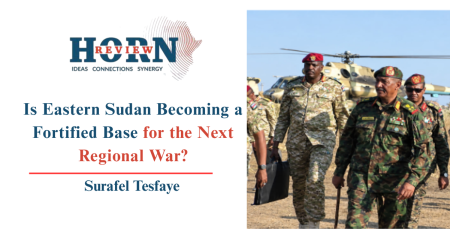
Is Eastern Sudan Becoming a Fortified Base for the Next Regional War?
General Abdel Fattah al-Burhan's recent inspection of the 11th...
18
Oct
The Legal Paradoxes in Eritrea’s AU Complaint to ReInstate its Mission
Ethiopia’s expulsion of ten Eritrean diplomats from Addis Ababa marked...
17
Oct
Russia’s Mediation Offer Between Ethiopia and Eritrea
Russia’s decision to offer a platform for contacts between Ethiopia...
15
Oct
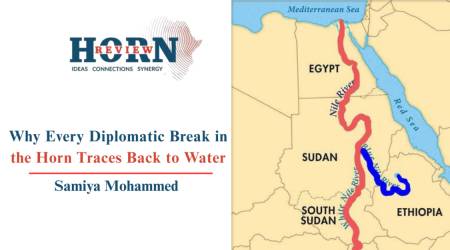
Why Every Diplomatic Break in the Horn Traces Back to Water
Analysis of instability in the Horn of Africa and...
15
Oct
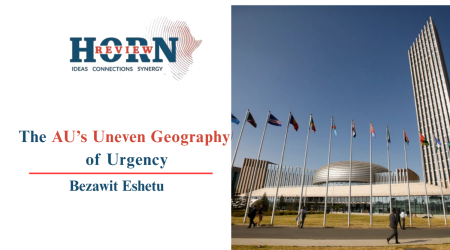
The AU’s Uneven Geography of Urgency
Since Mahmoud Ali Youssouf assumed leadership of the African Union...
15
Oct
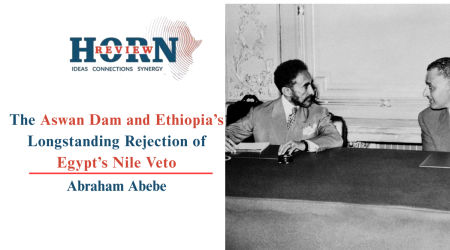
The Aswan Dam and Ethiopia’s Longstanding Rejection of Egypt’s Nile Veto
On 29 May 1956, before construction of the Aswan High...
15
Oct
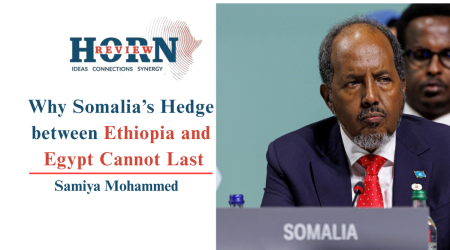
Why Somalia’s Hedge between Ethiopia and Egypt Cannot Last
The public position articulated by Somalia’s Deputy Foreign Minister Hassan...