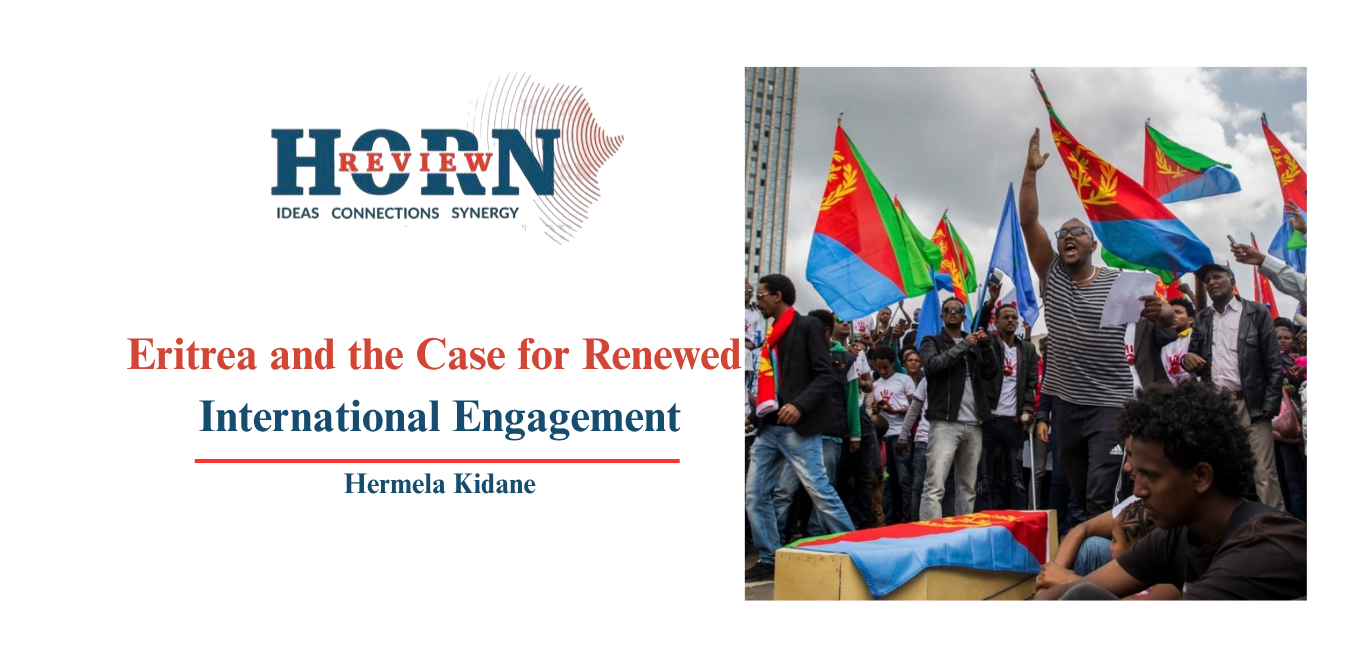
The United Nations Human Rights Council’s decision to extend the mandate of the Special Rapporteur on the situation of human rights in Eritrea is a critical affirmation of multilateral oversight in the face of sustained state resistance. The resolution passed with 23 votes in favor highlighting concern over persistent reports of violations while Eritrea’s counter proposal to terminate the mandate received minimal support. As the current mandate holder Dr. Mohamed Abdelsalam Babiker concludes his tenure the transition to a successor occurs as of Asmara’s determined campaign to end independent deconstruction. Eritrea’s non cooperation with the mandate refusal of country access, dismissal of findings and limited engagement with other mechanisms has rendered external monitoring indispensable.
Eritrea’s government has maintained a posture of defiance toward international human rights bodies. This stance reflects not only procedural disagreement but a rejection of external accountability for systemic practices. Ambassador Sophia Tesfamariam articulated this position forcefully during the June 2026 Enhanced Interactive Dialogue. She described the Special Rapporteur’s reports as fundamentally flawed in methodology, reliant on anonymous and unverified sources and disconnected from ground realities. She defended Eritrea’s National Service Programme established under Proclamation No. 82/1995 as a legitimate sovereign institution necessary for national defence under external threats comparable to practices in other states. She further argued that the country specific mandate is selective and divisive ignoring other UN mechanisms such as the Universal Periodic Review and lacks support among member states.
The 2016 UN Commission of Inquiry on Eritrea drawing on over 500 interviews with victims and witnesses found reasonable grounds to believe that crimes against humanity including enslavement, arbitrary detention, torture, enforced disappearances and persecution have been committed since 1991 under government authority. Successive Special Rapporteurs including Dr. Babiker have documented the absence of meaningful progress on accountability or reform. Testimonies are not abstract or unverified they involve corroborated accounts subjected to scrutiny, consistent across years and sources.
The National Service Programme Legally capped at 18 months operates indefinitely in practice with conscripts often including minors and those well beyond statutory age subjected to forced labour, inadequate conditions, torture and sexual violence. The Commission of Inquiry characterized elements of this system as amounting to enslavement a crime against humanity. Comparisons to mandatory service elsewhere falter on the indefinite duration, coercive conditions and use for state and private benefit which fundamentally distinguish it from proportionate national defense measures permissible under international law. Eritrea’s refusal to implement recommendations including those from its own Universal Periodic Review further undermines claims of good faith engagement.
The scale of population flight with Hundreds of thousands of Eritreans who have fled with UNHCR data indicating over 660,000 registered refugees and asylum seekers as of recent years presenting a big proportion of a population estimated between 3.5 and 6 million. Eritrean youth constitute the majority of this exodus driven primarily by the prospect of open ended conscription which disrupts education, family life, employment and personal autonomy. Reports document associated abuses arbitrary punishment for evasion or desertion, family reprisals and transnational repression extending to diaspora communities including monitoring, intimidation and conditional consular services tied to a 2% rehabilitation tax or expressions of loyalty.
Many exiles including former conscripts, journalists and religious minorities describe a climate of pervasive surveillance, arbitrary detention without trial with thousands held incommunicado for years or decades and suppression of dissent. Diaspora communities report polarization exacerbated by government efforts at transnational control yet a growing segment mobilizes for accountability highlighting the human cost of indefinite service and the lack of rule of law. These testimonies align with patterns documented by independent experts and align with the broader refugee outflow despite the regime’s denial.
As a UN member state Eritrea is bound by the UN Charter and customary obligations including respect for human rights as a legitimate international concern. The Human Rights Council’s special procedures grounded in resolution 60/251 address gross and systematic violations. Persistent refusal of access and implementation particularly where crimes against humanity criteria are met engages state responsibility and may justify sustained scrutiny. Precedents in situations like Syria or Myanmar illustrate that non cooperation does not nullify mandates but scores their necessity to prevent impunity. Sovereignty while foundational is not absolute it coexists with erga omnes obligations and the responsibility to protect populations from atrocity crimes. Eritrea’s preference for the Universal Periodic Review a peer process without independent investigative powers appears designed to limit evidentiary depth rather than advance substantive reform.
The impending succession of the Special Rapporteur Dr. Babiker’s appointment in 2020 occurred under evolving regional activities. His Sudanese nationality coincided with strengthened ties between Khartoum and Asmara which may have made him relatively more acceptable to Eritrean authorities than other candidates. Eritrea’s campaign against the mandate overall coupled with apparent acquiescence to his term suggests a conscious preference for continuity over a successor who might intensify documentation. The initial paucity of applicants for the position necessitating an extended deadline before eight candidates many from Africa emerged highlights the role’s inherent challenges, lack of access, risks of transnational reprisals, political sensitivities in the Horn of Africa and the demanding nature of compiling credible evidence from exile testimonies. This scarcity itself testifies to the isolating environment Eritrea has cultivated.
Eritrea’s Red Sea location has prompted renewed Western interest including reported U.S. considerations under the current administration to reset diplomatic ties and ease certain sanctions imposed in response to Eritrean actions in Ethiopia’s Tigray conflict. However the nature and scale of documented abuses systematic forced labour, arbitrary detention, suppression of fundamental freedoms and a governance model that drives mass emigration counsel caution. Normalizing relations without benchmarks for accountability, release of political prisoners or tangible reforms risks signaling tolerance for impunity. Evidence from the Tigray war where Eritrean forces faced credible allegations of serious violations further illustrates the unconditioned re-engagement. A return from diplomatic dormancy should prioritize verifiable progress to ensure strategic partnerships do not undermine long term stability based in rights and rule of law.
Eritrea’s rejection of the Special Rapporteur mechanism while framed in terms of methodology and selectivity ultimately serves to shield systemic practices from sustained examination. The mandate’s continuation and the appointment of a strong successor remain essential not as punitive measures but as mechanisms to uphold universal standards magnify silenced voices including those in the diaspora and encourage a path toward genuine domestic reform. History suggests that unaddressed impunity rarely fosters the stability states seek rather transparency and accountability provide firmer foundations for regional peace and development.
By Hermela Kidane, Researcher, Horn Review