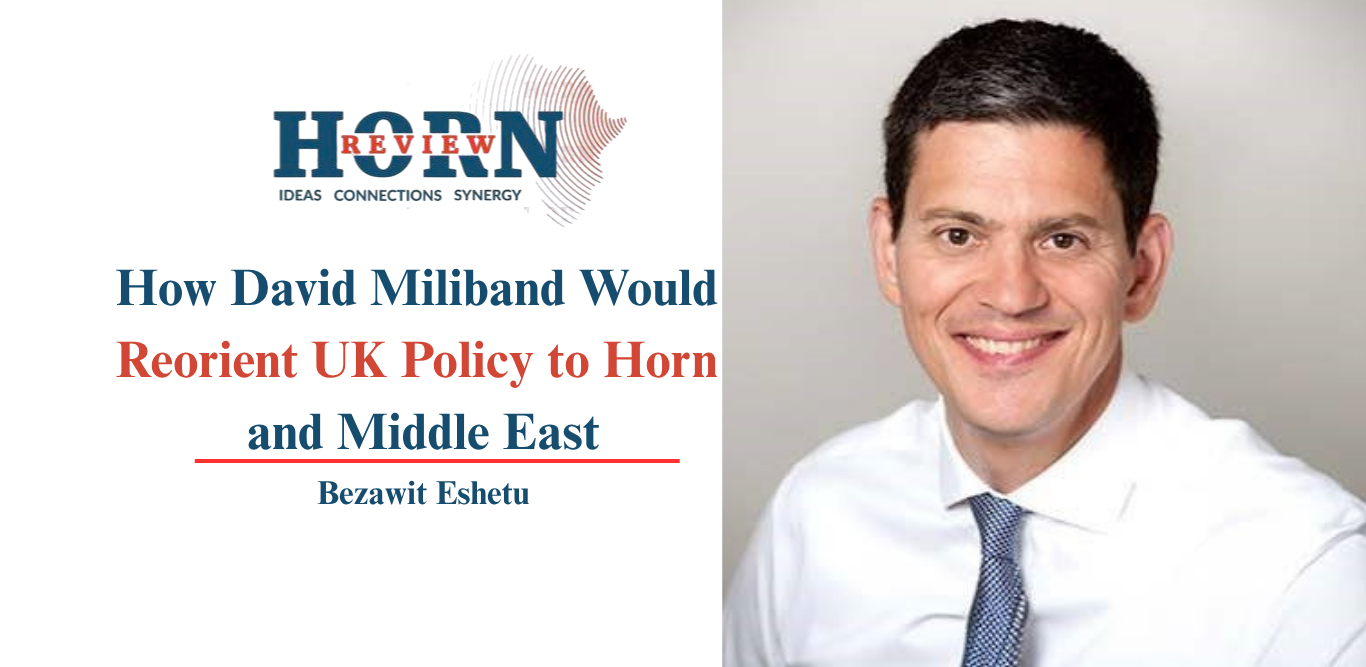
David Miliband, foreign secretary from 2007 to 2010 and now president of the International Rescue Committee, has become the name most persistently attached to a return to the British cabinet, quite possibly as foreign secretary again, in a government led by Andy Burnham. Asked directly about the prospect, Miliband declined to rule it out, saying only that Burnham would make his own choices; British reporting has treated the role as the likeliest destination for him, an echo of David Cameron’s comeback under Rishi Sunak, contingent on a peerage since Miliband no longer sits in the Commons. The opening has arisen with startling speed.
Keir Starmer announced in June 2026 that he would resign as Labour leader and prime minister, and that cleared the way for Burnham’s swift return to Westminster and his emergence as the overwhelming favourite to succeed him, endorsed even by his one-time rival Wes Streeting and quite possibly unopposed once nominations close in mid-July.
Burnham built his career on the Greater Manchester mayoralty, on transport reorganization, housebuilding, and a devolution agenda he has taken to calling “Manchesterism,” and he brings no comparable record in foreign affairs, which is precisely why a figure like Miliband is being discussed at all. According to political reporting, it was Miliband’s brother Ed, the current energy secretary and himself a contender for the Treasury, who first raised the idea with Burnham, even as one cabinet colleague is said to have grumbled that Westminster cannot accommodate more than one Miliband in high office. Whatever the outcome of that argument, David Miliband would arrive with a fully formed and unusually consistent worldview, one he has spent the past several months setting out in speeches and testimony.
That worldview centres on what Miliband calls the “New World Disorder,” a phrase he has used consistently since unveiling the International Rescue Committee’s Emergency Watchlist in December 2025 and has returned to in testimony to the Council on Foreign Relations, in a speech at MIT, and in his own commentary for Time magazine. His argument is that the rules-based system built after 1945 is being replaced by something more transactional: rising competition between powers, shifting and short-lived alliances, and a growing indifference to civilian protection and international law. What lifts the framework above rhetoric is the data he attaches to it.
Global humanitarian funding, by the IRC’s own calculation, has fallen by roughly half since 2024, even as the twenty countries on its Watchlist, home to just twelve percent of the world’s population, now account for close to ninety percent of everyone in acute humanitarian need. “Disorder begets disorder,” Miliband said on releasing the 2026 Watchlist, and the phrase captures his central claim: crises left unsourced in one part of the world do not stay contained there, but generate the instability and displacement that eventually reach everyone else. It is this instinct, treating humanitarian collapse as a driver of geopolitics rather than a footnote to it, that would most likely shape his approach in a British cabinet room.
The 2026 Iran war has become the clearest illustration of that argument in practice. Since the United States and Israel opened Operation Epic Fury against Iran on 28 February, killing Supreme Leader Ali Khamenei and drawing retaliatory strikes across the Gulf, Iran’s closure of the Strait of Hormuz has cut a corridor that normally carries roughly a fifth of the world’s seaborne oil and liquefied natural gas; even after an April ceasefire and a June memorandum meant to end the war, shipping through the strait has kept being disrupted by flare-ups tied to Israel’s continuing operations in Lebanon.
Speaking at the Royal United Services Institute in May, Miliband argued that the human cost of that closure was being felt far from the Gulf, telling his audience that the “forgotten victims of the war in Iran” were living not in the Middle East but in the Sahel and in Somalia. He was specific about the mechanism: fertiliser shortages and rising fuel and transport costs radiating out from the closure; shipping-insurance premiums in Yemen rising by some four hundred percent; therapeutic food rationed in Somali clinics because supply chains had broken down; and emergency aid once routed cheaply through Dubai now reaching Sudan only at far greater cost.
He set the Pentagon’s own estimate of the war’s cost, twenty-five billion dollars after nine weeks, against a total American humanitarian response of roughly forty-nine million dollars, a fifth of one percent of the military bill, and against his broader warning that resources and diplomatic attention drawn toward Iran were letting the emergencies in Gaza and Sudan slide further down the international agenda.
This same instinct has long shaped Miliband’s approach to the Horn of Africa, where his commentary keeps returning to the disproportion between Somalia, Ethiopia, and Kenya’s tiny share of the world’s population and their outsized share of extreme food insecurity. What he has not done, in any of his public statements, is stake out an independent position on Somaliland’s decades-long campaign for recognition, a gap that has become more consequential since Israel recognize Somaliland’s sovereignty in December 2025, a move that has fed speculation that the UAE and United States might eventually follow and left Britain, a traditional supporter of Somalia’s territorial integrity where at least one MP has already broken ranks to urge recognition, in an increasingly uncomfortable middle position.
Somaliland’s leverage in that argument rests substantially on its port at Berbera, already developed with Emirati investment, and on the naval-access agreement it has offered Ethiopia in exchange for recognition; absent a settled Miliband doctrine on sovereignty, both governments would likely find more traction making the case that their arrangement delivers the kind of regional stability and logistical resilience his humanitarian framework prizes, rather than resting their case on statehood or military alliance alone.
Miliband’s wider network of relationships would probably follow a similar, results-oriented logic rather than a purely alliance-based one. His years running an organization with deep roots in Washington policy circles give him real fluency in American politics, but that fluency has curdled into open criticism as the Trump administration has cancelled, by the IRC’s own count, some eighty-three percent of USAID’s programs; a Foreign Secretary Miliband would likely be more willing than most to say plainly that Washington’s capacity for military spending and its retreat from humanitarian funding sit uncomfortably together.
His posture toward the Gulf states would probably prove equally transactional. The United Arab Emirates has been repeatedly and credibly linked by United Nations sanctions monitors and independent researchers to the supply of weapons and other support reaching the Rapid Support Forces (RSF) in Sudan’s civil war. Miliband and the IRC have consistently highlighted how such external arms flows and war economy enablers prolong the conflict, which remains the world’s largest humanitarian crisis and tops the IRC’s Emergency Watchlist for multiple years running.
The IRC has explicitly pressed the UK government and international partners to deploy sanctions, financial pressure, and diplomatic leverage to disrupt these networks, while simultaneously calling for broader measures to halt arms supplies to all parties, protect civilians, ensure humanitarian access, and pursue a credible political process. This approach reflects Miliband’s broader insistence that unchecked external fueling of internal conflicts—whether through weapons, gold smuggling, or port access deals—exacerbates displacement, famine risks, and regional spillover, demanding results-oriented accountability over purely transactional alliances.
Miliband’s longstanding engagement with Ethiopia and Somalia underscores the Horn of Africa’s disproportionate burden of food insecurity and displacement. Through the IRC, he has repeatedly highlighted the perfect storm of conflict, drought, climate shocks, and external disruptions, such as those stemming from the Iran war or global aid cuts, urging scaled-up funding, vaccine delivery, livelihood programs, and resilient supply chains to avert famine thresholds. On Ethiopia, he has stressed sustained aid to tackle internal displacement, refugee hosting, and recovery needs, while noting the country’s role in regional stability and its occasional contributions amid donor shortfalls.
In Somalia, Miliband has consistently called for proactive support to strengthen local resilience amid persistent conflict and governance challenges, and to safeguard humanitarian access. Though he has not articulated a detailed public stance on Somaliland’s recognition campaign, this gap leaves room for pragmatic advocacy focused on Berbera port infrastructure and logistical reliability, priorities that dovetail with his emphasis on civilian protection and supply chain continuity. In his view, the Horn functions less as a peripheral aid recipient than as a strategic frontline where targeted humanitarian investment delivers tangible geopolitical returns by curbing instability and secondary migration pressures.
On Israel and the Jewish diaspora, his inheritance is direct: his father his mother survived the war in hiding in Poland, and Miliband has described the IRC’s work as “personal for me” because his own parents were once among the refugees the organization exists to help. That inheritance appears to translate less into reflexive alignment with any single government than into an insistence, applied without much regard for whose ally is involved, on international humanitarian law and the protection of civilians.
Taken together, these positions suggest a fairly consistent rule for anyone hoping to win Miliband’s attention from the Foreign Office: a demonstrated ability to protect civilians, keep supply chains moving, and produce measurable humanitarian results are likely to matter equal to him as appeals built on military alliance or access to resources.
By Bezawit Eshetu, Researcher, Horn Review