
The Gulf in the Aftermath of the U.S.- Iran War
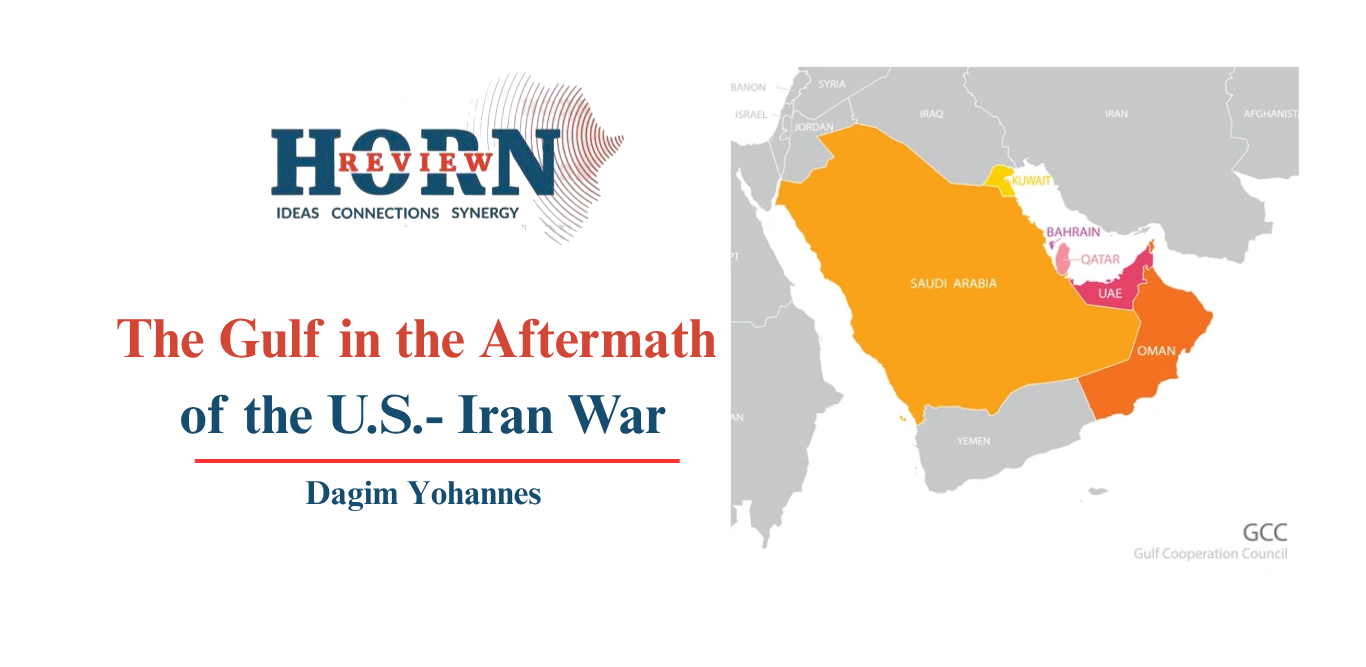
In the early hours of February 28, 2026, Israel and the United States launched Operation Roaring Lion and Operation Epic Fury, opening a war whose first salvo killed Iran’s Supreme Leader Ali Khamenei along with his defense minister, the armed forces chief of staff, and the IRGC commander. Within hours, Iran began retaliating not only against Israel but across the Arab Gulf, treating American basing and Emirati-Israeli alignment as legitimate targets in a war the Gulf states had neither declared nor been meaningfully consulted on. By the time a ceasefire took hold, Iran had fired the overwhelming majority of its missiles and drones not at Israel but at its Gulf neighbors, roughly 83 percent of total strikes landed on GCC territory, with the UAE absorbing more attacks than any other country in the conflict, Israel included. The states that had spent two decades building reputations as safe havens for global capital discovered, in the space of weeks, that proximity to a great-power war confers exposure without conferring a vote.
What followed defied both the swift regime collapse that Israeli planners had promised Washington and the all-consuming regional conflagration that some in Tehran’s leadership had threatened. Iran’s government did not fall; Khamenei’s son Mojtaba was installed as successor within days, and an embattled but functioning state apparatus continued fighting for months. The war ground through a failed April round of talks in Islamabad, a US naval blockade of Iranian ports imposed in mid-April, and a slow, halting diplomatic track that finally produced the Memorandum of Understanding, signed remotely by Presidents Trump and President Pezeshkian on June 17. The memorandum is not a peace treaty. It is a fourteen-point interim framework: an end to hostilities, the reopening of the Strait of Hormuz to commercial shipping (toll-free, for sixty days only), a partial unwinding of the naval blockade, and a sixty-day negotiating window to address the issues the document conspicuously does not resolve,Iran’s nuclear stockpile, its ballistic missile program, and the future of its regional proxy network. For the Gulf states, who were not party to the negotiations and whose only formal channel into the process ran through Pakistani, Qatari, Saudi, Turkish, and Egyptian facilitation roles rather than a seat at the table, the settlement confirmed what four months of bombardment had already taught them: they bore the most concentrated regional cost of the war and exercised the least influence over how it ended.
I. ECONOMIC COST: A WAR THAT CAME TO THEM
The regional energy toll was severe and unevenly distributed. Iranian strikes damaged roughly eighty energy facilities across the GCC, with reconstruction costs estimated above fifty-eight billion dollars by mid-2026 and direct infrastructure losses already exceeding twenty-five billion dollars by early April, according to Welligence’s energy sector analysis. Qatar’s Ras Laffan LNG complex absorbed a strike that eliminated an estimated seventeen percent of national LNG export capacity, roughly three percent of global supply, with QatarEnergy declaring force majeure on exports and warning the damage would persist for years. Bahrain’s Sitra refinery sustained damage with no clear restoration timeline. The UAE’s Habshan gas processing plant, struck twice by interception debris, is not expected to return to full operation before 2027.
The closure of the Strait of Hormuz, which Iran imposed on March 4 and which the US Navy then compounded with a counter-blockade on Iranian ports beginning April 13, produced what the International Energy Agency characterized as the largest supply disruption in the history of the global oil market. Combined Kuwaiti, Iraqi, Saudi, and Emirati oil production fell by roughly 6.7 million barrels per day within the war’s first two weeks, and by at least 10 million barrels per day by mid-March, even as Saudi Arabia and the UAE partially offset losses by diverting flows through overland pipelines built decades earlier as insurance against precisely this scenario, the Saudi East-West pipeline to Yanbu and the Emirati Habshan-Fujairah line. Those states without comparable alternative routes fared far worse: Kuwait, Bahrain, and Qatar’s LNG exports were effectively halted. The closure also triggered what regional economists termed a grocery supply emergency, since the GCC imports roughly seventy percent of its food and over eighty percent of its caloric intake through Hormuz; by mid-March, seventy percent of regional food imports were disrupted, consumer prices for staples spiked between forty and one hundred twenty percent, and retailers resorted to emergency air freight. The blockade’s threat to desalinated water, which supplies over ninety percent of drinking water in Qatar and Bahrain and the majority in Kuwait, Oman, and the UAE pushed the crisis, briefly, toward a humanitarian register rather than a purely fiscal one.
The World Bank downgraded its 2026 GCC growth forecast from 4.4 percent to 1.3 percent; Oxford Economics projected outright recession in parts of the bloc for the second half of the year. Tourism and aviation, two pillars of Gulf economic diversification, absorbed disproportionate damage: Dubai hotel occupancy was projected by Moody’s to collapse from roughly eighty percent before the war to ten percent in the second quarter, more than thirty thousand regional flights were cancelled in the war’s first month, and jet fuel costs rose ninety percent above their annual average. Saudi Aramco, paradoxically, posted a twenty-six percent first-quarter profit increase on the back of price spikes and pipeline diversion, a reminder that the war’s costs and benefits within the GCC were never evenly shared, even among states formally aligned against the same threat.
II. THE GCC FRACTURE LINES: A BLOC DIVIDED BY ITS OWN EXPOSURE
The Gulf Cooperation Council entered the war already strained by years of Saudi-Emirati competition over capital, business climate, and regional influence, rivalries rooted in Vision 2030’s competition with the Emirati diversification strategy, divergent approaches to Yemen, and tension over the UAE’s deepening security relationship with Israel. These fractures were not confined to security policy alone. Even within economic coordination frameworks, divergence had begun to surface, most notably in the UAE’s decision to withdraw from OPEC production constraints, signaling Abu Dhabi’s willingness to prioritize national economic autonomy over collective alignment. The war did not create these divisions; it operationalized them into starkly different national strategies under fire.
Saudi Arabia, having normalized relations with Iran in 2023 under Chinese mediation, pursued de-escalation throughout the conflict, backing the Pakistani-led Islamabad process and explicitly warning that prolonged war threatened its diversification agenda and risked drawing the Houthis into renewed confrontation along its Red Sea export corridor. Bahrain and Kuwait, traditionally deferential to Saudi foreign policy, followed Riyadh’s lead in calling for accommodation.
The UAE took the opposite path. Having absorbed more Iranian strikes than any other state in the war, Abu Dhabi moved toward open operational alignment with Israel and the United States, accepting Israeli-made Iron Dome interceptor batteries and, according to reporting later in the conflict, conducting its own retaliatory strike on an Iranian refinery on Lavan Island, an action Washington reportedly welcomed rather than discouraged. UAE officials, including Foreign Minister Sheikh Abdullah bin Zayed and presidential adviser Anwar Gargash, publicly characterized Iranian strikes as terrorism and called for any eventual settlement to include reparations and binding security guarantees that the Islamabad Memorandum does not provide.
Oman and Qatar, by contrast, converted their long-standing role as Gulf-Iran intermediaries into wartime relevance. Oman’s foreign ministry maintained direct diplomatic contact with Tehran even after Omani territory and shipping were targeted, and Muscat notably extended congratulations to Iran’s new supreme leadership, a gesture neither Riyadh nor Abu Dhabi was prepared to make. The asymmetry between Gulf states’ physical exposure and their diplomatic posture toward Iran has, if anything, widened rather than narrowed the bloc’s internal divide. The state hit hardest, the UAE, has hardened; the states with functioning channels to Tehran, Oman and Qatar, have preserved them; and Saudi Arabia has attempted, with only partial success, to hold a centrist position between the two poles. Analysts at the Atlantic Council and elsewhere have concluded that a NATO-style integrated GCC security architecture remains unlikely precisely because Riyadh and Abu Dhabi each regard the other as an unacceptable candidate for regional leadership, a structural rivalry the war has reinforced rather than dissolved.
III. THE AMERICAN SHIELD: PERFORMANCE UNDER FIRE
The Gulf states’ arms purchases and basing arrangements with Washington were premised on an implicit promise of protection that the war’s opening days immediately complicated: none of the GCC states had been consulted before Operation Epic Fury began, despite hosting the American forces and infrastructure that Iran subsequently targeted in retaliation. The disjunction between the scale of Gulf financial commitment to the US relationship, recent pledges totaling roughly two trillion dollars in American investment, alongside extensive defense procurement, and the absence of Gulf input into a decision that exposed their territory to sustained bombardment, has become a defining grievance of the post-war period.
Washington’s subsequent diplomatic conduct deepened rather than resolved this grievance. The Trump administration pursued, and ultimately signed, an interim memorandum that left core Gulf security demands, explicit Iranian security guarantees, war reparations, dismantlement of Iran’s missile and proxy networks entirely unaddressed, deferring them to a sixty-day negotiating window with no guarantee of resolution. Israel, notably, was not a party to the US-Iran memorandum and has stated its intention to continue military operations against Hezbollah in Lebanon regardless of the agreement’s language, a reminder to Gulf capitals that even the framework meant to end the war does not bind all the parties whose actions shape their security environment. The result is an enduring rupture in Gulf strategic assumptions: the war demonstrated that an expensive, decades-deep American security relationship neither prevented a war that originated in decisions made in Washington and Jerusalem nor guaranteed Gulf states a voice in how that war concluded.
IV. IRAN AFTER THE MEMORANDUM: CONSTRAINED, NOT CONTAINED
The Memorandum leaves Iran’s nuclear program in a genuinely ambiguous position. Rather than dismantling Iranian enrichment capacity, the agreement requires both parties to maintain a status quo pending final terms, commits Iran only to a future, unspecified mechanism for down-blending its enriched uranium stockpile, and includes no enforceable cap on the ballistic missile program or restrictions on Iran’s regional partners. Arms control specialists have characterized the deal as fundamentally a non-nuclear agreement, one that halted active combat without resolving the proliferation concern that triggered the war in the first place. Iranian leverage in the subsequent sixty-day negotiating window is reinforced by the memorandum’s economic provisions: immediate Treasury waivers permitting Iranian crude exports, a commitment to terminate the full architecture of UN, IAEA, and US sanctions on an agreed schedule, the release of frozen assets, and most strikingly, a stated commitment to develop a reconstruction and economic development plan for Iran valued at roughly three hundred billion dollars, to be financed in part by regional partners.
For Gulf states already absorbing direct war damage in the tens of billions of dollars, the prospect of underwriting Iranian reconstruction, even framed as a stabilization investment rather than a concession represents precisely the leverage inversion that Kuwaiti and other regional security analysts had anticipated as a structural risk of any negotiated settlement reached without Gulf participation. Iran emerges from the war diplomatically rehabilitated by the optics of having endured assassination of its top leadership and sustained bombardment without total collapse, while several of the states that absorbed the bulk of its retaliatory fire are now being asked, implicitly, to help finance its recovery. The reputational and narrative shift compounds an underlying competitive threat: Iranian energy re-entry into international markets, once sanctions relief proceeds on schedule, will pressure the OPEC+ production architecture that Saudi Arabia has relied on as its primary instrument of oil-market statecraft, while Iranian gas development at South Pars, sharing the same geological reservoir as Qatar’s North Field will sharpen competition in Asian LNG markets precisely as Qatar’s own Ras Laffan capacity remains degraded from wartime strikes.
V. STRATEGIC ADAPTATION: HEDGING AFTER EXPOSURE
The war has accelerated diversification strategies that GCC states had pursued cautiously before February 2026 and are now pursuing with evident urgency. Within a month of the first Iranian strikes, Ukraine concluded ten-year defense cooperation agreements with Saudi Arabia, Qatar, and the UAE, reflecting Gulf interest in lower-cost, combat-tested counter-drone systems as a complement to American point-defense systems that proved insufficiently dense to intercept the volume of Iranian drone and missile traffic. Gulf capitals have simultaneously revived interest in the India-Middle East-Europe Economic Corridor as a hedge against Hormuz vulnerability, and Saudi Arabia is reportedly examining further expansion of its overland pipeline capacity infrastructure investments that function as insurance against a repeat closure rather than confidence that one will not recur.
The deeper adaptation is institutional and psychological rather than infrastructural. The shared experience of exposure is unlikely to produce GCC unity, precisely because the war’s differential impact UAE hardline, Saudi accommodationist, Omani and Qatari intermediary has widened rather than narrowed the bloc’s strategic divergence. The BRICS framework that several Gulf states joined as a hedge against Western dependence proved unable to produce so much as a joint statement on the war, paralyzed by the simultaneous membership of Iran and the UAE on opposing sides of the conflict, a vivid demonstration that multipolar hedging strategies offer diversification of economic exposure without offering a coherent alternative security architecture. What emerges instead is a GCC moving toward parallel, state-specific hedging: deeper but separately negotiated security relationships with Washington, selective technology and defense partnerships with Ukraine, India, and China, and continued economic diversification pursued nationally rather than collectively, even as the rhetoric of Gulf unity persists in summit communiqués.
The Gulf’s Way Forward: Aftermath and Strategic Trajectories
The aftermath of the 2026 war is not defined by destruction alone, but by the exposure of structural limits that had long been obscured. External guarantees have proven conditional, deterrence has become more contested, and internal fragmentation remains unresolved. These conditions now shape the pathways available to Gulf states.
The first trajectory is collective balancing. The shock of exposure pushes GCC states toward deeper coordination in defense and strategic planning. This reflects a balance-of-power response, where shared vulnerability compels unity. If realized, it could restore a degree of regional agency, though it requires overcoming entrenched political divisions.
The second is adaptive dependency. Gulf states adjust to the new environment while maintaining reliance on external security providers. This aligns with dependency dynamics, where adaptation occurs within existing hierarchies rather than through their transformation. Stability is maintained, but vulnerability persists beneath the surface.
The third is fragmented hedging. Diverging threat perceptions and strategic priorities lead states to pursue individualized policies, strengthening bilateral ties or selectively accommodating regional actors. This reflects hedging under uncertainty, but in the aftermath context, it risks accelerating internal fragmentation and reducing collective resilience.
These trajectories do not represent free choices, but constrained responses shaped by the war’s aftermath. The central challenge is not simply to choose a path, but to overcome the structural conditions that limit meaningful strategic autonomy. Without such a shift, the Gulf will remain in a position where it must absorb the consequences of crises it cannot fully control. The case for deeper GCC integration is unequivocal: without unity, the Gulf remains an arena shaped by external powers; with it, it becomes a strategic actor capable of imposing constraints on their decisions. Ultimately, only a more unified bloc can reclaim agency and ensure it is no longer sidelined when others determine the region’s trajectory.
By Dagim Yohannes, Researcher, Horn Review

RELATED
Posts
8
Oct
The Houthi-al-Shabaab Nexus and the Emerging Security Architecture of the Gulf of Aden
The growing relationship between Yemen’s Houthi movement and Somalia’s al-Shabaab...
7
Oct
“Decaffeinated Sovereignty”: Eritrea’s One-Way Street with Ethiopia
There is a peculiar contradiction at the heart of Eritrea’s...
7
Oct
Leaked Documents Allege Sudanese Army Weapons Pipeline to TPLF-Aligned Forces as Tigray War Reignites
Leaked documents alleging a Sudanese army weapons pipeline to TPLF-aligned...
7
Oct
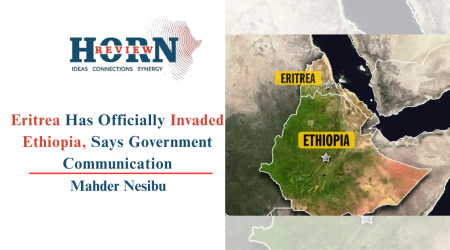
Eritrea Has Officially Invaded Ethiopia, Says Government Communication
Ethiopian Government Formally Condemns Eritrean Territorial Incursion as Its Forces...
7
Oct
Turkey, Somalia and the Transactional Reading of Alamein
The Alamein Declaration functions less as a coherent framework...
7
Oct
Somalia's Alamein Signature and the Costs of Diplomatic Alignment
The Alamein Declaration between Egypt, Sudan, Eritrea and Somalia...
6
Oct
Egypt's Nile for All, the Red Sea for Some - Except Ethiopia
The contradiction was laid out almost perfectly at El Alamein....
6
Oct
Isaias Afwerki has Long Wanted to Rule Ethiopia, Why He will Never
President Isaias Afwerki is among the most enduring figures in...
6
Oct
Egypt Cannot Be Sudan's Mediator and Patron at the Same Time
Abdel Fattah el-Sisi received Abdel Fattah al-Burhan in New...
6
Oct
Afwerki Calls for Non-Interference in Sudan as Eritrean Soldiers Continue Fighting for SAF
At the New Alamein summit in October 2026 Eritrean...