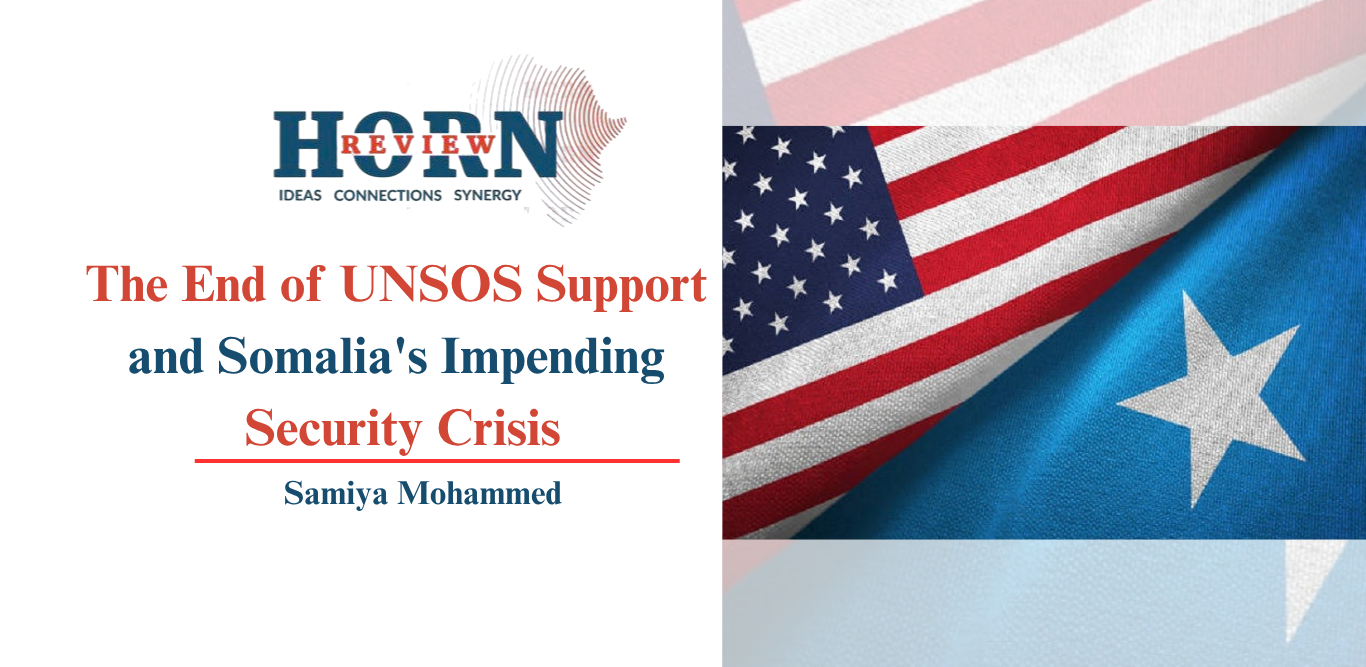
The United States has communicated a definitive policy decision regarding its security engagement in Somalia establishing December 31, 2026 as the termination date for all support to the United Nations Support Office in Somalia. This decision shows an adjustment of American commitment to the Somali state building project predicated on the assessment that nearly two decades of sustained investment have failed to produce the requisite security sector reform or political cohesion necessary for sustainable stability. The policy shift compels a test of the deficiencies that have described Somalia’s political development and the likely security path that will come in the post UNSOS environment.
The pathology of Somali political development resides in the relationship between the political elite and the national institutions they nominally govern. Successive federal administrations in concert with federal member state leaders and clan elders have demonstrated an inability to subordinate parochial interests to the requirements of state consolidation. This pattern is not attributable to capacity deficits or resource constraints and reflects a choice to maintain disintegrated governance structures that permit elite access to external revenue streams while evading accountability for security outcomes. The international support predicated on the assumption that sufficient resources would eventually incentivize institutional reform has instead enabled the elite to externalize the costs of security provision while internalizing the benefits of sovereign authority.
The United States has now concluded that this is immune to correction through continued resource infusion. The decision to terminate UNSOS support is grounded in the assessment that Somalia has failed to make sufficient progress against Al-Shabaab has not assumed ownership of its security responsibilities and has not completed serious security sector reform. These failures are not incidental to the political structure but are inherent to a system in which clan loyalty systematically supersedes national allegiance. The unwillingness to forge a unified national army to establish or to resolve intra state disputes through institutional channels reflects a preference for the status quo that external actors have been unable to alter.
The withdrawal of UNSOS support will precipitate a reassessment by Al-Shabaab regarding the viability of its insurgency. The militant organization has demonstrated an operational planning and has consistently exploited periods of transition to expand its territorial control. The 2026-2027 timeframe will likely witness a major Al-Shabaab offensive designed to capitalize on the disruption of international logistical networks and the fragmentation of Somali security forces. The offensive strategy will probably target several objectives simultaneously with the seizure of rural administrative centers to demonstrate governmental impotence, the interdiction of key supply routes to accelerate the degradation of AU and Somali forces and the conduct of urban siege operations against population centers that have previously been insulated from sustained insurgent pressure.
The propaganda value of the withdrawal is important. Al-Shabaab has constructed its narrative around the expulsion of foreign forces and the collapse of the internationally backed government. The termination of UNSOS support provides empirical validation for this narrative likely enhancing the organization’s recruitment capacity and its ability to attract external financing. The perception of American retreat regardless of the strategies underlying the decision will be weaponized by the insurgency to undermine the legitimacy of the federal government and to attract defections from Somali security forces that assess the balance of power as shifting decisively in favour of the insurgents.
The security forces of Somalia are not a unified national army but a collection of clan based units, regional militias and personal loyalist contingents that have been temporarily unified by the availability of international support. This structural characteristic will become fully manifest once the external logistical and financial integration mechanism is removed. The dissolution of the Somali National Army into its constituent clan components is a likely path with regional forces reverting to the protection of their specific territories and populations rather than executing a national defence mandate.
This process will follow predictable patterns. Regional administrations will prioritize the withdrawal of their forces from federal command structures redeploying them to defend local holds. The federal government in Mogadishu will retain control over only those units directly loyal to the presidency, severely limiting its capacity to project power beyond the capital. Inter clan competition for resources, including control over ports, airports and agricultural land will intensify potentially leading to armed conflict between regional forces previously aligned against the common insurgent threat. The historical pattern of Somali political organization in which insecurity is periodically managed through the formation of temporary coalitions that subsequently fail suggests that the post UNSOS period will witness a return to war as the dominant mode of political organization.
The destabilization of Somalia will necessarily affect neighbouring states. Nations who have Somali populations will be exacerbated by the collapse of Somali state capacity. The degradation of the AU mission’s operational capacity will reduce the pressure on Al-Shabaab within Somalia enabling the organization to allocate greater resources to external operations. The security deterioration will generate humanitarian consequences that will extend Somalia’s borders. The Somali population already experiencing humanitarian crises globally will face additional displacement as conflict intensifies. The pattern of internal displacement will be complemented by external migration with refugees seeking safety as well as undertaking the dangerous maritime route. The existing refugee populations in the region which have strained host country resources for decades will be supplemented by new waves of displacement that will require substantial humanitarian assistance.
The withdrawal of UNSOS support creates opportunities for external actors seeking to expand their influence in the Horn. The departure of the United States from the logistical support role will accelerate these efforts. The motivations of these actors however must be understood as strategic rather than humanitarian. The American decision to terminate UNSOS support presents that the interventionist model of state building in Somalia has failed to achieve its objectives. The alternative approach reflects a judgment that large scale institutional support has been ineffective and that further investment is unlikely to yield different outcomes. This while defensible given the historical record does not resolve the security challenges that will come from the transition.
The Somali politics now confronts a situation in which external support is no longer guaranteed and in which the consequences of continued disintegration will be borne by the Somali population. The historical record however does not suggest that elite behaviour will change in response to the withdrawal. The incentives that have generated the prioritization of clan interests over national institutions remain in place and the removal of external support will not create new incentives for unity. The likelihood of a functional, unified Somali state come from this transition is low and the more probable outcomes include the consolidation of Al-Shabaab control over substantial territory, the disintegration of the Somali National Army into warring factions and a period of instability that will generate regional and humanitarian costs.
The termination of UNSOS support on December 31, 2026 shows a decisive inflection point in Somalia’s post conflict. The decision reflects the assessment that the political elite has demonstrated neither the capacity nor the will to prioritize national institutions over clan interests and that continued investment in this way is unlikely to generate different outcomes. The consequences of the withdrawal will be severe with a major Al-Shabaab offensive, the fragmentation of Somali security forces, regional security spill over, humanitarian displacement and intensified competition among external actors for influence.
Somali now bears the responsibility for the outcomes of this transition. The removal of external support removes the excuse that insufficient resources have prevented institutional development. If the Somalia cannot unite to forge a functional state and security apparatus, the void will be filled by Al-Shabaab, war or both. However the analytical record suggests that this burden is unlikely to be successfully discharged and the security path outlined in will likely materialize with costs for the Somali population and the region.
By Samiya Mohammed, Researcher, Horn Review