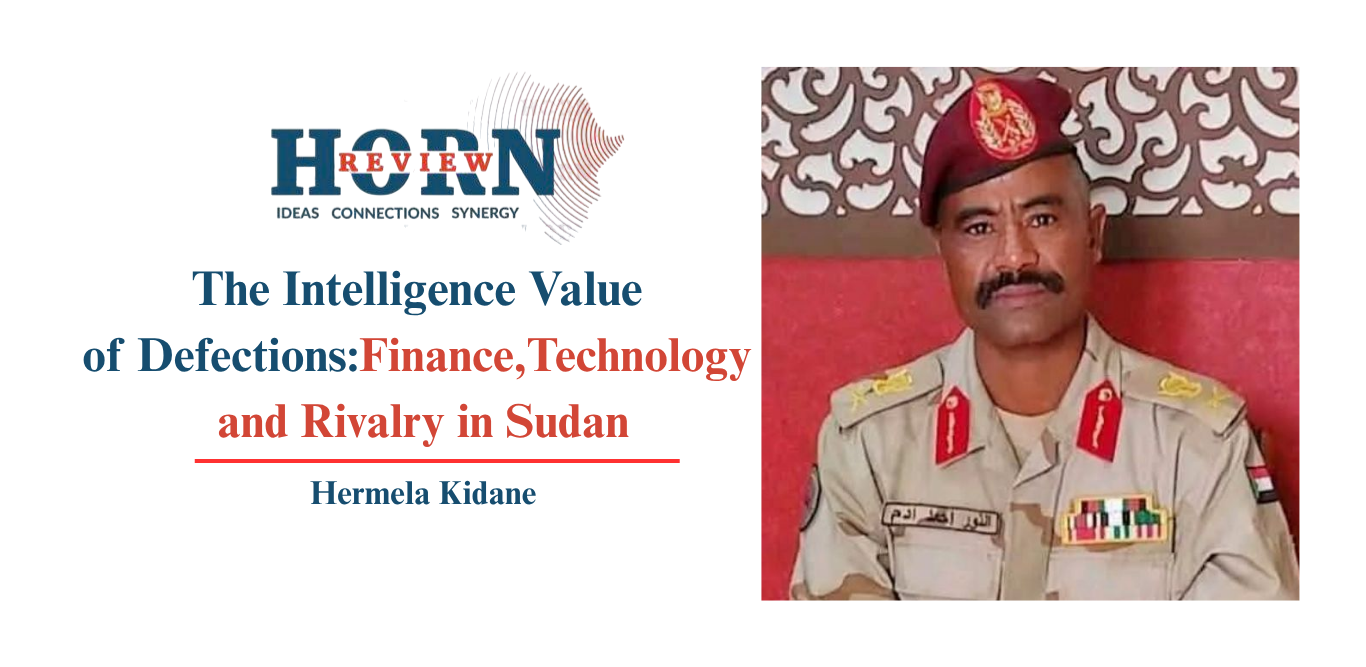
Recent high profile defections from the Rapid Support Forces to the Sudanese Armed Forces including Major General Al-Nour Guba and commander Ali Rizqallah known as El Safana have pointed to a less visible contest involving intelligence acquisition, digital systems, financial tools and external influences. These defections are reported to have included the transfer of operational knowledge.
According to accounts Ali Rizqallah who maintained extensive militia networks across Darfur and western Sudan provided insights into RSF digital financial initiatives. This reportedly reached access to server codes and data linked to the Future Money application and efforts to establish alternative payment systems in RSF controlled areas during severe cash shortages. If accurate such information would grant visibility into how one faction attempted to build functional financial mechanisms outside the disrupted national banking system.
Similarly Major General Al-Nour Guba who oversaw aspects of weaponry and technology for the RSF is said to have shared details on control systems and satellite frequencies for advanced drones previously acquired by the group. This transfer could enable electronic warfare capabilities such as jamming or intercepting system potentially affecting the balance in the air domain where external support had earlier provided advantages to the RSF.
Defections of this nature can function as channels for operational knowledge. Patterns of procurement, supply lines, resource management, cross border activities and logistical arrangements developed by the RSF may now be accessible to the opposing side. This creates opportunities for one faction to review repurpose or neutralize capabilities originally built by the other. Such shifts also place pressure on internal cohesion as commanders weigh loyalties Throughout battlefield developments competing offers and local realities. In regions like Darfur tribal and command structures face renewed strains from these realignments.
These events reflect abiding rivalries involving financial crossroads, logistical networks and influence along the Red Sea. Gulf countries have actively pursued economic opportunities in Sudan ranging from agriculture and mining to trade and port infrastructure. One Gulf actor has maintained closer ties with the government in Port Sudan while another has faced repeated accusations which it denies of supporting the RSF through alleged arms flows, economic links or other means. Competition for control over ports, trade routes and resources remain a major factor in the broader Horn of Africa geopolitics.
Reports indicate that payments facilitating the defections were made in U.S. dollars via established international banking channels. This provided immediate liquidity in contrast to the local or experimental monetary instruments used in RSF controlled territories. The preference for hard currency in such transactions illustrates the practical challenges of operating with dispersed financial tools during conflict.
Economically the RSF under Mohamed Hamdan Dagalo Hemedti developed initiatives to manage liquidity crises. These included printing new Sudanese Pound notes and launching the Future Money digital application linked to ideas such as Future Bank. The measures intended to enable transactions, salary payments and trade in areas under RSF influence offering a degree of operational continuity when national banking systems were unavailable.
Intelligence obtained through the defections could allow monitoring or potential disruption of these parallel systems. This contributes to a process of economic decoupling between the two sides. Resource flows including gold, agricultural goods and other commodities may shift toward different channels with networks tied to each faction facing varying degrees of pressure or opportunity. Both the RSF’s decentralized flexible model and the SAF’s more centralized state linked approach carry distinct strengths and vulnerabilities in sustaining operations.
The economic aspects intersect with military and technological dimensions. Details on revenue mechanisms, front companies and cross border resource activities add depth to the intelligence picture for the receiving side. Neither faction operates without external connections or internal limitations. The RSF has relied on adaptability and external partnerships while the SAF benefits from formal state institutions and broader international recognition. Defections expose weaknesses in decentralized structures under stress but do not eliminate the SAF’s own operational and governance challenges.
Gulf countries and other regional and international actors have engaged Sudan through economic, diplomatic and security channels. Reports have noted scrutiny of certain financial flows including concerns over sanctions risks and money laundering linked to parallel networks. These pressures affect parties differently depending on their alignments and access to formal systems. The recent defections intensify such actions by providing detailed information that can be used to map disrupt or absorb existing capabilities.
In this environment defections act as notable inflection points. They go far of individual choices to influence command structures, technological edges and financial viability. The receiving side gains better understanding of the other’s methodologies however the actual strategic impact depends on how effectively the intelligence is integrated and acted upon. Sudan’s difficult terrain challenging tribal interactions and history of shifting alliances suggest that early gains may encounter setbacks or require continuous effort to maintain.
The contest involving currency, digital systems and networks reflects trends in contemporary conflicts. While ground fighting continues control over monetary policy, data infrastructure and supply chains plays an increasingly important role in long term sustainability. Innovations by the RSF to address cash shortages now face new challenges from disclosed information. At the same time the government in Port Sudan must contend with the immense difficulties of restoring nationwide services during widespread destruction and displacement.
Competition among Gulf countries and other powers for influence in Sudan is part of larger regional positioning. Different external alignments sustain both centralized and alternative power centers complicating prospects for resolution and increasing the risk of fragmentation. In this setting financial tools and digital infrastructure have become critical domains where control over data and ledgers can carry weight comparable to territorial control.
The defections of figures such as Al-Nour Guba and Ali Rizqallah amplify the intersection of intelligence, finance, technology and geopolitics in the Sudanese conflict. They demonstrate how knowledge transfers can erode one side’s proprietary advantages and accelerate separation between competing economic and operational models. At the same time they show the conflict’s fixed difficulties with no single development is likely to be decisive on its own. Outcomes will be shaped by adaptability, local conditions and the capacity of Sudanese parties to manage internal divisions alongside external pressures.
The situation remains highly fluid. As both sides adjust to shifting incentives the interplay between conventional capabilities, currency systems and digital tools will continue to influence the path . For Sudan the central challenge is in transcending these competitive actions to address urgent humanitarian needs and build pathways toward more stable governance.
By Hermela Kidane, Researcher, Horn Review