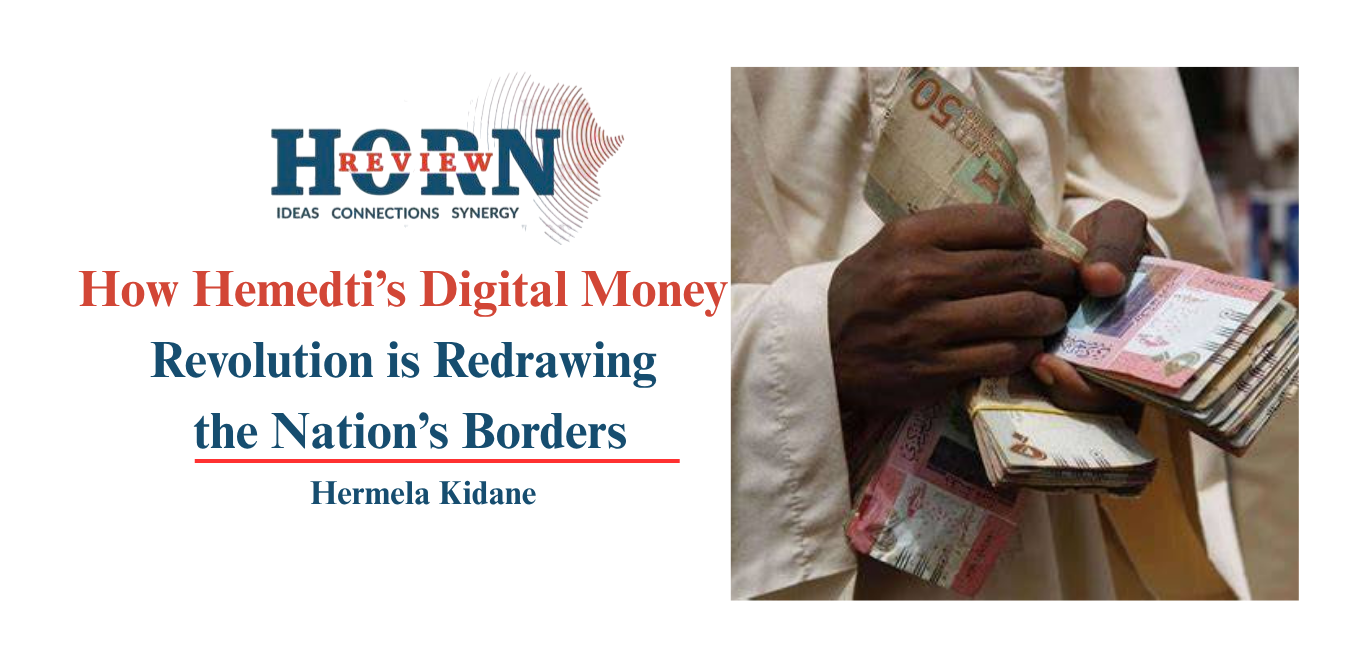
The RSF leader Sudan’s General Mohamed Hamdan Dagalo Hemedti has pursued new financial measures through the Tasis structure that are contributing to a crucial monetary separation in Sudan. This development is heightening the de facto economic and political division within the country among the civil war between the Rapid Support Forces and the Sudan Armed Forces. Through the Tasis associated financial arrangements which is a digital application known as Future Money has been introduced to help address currency note shortages in RSF controlled areas. What began as a military conflict has evolved into a serious phase of monetary and currency competition.
In the context of the civil war the SAF with its administrative base in Port Sudan under General Abdel Fattah al-Burhan implemented a currency reform involving new Sudanese pound banknotes. This policy aimed to stabilize financial operations in areas under SAF control but led to cash shortages and disruptions in RSF influenced regions particularly parts of Darfur and Khartoum. By phasing out the usability of older notes in its territories the SAF sought to reassert centralized monetary authority. The practical outcome has been increased economic splintering affecting liquidity and daily transactions for populations in contested or RSF held zones.
In response the RSF and the Sudan Founding Alliance or Tasis have developed parallel financial mechanisms. These steps allow the RSF to maintain economic activity and administrative functions in the areas it controls. Rather than relying only on physical currency the Tasis structure has supported the launch of digital tools to facilitate payments and trade. This reflects an effort by the RSF to build institutional capacity and exercise greater control over economic flows in its territories.
A key component is the Future Money digital wallet and transfer application developed in association with Tasis financial initiatives sometimes linked to the El Mustaqbal or Future Bank. This platform enables users in RSF administered areas to conduct transactions via mobile phones helping to mitigate the effects of physical cash shortages. Merchants and residents are encouraged to adopt the system for everyday commerce, salary payments and market activities. By channeling transactions digitally the authorities gain improved visibility into local economic patterns which can support administrative planning such as resource distribution while also strengthening oversight of financial activity.
These measures represent an attempt by the RSF and Tasis to establish a degree of economic sovereignty in the western and other controlled regions. Hemedti’s leadership has positioned these initiatives as a way to sustain operations independently of the Port Sudan based banking system. Reports indicate ambitions to support troop and civil servant payments and maintain market functionality under Tasis administration. In political and economic terms, the existence of parallel monetary arrangements one centered in Port Sudan with traditional banknotes and another incorporating digital solutions in RSF areas is viewed as a concrete sign of de facto division. When separate authorities manage distinct currency mechanisms and payment systems within the same internationally recognized state it becomes substantially more difficult to treat Sudan as a single unified economic entity. The eastern and central zones largely follow the Port Sudan framework while western regions under stronger RSF influence operate with alternative tools.
In political science the emergence of two distinct approaches to currency issuance and financial governance is often regarded as a strong indicator of de facto state fragmentation even without formal declarations of separation. The Tasis structure which includes a parallel presidential council and appointments of experienced officials such as a former central bank governor for monetary affairs signals an intent to develop functioning governance institutions rather than purely military control.
Sudan’s location makes internal economic changes relevant to neighboring countries and cross border trade routes in the Horn of Africa and Sahel. Different currency acceptability and regulatory environments at border areas can affect traders and regional economic stability. Various external actors maintain relationships with the parties involved influencing the broader context in which these financial measures extend.
A digital platform operating alongside and partially outside the national framework may face questions regarding value stability especially if it lacks widely recognized reserves or backing. There are concerns about uneven inflation pressures, difficulties in maintaining public confidence and impacts on savings and markets. Unrecognized or parallel currencies issued in wartime conditions can contribute to price instability though outcomes depend on multiple factors including adoption levels, supply management and broader conflict resolution. Both sides populations continue to experience hardships including disruptions to trade, access to goods and overall economic uncertainty.
It could be described as the RSF’s digital initiatives as carrying risks related to surveillance and control. A system that records transactions can provide authorities with detailed information on the location, assets and trading relationships of users. While such capabilities can serve administrative and security purposes in a conflict environment, for example facilitating salary payments or monitoring supply chains they also raise considerations about privacy and the extent of institutional reach into civilian life.
Regarding possible external dimensions the monetary competition occurs because of regional interests. Egypt has maintained a close relationship with the SAF and Port Sudan authoritie while other actors have engaged with the RSF side. There have been discussions of precautionary financial arrangements to protect against potential disruptions such as concerns over counterfeit currency flows or external economic pressures.
The central question is Proponents see the initiatives as necessary adaptations that demonstrate governance potential and resilience. It could be Warned that fragmented monetary systems risk accelerating instability, reducing the value of the Sudanese pound across zones and complicating any future reunification efforts. Sudan now effectively operates with divided financial structures traditional banking and notes in Port Sudan controlled areas and digital and alternative mechanisms in paramount RSF held territories. This currency competition shows an evolution in the conflict where control over money and transactions has become as important as territorial control. The Sudanese people caught in the middle face the daily realities of navigating these divisions from cash shortages to adapting to new digital tools while bearing the humanitarian consequences of war.
The monetary bifurcation accentuates the challenges of restoring national unity. Reintegrating economic and financial systems would likely require sustained dialogue, technical cooperation and political will from Sudanese stakeholders supported by the international community. As the situation develops the Future Money initiative and Tasis financial efforts stand as both a practical response to wartime conditions and a symbol of Sudan’s fragmentation. Whether this leads to more division or creates space for eventual negotiated solutions remains one of the uncertainties in Sudan’s crisis.
By Hermela Kidane, Researcher, Horn Review