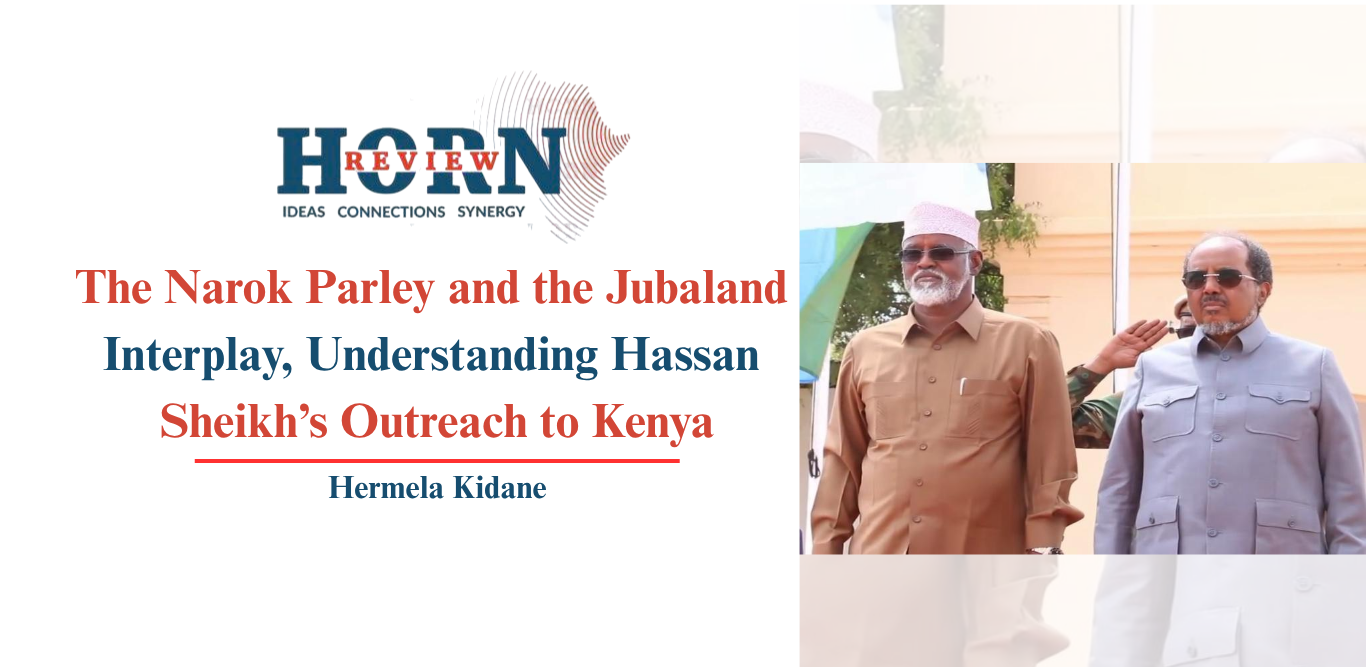
Somali President Hassan Sheikh Mohamud made a closed door working visit to Kenya holding private face to face talks with President William Ruto at the latter’s farm in Narok County. Villa Somalia described the meeting as a routine review of bilateral relations and regional developments. The official communiqué was deliberately minimalist highlighting the importance of continuing cooperation and collaboration in peace, stability and development. However this standard diplomatic language have more story based in Somalia’s internal power struggles. The choice of venue itself warrants attention. A private farm in Narok far from formal settings in Kenya suggests a meeting designed for discretion and candid exchange. The absence of large delegations and the brevity of the visit reinforce the impression of a focused issue specific agenda.
The visit was driven less by routine bilateral matters and more by Somalia’s geopolitical concerns over Jubaland State led by President Ahmed Mohamed Islam Madobe. While the Federal Government of Somalia has successfully influenced leadership changes in other Federal Member States, Jubaland stands apart as a region where Somalia’s authority remains decisively limited. This reality creates deep unease in Villa Somalia especially with national elections approaching. The timing of the visit is unlikely to be coincidental.
President Madobe has built a resilient political and economic base in Jubaland. The region benefits from the Kismayo port which generates substantial independent revenue through trade and livestock exports. It also maintains a capable regional security force the Jubaland Security Forces with years of combat experience against al-Shabaab and operates with considerable political autonomy. These forces maintain their own command structures and operational doctrines that are not easily subordinated to Somalia.
This setup goes beyond ordinary federal-state tensions. Jubaland functions as a parallel power center that challenges Somalia’s preference for a more centralized state. For President Mohamud Madobe is no longer just a regional leader but a credible potential challenger in the extended 2026 electoral cycle. Madobe’s political durability has created a constituency and network of alliances that extend into national politics.
It is against this domestic act that the Narok meeting should be understood. The core though unstated objective appears to have been an attempt by Somalia to enlist Kenya’s help in managing or moderating Madobe’s growing influence. Jubaland shares a long border with Kenya, maintains deep clan and commercial ties with Kenya’s North Eastern region and has a long history of security and economic cooperation with Kenya. These factors make Kenya the only external actor with meaningful Coercive capacity over Jubaland’s leadership.
Hassan Sheikh’s move presents a form of diplomatic triangulation seeking external support to address an internal political challenge that Somalia has been unable to resolve directly. This reflects the limitations of the FGS in enforcing its will across Somalia’s federal system and shows a contradiction at the heart of Somali federalism.
This strategy however collides directly with Kenya’s core national interests. From Kenya’s perspective Jubaland is not just another Somali region it is a vital security buffer and a forward line of defense against al-Shabaab. Madobe’s forces work hand in hand with the Kenyan Defence Forces under the African Union in Somalia. Years of close intelligence sharing, joint patrols and coordinated operations have created a deeply institutionalized security partnership that has repeatedly proven effective in keeping al-Shabaab away from Kenyan territory. Kenya has a direct exposure in Jubaland’s stability. Any destabilization of Madobe’s administration risks creating a security gap that could allow al-Shabaab fighters to push closer to Kenya’s border destabilizing Kenyan civilians and national security. Beyond security Kenya also benefits from strong economic and people to people ties with Jubaland through cross border trade and the Somali community in Kenya’s North Eastern region. For these reasons Kenya are highly unlikely to sacrifice a reliable and battle tested partner in Kismayo for an uncertain Somalia’s centric arrangement.
The Narok discussions were also shaped by Ethiopia’s regional security interests which further reinforce Madobe’s position. The Ethiopia-Jubaland relationship is a mature, transactional partnership based on mutual pragmatic needs. Jubaland’s border areas have provided geostrategic depth for Ethiopian security concerns. This pattern positions Madobe as an important stabilizing actor for Ethiopian interests in the region. Importantly this reflects standard geopolitical pragmatism among neighboring states rather than any hostility toward Somalia. Both Kenya and Ethiopia prioritize border stability and counter terrorism cooperation. Jubaland’s role as a secure buffer serves broader regional security goals that benefit multiple countries.
The Narok meeting highlights the structural limits of federal authority in Somalia. In the Horn of Africa, effective power often flows through networks of security alliances, economic interests and regional relationships. Somalia faces practical constraints it cannot easily deploy force against a region supported by neighboring armies, it cannot financially isolate a port based administration and it struggles to out position a leader skilled in balancing external relationships. This does not damage bilateral ties between Somalia and Kenya. Instead the visit shows the multifaceted realities of regional politics. Madobe’s Jubaland has become structurally important because it delivers the stability and security cooperation that Kenya and Ethiopia value.
For President Mohamud, the journey to Narok highlighted the challenges of centralized state building in a decentralized federal environment. The deep concern in Somalia stems from recognizing Jubaland as a substantial political alternative with strong regional backing. This reality requires sophisticated political navigation rather than direct confrontation. The Narok parley offers important insights into Somalia’s political arena. While official statements focused on cooperation, the real importance lies in what the visit shows about power distribution. Jubaland operates within a protective framework of Kenyan security needs and Ethiopian interests making it a key pillar in the Horn’s security structure.
Sustainable progress in Somalia requires practical accommodation of federal realities. For Somalia influence lies in building genuine trust and delivering results that address the concerns of federal states rather than seeking external mediation against them. The unity cannot be imposed through diplomatic positioning alone it must be constructed through inclusive political frameworks broad enough to accommodate powerful regional actors. The trip from Narok back to Somalia served as a reminder of Somalia’s governance challenges. Understanding these acts honestly is essential for lasting stability in Somalia and the wider Horn.
By Hermela Kidane, Researcher, Horn Review