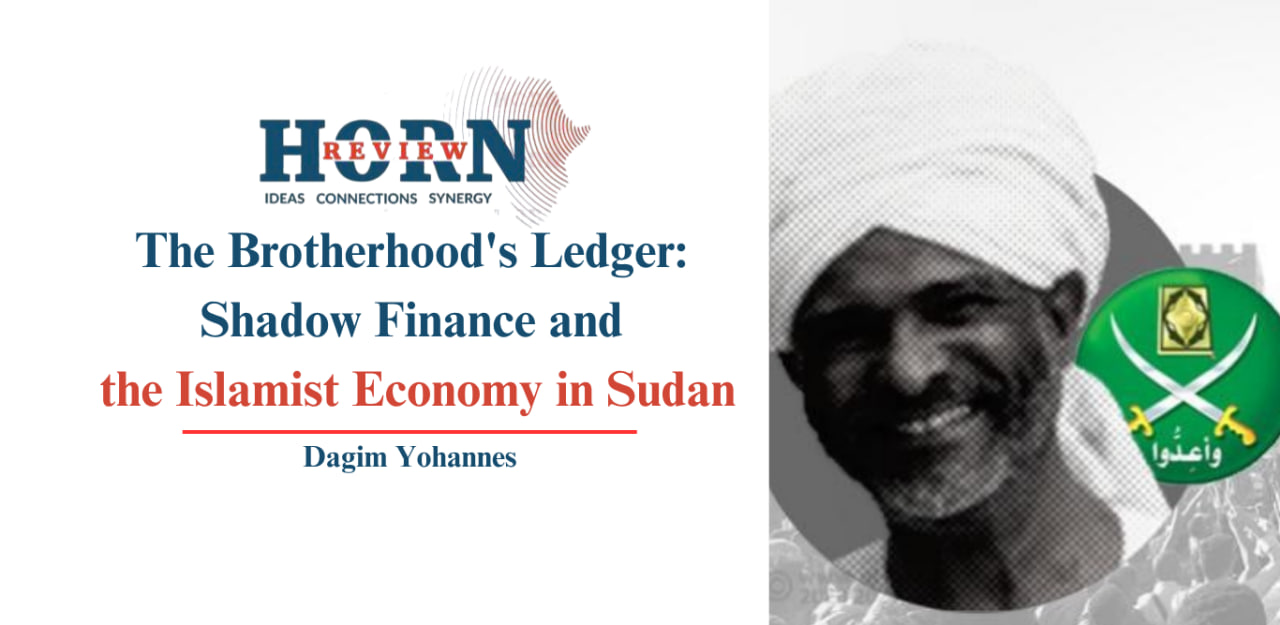
When Omar al-Bashir was toppled in April 2019 after thirty years of Islamist rule, Sudan’s transitional government moved quickly to dismantle the economic architecture that had sustained his regime. Assets were seized, key figures convicted, and a formal dismantling committee the Empowerment Removal Committee was tasked with tracing the financial sinews of the Sudanese Islamic Movement (SIM) across state institutions. What that process revealed was not merely corruption but a deliberate system of state capture: a layered network of companies, offshore holdings, and patronage channels engineered to preserve the Muslim Brotherhood’s grip on Sudan’s productive economy regardless of who nominally held power. The October 2021 military coup, orchestrated against the civilian transitional council, reversed nearly all of that reckoning. It restored figures who had been convicted, returned seized assets, and reintegrated into the state the very networks the transition had sought to exercise. Sudan has been at war since April 2023, and the humanitarian toll is catastrophic, more than 12 million people displaced, famine spreading across multiple states, and tens of thousands dead. Yet the financial infrastructure of political Islam continues to function, shielded by a military leadership that depends on it for manpower, financing, and institutional reach it cannot generate on its own.
The Architect: Abdelbasit Hamza and the Financial Octopus
No individual better illustrates the depth and durability of the SIM’s financial apparatus than Abdelbasit Hamza Elhassan Mohamed Khair. During the Bashir era, Hamza served as chairman of Sudatel, Sudan’s primary telecommunications provider, while simultaneously building one of the country’s most expansive private empires across real estate, oil, land, gold, and financial services. Sudanese investigative probes at the time of his arrest estimated the total value of his holdings in the billions. He was not merely a businessman operating in a favorable political climate; he was a central node in the SIM’s economic strategy, managing financial flows that extended well beyond Sudan’s borders.
On October 18, 2023, the United States Treasury’s Office of Foreign Assets Control (OFAC) designated Hamza a Specially Designated Global Terrorist (SDGT) for managing companies in Hamas’s investment portfolio, laundering money, and generating revenue for the group. The designation confirmed that Hamza had been directly involved in the transfer of nearly $20 million to Hamas, including funds routed to senior Hamas financier Mahir Jawad Yunis Salah, himself designated by OFAC in 2015. Nine days later, on October 27, OFAC followed with a second action, sanctioning three of Hamza’s companies Zawaya Group for Development and Investment Co. Ltd (Sudan), Zawaya Group for Development Investment Sociedad Limitada (Spain), and Larrycom for Investment Company (Sudan) as instruments of Hamas’s secret global investment portfolio. The European Union simultaneously designated Zawaya Group, describing it explicitly as a front company used to facilitate Hamas financial flows. Both the UK government and the US State Department’s Rewards for Justice program, which offers up to $10 million for information disrupting Hamza’s financial mechanisms, have confirmed the scope of his terrorism financing activities. OFAC further noted that Hamza carries longstanding ties to al-Qaeda and to companies linked to Osama bin Laden, who resided in Sudan during the 1990s.
leaks revealed that through Zawaya Group, Hamza held stakes in Cyprus-based Matz Holdings, which secured lucrative gold mining concessions in Egypt. Documents showed assets worth tens of millions of dollars, with Hamza retaining a 10 percent stake even after divesting a substantial portion of his shares the day before Bashir’s ouster in April 2019, a transaction that itself indicates advanced warning of the regime’s imminent collapse. He also owned Spanish real estate through a separate vehicle later caught in OFAC’s second sanctions round. Mohamed Al-Faki Suleiman, the former acting head of Sudan’s civilian anti-corruption committee, told CNN that Hamza’s portfolio encompassed investments in oil, hotels, marketing, and contracting, and that he had illegally acquired millions of acres of land. Al-Faki confirmed that his committee had flagged hundreds of millions of dollars in external assets to US and European authorities as early as 2019 and that those governments did not act until after October 7.
Sudatel as Nerve Center: The Institutional Architecture of Islamist Finance
Sudatel’s role in Sudan’s political economy was never reducible to telecommunications. Under Bashir, it functioned as a hub for Islamist capital accumulation, a state-linked enterprise whose leadership overlapped with SIM networks and whose offshore investment structures served as conduits for wealth extraction. alliances between Sudatel leadership, including former chair Abdel-Aziz Osman, and figures such as Hamza, involving opaque share arrangements and investments routed through foreign holdings including Expresso and Larrycom. These structures permitted the recycling of telecom revenues into parallel Islamist financial channels spanning banking, imports, and real estate, all while Sudatel maintained the appearance of a legitimate publicly listed company.
The 2021 coup ensured that this architecture survived the transition intact. Hamza, who had been arrested in 2019, convicted on corruption and money laundering charges, sentenced to ten years imprisonment, and had approximately $1.2 billion in assets seized, was released from prison in 2021 and had his asset seizures reversed. Reports which spoke with security sources in Cairo, Hamza subsequently relocated to Egypt, where he was later detained by Egyptian authorities for intelligence questioning though Egypt has not charged him with any domestic offenses. The picture that emerges from these accounts is not of a man brought to justice and then escaped, but of one whose protection was actively arranged. Burhan both secured Hamza’s release and facilitated his exit from Sudan. OFAC’s designations, the EU’s parallel measures, and the ongoing Egyptian inquiry collectively confirm that the financial network Hamza operated remained functional throughout and after the transition period.
The enduring financial empire of Abdelbasit Hamza and the broader Sudanese Islamic Movement (SIM) demonstrates that Sudan’s Islamist economic architecture was never merely a feature of Omar al-Bashir’s personal rule. It was a resilient, deliberately engineered system of state capture designed to outlast any single regime. The rapid reversal of transitional reforms after the 2021 coup, the reintegration of sanctioned networks, and the military’s ongoing reliance on these patronage structures reveal how deeply embedded this parallel economy remains even amid catastrophic war, mass displacement, and famine.
Hamza’s case is emblematic: a businessman whose telecom leadership, offshore holdings, gold interests, and direct financial support for Hamas (as confirmed by OFAC, EU, and UK designations) blurred the lines between legitimate commerce, corruption, and terrorism financing. His ability to retain influence, relocate under protection, and maintain assets despite convictions and sanctions underscores the transnational adaptability of these networks. Sudatel, far from a neutral utility, functioned as a critical node for recycling revenues into Islamist channels across banking, real estate, imports, and extractives.
Today, as Sudan fractures, this shadow finance provides the military and aligned Islamist elements with resources, institutional reach, and external alliances they could not otherwise sustain. It perpetuates conflict by funding proxies, shielding illicit flows, and undermining any genuine civilian-led transition. International designations by the US, EU, and others represent important steps, but they remain reactive and incomplete without sustained pressure on enablers in Sudan, Egypt, and Gulf financial hubs, coupled with aggressive asset tracing and disruption of gold, telecom, and investment conduits.
Ultimately, dismantling Sudan’s Islamist economy is not just an anti-corruption imperative, it is a national security and counter-terrorism necessity. Without addressing these entrenched financial sinews, cycles of authoritarian resurgence and violence will persist, keeping Sudan trapped in a loop where formal politics change but the real power structures endure. True stabilization demands not only battlefield outcomes but the systematic excision of this parallel state within the state.
By Dagim Yohannes, Researcher, Horn Review