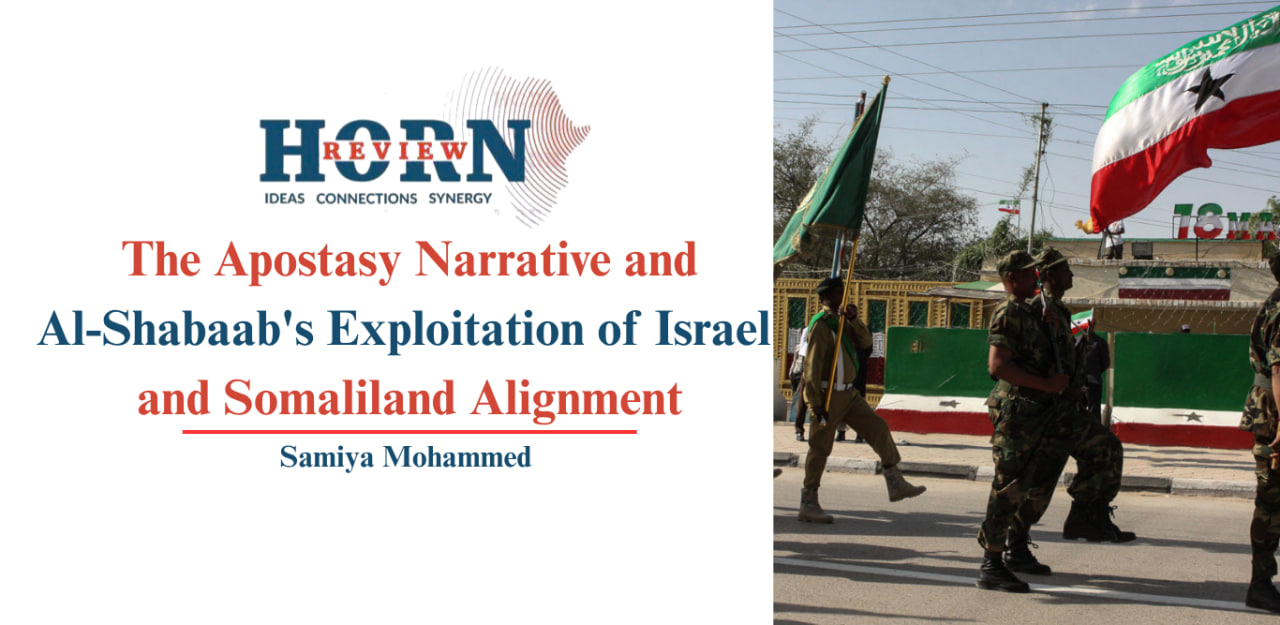
The diplomatic and security realignment between Israel and Somaliland, embassy opening in Jerusalem and the confirmation of Israeli military training for Somaliland forces has generated a discernible security response from jihadist elements in the Horn of Africa. Al-Shabaab’s immediate condemnation of these developments formulated within a narrative of theological betrayal and foreign encroachment presents more of rhetorical posturing. It is a move that amplifies militant recruitment, radicalization and operational activity across the region. This shows the mechanisms through which the Israel-Somaliland engagement may be weaponized by jihadist groups to expand their influence, deepen their networks and potentially foster convergence among disparate militant actors.
Contemporary jihadist movements demonstrate a sophisticated understanding of the power of narrative in shaping political violence. The operational environment for groups such as Al-Shabaab is not limited to territorial control or direct military engagement and it is fundamentally concerned with the contestation of legitimacy and the mobilization of popular objections. The decision by Somaliland leadership to establish official diplomatic representation in Jerusalem provides ready made and highly resonant objections that can be harnessed to portray the administration as having abandoned core Islamic principles. Al-Shabaab’s statement which condemned the Somaliland leadership for abandoning the Islamic faith and urged locals to oppose the administration as illegitimate exemplifies this framing.
This narrative construction operates on multiple levels simultaneously. At the theological level the group positions itself as the defender of Islamic sanctity against a political entity that has transgressed fundamental religious boundaries. At the political level the accusation of apostasy delegitimizes the Somaliland government’s authority creating space for alternative governance structures that militant groups propose. At the social level the narrative appeals to communal identities and shared objections, transforming a diplomatic initiative into a perceived assault on collective religious and cultural dignity. The effectiveness of this approach is predicated on the existence of deep anti Israeli sentiment across Muslim societies in a sentiment that jihadist groups have consistently exploited to expand their constituencies and justify violence.
The historical record demonstrates that perceived betrayals of Islamic solidarity have consistently functioned as potent recruitment catalysts for jihadist organizations. Al-Shabaab’s utilization of the Israel-Somaliland engagement fits this established pattern with precision. The public and verifiable nature of the security cooperation including police and military training provided by Israel to Somaliland forces provides concrete evidence that can be deployed in propaganda materials to substantiate claims of foreign encroachment and local complicity.
The narrative of apostasy and collaboration with a perceived enemy may erode this advantage by creating new objections within Somali communities that the group can exploit. Individuals who might otherwise be unreceptive to militant recruitment may become susceptible when presented with a narrative that frames local political leadership as having violated fundamental religious principles. The accusation that the Somaliland government does not represent the authentic Muslim Somali people directly challenges the administration’s foundational legitimacy potentially widening the audience for Al-Shabaab’s message.
Furthermore the framing of security cooperation as establishing a Zionist outpost or foreign military presence in Muslim lands resonates with established jihadist themes of resistance to foreign domination. This narrative has historically proven effective in mobilizing support as it transforms local conflicts into struggles against external powers. Al-Shabaab’s ability to portray the Israeli training program as evidence of a larger conspiracy to subjugate Muslim populations may attract individuals motivated by anti imperial sentiment expanding the group’s recruitment pool beyond purely religious or ideological adherents.
Beyond the immediate threat of intensified recruitment, the Israel-Somaliland engagement risks fostering tactical convergence among groups that have historically maintained distinct operational roads. Al-Shabaab, Islamic State affiliated factions active in Somalia and the Houthi movement in Yemen share certain interests despite ideological differences. The introduction of a unifying objections centered on Israeli involvement in the Horn of Africa may serve to bridge these divisions creating opportunities for cooperation that were previously limited.
The Houthis have issued warnings regarding any Israeli presence in the region and have demonstrated a willingness to target perceived threats to Red Sea shipping. This posture aligns with Al-Shabaab’s opposition to Israeli influence creating a potential convergence of interests that could manifest in operational coordination. While sectarian differences between the Shia Houthis and the predominantly Sunni Al-Shabaab present genuine obstacles to formal alliance, the logic of shared opposition to Israeli involvement may facilitate limited cooperation in areas such as weapons smuggling, intelligence sharing or coordinated messaging.
The potential for such convergence is high by the geographic proximity of these actors and the existence of established smuggling routes and informal networks across the Red Sea and Gulf of Aden. The Horn of Africa has served as a transit point for arms and fighters moving between the Arabian Peninsula and the African continent and the coming of a shared anti Israeli narrative may facilitate increased interaction among groups operating in this space. Even in the absence of formal operational coordination, parallel targeting of shared adversaries would compound the security challenges facing regional states and international maritime interests. The security cooperation between Israel and Somaliland while intended to enhance the latter’s capacity to address internal threats may inadvertently contribute to an escalation cycle that undermines its own objectives. Al-Shabaab’s narrative exploitation of the training program transforms it from a counterinsurgency tool into a recruitment asset as the very existence of Israeli involvement provides proof of the accusations levelled against the Somaliland government. This mirrors patterns observed in other contexts where foreign security assistance to local partners has been weaponized by insurgent groups to mobilize opposition.
The risk is that intensified rhetoric from Al-Shabaab and potentially allied groups will lead to increased attacks targeting Somaliland security forces, government officials and associated infrastructure. These attacks would necessitate robust countermeasures from the Somaliland government and may spill to other regional state actors as well. This circular acts reinforces the narrative of foreign involvement and local collaboration perpetuating the conditions that fuel militant recruitment and radicalization. The prospect of a sustained cycle of violence wherein each security response generates new objections and recruits for the insurgency heightens the risk of a protracted conflict that destabilizes the region without achieving decisive security outcomes.
Somalia which claims sovereignty over Somaliland has consistently opposed the territory’s pursuit of international recognition and the alignment with Israel introduces a new dimension to this dispute. The prospect that Israeli security cooperation with Somaliland could include intelligence sharing or other forms of support may prompt Somalia to seek countervailing alliances further complicating regional dynamics.
Al-Shabaab’s operational reach already extends across borders into Kenya and other neighboring states and the intensification of recruitment and radicalization within Somaliland could expand the group’s capacity to project violence beyond its traditional operating areas. The narrative of anti-Israeli resistance has demonstrated trans regional appeal in previous contexts and the exploitation of this narrative by Al-Shabaab may resonate with jihadist sympathizers across the Horn of Africa and beyond. This heightens prospects for the diffusion of militant activity as individuals motivated by the perceived betrayal of Islamic principles seek to join or support the group.
These risks fuelling a cycle of violence wherein countermeasures reinforce the objections that generate insecurity undermining the objectives of the security cooperation itself. The regional implications including the potential for cross border threats and the exacerbation of existing geopolitical rivalries heighten prospects for a sustained period of intensified conflict however well intentioned must be calibrated against its potential to generate the very instability it seeks to prevent. The exploitation of the Israel and Somaliland engagement by jihadist groups demonstrates the continuing power of narrative in shaping conflicts and the necessity of accounting for these dimensions in planning.
By Samiya Mohammed, Researcher, Horn Review