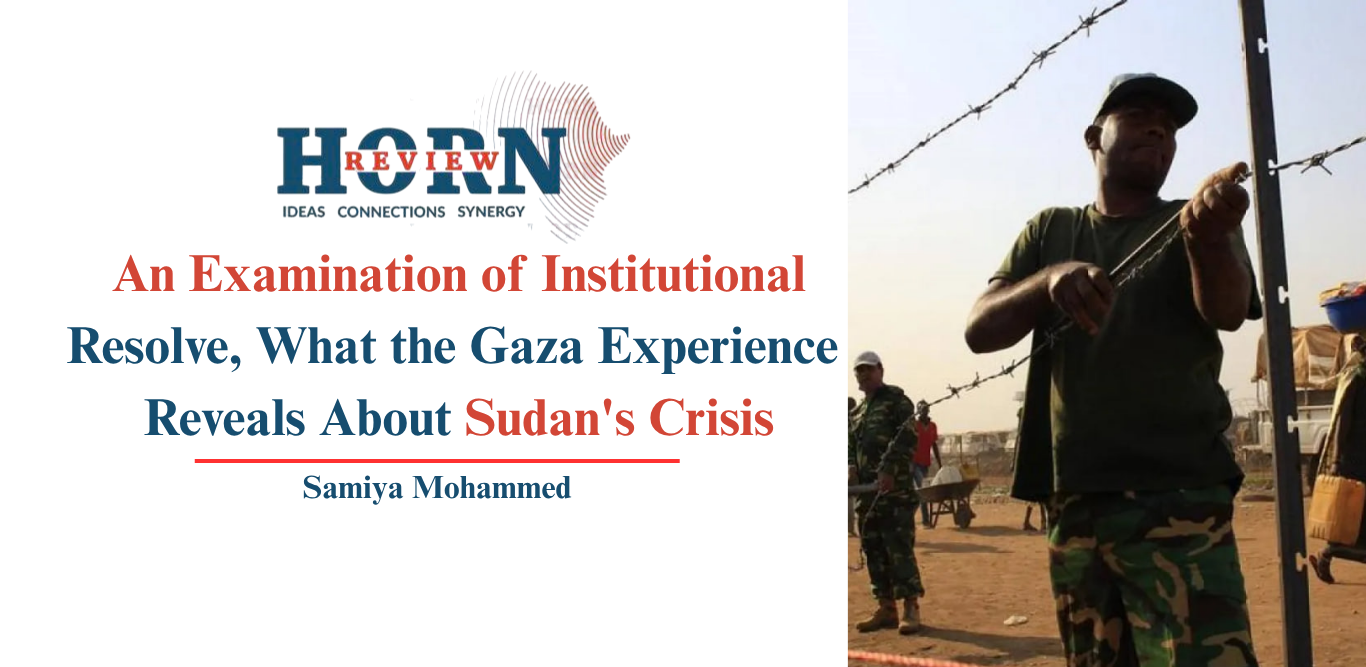
The reestablishment of a United Nations operational headquarters in Khartoum following the Sudanese Armed Forces consolidation of control over much of the capital has been met with a measured sense of relief by the international community. It is perceived as a step in a logistical necessity to facilitate the delivery of aid to a nation with what the UN itself has described as one of the most severe humanitarian crises in the world. However this step when viewed through the experience in Gaza should provoke unease and a searching examination of the UN’s operational posture in conflict zones. The reopening in Khartoum operating from territory dominated by one resurrects a parallel that if Sudan is destined to mirror Gaza’s scepticism toward international institutions leaving its civilian population caught between warring parties and a compromised humanitarian system.
The parallel with Gaza is not one of identical circumstances but of a shared and concerning pattern of operational and credibility challenges. In Gaza the UN’s humanitarian apparatus particularly the UN Relief and Works Agency for Palestine Refugees became a subject of intense international scrutiny and a lightning rod for accusations of being compromised by its operating environment. Allegations of institutional infiltration by Hamas, the diversion of aid and a failure to maintain the fundamental humanitarian principles of neutrality, impartiality and independence have severely eroded trust in the UN’s ability to act as an honest broker.
The controversy surrounding UNRWA including claims that a percentage of its staff were affiliated with militant groups and that its facilities were routinely exploited for military purposes illustrates the extreme vulnerability of humanitarian missions when they are forced to operate under the dominance of a single faction. This situation has fostered a cynicism where humanitarian action is often perceived not as a neutral life line but as a tool for political survival.
While the operational challenges in Gaza are distinct, the risks for Sudan are similar. The UN has chosen to base its renewed central operations from Khartoum which is a city firmly under SAF control. This operational location while necessary for logistical efficiency creates an immediate and fundamental asymmetry in its engagement with the conflict. Humanitarian actors operating from the territory of one armed faction regardless of their intentions face immense pressure to secure and maintain access often leading to a form of self censorship or a soft pedaling of violations perpetrated by the controlling party. The perception of partiality of being hosted, facilitated and reliant upon the SAF for movement and security can be as damaging as actual bias. It provides the SAF with a powerful tool to shape the narrative of the conflict and control the flow of information about its own conduct. The risks here are a documented pattern in humanitarian emergencies where the physical and political centre of gravity lies with one side.
This concern is seen by a credible analysis of the SAF’s composition and it’s ideological under pinnings. International observers have documented the influence of Islamist networks particularly the remnants of the Kizan within the SAF’s command structures and its auxiliary forces. The release of high profile Islamist figures from Kober Prison at the outset of the war and the emergence of brigades like the Al-Baraa Ibn Malik Brigade which has been sanctioned by the US Treasury point to a deep ideological alignment. This Brotherhood in Khaki presents a counter revolution which is an attempt to restore the political project that was overthrown by the 2019 uprising. The SAF leadership while publicly denying deep ties is depicted as a vehicle for these Islamist who provide manpower and political direction in exchange for the promise of a post war return to power .
This ideological dimension introduces a complexity to the UN’s humanitarian mission. If the SAF is in part an instrument for the re-establishment of an Islamist state then humanitarian operations facilitating its control over the capital and its access to international legitimacy become politically charged by default. The situation creates a parallel with Hamas which has been described as the most internationally recognised Brotherhood linked armed movement. While the SAF presents a state controlled model of Brotherhood power and Hamas an insurgent one the core tension is identical with the challenge of delivering independent, principled humanitarian aid through a structure that is ideologically and operationally intertwined with the authority of a single, non neutral party. The potential for co option, whether through direct influence over staff, the vetting of aid or the self censorship of reporting on SAF aligned atrocities is a palpable threat to the integrity of the UN’s mission.
Therefore, the concern about compromised neutrality is viable and warrants serious scrutiny. To avoid replicating the Gaza trajectory, where international institutions became a byword for bias and complicity the UN must demonstrate a proactive commitment to upholding its principles. This commitment must be visible. The Gaza parallel may be strongest in illustrating the operational and credibility pitfalls of operating under one faction’s dominance but it is a cautionary tale of immense relevance to Sudan. Without deliberate and transparent safeguards Sudan risks following Gaza’s path toward skepticism of international institutions. The consequences are dire since a civilian population already enduring suffering will be left with a compromised humanitarian system that is viewed with suspicion by the very people it is meant to serve. Pragmatism without principle is a short sighted strategy that ultimately undermines the UN’s core humanitarian mission and its role as a guardian of international norms. The reopening of the UN’s headquarters in Khartoum is not a victory however is a test. The next step is to see whether the UN will pass it or whether Sudan will become the next country where humanitarianism is sacrificed to political convenience leaving its victims to the mercy of both the warring parties and a system that has lost their trust.
By Samiya Mohammed, Researcher, Horn Review