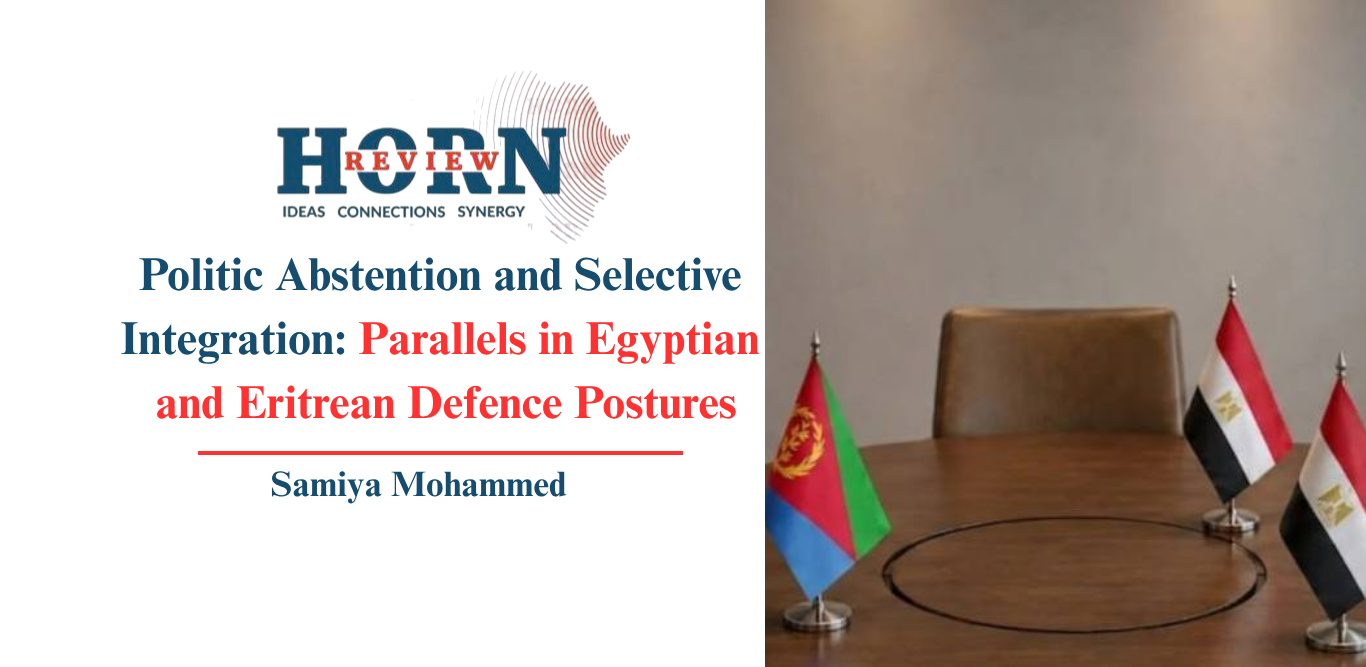
The continuing security design of the Red Sea and overreaching Middle Eastern region increasingly reveals a pattern of deliberate behaviour among states that prefer measured engagement over exacting alliance structures. To focus on meaning, Egypt and Eritrea despite immense disparities in scale, military capability, diplomatic reach and historical influence display noteworthy similarities in the style and logic of their external security relationships. These parallels illuminate a shared execution of disposition where a preference for practical, selectively transactional engagement that maximizes national leverage while avoiding deep institutional entanglement.
Egypt’s military and security deployments across parts of the Gulf have revived debates concerning the nature of regional alignment systems. Cairo’s approach appears to combine participation with restraint. It contributes to security arrangements where its interests converge with those of Gulf partners and external powers, simultaneously avoids complete incorporation into inclusive regional command structures, particularly those that would publicly integrate Egypt. This selective participation is interpreted as creating operational ambiguities within evolving regional deterrence planning. This pattern bears meaningful resemblance to Eritrea’s own external posture. Eritrea has repeatedly demonstrated a willingness to provide access, logistical utility, geographic advantage or tactical cooperation to regional and international actors without binding itself to permanent multilateral commitments. In both cases, the underlying logic is carefully managed engagement designed to preserve autonomy while extracting security, economic, and political benefits from shifting regional dynamics.
Egypt culture reflects an unwillingness to accept the modest burdens of transparency that genuine collective security demands. Egypt’s partners have increasingly noted that Egypt expects the benefits of alliance protection without reciprocating with commensurate operational commitments which is a form of free riding dressed in the language of sovereignty. On another point Eritrea’s motivations produce a somewhat parallel operational style. In practice however this style has rendered Eritrea a persistently unreliable actor willing to host foreign military installations only as long as short term rents flow inward with little regard for the long term destabilization such ad hoc arrangements produce across the Horn of Africa and the southern Red Sea. The geography further reinforces the comparison. Egypt and Eritrea occupy positions within one of maritime corridors. Geography grants both states relevance regardless of fluctuations in their broader diplomatic relations. However geography also exposes a shared failure with neither state has translated its positional advantage into a coherent and rule based maritime security policy. Instead, both have monetized their geography through episodic access deals that invite external competition rather than dampening it. In this sense, both states understand that selective cooperation can generate substantial leverage. And it is precisely this non substitutability that has encouraged behaviour bordering on rent seeking extracting maximum concessions while contributing the bare minimum to shared security goods.
However some distinction is essential because it clarifies the limits of the analogy. Egypt’s selective participation reflects the measurements of a heavyweight state seeking to preserve leadership autonomy while remaining deeply embedded within regional structures. Eritrea’s approach reflects a smaller state’s effort to maximise sovereignty and bargaining power despite limited institutional influence. The resemblance therefore exists not in power parity, but in a preference that when generalised across the region systematically erodes the very possibility of durable collective security.
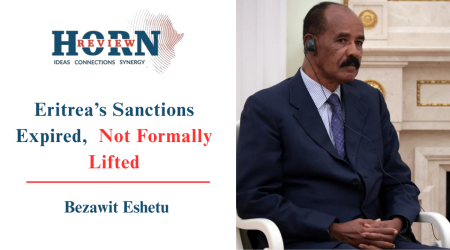
Recent developments in Egyptian-Eritrean relations further reinforce the relevance of this comparison. The expansion of educational, diplomatic and cooperation between Cairo and Asmara suggests a convergence inserted in compatible approaches to regional engagement. Egypt’s official approval of a Cairo University branch in Eritrea carries significance beyond educational diplomacy alone. It symbolises an effort to institutionalise influence through selective partnerships that deepen bilateral ties without requiring rigid alliance commitments. Yet this too carries a darker interpretation with Egypt is exporting its own model of transactional statecraft to a smaller neighbour, thereby consolidating a sub regional axis defined not by shared values or long term planning but by mutual convenience at the expense of broader regional order.
Such initiatives reveal how both states increasingly favour layered forms of cooperation that combine utility with political flexibility. Educational engagement, infrastructure collaboration, security coordination and diplomatic consultation together create a framework of partnership that remains adaptable rather than formally codified within expansive multilateral structures. This reflects a regional trend in which states seek influence through overlapping networks of cooperation instead of comprehensive alliance systems. That trend however is cause for concern rather than admiration since overlapping networks without fixed commitments produce diffuse responsibility, free riding and a race to the bottom in which the least reliable actor sets the standard for engagement. Moreover, the Egypt-Eritrea relationship unfolds an intensifying competition throughout the Red Sea region. States capable of engaging multiple actors without becoming fully absorbed into any single bloc often gain disproportionate diplomatic flexibility. But ambiguity is a double edged sword and what one state calls flexibility, its neighbours call unpredictability. The Red Sea’s growing reputation as a zone of shadow alignments and broken understandings owes much to the Egyptian and Eritrean preference for keeping options perpetually open while closing none.
Both Egypt and Eritrea appear acutely conscious of this reality. Their approaches suggest an understanding that excessive transparency in alignment can reduce bargaining power. By maintaining selective distance even while cooperating, they preserve the ability to recalibrate relationships as regional conditions evolve. This does not necessarily indicate unreliability rather, it reflects a sophisticated reading of a fragmented regional order in which permanent alignments are increasingly difficult to sustain. Yet the effect of such behaviour the very fragmentation that Egypt and Eritrea claim to navigate is in part a product of their own refusal to offer anything beyond provisional cooperation. They are not adapting to a broken system but they are perpetuating its brokenness.
Importantly, this style of engagement also challenges conventional assumptions about regional integration. External powers frequently conceptualise security through the framework of seamless interoperability, integrated command systems and formalised multilateral cooperation. For states like Egypt and Eritrea preserving sovereign discretion may outweigh the benefits of complete institutional integration. But discretion in this context is a luxury that neither state has earned through consistent contribution. Their sovereignty arguments is hollow when deployed to excuse the same behaviours that leave Red Sea states exposed to extra regional predation. This divergence creates structural asymmetries within regional security systems. External planners may seek coherent deterrence while participating states pursue selective involvement calibrated to domestic legitimacy, historical memory and national interest. The result is a regional order characterised by uneven commitments, layered loyalties and managed ambiguity which is an order that external powers increasingly view as dysfunctional yet are forced to accommodate due to the geographic points Egypt and Eritrea control.
Far from being anomalies, Egypt and Eritrea may therefore are avoiding binary alignment choices in favour of multidirectional diplomacy. They cooperate without fully committing, engage without fully integrating and extract benefits without surrendering independence. Such behaviour reflects not indecision but adaptation to an increasingly fluid geopolitical environment. Nevertheless adaptation is not virtue. A region full of actors who engage without committing is a region without guardrails precisely the environment in which miscalculation and escalation become routine.The comparison between Egypt and Eritrea is thus most persuasive when understood as an examination of method rather than equivalence. Both states demonstrate how regional actors can leverage geography, military relevance, and diplomatic flexibility to maximise autonomy within competitive regional systems. Their approaches reveal a shared preference for pragmatic engagement in national measurement rather than ideological alignment or institutional loyalty. That preference, however normalises , rewards opacity and punishes the very trust upon which lasting security must be built.
Ultimately, It is neither an overt alliance nor a purely symbolic partnership. Instead in this sense, the parallel between Egypt and Eritrea offers an important analytical lens for understanding contemporary regional politics but as a cautionary tale. When that selectivity becomes an end in itself, however the result is not stability but managed instability. Egypt may remain the far more consequential actor and Eritrea the more opportunistic host but both illustrate the quiet corrosion of collective security in an era defined by fluid alignments and contested regions which is a corrosion for which both bear responsibility.
By Samiya Mohammed, Researcher, Horn Review