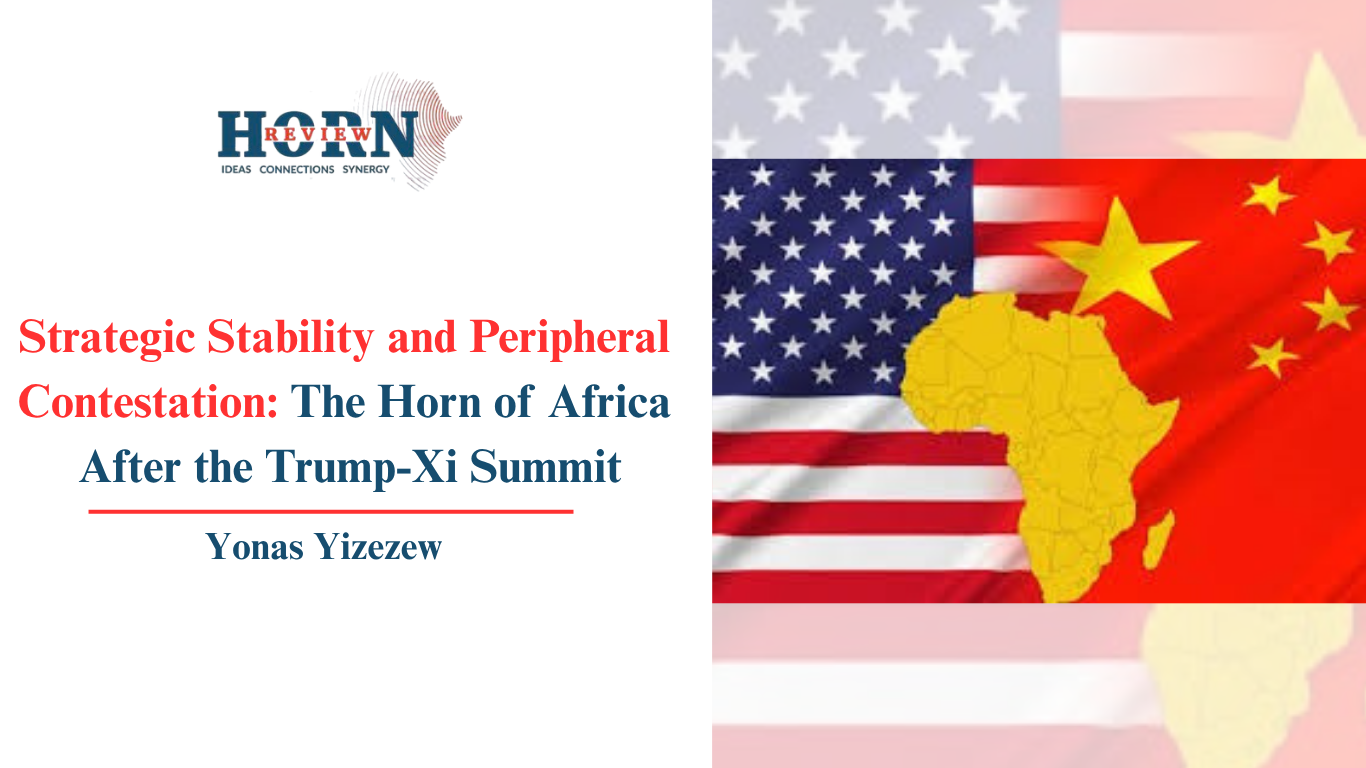
The Trump-Xi summit of May 14–15, 2026, delivered neither a major breakthrough nor a dramatic rupture. Instead, it produced a managed stabilization that both sides framed as a success. China’s Foreign Ministry described the outcome as leaders agreeing on “a new vision of a constructive China-U.S. relationship of strategic stability,” reaching “important common understandings on keeping economic and trade ties stable,” while “properly addressing each other’s concerns, and enhancing communication and coordination on international and regional issues.”
From the US viewpoint, results were modest. Xi delivered a firm warning on Taiwan, yet the American readout minimized it. On Iran, China offered only vague promises regarding the Strait of Hormuz blockade. Across economics, Taiwan, and Iran, China conceded little of structural importance. The summit did not reduce great-power competition in third regions. It established clearer rules of engagement—periodic leader-level meetings and trade truce extensions. This will allow rivalry in various parts of the world including the Horn of Africa and Red Sea to continue at full pace under more predictable parameters.
This equilibrium carries direct and significant implications for the Horn of Africa, the Red Sea corridor, and Ethiopia specifically. Viewed through a realist lens, the Horn exemplifies securitization in an anarchic environment with great powers pursue security, strategic advantage, and interests through competition and intervention. The US, as the established hegemon, works to preserve dominance over critical maritime routes, counter terrorism and security. China, as a rising power, expands its political-economic footprint. Their “stabilized” bilateral relationship regularizes this contest without resolving underlying tensions, producing clearer but still intense rivalry in peripheral zones.
The US and China operate with distinct but increasingly overlapping engagement models in the Horn, and the Beijing ‘stabilization’ allows both to pursue these models more methodically.
China’s approach is deeply embedded and structural, evolving from primarily economic BRI tools to strategic presence. The Addis-Djibouti railway, built by China, links Ethiopia’s landlocked economy to Djibouti, where China Merchants Port Holdings holds a 23.5% stake. China’s sole overseas military base in Djibouti completes this corridor, enabling monitoring and protection of its Maritime Silk Road investments. Early 2026 diplomacy with Foreign Minister Wang Yi’s visit to Addis Ababa and repeated envoy trips to Asmara and Ethiopia demonstrated Beijing’s priority: preventing Ethiopia-Eritrea deterioration that could threaten these assets. The Djibouti base marks China’s shift toward blue-water navy projection and direct strategic competition with the US.
Washington’s approach under Trump is transactional and sequenced around critical minerals, energy, and maritime security. Initiatives like the February 2026 Critical Minerals Ministerial and proposals for trading blocs aim to counter China’s supply chain dominance. US engagement with Ethiopia emphasizes strategic sectors with regional security, trade, investment, defense, and Red Sea/Bab el-Mandeb security — linking future cooperation in various areas. Camp Lemonnier in Djibouti remains central for US counter-terrorism, regional power projection, and countering Chinese influence while safeguarding sea lanes.
The Beijing summit’s stabilization means both powers will advance these architectures with less risk of uncontrolled escalation, yet at full intensity. Periodic communications reduce misunderstanding, but competition over supply chains, ports, and routes persists. Djibouti, hosting both US and Chinese bases, perfectly illustrates this managed overlap: each power justifies its presence via maritime security and counter-terrorism, while pursuing competitive objectives. Emerging Middle Eastern actors add multi-polar complexity by treating the Horn as an extension of their security complex.
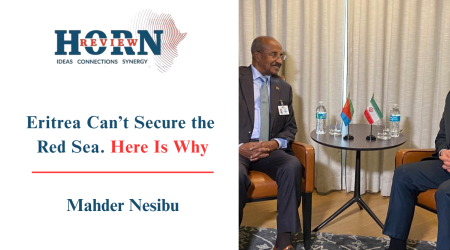
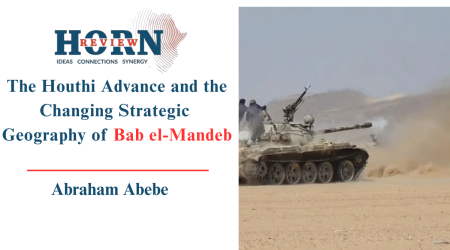
One of the clearest immediate implications of the post-summit equilibrium is accelerated US maneuvering in the Red Sea. Washington is actively advancing normalization with Eritrea, including plans to lift sanctions. Talks, facilitated by Egypt and involving Trump’s senior Africa envoy Massad Boulos and President Isaias Afwerki, center on Eritrea’s long Red Sea coastline. The context of Houthi disruptions in Bab el-Mandeb and the closure of the Strait of Hormuz, have brought into focus the strategic importance of the Red Sea as a vital maritime corridor connecting the Mediterranean with Asian trade and energy markets. As a result, this geography carries outsized value. The move also aims to send signals regarding regional stability.
For Ethiopia, this carries its own implications. The reset is embedded in US-Egypt ties, where Egypt competes with Ethiopia over Nile waters, the GERD, and opposes Ethiopian Red Sea ambitions while aligning with Eritrea. Washington is engaging Eritrea without apparent demands for its withdrawal from northern part of Ethiopia, cessation of support for internal armed groups in Tigray and other regions inside Ethiopia, or meaningful maritime access talks. This has the potential to strengthen an anti-Ethiopian axis. It might also weaken external leverage for compromise, allowing Eritrea to keep Addis focused inward on internal security fragmentation rather than outward projection. The behavior of the Eritrean regime, long characterized by isolation and regional destabilization, adds another layer of complexity, as it may limit the effectiveness of any US engagement while still drawing Washington in due to immediate Red Sea priorities. The African Union’s Pretoria process has faltered, compounding the challenge. China maintains quiet influence via economic ties but prioritizes protecting its infrastructure assets over forceful mediation.
Yet on the ground this development could still change dynamics in unexpected ways. Deeper US engagement with Asmara might create new leverage points for Washington to quietly press for de-escalation or confidence-building measures between Eritrea and Ethiopia. Transactional US interests in Red Sea stability could incentivize practical arrangements on ports or economic access. Occurring alongside Ethiopia’s own Bilateral Structured Dialogue with Washington, US-Eritrea normalization might open a narrow window for trilateral or facilitated talks. While risks dominate currently, the fluid transactional nature of the approach means outcomes on the ground are not predetermined and will depend on how these regional countries position themselves and whether Washington sees value in a more stable region as part of broader maritime security.
Ethiopia is actively navigating this environment. On May 11, 2026 just before Trump’s Beijing trip, Addis Ababa and Washington signed the Bilateral Structured Dialogue (BSD) Framework. Covering economic prosperity and trade, defense and security cooperation, and regional peace and stability, the agreement institutionalizes relations. The delegation’s composition, including National Intelligence chief Redwan Hussein, reveals the weight placed on security, counterterrorism, intelligence sharing, and Red Sea coordination.
This move, combined with Ethiopia’s longstanding all-weather partnership with Beijing (reaffirmed in January 2026), shows Addis balancing both powers. The timing suggests deliberate positioning to secure institutional continuity with Washington amid peaking US Horn interest, while preserving Chinese infrastructure and other ties. Ethiopia simultaneously pursues IMF-backed reforms, AGOA restoration, and debt restructuring with China.
The Trump-Xi summit’s managed stabilization might allow the US and China to pursue their Horn and Red Sea objectives in part with predictability: China deepens infrastructure-driven influence and debt relationships; the US advances transactional access to minerals, bases, and coastlines. Both continue justifying actions through public goods (security, trade, counter-terrorism) while advancing competitive goals.
For Ethiopia, this means operating at the intersection of great-power equilibrium and regional rivalries. It gains structured channels with Washington and sustained ties with Beijing, but faces a complex regional architecture. The Horn’s states, particularly Ethiopia, absorb the costs of this regularized superpower competition through contradictory signals and persistent local tensions. Yet transactional openings may also create limited windows for on-the-ground shifts.
In a realist framework, the Trump-Xi meeting outcome reduces bilateral crisis risk but sustains the strategic contest in critical peripheries. Ethiopia’s success will depend on skillful balancing: leveraging the BSD for tangible security and economic gains, using Chinese partnerships for infrastructure continuity, mitigating the Egypt-Eritrea axis, and testing whether US engagement with Asmara can be steered toward practical stability measures rather than pure containment. The stabilized US-China relationship sets the broader parameters with regional actors like Ethiopia must still shape the concrete consequences on the ground.
By Yonas Yizezew, Researcher, Horn Review