Ethiopia’s Measured Response to Sudan’s Allegations
By Blen Mamo
The recent accusations advanced by the Sudanese Armed Forces against Ethiopia signal a potentially destabilizing inflection point within an already fragile regional order – one in which discursive escalation risks outpacing empirically verifiable realities. Ethiopia’s response has been deliberately calibrated: unequivocal in its rejection of what it characterizes as unsubstantiated allegations, yet notably restrained in tone and embedded within a broader normative commitment to regional stability. Central to the dispute are claims implicating Ethiopia in drone operations within Sudanese territory – assertions that Addis Ababa has categorically denied. Rather than engaging in reciprocal rhetorical escalation, Ethiopian officials have reaffirmed foundational principles of sovereignty, non-interference, and mutual respect. This posture should not be dismissed as mere diplomatic convention; rather, it reflects a strategic effort to contain bilateral deterioration at a moment when Sudan’s internal conflict – characterized by competing military centers of power and fragmented territorial control – is already generating significant cross-border security externalities. Ethiopia’s discourse thus operates simultaneously on normative and strategic registers, coupling restraint in language with a clear emphasis on security buffering.
Ethiopia’s rebuttal must also be situated within a wider and increasingly complex security architecture along its western frontier. References to the Tigray People’s Liberation Front (TPLF) and its purported cross-border movements introduce a countervailing narrative that foregrounds the role of non-state armed actors within a fragmented conflict environment. In addition to the degree to which such claims are substantiated in open-source reporting, they also underscore a structural reality: the permeability of borders and the operational adaptability of armed groups in a theatre defined by overlapping and mutually reinforcing conflicts. Within this context, some analytical and intelligence-oriented discussions have referenced the notion of a TSIMDO-aligned understanding or tacit convergence among elements of the SAF, the TPLF, and the Eritrean political-military establishment (the PFDJ). This reflects the broader fluidity and pragmatic recalibrations that can emerge in protracted regional conflicts, particularly in the Horn of Africa, where historical trajectories of both cooperation and confrontation have repeatedly intersected.
In this regard, the legacy of interaction between the TPLF and the EPLF – now institutionalized as the PFDJ – and the Sudanese military establishment – remains analytically relevant insofar as it demonstrates that even deeply entrenched adversaries or allies have, at different historical junctures, engaged in tactical coordination when converging interests temporarily outweighed ideological enmity. This configuration is further extended to include Egypt as a key external actor of influence or strategic gravity within Sudan’s evolving security landscape. This is not limited to diplomatic alignment with SAF, but has been linked to Egypt’s expanding security footprint, including reported air and drone operations targeting Rapid Support Forces (RSF) positions inside Sudanese territory in recent months. Such actions are evidence of a more direct Egyptian engagement in the conflict environment, particularly in support of the Sudanese Armed Forces for various reasons – mostly, if not all in all, aimed at containing Ethiopia. Understanding the pattern of interaction of these actors is analytically significant – as it illustrates how rapidly shifting threat perceptions and short-term strategic calculations can generate complex and often overstated alignment hypotheses in environments where conventional alliance structures are weak, fragmented, or fluid.
Extending this line of analysis, Eritrea’s current active role in the Sudanese conflict cannot be fully understood without reference to the historical entanglements that structured insurgent-era alignments across the region. During the latter decades of the Cold War and into the early 1990s, the Sudanese military establishment, the Tigray People’s Liberation Front (TPLF), and the Eritrean People’s Liberation Front (EPLF) – the latter constituting the institutional precursor of the present Eritrean state – were embedded within an intricate web of tactical cooperation, logistical interdependence, and fluid political accommodation. Sudan, at various junctures, functioned as a critical rear base and transit corridor for insurgent movements operating against the Derg regime in Ethiopia, facilitating the circulation of personnel, materiel, and operational coordination across what were then highly permeable frontiers. This trajectory has continued to the present, with reports indicating the flow of arms to TPLF, Fano, and OLA splinter factions engaged in armed confrontation with the Ethiopian state. These linkages, however, were neither static nor uniformly aligned; rather, they reflected the contingent and often transactional character of insurgent politics in the Horn of Africa. Periods of cooperation frequently coexisted with episodes of tension, recalibration, and strategic realignment, underscoring a recurring pattern in which convergent adversarial pressures temporarily superseded deeper ideological and organizational cleavages.
The legacy of these interactions, including the most recent oscillations in Eritrea’s posture vis-à-vis the Ethiopian Federal Government, the TPLF, the SAF itself, and the Somali Federal Government, persists in the form of residual networks, institutional memory, and durable strategic cultures that continue to inform regional threat perceptions and interpretive frameworks. Hence, Eritrea’s position in Sudan should be understood within this dual analytical prism: as both a product of contemporary geopolitical contestation involving Ethiopia and as an extension of a longer historical trajectory in which alignments have remained inherently instrumental, reversible, and contingent upon shifting strategic imperatives. Various intelligence accounts further suggest an active Eritrean engagement in Sudan’s conflict environment, embedded within the operational and informational dynamics of the conflict – including involvement of Eritrean personnel operating alongside Sudanese forces in certain theatres of the war. Additional reports have also pointed to the use of Eritrean airspace in relation to Sudanese military logistics, as well as reciprocal threat perceptions in which the Rapid Support Forces have issued both direct and indirect warnings toward Eritrea.
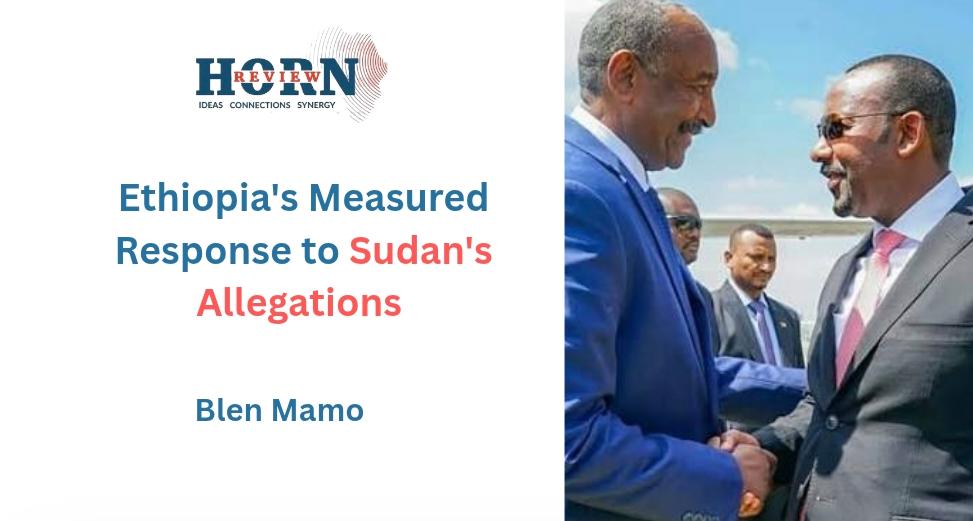
With Ethiopia, however, the analytical frame must be adjusted, as its position on Sudan should not be interpreted through a reductive lens of factional alignment, since such readings risk obscuring the underlying strategic logic guiding its longstanding behavior. Rather than signaling preferential alignment with specific Sudanese actors under the pretense of any geopolitical calculation, Addis Ababa’s posture has always been more coherently understood as an exercise in frontier stabilization and spillover containment. This translates into a form of regime-neutral engagement characterized by operational flexibility and pragmatic interaction across multiple nodes of authority within Sudan’s fragmented political landscape. While such an approach has to some extent generated perceptions of strategic ambiguity – particularly when localized security dynamics are extrapolated into broader geopolitical narratives – it is consistent with Ethiopia’s longer-standing diplomatic pattern of preserving maneuverability in volatile environments rather than committing to rigid alliance structures. Hence Prime Minister Abiy Ahmed’s visit to Port Sudan in 2024, marking one of the first high-level engagements with General al-Burhan after the displacement of formal authority from Khartoum. The visit was widely read as an effort to sustain direct channels with the Sudanese Armed Forces at a moment of institutional fragmentation. He also reportedly extended an invitation for Burhan to visit Ethiopia, which did not materialize, with some diplomatic accounts attributing this to Sudanese consultations with Egyptian counterparts. In parallel, Ethiopia has maintained an active humanitarian role in Sudan, particularly in facilitating cross-border relief operations and managing significant refugee inflows resulting from the conflict. This humanitarian engagement has been complemented by its continued participation in IGAD-led peace processes, where Ethiopia has historically played a leading mediating role. Within this framework, tensions have at times emerged over institutional influence, including Eritrea’s attempts to limit or contest Ethiopia’s prominence within regional mediation efforts. These dynamics are further complicated by the fact that both Sudan and Eritrea have experienced periods of suspension and subsequent reintegration within IGAD, with Sudan now formally re-engaging in the organization’s processes.
That said, Ethiopia’s contemporary strategic calculations are rather informed by an acute sensitivity to shifts in the regional balance of influence. The prevention of disproportionate external consolidation over Sudan’s political trajectory – often embedded within wider regional alignment patterns, including military coordination, border security arrangements, and historically conditioned strategic linkages – aligns with Ethiopia’s enduring interest in safeguarding strategic autonomy and mitigating risks of regional encirclement. This orientation does not imply counter-alignment per se, but rather reflects a preference for maintaining diversified diplomatic channels capable of absorbing uncertainty in an evolving security landscape. Within this logic, Ethiopia’s engagement with Sudan has combined high-level political contact, humanitarian coordination, and multilateral diplomacy in ways that are intended to preserve access across shifting centers of authority without overcommitting to any singular configuration of power.
Nonetheless, the broader informational space diverges from the position articulated by Ethiopia, and such narrative contestation now constitutes a central dimension of the Sudan conflict. Competing narratives – circulating across international media, policy platforms, and regional information networks – often function as instruments of strategic framing as much as attempts to draw Ethiopia more directly into Sudan’s conflict dynamics. Claims concerning military bases, proxy relationships, or cross-border operational coordination are interpreted variably by different stakeholders, each filtering available information through distinct security imperatives and geopolitical priors. Consequently, the informational domain has become an extension of the conflict itself, where perception management and narrative construction operate alongside material developments on the ground to pull Ethiopia into the Sudanese conflict. In this broader context, such allegations from Sudan also intersect temporally with developments in Tigray, including internal political reconfigurations following the dissolution of the Tigray Interim Administration (TIA) and efforts to recalibrate pre-2020 political arrangements within the region. These overlapping dynamics contribute to a fluid and sensitive domestic and regional environment in which signaling, perception, and timing acquire heightened strategic significance, including in terms of how federal authorities may interpret and respond to evolving political alignments in northern Ethiopia. It shall also be noted that Ethiopia’s sustained posture of maximum restraint in the face of not only Sudanese accusations, but also TPLF’s and Eritrea’s rhetorical and practical provocations, has contributed to a dynamic in which such actors increasingly resort to more explicit public attribution strategies – which reflects an effort to escalate narrative positioning by more directly implicating Ethiopia within regional security discourses. These developments illustrate how prolonged restraint by Ethiopia – in a highly contested information and conflict environment – can paradoxically, intensify attempts to redefine attribution and recalibrate the informational framing of the conflict.
Now therefore, assertions involving Ethiopia must be assessed within clearly defined evidentiary parameters rather than incorporated uncritically into broader explanatory frameworks and political rhetoric. In a regional context characterized by elevated mistrust, the amplification of unverified claims by Sudanese officials risks exacerbating instability while narrowing the space for maintaining channels of diplomatic engagement between the two countries. As much as questions persist regarding its perceived neutrality, Ethiopia has made it repeatedly clear that it retains significant functional advantages in relation to stability in Sudan, including geographic proximity, institutional familiarity with Sudanese political dynamics, and sustained engagement in regional diplomatic processes. The Ethiopian establishment is also cognizant that the effectiveness of these assets depends not merely on access, but on the ability to translate engagement into credibility through procedural consistency, calibrated neutrality, and alignment with multilateral frameworks. Ethiopia’s posture in relation to Sudan is thus best conceptualized as risk management rather than binary alignment. Its overriding objective is the prevention of a destabilizing configuration along its western frontier in a context marked by fragmented authority and shifting centers of power. This requires sustained engagement across a spectrum of actors – state and non-state alike – primarily to preserve situational awareness and maintain strategic flexibility rather than to formalize durable coalition structures, which is precisely the approach Ethiopia is currently pursuing.
In this sense, Ethiopia’s response to the current allegations reflects a coherent strategic logic anchored in restraint, diplomatic continuity, and escalation avoidance. By rejecting claims it deems unsubstantiated while simultaneously emphasizing dialogue, humanitarian engagement, and the necessity of a civilian-led political transition in Sudan, Ethiopia positions itself as an actor seeking stabilization within a highly fluid regional order. This episode, yet, underscores that in the Horn of Africa, contestation over narratives is not merely reflective of conflict dynamics, but increasingly constitutive of them.
Authors Bio
Blen Mamo is Executive Director of Horn Review and a researcher specializing in law, international security, and geopolitics in the Horn of Africa. She holds an LL.B and an M.Sc. in International Security and Global Governance.

RELATED
Posts
7
Sep
Abiy Ahmed and the Remaking of the Ethiopian State
Blen Mamo
The political trajectory of Abiy Ahmed cannot be adequately...
3
Sep
Is Ethiopia Ready for a Presidential System?
By Blen Mamo
Ethiopia has spent much of its modern political...
28
Aug
Ethiopia-U.S. Strategic Defense Partnership
The recalibration of United States–Ethiopia relations recently reflects a deeper...
20
Aug
Eritrea’s Buffer Zone Politics from Eastern Sudan to Ethiopia's Tigray
The most consequential development in the Horn of Africa may...
14
Aug
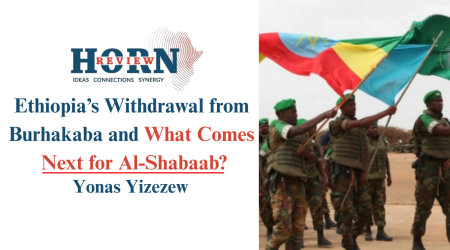
Ethiopia’s Withdrawal from Burhakaba and What Comes Next for Al-Shabaab?
The recent handover of the Burhakaba forward operating base...
13
Aug
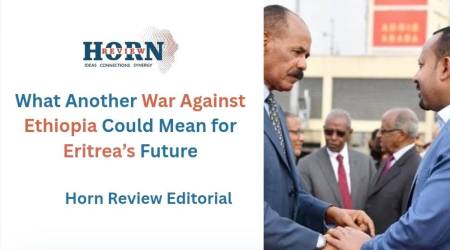
What Another War Against Ethiopia Could Mean for Eritrea’s Future
Another Ethiopia–Eritrea war would not be a replay of 1998....