
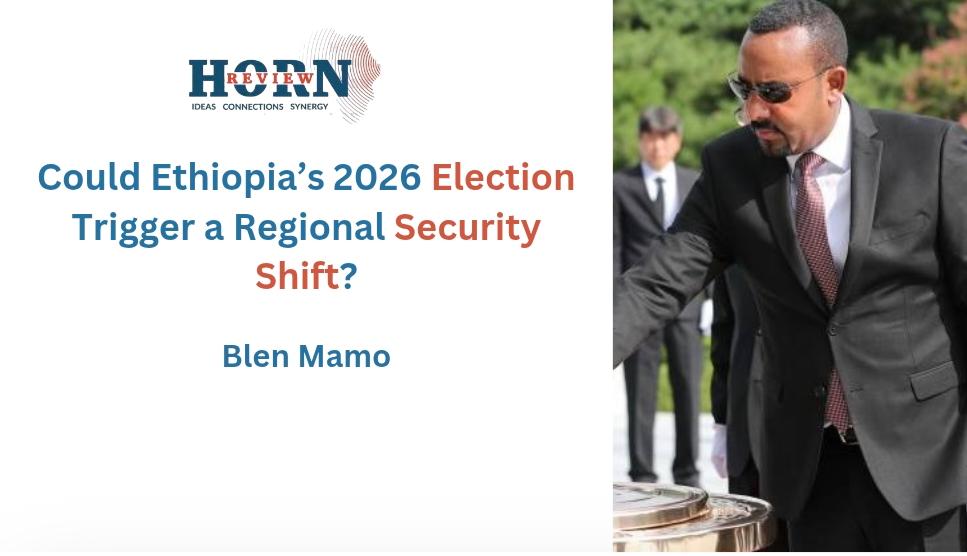
Could Ethiopia’s 2026 Election Trigger a Regional Security Shift?
By Blen Mamo
The 2026 Ethiopian general elections constitute a structural inflection point in the Horn of Africa’s security architecture, where domestic political contestation, elite fragmentation, and regional proxy competition intersect. Ethiopia’s internal political stability functions as a system-level variable for the wider Horn, given its demographic scale, military capacity, and geographic position bridging Sudan, South Sudan, Eritrea, Somalia, and the Red Sea corridor. The elections therefore operate not merely as a domestic institutional exercise but as a potential trigger mechanism within a broader regional balance shaped by overlapping state crises, external interventions, and contested sovereignty arrangements.
The current electoral environment cannot be understood in isolation from Ethiopia’s post-2005 political trajectory. The 2005 general elections remain the foundational reference point for contested electoral legitimacy in the modern Ethiopian state. That election produced a rare moment of competitive electoral pressure on the ruling coalition, the Ethiopian People’s Revolutionary Democratic Front (EPRDF), with opposition gains concentrated in urban constituencies. These gains were primarily achieved by opposition formations such as the Coalition for Unity and Democracy (CUD) and the United Ethiopian Democratic Forces (UEDF), which collectively challenged the EPRDF’s dominance in Addis Ababa and other major cities. The subsequent refusal to accept transitional political outcomes triggered mass protests, large-scale fatalities, and the detention of opposition leaders affiliated with these coalitions. The institutional consequence was a tightening of political space, including enhanced state control over media and civil society, and a long-term recalibration of how electoral competition is managed under conditions of perceived existential threat to regime stability.
In the aftermath of the 2005 crisis, the EPRDF under the late Prime Minister Meles Zenawi entered a period of intensified state consolidation. The ruling coalition refined its organisational cohesion and strengthened centralised party discipline, while maintaining the formal architecture of ethnic federalism. This period saw the EPRDF manage successive electoral cycles in 2010 and 2015 with overwhelming parliamentary majorities, in which opposition parties such as the Forum for Democratic Dialogue (Medrek) and the Unity for Democracy and Justice Party (UDJ) remained structurally constrained within a political environment characterised by tight regulation of party organisation, media access, and civil society activity. These elections were widely interpreted by observers as reflecting not only electoral dominance but also the consolidation of a developmental state model in which political competition was subordinated to state-building priorities.
The death of Meles Zenawi in 2013 marked a critical inflection point in this trajectory. It occurred at a moment when the wider region was still shaped by the aftereffects of the Arab Spring, whose wave of uprisings had generated expectations among observers that similar dynamics could extend into the Horn of Africa, with Ethiopia frequently identified as a potential site of future instability. While institutional continuity was maintained under Prime Minister Hailemariam Desalegn, Meles’s absence removed the central coordinating authority that had historically mediated tensions within the EPRDF coalition. In the absence of this balancing figure, latent contradictions within the coalition structure – between the Tigray People’s Liberation Front (TPLF), the Oromo People’s Democratic Organization (OPDO), and the Amhara National Democratic Movement (ANDM) – gradually became more pronounced. Over time, the coalition increasingly functioned less as a unified ideological project and more as a negotiated equilibrium between regionally anchored power centers with diverging strategic interests. It was within this accumulated structural tension, unfolding within a broader decade marked by regional protest movements and regime pressures, that Hailemariam Desalegn’s resignation in 2018 should be understood. The transition did not represent a sudden rupture but rather the culmination of a prolonged period of intra-coalition contestation over authority, resource distribution, and security control, which had intensified in the post-Meles era and progressively weakened the cohesion of the EPRDF as a governing structure.
Abiy Ahmed’s subsequent ascent to party leadership and the premiership in 2018 marked a decisive reconfiguration of this balance. His rise did not occur in a political vacuum, nor did it simply reflect a routine leadership transition within the EPRDF. Rather, it represented the outcome of a rapidly shifting internal balance in which no single constituent party – neither the TPLF, the OPDO, nor the ANDM – was able to fully stabilise coalition authority under the post-Meles order. Abiy’s elevation therefore signalled both a reconfiguration of elite bargaining within the ruling coalition and an attempt to restore centralised political direction at a moment when the EPRDF’s internal cohesion had become increasingly difficult to sustain. His early reform agenda – political prisoner releases, liberalisation of media space, and opening of political participation – initially expanded the operational field of political actors in the wake of accumulated institutional fatigue and widening intra-coalition fragmentation. Yet this opening also altered the internal equilibrium of the EPRDF, as authority shifted away from coalition-managed distribution toward a more centralised executive locus, transforming reforms intended to stabilise the system into forces that further unsettled its internal balance.
The subsequent dissolution of the EPRDF and its replacement with the Prosperity Party formalised this structural shift, marking a transition from coalition-based federal party management to a more unified party architecture. While officially framed as institutional modernisation aimed at transcending ethnic-based political organisation, it was met with resistance – most notably from the TPLF – which interpreted the restructuring as a loss of institutional leverage and strategic autonomy. This period marked the point at which elite fragmentation moved beyond managed intra-coalition competition into structurally destabilising political divergence.
From an analytical standpoint, this reconfiguration was also rooted in pre-existing social mobilisation structures. In Oromia, the mobilisation capacity of the Qeerroo youth movement played a significant role in shaping political pressure that preceded official elite-level realignments within the EPRDF. In the Amhara region, similarly, locally embedded mobilisation networks later associated with Fano formations functioned as influential actors in local security and identity politics. These movements did not operate as formal political parties, but they functioned as important intermediaries between local grievances and national-level political shifts. The significance of these pre-2018 mobilisation structures lies in their role as early indicators of the weakening boundary between political organisation and informal social mobilisation. As the post-2018 transition unfolded, these networks did not simply dissipate or align neatly with formal party structures; instead, they were partially absorbed, reactivated, or reoriented within a more fragmented political environment reflecting post 2018 elite fragmentation in the Oromo and Amhara ethnic political establishments. In this sense, the later post-transition instability cannot be understood solely through elite restructuring within the EPRDF and its successor arrangements, but must also be read through the longer trajectory of locally embedded mobilisation structures that had already begun to reshape the political landscape prior to institutional rupture.
The disruption of the 2020 electoral cycle and its extension into 2021 further institutionalised this fragmentation. The Tigray People’s Liberation Front (TPLF), rejecting the federal government’s extension of electoral timelines and the directives of the National Election Board of Ethiopia (NEBE), proceeded to organise its own regional electoral process in Tigray. This divergence effectively institutionalised an unprecedented dual-track political trajectory, reinforcing the fragmentation of electoral legitimacy between federal and regional authorities. The post-2018 period therefore reflects not only leadership change and party restructuring, but the consolidation of overlapping and competing political timelines: an elite-level reconfiguration of the EPRDF into the Prosperity Party, a disrupted national electoral cycle extending from 2020 into 2021, and the emergence of parallel legitimacy claims at the regional level, most visibly in Tigray.
The 2021 national election occurred within a structurally stressed environment defined not only by the COVID-19 pandemic, but also by the breakdown of the pre-existing security order following the November 2020 unprovoked attack by the TPLF on the Ethiopian National Defense Force (ENDF) Northern Command stationed in Tigray region. The subsequent fragmentation of this command structure and the federal government’s military response against TPLF forces fundamentally altered the national security landscape. What followed was a large-scale armed conflict centred in Tigray, Amhara, and Afar, which rapidly expanded the scope of Ethiopia’s internal instability and reshaped the conditions under which national political processes were conducted. Hence, the 2021 election unfolded under overlapping crises: active war in Tigray, persistent insecurity in parts of Oromia and Wollega, and transitional governance gaps across multiple regional states. In these areas, earlier cycles of youth mobilisation – particularly the OLF/OLA remobilisation in Oromia and locally embedded Fano-associated formations in Amhara – continued to shape local political and security dynamics, further complicating the boundary between electoral participation and security governance. Despite these constraints, the electoral process retained a degree of administrative functionality, including expanded voter registration systems and improved logistical coordination. At the same time, participation disparities and regional fragmentation limited the perception of a uniformly national electoral process.
Between the 2021 electoral cycle and the emerging 2026 political horizon, Ethiopia has moved toward a constrained but gradually stabilising governing framework, characterised by strengthened federal coordination alongside uneven regional implementation. The federal centre has incrementally restored functional coherence across core institutions, while governance in some areas continues to rely on negotiated accommodation rather than uniform enforcement. This has enabled the reassertion of procedural authority in areas such as electoral administration and intergovernmental coordination, even as the underlying distribution of coercive and political authority remains uneven.
Within this framework, the evolving governance configuration in Tigray represents the most consequential variable shaping the 2026 electoral environment. The extension of General Tadesse Worede’s interim mandate reflects a federal stabilisation strategy aimed at maintaining transitional control while deferring electoral competition in a post-conflict setting. His authority, derived from federal appointment rather than electoral mandate, operates within a vertically integrated reporting structure directly accountable to the federal government.
This arrangement is analytically significant for three reasons. First, it reinforces a model of governance in which regional authority is contingent on federal political sponsorship rather than autonomous legitimacy. Second, it reflects an effort to manage residual TPLF fragmentation through controlled incorporation rather than open competition. Recent statements by Worede suggesting limited prior consultation on his mandate extension can be interpreted as calibrated signalling within this constrained environment, balancing federal alignment with local legitimacy sensitivities. Third, the interim administration functions as a security–administrative interface through which armed and semi-armed actors can be indirectly regulated, including militia-linked networks associated with Fano mobilisation dynamics.
These internal configurations extend into a broader reordering of militia ecosystems and cross-border security dynamics. Such networks are not hierarchical but fragmented and adaptive, characterised by shifting alliances, episodic coordination, and variable degrees of external linkage. In borderland areas – particularly along the Sudanese and Eritrean frontiers – these dynamics intersect with weak or contested state control, enabling fluid patterns of armed movement, logistical support, and localized alliance formation. Militia activity operates within a transboundary security environment in which local actors are embedded in wider geopolitical and economic networks. The persistence of these semi-autonomous armed ecosystems increases the likelihood that localized instability may scale horizontally across borders, particularly in zones where state authority remains uneven or strategically contested.
At the interstate level, these dynamics are shaped by the strategic calculations of regional powers whose security postures are directly conditioned by developments within Ethiopia. Eritrea’s posture remains anchored in its long-standing strategic rivalry with Ethiopia, with particular sensitivity to shifts in northern Ethiopian governance that may alter the balance of influence along their shared frontier. Egypt’s expanding engagement in the Horn – evolving from a historically Eritrea-centered approach toward a broader regional footprint – is closely tied to Nile basin strategic considerations, reinforcing Addis Ababa’s perception of encirclement within a wider geopolitical contest over water security and regional influence. Sudan’s ongoing fragmentation of authority, marked by competing military and political centres, has significantly reduced border predictability and increased the permeability of cross-border security interactions. Somalia’s continued institutional fragmentation – shaped by layered federal–regional tensions and sustained external involvement – contributes to a wider regional environment in which state consolidation remains incomplete. These dynamics are further intensified by overlapping crises across adjacent regions, including the Israel-Iran-US war and the broader Gulf crisis projecting into the Red Sea and Horn of Africa corridor. The increasing visibility of overt and covert proxy competition across the Horn of Africa also reinforces the extent to which Ethiopia’s internal political trajectory is embedded within a wider system of regional contestation. Ethiopia therefore functions as a central node within an interdependent regional security system, where any sort of electoral developments are continuously monitored and interpreted, and at times acted upon, by neighbouring states operating under conditions of strategic uncertainty.
A further layer shaping the electoral environment is the growing role of transnational political networks, particularly segments of the Ethiopian diaspora engaged in sustained narrative framing around electoral legitimacy. While these actors do not directly affect electoral administration, they influence international perception environments through advocacy and media amplification, often advancing pre-emptive claims of illegitimacy or alternative governance frameworks. Domestic opposition actors continue to advance reform demands centred on security guarantees, institutional neutrality, and political access. These dynamics introduce an additional layer of informational and legitimacy contestation that operates alongside formal electoral processes.
Ethiopia’s 2026 elections, therefore, function as a regional signal generator. A broadly accepted outcome would reinforce deterrence and reduce incentives for proxy engagement. A contested but contained process would preserve central authority while sustaining volatility in peripheral regions. A systemic legitimacy breakdown would increase the likelihood of proxy activation, cross-border militia movement, and opportunistic regional intervention.
Authors Bio
Blen Mamo is Executive Director of Horn Review and a researcher specializing in law, international security, and geopolitics in the Horn of Africa. She holds an LL.B and an M.Sc. in International Security and Global Governance.

RELATED
Posts
9
Oct
Eritrea’s Post-Pretoria Strategy and the Escalation in Ethiopia
Our latest report examines Eritrea’s post-Pretoria trajectory and how selective...
8
Oct
After Years of Turnover, Ethiopia Chooses Continuity in Its Foreign Ministry
Abiy Ahmed’s decision to retain Gedion Timothewos as foreign minister...
8
Oct
Ethiopia’s Northern Crisis: Actors, Interests and the Anatomy of Escalation
Our latest report, examines the renewed conflict in northern Ethiopia...
7
Oct
“Decaffeinated Sovereignty”: Eritrea’s One-Way Street with Ethiopia
There is a peculiar contradiction at the heart of Eritrea’s...

7
Oct
Leaked Documents Allege Sudanese Army Weapons Pipeline to TPLF-Aligned Forces as Tigray War Reignites
Leaked documents alleging a Sudanese army weapons pipeline to TPLF-aligned...
7
Oct
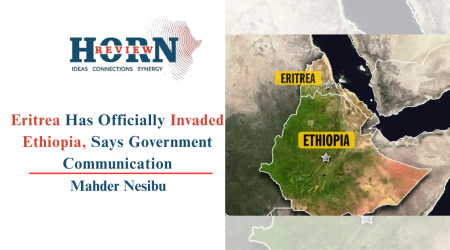
Eritrea Has Officially Invaded Ethiopia, Says Government Communication
Ethiopian Government Formally Condemns Eritrean Territorial Incursion as Its Forces...
7
Oct
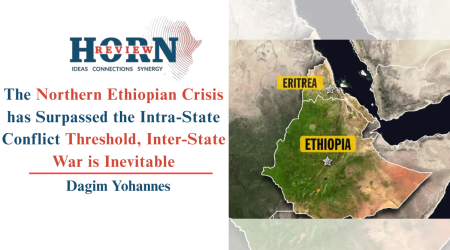
The Northern Ethiopian Crisis has Surpassed the Intra-State Conflict Threshold, Inter-State War is Inevitable
The Eritrean regime and its newly allied TPLF hardliners share...
6
Oct
What Abiy Ahmed’s Parliamentary Address Says About Ethiopia’s Next Five Years
In his reappointment to the premiership, Abiy Ahmed offered a...
5
Oct
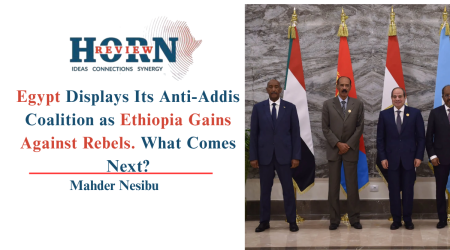
Egypt Displays Its Anti-Addis Coalition as Ethiopia Gains Against Rebels. What Comes Next?
Egypt's strategy of cultivating relationships around its chief rival in...
5
Oct
Ethiopia's Press Statements Exposes the El-Alamein Contradiction
The Ministry of Foreign Affairs of Ethiopia issued a clear...