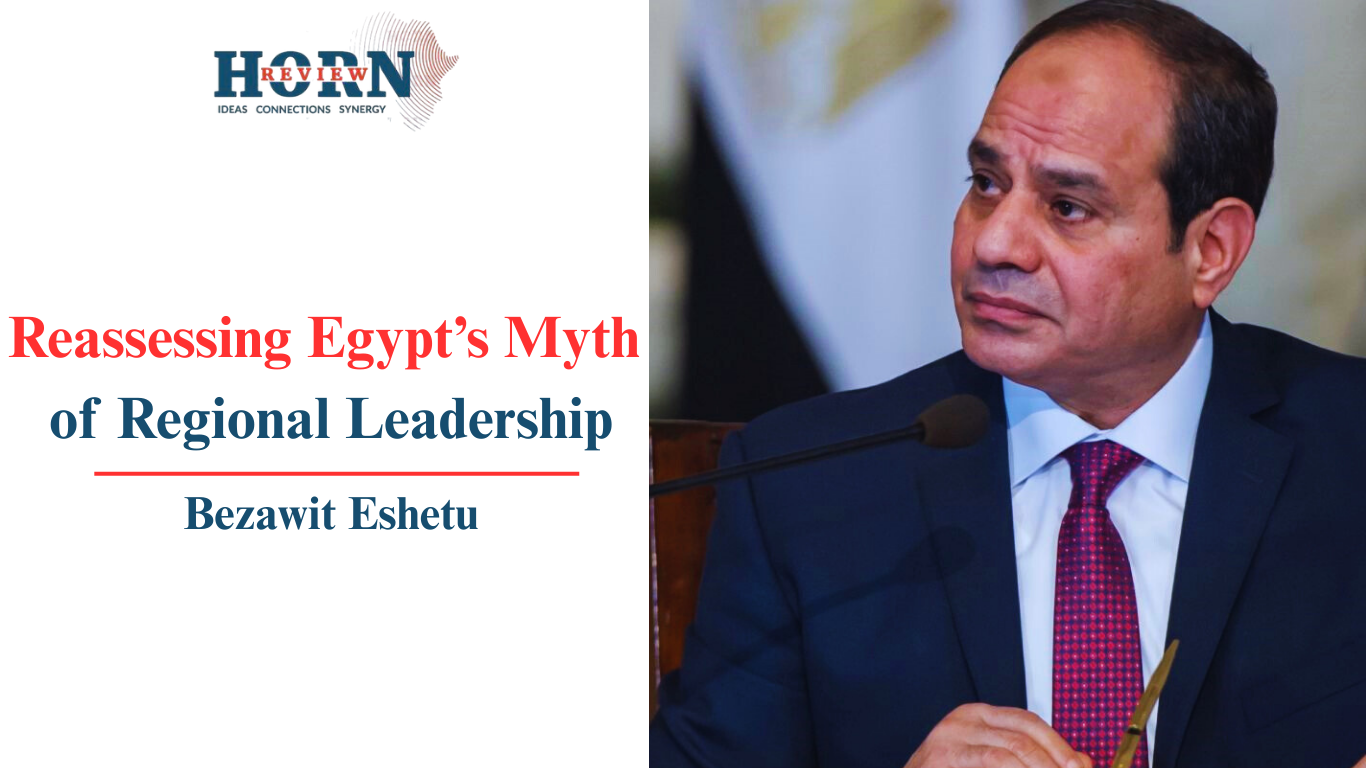
In the unstable landscape of the Middle East and North Africa, Egypt has long presented itself as a potential regional leader, backed by its large population, ancient culture, and key geographic location between Africa and Asia. However, the ongoing US-Israeli military campaign against Iran, which began with airstrikes on February 28, 2026, has exposed Cairo’s significant limitations.
Iranian missile and drone attacks have targeted Gulf infrastructure, prompting Egyptian officials to condemn assaults on Arab sovereignty in Bahrain, Kuwait, Qatar, and the UAE. Yet, Egypt’s response has been cautious and unclear. This measured stance does not reflect strategic skill; instead, it shows a country constrained by economic weaknesses, military limitations, and a pressing need to maintain domestic stability. Rather than establishing Egypt as a powerful player capable of influencing outcomes, the conflict is further weakening its influence and revealing vulnerabilities that could jeopardize President Abdel Fattah el-Sisi’s administration.
The economic disruptions caused by the war highlight how external shocks worsen Cairo’s structural weaknesses. Energy security presents a clearer example of vulnerability. Israel’s halt of natural gas deliveries from the Tamar and Leviathan fields, about 1.1 billion cubic feet daily or roughly one-fifth of Egypt’s consumption, has forced a sudden change. Domestic production meets approximately 4.2 billion cubic feet daily, against total needs of 6.2 billion, creating a shortfall that must be filled with regasification vessels and emergency LNG imports.
The Ministry of Petroleum has announced twenty additional LNG cargoes starting in March 2026 to supply over 2 billion cubic feet daily, but these imports come at higher costs and expose Egypt to unpredictable international markets. A true regional leader would manage energy flows or have diverse, independent supplies to protect against neighbors’ decisions. Instead, Cairo is struggling to respond to a cutoff driven by outside events, showing a lack of the strategic depth needed for true dominance.
The Suez Canal, once Egypt’s primary source of revenue and geopolitical strength, highlights the country’s incapability. Revenues fell from $10.25 billion in 2023 to about $3.991 billion in 2024 due to disruptions in the Red Sea, a decline of over 60 percent. Early data from 2026 show slight recovery, but renewed conflicts could lead to further drops as shipping insurers hesitate and tanker traffic is redirected. If Iran threatens the Strait of Hormuz, through which about 20 percent of global oil flows, rerouting around Africa or a blockade could raise shipping costs and further reduce canal traffic.
A dominant power would have the naval strength or diplomatic influence to secure such a strategic point; in contrast, Egypt remains a passive participant whose economic fate relies on decisions made in Tehran, Washington, or Jerusalem. The tourism industry, which welcomed nearly 19 million visitors in 2025 and generated substantial foreign currency, is also at risk as regional instability discourages travel. These interconnected challenges including remittances, energy, the canal, and tourism pose a serious threat to economic stability that no amount of cultural prestige can counter.
This fragility directly threatens the regime’s stability. Net international reserves are over $51 billion, providing a temporary cushion, but ongoing pressure could lead to capital flight, larger exchange-rate gaps, and renewed inflation. Parliamentarian Dr. Mohamed Fouad has warned that these issues make existing problems worse, such as supply-chain shortages and high borrowing costs, testing the administration’s ability to maintain public trust.
This situation echoes the 2011 uprising that removed Hosni Mubarak, during which economic inequality, youth unemployment, and elite corruption amid rising food prices ignited widespread protests. Like its predecessors, Sisi’s government faces the reality that prolonged external shocks can turn internal economic distress into political upheaval.
Egypt’s military posture reinforces this view. On paper, the armed forces seem strong, with 438,500 active personnel and a ranking of 19th in the 2026 Global Firepower Index. However, a closer look at its structure, readiness, and resilience reveals a military geared for defense, not regional leadership.
First, its force structure is mostly defensive in nature, focusing heavily on ground troops and armored units prepared for territorial defense and large-scale land warfare, a legacy of past conflicts with Israel. For the past decade, the primary operations have centered on counter-insurgency in Sinai. This focus has developed skills in asymmetric warfare but has created gaps in expeditionary abilities necessary for exerting power across the MENA area, such as marine forces, long-range air transport, or a blue-water navy.
Second, this internal focus affects the readiness of its weapons and forces for projecting power regionally. Although units in Sinai have combat experience, their training is suited for low-intensity conflicts rather than the high-intensity, multi-domain operations needed to compete with a peer like Iran or a technologically advanced state like Israel.
Third, the durability of Egypt’s military power and technology suffers from its mixed “patchwork” arsenal. Sourcing advanced systems from the United States, Russia, France, and Germany spreads political risk among suppliers and complicates logistics. Different maintenance standards, incompatible munitions, and uneven training processes for various systems greatly weaken the military’s capacity to conduct extended operations. In modern warfare, durability relies on a smooth logistics chain; Egypt’s varied inventory undermines this ability, contrasting sharply with the more unified arsenals of its rivals.
Thus, while military upgrades under Sisi have improved internal security and border defenses, they have not created the structure, readiness, or resilience needed to exert hegemonic power.
This military reality shapes Cairo’s diplomatic choices. Egypt has condemned Iranian attacks on Gulf states while also calling for de-escalation and offering to mediate. President Sisi has spoken with Gulf leaders to express solidarity but has not joined any anti-Iran alliance, maintaining ties with Washington for crucial aid while avoiding provoking Tehran. Foreign Minister Badr Abdelatty call for a joint Arab force suggests a preference for collective rather than Egyptian-led actions. Such neutrality does not mark a leader setting the regional agenda; it reflects the cautious moves of a state that cannot afford to become entangled.
Historical trends highlight the continuing cycle threatening Sisi’s government. Economic decline has repeatedly led to political instability: the 1876 debt crisis opened the door to British occupation; the 1952 Free Officers’ Revolution overthrew a monarchy weakened by inequality and dependence on others; the 2011 Arab Spring ousted Mubarak amid failures of neoliberal policies and public anger.
Each of these events showed how external pressures can amplify internal contradictions when leaders prioritize elite interests over broad-based resilience. Sisi’s administration mirrors these past patterns through its military-economic ties and dependence on Gulf funding.
Egypt’s rich cultural and historical background including its identity as an “ancient Arab state,” the prestige of Al-Azhar, and its media influence previously boosted the pan-Arabism of the Nasser era. Nowadays, however, soft power cannot replace tangible needs. Internal repression and stagnant economic growth have reduced its appeal, while rivals advance using real tools of influence. The Iranian crisis highlights this gap: Egypt plays a mediating role while others dictate battlefield dynamics.
Thus, the recent confrontation shows that Egypt under Abdel Fattah el-Sisi lacks strategic autonomy in energy diversification, maritime clout around the Suez Canal, coherent logistics, and inclusive political legitimacy necessary to convert cultural prestige and institutions such as Al-Azhar into durable regional leadership. Cairo reacts to moves by Iran, the United States, and Israel rather than shaping outcomes.
Without deep economic reform, independent energy corridors, and unified military-logistics modernization, Egypt will remain a risk-managing mediator capable of short-term survival but unable to exert sustained geopolitical leverage. This gap between rhetoric and capacity increases the risk that domestic economic and social strains will determine Cairo’s role more than any foreign-policy ambition.
By Bezawit Eshetu, Researcher, Horn Review