Regional Power, Structural Weakness
From a distance Egypt appears structurally strong and a regional heavyweight with the institutional capacity and depth to navigate commotion. However this image conceals a far more frail reality. Under Egypt’s so called outward strength lie deep structural dependencies in the very resources that sustain its economy and domestic stability. Two of the most critical pillars of modern state power energy and water are tied to external factors that Cairo does not fully control. The resulting imbalance means that in any serious confrontation involving these resources, the consequences are unlikely to be symmetrical. While disruptions would harm all parties involved Egypt would bear the most immediate and severe costs.
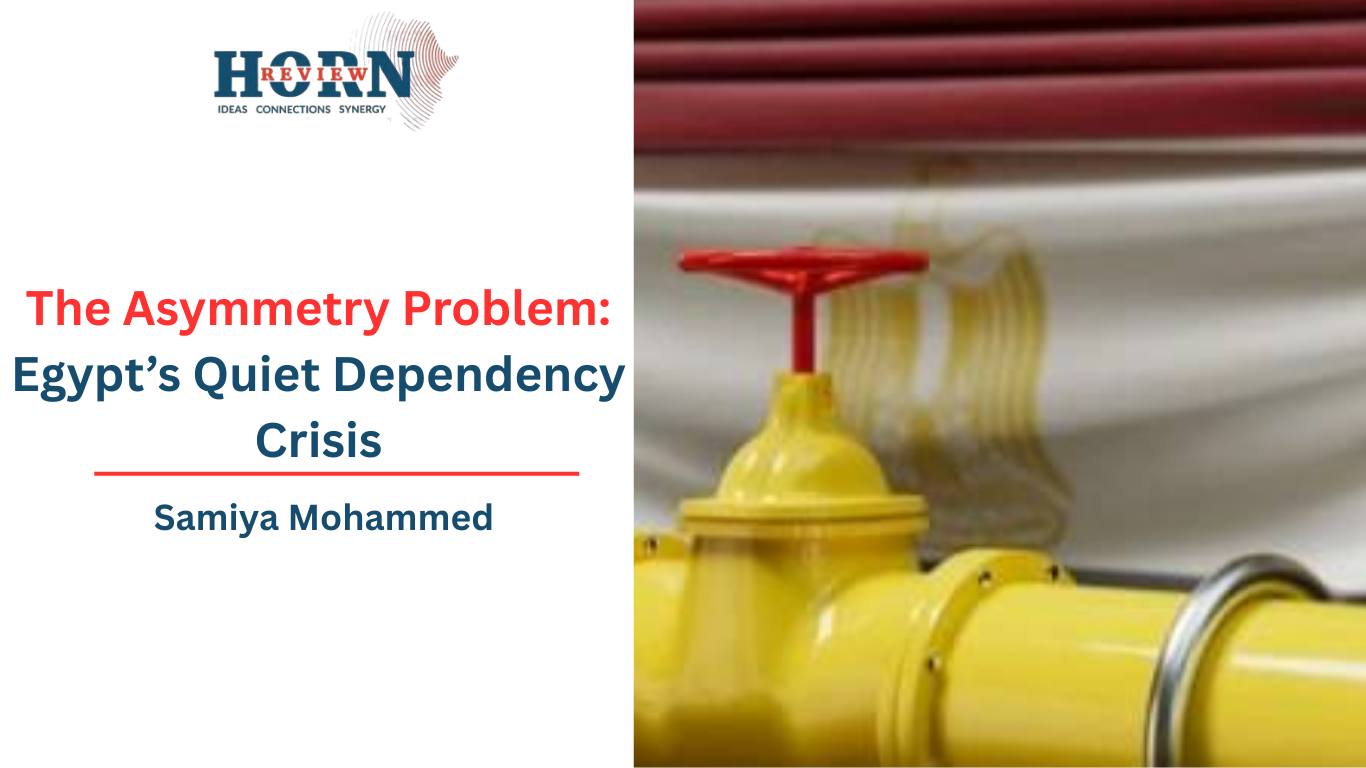
Recent developments surrounding natural gas exports from Israel offer an example. In early 2026, among Iran’s heightened regional tensions gas flows from Israeli offshore fields to Egypt were temporarily halted before being partially restored on a limited basis in March. The episode underlines a reality that is often underappreciated in public discourse with Egypt’s energy system has become dependent on imported Israeli natural gas. What might appear as a temporary commercial disruption exposes a structural vulnerability with reaching economic and political implications.
The shift toward this dependency has evolved gradually over the past decade. In the mid 2010s Egypt appeared poised to become a major natural gas power following the discovery of the Zohr Gas Field in the Mediterranean. Discovered in 2015 Zohr was the largest gas field ever found in the Mediterranean Sea and raised expectations that Egypt would soon achieve long term energy self-sufficiency while expanding its role. Production surged quickly in the years that followed and Egypt temporarily regained the status of a gas exporter.
However at the same time output from key fields began to plateau or decline sooner than anticipated. Zohr itself has not consistently delivered the volumes once projected. The result is that Egypt’s domestic production has struggled to keep pace with its rising energy needs. To bridge this gap Cairo turned increasingly to imports from Israel. Gas from the offshore Leviathan Gas Field and Tamar Gas Field now flows to Egypt through pipeline infrastructure linking the two countries’ energy systems. These supplies have become a core component of Egypt’s gas balance. In many periods Israeli pipeline gas has accounted for roughly 15 to 20 percent of Egypt’s available supply and sometimes more during seasonal demand peaks.
More importantly, energy disruptions have immediate domestic consequences. Egypt’s electricity system relies heavily on gas fired power plants which generate the majority of the country’s power. When gas supplies tighten, the risk of electricity shortages rises quickly. Blackouts, even temporary ones can affect households, businesses, and critical infrastructure. Industrial sectors such as fertilizers, cement, and petrochemicals are particularly vulnerable because their operations depend on stable and affordable gas supplies.
This vulnerability exposes a critical chink in Cairo’s armor. For Tel Aviv a disrupted pipeline is a logistical hiccup with a matter of rerouting supply or stockpiling reserves. The financial sting of halted exports is real for its treasury but Israeli citizens won’t be left in the dark nor will its factories grind to a halt. The core issue is one of fundamental national structure not a fleeting crisis. Egypt with an insatiable appetite for power and a hunger its own fields can no longer satisfy. Its reliance on imported gas much of it now from Israel is a direct consequence of this internal equation. This creates a dangerous asymmetry when regional tensions flare and energy flows are threatened, one nation faces a potential domestic emergency, while the other just faces a fiscal one.
To be clear Egypt is not passive. However they are shields not solutions. Solar power falters when the sun sets and LNG prices can skyrocket overnight and turning seawater into drinking water for 110 million people is an energy intensive and astronomically expensive proposition. These measures buy time and create buffers but they cannot fully sever the cords of dependency.
The result is a region where the balance of consequence is lopsided. In any confrontation that disrupts these flows Israel and other regional players may count the cost in lost revenue. Egypt however would be forced to count the cost in social stability in brownouts that stall industry, in the economic drag of expensive fuel imports and in the simmering pressure that comes when essential services become scarce. This is not a verdict on Egypt’s weakness but a measure of the modern foundations of power. But national resilience in the 21st century is increasingly defined by the security of supply lines not just the size of the arsenal. A nation dependent on others for its most critical inputs operates on a tighter leash with far less room for error.
In this light bellicose posturing or confrontational politics is a gamble with disproportionately high stakes. A disruption in the Eastern Mediterranean’s resource web would send shockwaves through all parties, but the epicenter of the damage would be firmly located on the Nile. Cairo’s dependencies act as an amplifier, turning geopolitical tremors into immediate domestic strain.This is precisely why, despite the rhetoric, stability and cooperation are the only logical path. The energy trade between Israel and Egypt is a monument to mutual economic self-interest; its disruption would serve no one. Likewise, collaborative management of shared regional resources is the only way to mitigate the inherent dangers of cross-border reliance.
Political narratives in the Middle East are often dominated by projections of brute force and invincibility. But under the military parades lies a more delicate truth with a state’s true strength is revealed by how it weathers a crisis. Egypt’s resilience is more precarious than its surface strength suggests. Its ability to function day to day is tied to systems beyond its full command. Acknowledging this reality is not an indictment however it is a clarification. When the next crisis erupts and the flow of critical resources is threatened the pain will not be shared equally. Egypt’s structural exposure ensures it will bear the heaviest burden. The illusion of invulnerability is a dangerous luxury and for a nation with Egypt’s foundational dependencies, it is a luxury it simply cannot afford.
By Samiya Mohammed, Researcher, Horn Review