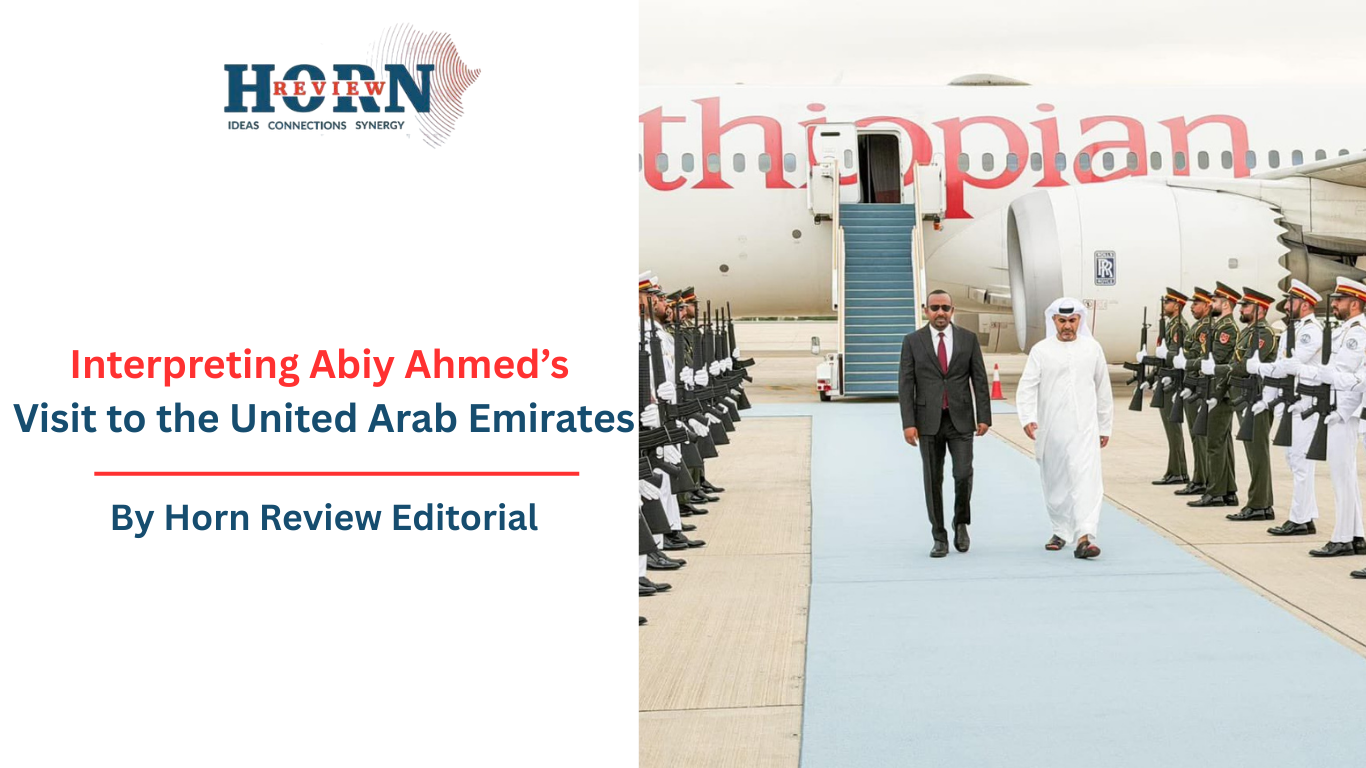
The visit by Abiy Ahmed to the United Arab Emirates at this particular juncture is best understood not as routine diplomatic engagement, but as a reflection of the depth and durability of a partnership that has steadily consolidated over the past eight years. Since 2018, relations between Ethiopia and the UAE have evolved into one of the most consequential bilateral alignments linking the Horn of Africa with the Gulf. Anchored in sustained political dialogue and reinforced by close ties between Abiy Ahmed and Mohammed bin Zayed Al Nahyan, the relationship has expanded beyond conventional diplomacy into a broader framework of strategic consultation.
The timing of the visit inevitably draws attention because it occurs amid heightened tensions across the Gulf associated with the ongoing confrontation involving Iran. Yet Ethiopia’s approach to the unfolding crisis has thus far been characterized by measured restraint. Addis Ababa has not issued a formal policy statement on the conflict, opting instead for gestures that convey solidarity with longstanding partners without transforming the situation into a platform for declaratory diplomacy. This posture reflects a tradition within Ethiopian statecraft that privileges prudence and stability over rhetorical positioning during moments of regional volatility.
Within this context, Abiy’s presence in the UAE carries symbolic and diplomatic weight. For Abu Dhabi, the visit represents the continued engagement of a partner whose strategic importance to the Horn of Africa is widely recognized. Ethiopia remains the region’s demographic and political centre of gravity, and its leadership maintains influence over the broader trajectory of regional security and development. High-level exchanges between Addis Ababa and Abu Dhabi therefore serve to reinforce a relationship that both governments view as foundational to their respective regional outlooks.
The visit also reflects the increasingly integrated strategic space that has emerged between the Gulf and the Horn of Africa over the past decade. The Red Sea basin has gradually become a zone where the political, economic, and security interests of Arab Gulf states intersect with those of East African powers. Within this evolving landscape, Ethiopia occupies a distinctive position. Although landlocked, its economic scale, military capabilities, and diplomatic reach give it a decisive role in shaping the stability of the wider Horn region. For the UAE, maintaining close political dialogue with Addis Ababa contributes to a broader effort to sustain stability along the maritime and political corridors linking the Arabian Peninsula to East Africa.
Equally important is the character of the engagement itself. Visits of this nature typically function less as public spectacles than as opportunities for candid strategic exchange. Leaders meet to compare assessments, review regional developments, and reaffirm the principles guiding their cooperation. In the current environment – marked by tensions that could reverberate across both the Gulf and the Red Sea – such consultations acquire additional significance. They allow partners to ensure that their respective policies remain informed by shared understandings of the evolving regional landscape.
At the same time, Ethiopia’s decision not to issue an official statement on the Gulf crisis underscores the distinction between diplomacy conducted through public declarations and diplomacy conducted through sustained engagement. Addis Ababa’s posture does not signal detachment from events affecting a key partner; rather, it reflects a preference for addressing complex geopolitical developments through direct dialogue with those most closely involved. The visit itself therefore becomes a form of diplomatic communication, conveying commitment to the relationship without amplifying the rhetoric surrounding an already volatile regional confrontation.
Ultimately, the significance of Abiy Ahmed’s visit lies in what it reveals about the maturation of Ethiopia–UAE relations. What began in 2018 as a period of renewed engagement has developed into a partnership characterized by regular high-level consultation and mutual strategic confidence. At a moment when regional tensions test the resilience of political relationships across the Middle East and the Horn of Africa, the continuation of such dialogue demonstrates the degree to which Addis Ababa and Abu Dhabi now regard one another as indispensable interlocutors in navigating an increasingly interconnected regional order.
By Horn Review Editorial