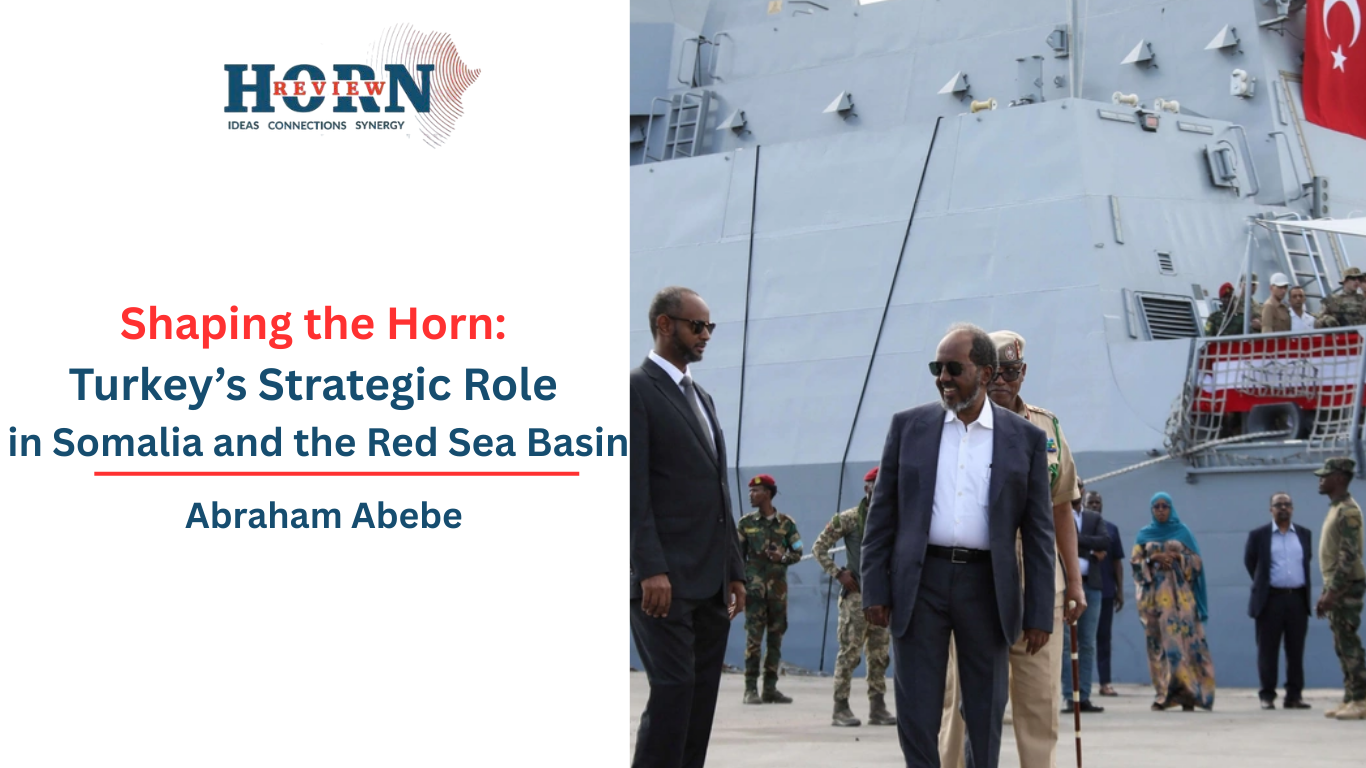
Since establishing the TURKSOM military training mission in Somalia in 2017, Turkey has developed a strategic foothold in the Horn of Africa that even great powers have struggled to replicate. Ankara’s network of security, diplomatic, and economic linkages connects Somalia engagement to the wider Red Sea basin, embedding Turkey in Somalia’s security architecture while maintaining parallel relationships with Ethiopia, Sudan, and Djibouti. This multi-layered presence makes Turkey a consequential actor in a region where substantial Western and Gulf investments have produced uneven strategic returns.
This expanding footprint raises structural questions rather than episodic ones: Does Turkey’s engagement signal the emergence of a durable sphere of influence, or a contingent alignment shaped by Somalia’s internal security trajectory? And how might Turkey’s role affect the evolving Red Sea security architecture, where Gulf states, Egypt, and Western actors are simultaneously seeking access, basing arrangements, and political leverage along one of the world’s most strategically significant maritime corridors.
Turkey’s approach in Somalia emphasizes a broader set of instruments than traditional Western security engagement. While the United States and the European Union have typically focused on counterterrorism operations and discrete training missions, Turkey combined military training with sustained diplomatic, economic, and infrastructure involvement. The TURKSOM mission regularly prepares Somali forces, integrating humanitarian, security, and development tracks into both institutional and operational engagement.
The strategic relevance of this engagement is closely tied to geography. Somalia’s extensive coastline borders the Gulf of Aden, a corridor linking the Indian Ocean to the Red Sea and the Suez Canal that carries a significant share of global energy and commercial shipping flows. Turkey’s land-based security cooperation increasingly intersects with maritime capacity-building, naval training, and port infrastructure cooperation. It positions Turkey as a growing player in security dynamics near a maritime chokepoint.
Turkey’s regional strategy extends well beyond Somalia. Ankara has simultaneously cultivated relations with Ethiopia through bilateral economic cooperation agreements covering trade, energy, and industrial capacity building, while positioning itself as a mediator between Ethiopia and Somalia over the contentious Somaliland port agreement. This dual engagement constitutes strategic hedging: Turkey maintains influence with both parties to a regional rivalry, providing diplomatic leverage in Mogadishu and Addis Ababa.
This pattern repeats across the Red Sea basin. In Sudan, Turkey signed a long-term agreement in 2017 to develop Suakin Island, a deteriorating Ottoman-era port that Ankara frames as a cultural restoration project. In Djibouti, Turkey established diplomatic relations and opened an embassy in 2013, and its engagement has since expanded to include economic cooperation and bilateral joint commissions. While not yet fully realized military footholds, these positions represent strategic optionality that Turkey can activate should regional dynamics shift.
What emerges can be understood as a hub-and-spoke architecture. Somalia serves as the operational hub, one of Turkey’s most developed overseas military platforms, while Ethiopia, Sudan, and Djibouti function as spokes: less militarized but diplomatically and economically integrated. The model resembles less the territorial logic of 20th-century great power competition and more the strategic methods associated with elements of China’s Belt and Road Initiative: leveraging infrastructure investment, institutional capacity-building, and economic integration to generate durable strategic influence.
Turkey is not alone in this regional competition. The United Arab Emirates operates a military logistics facility in Eritrea and has cultivated strategic ties with Somaliland’s authorities. Saudi Arabia has deepened security and economic cooperation with Djibouti as part of broader Gulf engagement in the Horn of Africa. Israel has quietly expanded diplomatic, intelligence, and security engagement across the Horn in conjunction with its post-Abraham Accords outreach to African partners. These overlapping engagements reflect the Red Sea and Horn of Africa becoming a contested space for influence among Middle East and Horn of Africa actors, alongside external powers. In this environment, Turkey’s comparative advantage lies in cultivating diplomatic relationships and institutional linkages across competing regional alignments, expanding influence through embedded partnerships rather than visible force projection.
Yet Turkey’s official discourse of partnership coexists with deepening structural realities. President Erdogan frequently invokes Ottoman-era historical ties and frames Turkish engagement as fraternal support, a narrative Somali President Hassan Sheikh Mohamud has embraced in contrast to what he characterizes as Western conditionality and Gulf interference. This partnership narrative coexists with a relationship of deepening structural dependence, now accentuated by regional competition with Israel.
The reported deployment of Turkish F-16 fighter jets and attack helicopters on January 28, 2026, marks a significant escalation, extending Ankara’s decade-long presence beyond training missions toward a more operational military role. The subsequent appointment of a Turkish military academy graduate as head of the Somali National Army illustrates how Turkish training pipelines are increasingly translating into influence at the command level, embedding Ankara within Somalia’s institutional and operational frameworks. Collectively, these developments reveal a multi-layered strategic footprint: Somalia’s military increasingly relies on Turkish training, equipment, and operational support. While not colonialism in the classical sense, this represents a durable form of asymmetric dependence that consolidates influence over time. These dynamics suggest that Turkey is positioning itself as a long-term strategic actor in the Horn of Africa, shaping Somalia’s security and economic architecture in ways likely to influence regional power balances well beyond immediate operational engagements.
Turkey’s model reflects a broader evolution in middle-power competition. Contemporary influence derives less from territorial control than from institutional embedding within partner states. By training military forces, constructing critical infrastructure, and providing budgetary support, external actors can shape decision-making without territorial occupation. This approach characterizes Chinese engagement in the Pacific and Africa, Russian operations in Africa, often through security partnerships and political influence, and increasingly Turkish strategy in the Horn.
The cumulative effect is substantial. A decade ago, Turkey maintained a minimal presence in the Horn. Today, it has become a key partner upon which Somalia relies for certain capacities, with which Ethiopia negotiates, and which Gulf states cannot disregard. Ankara has converted modest investments, troops, development aid, and infrastructure projects, into considerable strategic leverage in a region where great powers have spent far more with less impact. Turkey’s success stems partly from its lack of colonial historical baggage and its avoidance of heavy-handed counterterrorism approaches. It has provided what Somalia’s government sought: diplomatic recognition, economic investment, and partnership frameworks with fewer conditionalities than typically accompany Western engagement.
A more concerning scenario warrants consideration. As Turkey, the UAE, Egypt, Saudi Arabia, and other external actors deepen their respective footholds, the Horn risks becoming a patchwork of proxy relationships in which local conflicts serve as vectors for external rivalries. Local disputes could potentially escalate if Turkish-backed Somali forces were to clash with Emirati-supported actors.
Turkey’s recent operational escalation marks a milestone in a broader strategic shift from advisory and training missions toward deeper operational, economic, and diplomatic engagement in Somalia and the Horn of Africa, sharpening associated risks. Can Ankara maintain this expanded commitment without overextension? How will competing powers, Israel and the UAE, respond to Turkey’s growing military footprint? And can external actors avoid transforming the Horn into another arena for violent regional rivalry?
The answers will determine whether Turkey’s model may represent either a sustainable form of middle-power influence or a prelude to a more unstable regional order. Through early engagement, sustained commitment, and institutional embedding, Ankara has secured disproportionate leverage in a region where wealthier states have achieved limited success. But leverage creates obligations. As Turkey deepens its military role in Somalia, it inherits not only influence but also the risks of entanglement in a fragile security environment surrounded by rival powers. This trajectory will shape both Somalia’s domestic future and the broader security architecture of the Red Sea corridor, determining whether it stabilizes around complementary interests or fractures into competing spheres of influence.
By Abraham Abebe, Researcher, Horn Review