The civil war in Sudan has been understood primarily as an internal contest between the Sudanese Armed Forces and the Rapid Support Forces. However, the conflict has also become an arena for the unresolved hydro political rivalry between Egypt and Ethiopia over the Nile and the Grand Ethiopian Renaissance Dam. While every external actor involved in mediation brings its own interests and while Sudan’s internal military fragmentation remains the primary driver of violence, Egypt’s particular interest has deepened and extended the crisis in ways that constrain Sudanese agency and regional cooperation.
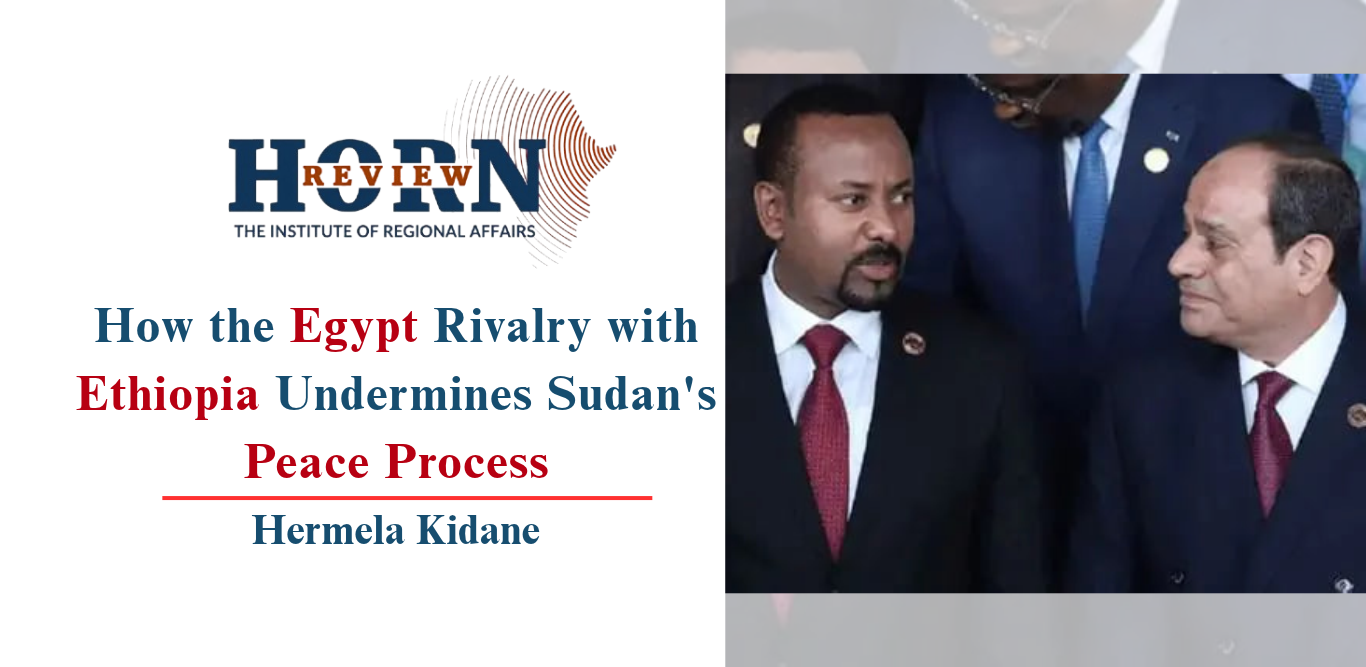
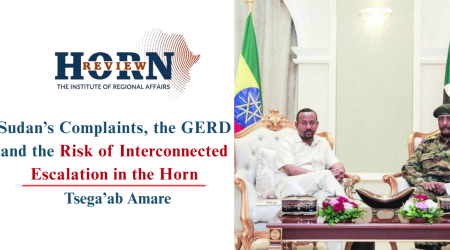
Egypt frames the Nile as an existential resource and has consistently sought to ensure that any Sudanese government remains aligned with its position on the GERD. Before the start of the war, Sudan’s policy showed signs of pragmatic recalibration. At moments including during high level contacts with Ethiopian leadership Sudanese officials indicated openness to the tangible benefits the dam could offer downstream more regulated flows, reduced flooding and potential gains in irrigation and energy. Ethiopia consistently encouraged this recognition of mutual advantage. That path however faced sustained Egyptian diplomatic and political pressure that sought to keep Sudan within a downstream bloc insisting on binding constraints that would limit Ethiopian operational flexibility. Egypt’s presence in the Quad comprising the United States, Saudi Arabia, the United Arab Emirates, and Egypt has provided an additional layer of institutional cover. Within this framework divergent member interests have complicated unified pressure on both warring parties. Egypt’s support for the Sudanese Armed Forces entrenched in military ties and shared views on the Nile has helped shield the SAF from certain forms of collective leverage while reports of external backing for the Rapid Support Forces from other directions have further fragmented mediation efforts.
The practical expression of Egyptian influence extends diplomacy. Reporting has documented the deployment of advanced combat drones near the Sudanese border and airstrikes associated with artisanal gold mining sites in border areas, actions that have produced civilian casualties and raised questions of sovereignty. Official Egyptian statements emphasize border security and the desire for a unified Sudanese state yet the pattern of engagement has the effect of reinforcing dependence by the SAF leadership whose arithmetic increasingly reflect Egyptian priorities on the GERD rather than an independent assessment of Sudanese national interest. A stable, sovereign Sudan capable of defining its own riparian policy would be free to pursue bilateral arrangements with Ethiopia. As sovereign states, Sudan and Ethiopia would retain full authority over any such agreement and Egypt would possess no legal or political right to veto or dictate its terms. The continuation of conflict postpones that possibility and keeps Sudan tethered to Egypt’s preferred framework.
This is reinforced by Egypt’s regional posture. Declarations by groupings of Red Sea coastal states that governance of the waterway belongs exclusively to littoral countries while formally about maritime security have functioned in practice as instruments to limit the expansion of Ethiopian economic and strategic influence. The same competitive logic appears in the silent rivalry playing out inside Sudan with Egypt seeking not just to protect downstream water claims but to maintain a buffer that reduces Ethiopian room for independent regional connectivity including potential cooperation with a peaceful Sudan. Prolonged instability also allows Egyptian security presence and influence to remain closer to Ethiopia’s western approaches.
Ethiopia’s approach has been markedly different. As a non aligned actor focused on regional stability Ethiopia has worked through the Quintet framework which brought together the African Union, IGAD, the European Union, the League of Arab States and the United Nations to support an inclusive and Sudanese owned political process. Hosting the African Union headquarters and occupying a central position within IGAD gives Ethiopia natural diplomatic weight which it has used to advocate respect for Sudanese sovereignty, territorial integrity and an end to hostilities that would open space for humanitarian access and genuine dialogue. Ethiopia’s national interest is served by a stable Sudan able to benefit from the GERD’s regulated flows and to participate in broader East African energy and economic integration. The dam itself financed and constructed through Ethiopian resources stands as a project of self reliance whose regional connectivity potential is diminished not enhanced by prolonged conflict next door.
The result is a zero sum environment in which Sudanese civilians bear the heaviest cost. Egypt’s deepening military and political support for one side has strengthened its leverage over time yet that leverage rests on the continuation of disequilibrium. A political transition that restored Sudanese capacity to define national interests independently would reopen the possibility of pragmatic cooperation with Ethiopia on water management with an outcome Egypt has little incentive to facilitate. External actors in both the Quad and the Quintet pursue legitimate interests of their own with the divergence among them has hindered coherent progress. The distinctive feature of the Egyptian role however is the direct linkage between the prolongation of war and the preservation of an older hydro political order.
Sustainable peace in Sudan requires recognition that Egypt is an interested party whose Nile imperative shapes its engagement. Treating Egypt as a neutral broker obscures the structural incentives that keep the conflict useful as a buffer. A Sudanese led settlement that restores sovereign decision making would allow Sudan to weigh the concrete benefits of cooperation with Ethiopia on their merits. Ethiopia has repeatedly affirmed its readiness for such partnership on the basis of mutual respect and shared regional prosperity. The rest task is to create the political space in which Sudanese agency rather than external hydro political actions can determine the country’s future.
By Hermela Kidane, Researcher, Horn Review