On 17 December 2025, the Swedish foreign minister, Maria Malmer Stenergard, took the unprecedented step of travelling to Asmara to meet President Isaias’s senior envoy, Foreign Minister Osman Saleh. Her visit was the first by a senior western official to Eritrea in years. It was a symptom of fundamental changes in Eritrea’s external relationships. The visit was also the first by a Swedish government representative since Sweden recognised Eritrea’s independence in 1993, and it followed a trend, visible today, of western capitals growing increasingly comfortable with talking to Eritrea, contrary to the collective policy of the preceding decades, which had found it unproductive to engage with a prickly Asmara. However, age-old obstacles, primarily President Isaias and his long-held antipathy towards the West, are set to cast a long shadow over this rapprochement.
An array of changes has made a policy of engagement with Eritrea reasonable, at least from the view of western capitals. For one, it was in 2018 that Eritrea’s neighbour Ethiopia decided to bring Eritrea “in from the cold”, making peace with it (the two had remained in a state of “no war-no peace” after their 1998 to 2000 war) and urging western and wider international partners to engage with Asmara. Although a brief interlude interrupted this thaw, owing to Eritrea’s involvement in Ethiopia’s Tigray conflict, for which the EU and the United States imposed sanctions, diplomatic overtures have resurfaced recently.
Western governments seem to have lost their appetite for interrogating the Eritrean regime and its president on his authoritarian system and the grave human rights record his government has managed to maintain for most of Eritrea’s statehood. Instead, amid a broader shift in foreign policy thinking, Eritrea is increasingly valued for the part it can play in advancing and safeguarding western interests. Beyond Sweden, an array of western states, among them Italy and Canada, together with the European Union itself and international organisations such as the United Nations, has stepped up its dealings with Asmara. Such contacts now occur with regularity, and the meetings produce declarations of interest in pursuing cooperation on matters of mutual concern.
The more consequential interest, however, emanates from Washington, which has signalled, at least in intent, a diplomatic reset between the United States and Eritrea, potentially remaking Asmara’s relevance in the international system. For Washington, which has made contact with the Eritrean leadership on several occasions since 2025 through the president’s senior adviser for Arab and African affairs, Massad Boulos, and which allowed the sanctions it imposed in 2021 to expire in September this year, Eritrea has entered its calculations along the unstable Red Sea corridor, and Asmara is seen as a key player in a Horn of Africa riddled with insecurity in its own right.
The United States, whether in reality or in the imagination of the Eritrean leadership, occupies a significant place in Eritrea’s history and in its most recent foreign policy predicaments. As such, the prospect of Eritrea standing on good terms with Washington carries the possibility of far-reaching outcomes for the country.
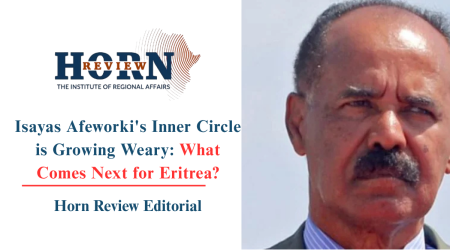
Still, certain structural gaps in Eritrea’s self-conception, and more importantly in the worldview of its overarching leader, President Isaias Afwerki, may prove more difficult to overcome than the current warming suggests. This much was revealed in Isaias Afwerki’s October visit to Moscow and his participation in the Russia-Africa Summit. During the trip, Isaias, speaking to Russian media, delivered a sharp attack on western policy towards Russia and stated that the Russia-Ukraine war (arguably the primary security concern in European capitals at the moment) was an extension of European and a Western conspiracy against Russia, which in Isaias’s conception is a bulwark against western hegemonic designs on the international system.
This conception of Isaias on the West and its policies has remained somewhat consistent throughout his political career and, given his autocratic rule of Eritrea, has manifested itself in Asmara’s foreign policy.
This is somewhat understandable given the prominent role the United States has played in Eritrea, particularly through Washington’s relationship with Ethiopia and its broader calculations in the Horn of Africa, both in respect of Eritrea as a state and of the Ethiopian territory that preceded it, albeit perhaps not in favour of President Isaias and his movement, the Eritrean People’s Liberation Front (EPLF), and their eventual rule over Eritrea.
The United States, for one, had played a pivotal part in the United Nations’ decision, after the Second World War, to place Eritrea under Ethiopian sovereignty through a federation. Washington had found a strong ally in the Horn of Africa in Emperor Haile Selassie of Ethiopia, one that it needed in its rivalry with the Soviet Union in a critical region. The alliance between the United States and Ethiopia was of mutual benefit. It gave Washington a signals intelligence base at Kagnew Station, in the Eritrean capital, Asmara, while Ethiopia benefited from alignment with the western world, including Israel, which, alongside Ethiopia, stood among the few western-aligned states in a Middle East and Horn of Africa increasingly swept by communist and Arab nationalist revolutions.
For Isaias, this episode marks the roots of the United States’ “misguided” foreign policy in the Horn of Africa. To the separatist forces that would eventually grow into an insurgency, the federation outcome was, in their reading, a product of Washington’s Cold War machinations in the Horn, which curtailed Eritrea’s right to statehood at that time. Washington’s alliance with Addis Ababa, which continued until the fall of the emperor in 1974, also meant that, as the Eritrean insurgency gathered momentum over those years, Addis Ababa would come to rely on American and Israeli support to fight the rebels. These rebels, the Eritrean Liberation Front (ELF) and the EPLF, would in turn rely on pan-Arab and communist patrons to back their fight.
Isaias regularly invokes that period and names John Foster Dulles, the prominent American secretary of state of the early Cold War, in his criticism of American foreign policy.
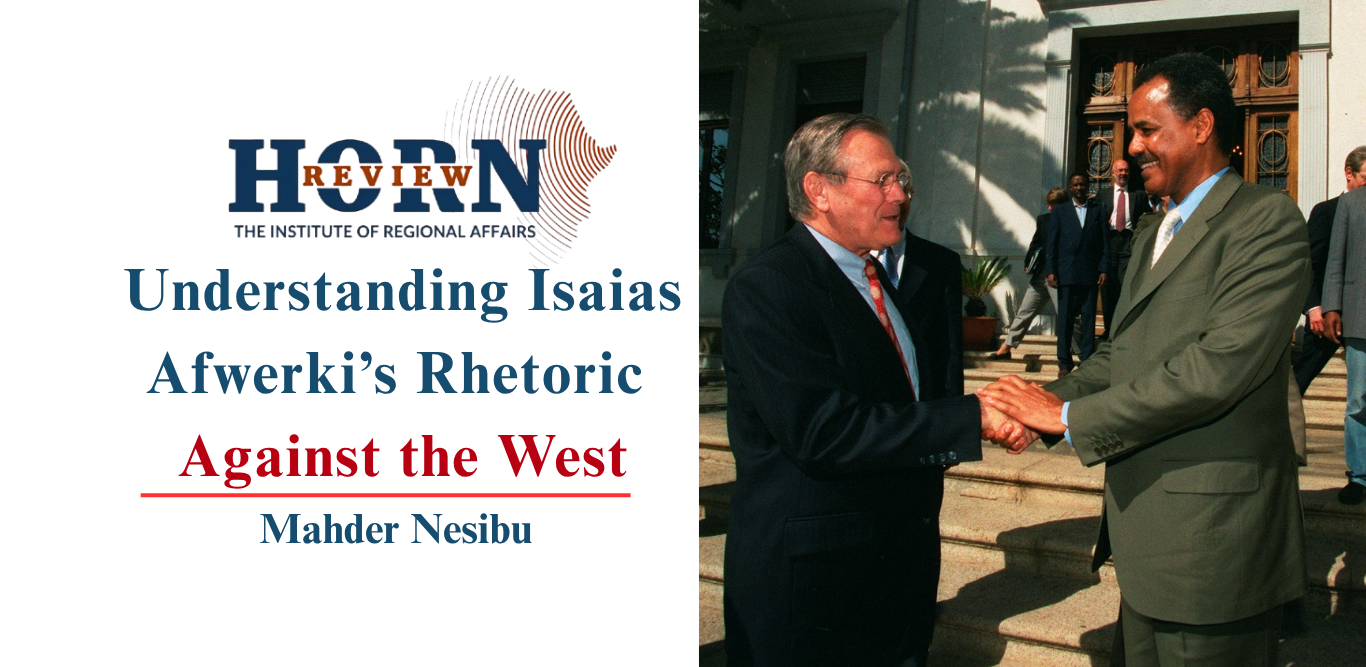
The victory of the EPLF and other Ethiopian rebel groups over Mengistu Haile Mariam’s government in 1991 was to bring new horizons for Eritrea’s relations with Washington. Eritrea separated from Ethiopia with little friction in 1993, a process in which the United States, through its Assistant Secretary of State for African Affairs, Herman Cohen, had played a major part. Isaias and his Ethiopian counterpart, Prime Minister Meles Zenawi, were celebrated as “renaissance” leaders in the Washington of President Bill Clinton, whose tenure spanned a post-Cold War era in which American primacy over the international system stood undisputed.
Yet when Ethiopia and Eritrea went to war in 1998, relations with the United States turned sour again, and the Eritrean president would eventually place the blame for starting the war on Washington and the Central Intelligence Agency (CIA). As animosity between Ethiopia and Eritrea developed, the former would prove of greater value to Washington and its interests. Although the United States’ global war on terror had initially enlisted both Ethiopia and Eritrea, Ethiopia would eventually emerge as the main partner in fighting terrorism in the Horn of Africa, while Eritrea ended up sponsoring it, as evidence assembled by United Nations monitors would show in the late 2000s. Isaias’s authoritarian rule also hardened in the aftermath of the war, making it highly unpopular with the United States and its European allies.
In addition, although Eritrea had invited the American military to establish a presence on its soil for the regional campaign against terrorism, Washington would pass over Eritrea in favour of neighbouring Djibouti in the early 2000s.
Isaias’s decision to support al-Shabaab – the rationale being to weaken his foe Ethiopia, which was fighting it in Somalia – together with Eritrea’s own spoiler role in the Horn of Africa, would prove fatal for the relationship, as the United States would be instrumental in the imposition of a United Nations sanctions regime (a move Isaias saw as a hegemonic conspiracy on the part of Washington) that entrenched a diplomatic isolation which lasted until 2018, an isolation that endured because of Isaias’s own disinclination to reform his policies of antagonism towards the West as well as adventurism in his neighbourhood, and because of western reluctance to engage a leader with such a grave governance record at home.
Although the current dynamics have shifted once again, this time bringing Eritrea’s strategic location into relevance within Washington, its relationship with Isaias is likely to remain unchanged. For instance, Isaias has repeatedly stated that the priority in his contacts with the United States is the correction of Washington’s “misguided” policies towards Eritrea and the Horn of Africa more broadly, ahead of any improvement in relations.
Indeed, following reports in May that the United States intended to lift the sanctions, Isaias reacted, in his annual state address, by resorting to his long-standing criticism of American foreign policy, which extended beyond Eritrea to a broad set of topics, including Washington’s capture of Venezuelan President Nicolás Maduro and its war with Iran. The president, now 80, appears to be clinging to old wounds and grudges against the United States, as well as to his notoriously frustrating posture of defiance, which makes diplomacy with his government difficult to conduct and of which diplomats have complained before.
More broadly, Eritrea remains practically unchanged in the policies that led western capitals to hold it at a diplomatic distance. Whether in the crushing authoritarian system of rule that still grips the country or, worse still, in the spoiler role in the Horn of Africa, which, instead of being reformed, has been revitalised since the 2018 shift, with Eritrea now playing interventionist roles in neighbouring Ethiopia and Sudan. The president is likely uninterested in a reset and focused instead on his ability to continue pursuing his interests in the Horn of Africa, while calling for the West to reform its policies and for Russia and China to “lead” the change of the international system at the western world’s expense.
By Mahder Nesibu, Researcher, Horn Review