
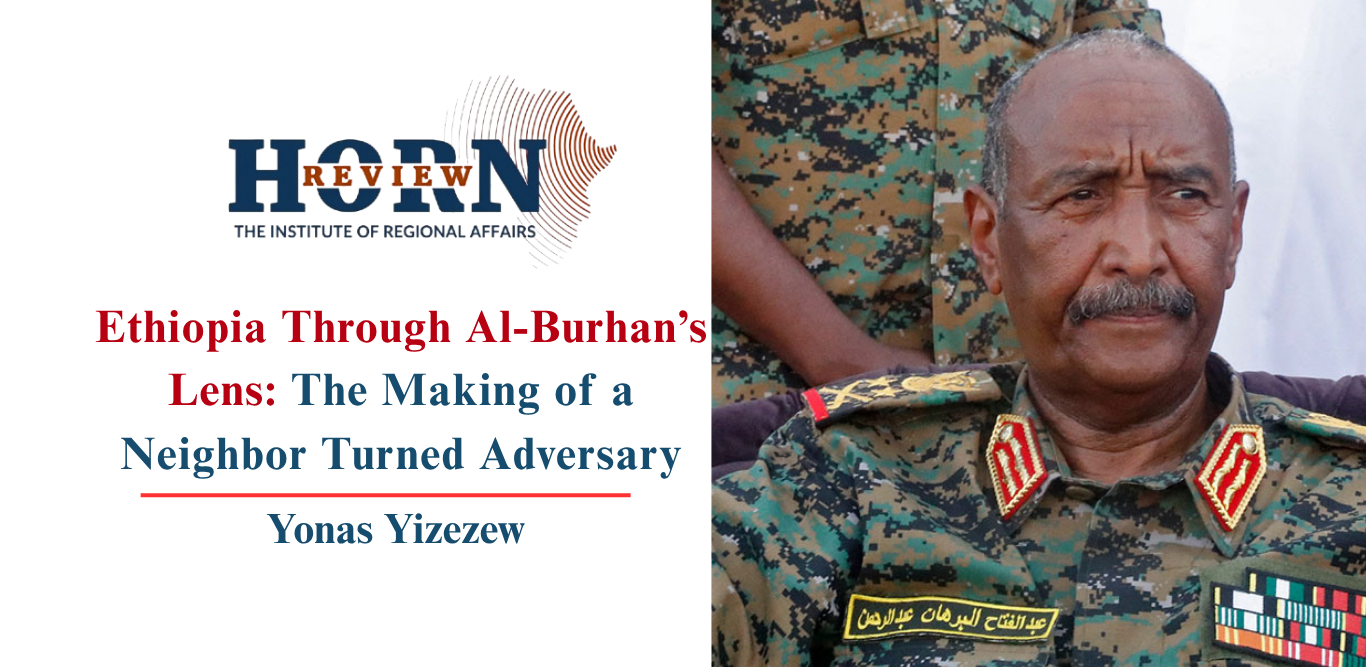
Ethiopia Through Al-Burhan’s Lens: The Making of a Neighbor Turned Adversary
One of the defining characteristics of leadership in the Horn of Africa is the extent to which the personal experiences, perceptions and characters of individual leaders shape how their countries behave and conduct their affairs. Eritrea, for instance, offers a clear example of how the state’s behavior has been shaped by Isaias Afwerki’s personal character and worldview. A similar dimension can be observed in Sudan. When Abdel Fattah al-Burhan became Chairman of Sudan’s Transitional Sovereignty Council in April 2019, effectively assuming the role of de facto head of state during the country’s delicate civil-military transition, his personal experiences, perceptions and political calculations became an important part of how Sudan and later the Sudanese Armed Forces (SAF), approached domestic and regional affairs.
SAF’s leader Burhan’s approach towards Ethiopia is particularly revealing. Although Sudanese-Ethiopian relations have long been influenced by unresolved territorial questions, Nile politics and competing regional interests, the confrontation over Al-Fashaga from late 2020 acquired a distinctly personalized character. Burhan’s military background, his reported experience in the disputed territory during the 1990s and his pursuit of political legitimacy through a nationalist narrative of territorial takeover help explain the aggressiveness that characterized Sudan’s policy at the time and SAF’s position currently. These personal considerations did not operate independently of Sudan’s institutional interests or wider regional calculations. They reinforced one another, turning a longstanding border disagreement into a more consequential source of bilateral hostility.
Burhan’s military career placed him close to Sudan’s border and security affairs long before he became the country’s most powerful political figure. He served in the border guards, later became their commander and held several senior military positions, including commander of the Ground Forces. He also worked as a trainer at a military college in eastern Sudan and served as Sudan’s military attaché in China. His professional experience included military training in Egypt and Jordan. This background is relevant when considering the strategic perspectives that may have informed his understanding of Ethiopia, particularly given Egypt’s longstanding tendency to view its eastern neighborhood through the lens of Nile security, territorial considerations and historical distrust.
A particularly important time concerns his deployment to Al-Fashaga in 1995–96. Burhan served in the area during a period of considerable strain in Sudanese-Ethiopian relations following the 1995 assassination attempt against Egyptian President Hosni Mubarak in Addis Ababa. Ethiopia and Egypt accused Khartoum of involvement in the plot, while Sudan was already confronting territorial pressure elsewhere, including Egypt’s occupation of the Hala’ib and Shalateen area. Sudan’s government under Omar al-Bashir, preoccupied with the war against the Sudan People’s Liberation Army, did not mount a military response to the loss of territory. Burhan then reportedly felt humiliated by Sudan’s inability to defend ‘its territorial claims’. Nevertheless, it offers a possible explanation for why the takeover of Al-Fashaga later became so closely associated with his leadership.
In 2020 when Ethiopia was consumed by the northern Ethiopia conflict, it opened an opportunity for the Chairman of the Transitional Sovereignty Council of Sudan, al-Burhan. He moved his forces into Al-Fashaga, displacing Ethiopian farmers and taking control of areas that had been cultivated by Ethiopians. The way the operation unfolded suggested that the deployment had been planned well in advance, as its speed and coordination made it unlikely to have been improvised. It has been also noted that Sudan deployed thousands of troops and that Burhan visited Gedaref shortly after the operation began, publicly declaring the armed forces’ determination to take the territory.
Burhan’s personal involvement gave the operation a political significance beyond the border itself. Burhan’s personal role in driving the confrontation in Al-Fashaga has become so pronounced that some Sudanese officials and observers have come to characterize it as “Burhan’s war on Ethiopia.” His visits to the area, public statements and insistence that Sudan would take the territory helped frame the operation in a nationalistic tone. In March 2021, Burhan rejected negotiations that did not begin with Ethiopian recognition of Sudanese sovereignty over the disputed territory. The position left little room for the kind of pragmatic accommodation that had sustained the previous arrangement.
The domestic political context was equally important in this matter. Sudan was experiencing a fragile transition in which the military leadership was competing with civilian actors over the direction and authority of the state. The border confrontation offered Burhan an opportunity to strengthen his nationalist credentials, consolidate support within the armed forces and present himself as a ‘defender of Sudanese territory’. Some senior military officers reportedly have commercial interests in Al-Fashaga, whose fertile agricultural land offered significant economic returns. These interests formed part of a wider pattern of military involvement in Sudan’s economy. There are hundreds of entities controlled by Sudanese security elites, spanning agriculture, banking and medical imports, illustrating the military establishment’s extensive economic reach. Sudan’s military establishment has long shared important characteristics with its Egyptian counterpart, particularly in its extensive commercial involvement across sectors extending well beyond the defense industry.
The confrontation also developed within a wider regional alignment. Egypt and Sudan had intensified military cooperation through exercises after the ouster of Omar al-Bashir and signed a military cooperation agreement on March 2021. These developments coincided with tensions over the GERD and the failure of negotiations over the Nile. For Cairo, closer military coordination with Khartoum served its interest in strengthening a common position on the dam and also its own interests in Sudan. For Sudan’s military leadership, cooperation with Egypt provided diplomatic and military support at a moment when relations with Ethiopia were deteriorating.
The implications of the above factors have extended beyond Al-Fashaga. During the same period, Sudan’s request for the removal of Ethiopian peacekeepers from the UN Interim Security Force for Abyei added another point of tension. On top of that, SAF also began leveraging cross-border proxies specifically targeting disgruntled ethnic groups in Ethiopia’s Benishangul-Gumuz region (BPLM and Gumuz dissidents). These dissident fighters frequently utilized the Sudanese borderlands (such as the Blue Nile region) as a logistical base and safe haven to launch incursions into western Ethiopia.
This sort of position escalated after the outbreak of the Sudanese civil war between the SAF and the Rapid Support Forces (RSF) in 2023. The longstanding relation between veteran Tigrayan generals and Sudanese army has played a role for the subsequent Army 70’s (TPLF’s paramilitary group) direct participation on the side of al-Burhan. This resembles to the historical use of eastern Sudan as a supply route during the TPLF’s insurgency against the Derg.
The conflict weakened Sudan’s ability to manage its border and increased the importance of external support for Burhan’s military campaign. Ethiopia, meanwhile, faced the prospect of instability spreading across its western border. In order to ease tension, Prime Minister Abiy Ahmed travelled to Port Sudan and met Burhan in 2024, becoming the first foreign head of government to visit the Sudanese military leadership’s wartime capital. The visit was intended to encourage stability and explore possible paths towards peace. It demonstrated that Addis Ababa was still prepared to engage Burhan despite the tensions inherited from the Al-Fashaga confrontation. Yet the meeting did not produce a durable diplomatic breakthrough, and the two countries’ competing security concerns continued to deepen.
As relations between Ethiopia and Eritrea deteriorated after Pretoria agreement, Asmara increasingly cultivated ties with armed opposition groups inside Ethiopia. These relationships would later intersect with Eritrea’s growing ties with Burhan, Burhan’s own relationship with the TPLF, and the connections both Eritrea and Sudan’s military leadership maintained with TPLF and other armed groups operating inside Ethiopia. What initially developed as separate relationships gradually converged, creating an overlapping network of political and military connections with direct implications for Ethiopia’s regional security.
One of the clearest manifestations of this convergence came in mid-May 2026, when Port Sudan hosted a gathering under Tsimdo initiative, bringing together Ethiopian opposition figures and representatives associated with Eritrea and the Sudanese Armed Forces (SAF). The Port Sudan gatherings preceded by several months the establishment of the Ethiopian Peoples’ Forces Alliance for Survival in late September, followed by armed clashes between the groups and federal forces in northern Ethiopia.
This has clearly shown that Sudan’s internal conflict had become increasingly intertwined with regional rivalries. Egypt openly strengthened its support for Burhan, while Eritrea developed closer relations with the SAF and hosted Sudanese military and political figures. These positions reflected shared interests over the regional balance of power, their respective strategic calculations and Egypt’s policies towards Ethiopia and Sudan.
The historical pattern of Sudan’s military establishment aligning its Nile policy with Egyptian priorities has a long precedent. In November 1959, General Abboud’s military government signed the Nile Waters Agreement, conceding Egypt the larger share of the river’s water. Recently, the SAF-led authorities have again aligned Sudan’s Nile position with Cairo, reaffirming the 1959 Agreement, opposing Ethiopia’s operation of the GERD and pledging to protect Egypt’s water rights. The pattern suggests that, under Burhan, Sudan’s military leadership is once again being shaped by Egyptian priorities, even where these may not fully correspond with Sudan’s own long-term interests.
Although Burhan and some senior military figures have adopted an increasingly confrontational posture towards Ethiopia, there are also influential figures within Sudan’s military-led establishment who recognize the costs of allowing tensions with Addis Ababa to develop into another front in an already devastating war. Malik Agar, deputy chairman of Sudan’s de facto Sovereign Council, has emerged as one of the clearest advocates of restraint. His behind-the-scenes efforts to ease tensions, including facilitating direct communication between Burhan and Abiy Ahmed during the May 2026 escalation, indicate an alternative approach within the Sudanese leadership. His subsequent public declaration that Sudan did not want a war with Ethiopia reinforced this position. Agar’s calculations are also shaped by the strategic realities of the Blue Nile region, where further confrontation with Ethiopia could create additional security pressures for Sudan.
Figures such as Gibril Ibrahim, leader of the Justice and Equality Movement (JEM) and Sudan’s de facto finance minister, alongside General Ahmed Ibrahim Mufaddal, head of the General Intelligence Service (GIS) also participated in efforts to ease tensions. These diplomatic initiatives, however, have done little to temper the army’s increasingly confrontational public rhetoric.
In essence, the SAF has continued to climb the escalation ladder, taking the deterioration of diplomatic relations to a new peak when it accused Ethiopia before the UN Security Council of supporting the RSF and facilitating its military operations from Ethiopian territory. Coming on the heels of the closure of consulates and the withdrawal of diplomatic personnel, the accusation represents another significant step in an increasingly rapid sequence of escalatory developments.
That being said, the institutional interests of the SAF, the military’s economic position, the struggle for political authority in Sudan, the war against the RSF and the regional alignments surrounding the Nile and Red Sea have all contributed to the current situation. Burhan’s personal outlook appears to have intersected with these wider calculations, giving an unresolved border dispute a more persistent place in Sudan’s security policy. What began as a confrontation over territory has developed into a much broader strategic rivalry, one in which the stability of Ethiopia and Sudan is increasingly connected to the outcome of each other’s internal conflicts.
By Yonas Yizezew, Researcher, Horn Review

RELATED
Posts
7
Nov
Ethiopia, Eritrea and the Politics of Strategic Depth
Eritrea remains a structural challenge to Ethiopia’s national security. The...
4
Nov
The Red Sea Chokehold: Why Maritime Access Is an Existential Question for Ethiopia
For a landlocked nation, maritime access is rarely a matter...
2
Nov
Ethiopia’s Maritime Diplomacy in a Contested Red Sea
On October 26, 2026, Addis Ababa hosted a gathering that...
29
Oct
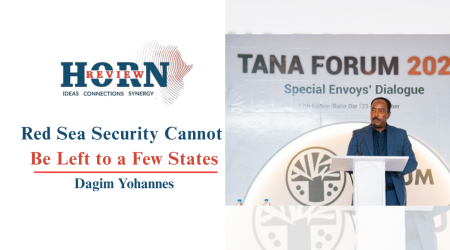
Red Sea Security Cannot Be Left to a Few States
At the 12th Tana High-Level Forum on Security in Africa,...
29
Oct
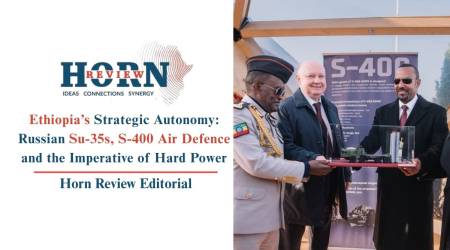
Ethiopia’s Strategic Autonomy: Russian Su-35s, S-400 Air Defence and the Imperative of Hard Power
Prime Minister Abiy Ahmed’s announcement in Moscow on October...
29
Oct
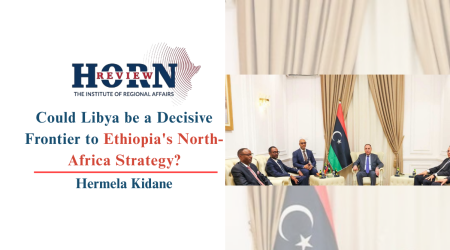
Could Libya be a Decisive Frontier to Ethiopia's North-Africa Strategy?
Ethiopia’s renewed engagement with Libya is neither sentimental nor accidental...
29
Oct
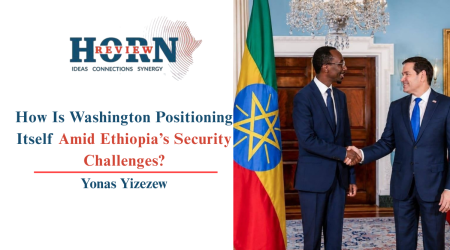
How Is Washington Positioning Itself Amid Ethiopia’s Security Challenges?
Asked about the risk of war between Ethiopia and Eritrea,...
29
Oct
The Moyale Crisis and the TPLF Legacy
The eruption of violence in Moyale demands an analysis...
29
Oct
Ethiopia and Strategic Openings in the Emerging Red Sea Order
The presentation of a geopolitical map by Israeli Prime...
21
Oct
Ethiopia, Kenya and the Growing Complexity of Somalia's Security Crisis
Prime Minister Abiy Ahmed's visit to Kenya on October 20...