The definition for Somalia’s political class is no longer the legal contestation of Hassan Sheikh Mohamud’s presidency. Rather it is whether a state whose constitutional order depends on negotiated consent between a weak center and powerful federal member states can endure a presidency whose legitimacy has become the principal challenge of national politics. This is a structural inquiry into the consequences that arise when the officeholder and the office itself become the subject of dispute and when every institution that once mediated that dispute has been absorbed into the defence of a single mandate. The evidence compiled over the past year supports a conclusion that the continuation of the current presidency does not constitute a neutral holding pattern. It is an active variable that increases the probability of the very outcomes Somalis have spent fifteen years seeking to escape.
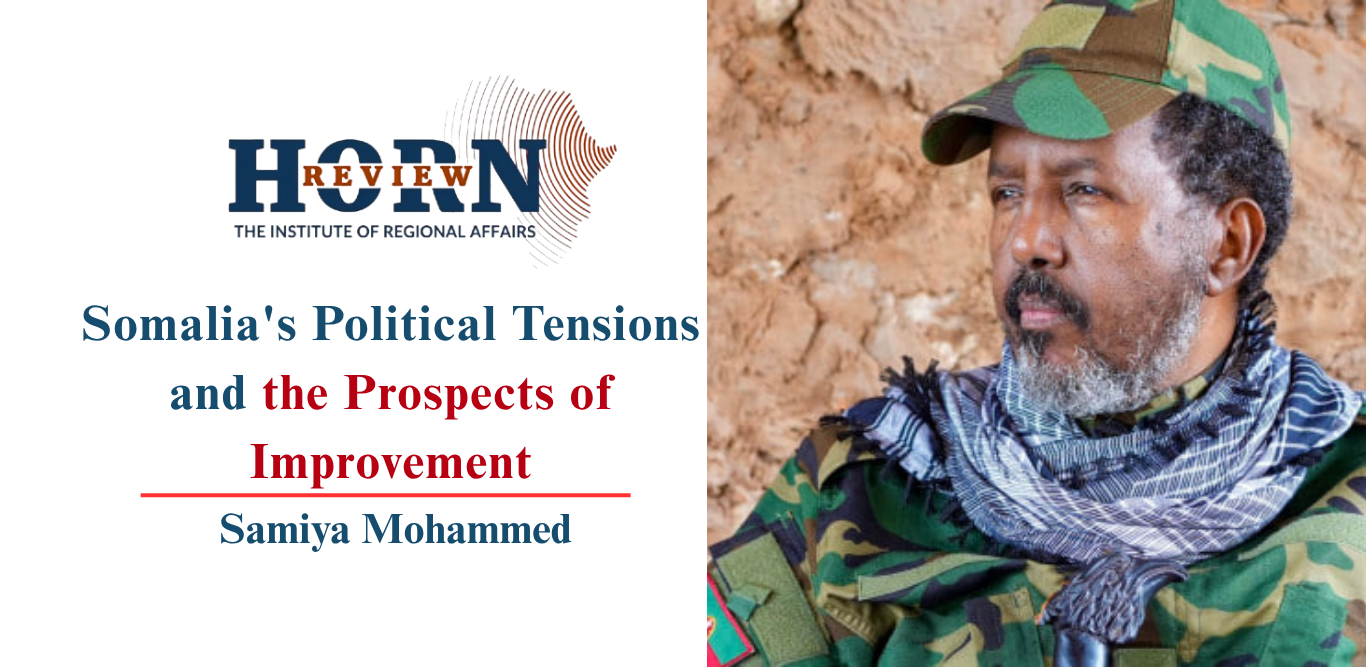
Hassan Sheikh’s original four year term expired on 15 May 2026 under the Provisional Constitution. The March 2026 parliamentary amendments extending presidential and parliamentary terms to five years were passed without the participation of the opposition or key federal member states and the last minute dialogue convened by foreign diplomats collapsed before producing agreement. The president’s response was to govern through the extension regardless. The June 2026 Mogadishu fighting in which at least thirteen people were killed, 189 wounded and roughly 12,500 households displaced around the residences of opposition figures preparing protests was not just an isolated eruption. It was the predictable translation of a legal dispute into physical violence when no constitutional court exists to arbitrate it. A president whose mandate is the central political question cannot credibly convene the election that is supposed to answer it. The instrument and the obstacle are the same person.
Puntland’s Said Abdullahi Deni has moved from skepticism to open rupture publicly calling for the president’s resignation and proposing an interim transitional council to manage the country until elections can be held under agreed terms. Jubaland is aligned with that position and both states have rejected the unilateral election timetable announced by the National Independent Electoral Commission which scheduled parliamentary elections for April 2027 and presidential elections for May. In a clan federal system a national election conducted against the active refusal of the two most powerful member states is not an election. It is an administrative assertion of the capital’s authority that will produce a result half the federation treats as void before the ballots are counted. The federation is not disagreeing with the center. The federation is rejecting it and that distinction matters because the first can be negotiated while the second cannot be papered over.
The third structural fact is methodological with the removal of Southwest’s Laftagareen in March 2026 by federal forces and loyalists followed by the installation of an administration aligned with Villa Somalia did not stabilize the region. It converted a political dispute into an armed one. Laftagareen aligned forces have since captured Buurhakaba along the Mogadishu and Baidoa road and taken Qansahdhere challenging the federal backed administration through mobilization rather than negotiation. Contested processes in Galmudug and Hirshabelle produced governments aligned with Villa Somalia even in exclusion and violence. This is not state building and It is the center selecting winners by force and then declaring the outcome legitimate in which a pattern that converts federalism from a bargaining framework into a patronage map drawn with artillery. The federal bargain that has kept Somalia from reverting to fragmentation is being consumed to defend a single presidency and the consumption is not reversible at will.
Al Shabaab has regained territory in Middle Shabelle that government forces had claimed as liberated, including towns along the Shabelle River valley and has exploited the federal state split and the Southwest conflict to reestablish supply zones and isolate government held positions. Estimates of Somali National Army casualties in the 10,000 to 15,000 range over recent years have not produced durable control. The government’s claims of momentum do not match the pattern of regained territory and continued attacks. A president whose political project is fracturing the army’s rear areas cannot ask that army to win a counterinsurgency campaign because the rear areas are the war. Security is not improving under this presidency and Political division is making it worse.
The dual executive arrangement and negotiated clan balance that once forced compromise have been hollowed out by centralization. The prime minister is widely treated as a non entity and federal institutions function as instruments of presidential preference rather than arenas for bargaining among autonomous power centers. When the center has no independent counterweight and the key states are outside the process, crises have no internal exit. June 2026 was not an aberration. It was a demonstration of what a system without safety valves looks like when pressure accumulates.
The other structural fact is external. The United Nations political mission in Somalia ceased operations on 31 October 2026 transferring its functions to Somali institutions and UN agencies on the ground. There is no heavyweight external mediator left to convene the parties, interpret the constitutional dispute or guarantee a transition arrangement. Aid and peacekeeping logistics are under pressure and foreign alignments are already being drawn into the domestic contest. Isolation plus foreign meddling is a familiar recipe for low intensity conflict and Somalia is moving toward it with the stove already lit.
A final structural consideration internal to the presidency itself merits examination. There were unverified talks that claims Senior figures close to Hassan Sheikh including security officials have pressed him to abandon the unilateral track and accept a broader deal and his response has been defensiveness rather than course correction behavior that calls into question whether he still commands a coherent coalition. Deni’s public resignation call and the federal parliament’s rejection of the timetable are not isolated objections however they suggest the political isolation of a president.
A practical alternative would be a short transitional arrangement led by a figure outside the current government with no stake in the next election, whose sole mandate is to prepare the ground for a vote that Puntland, Jubaland and the opposition can accept. This would require Hassan Sheikh to step aside before May 2027, whether through resignation or a negotiated transition. The alternative of grinding forward with a disputed mandate, a fractured federation, a resurgent insurgency and no external mediator is already demonstrably costly and likely to worsen.
The pressure on Hassan Sheikh Mohamud can be understood as the accumulated weight of a status quo producing exactly the outcomes that destroy Somali states with contested legitimacy, inter elite violence, federal fragmentation and a security space that Al Shabaab exploits. A leader who cannot organize a legitimate election because his own mandate is the dispute and who cannot hold the federation together because its two strongest members have rejected him has arguably become a variable the system cannot absorb. The question, then, is whether he should step aside and whether anyone around him is willing to say so before the next round of fighting makes the choice for them.
By Samiya Mohammed, Researcher, Horn Review