The El Alamein–Aswan Axis and the Strategic Containment of Ethiopia
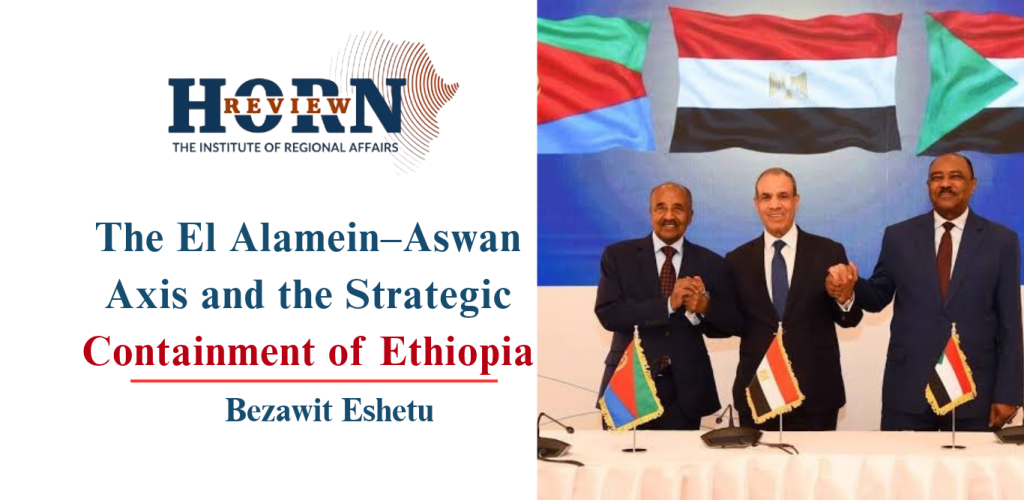
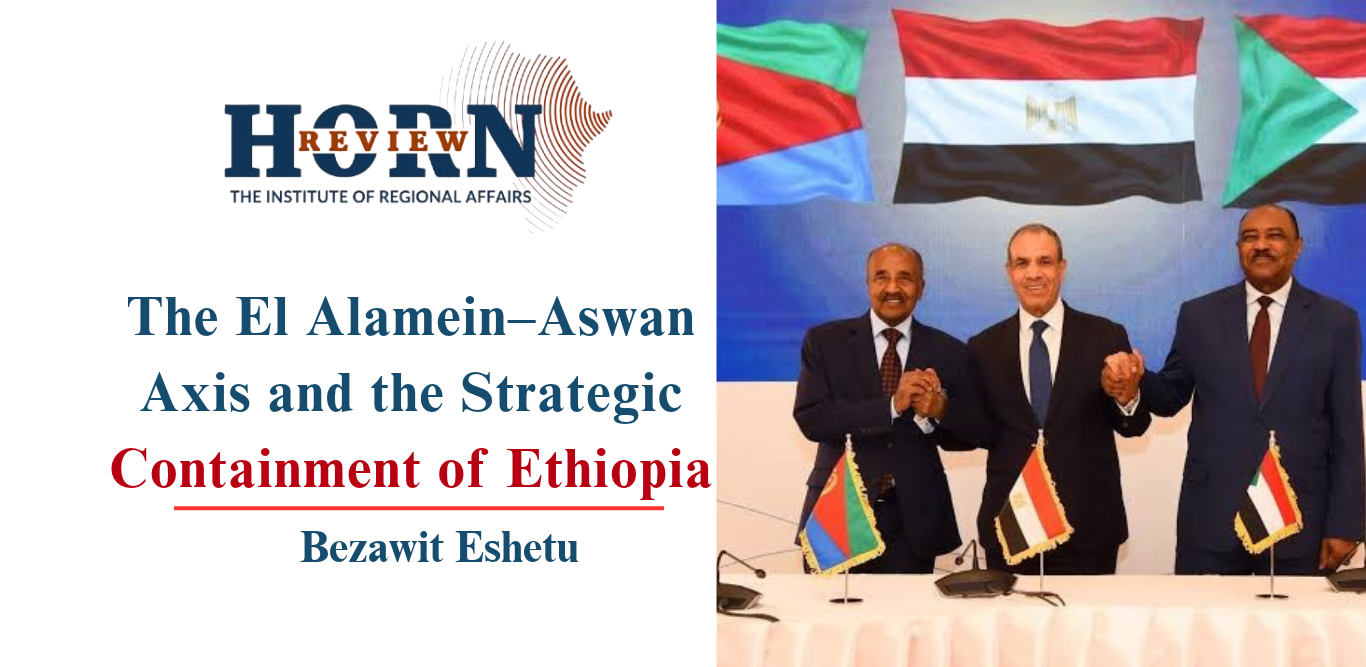
When the foreign ministers of Egypt, Sudan and Eritrea met in Aswan on November 21, they gave further momentum to a regional alignment that had been taking shape through a series of consultations over the preceding weeks. Meeting on the sidelines of the sixth Aswan Forum for Sustainable Peace and Development, Badr Abdelatty, Mohieddin Salem and Osman Saleh reaffirmed that responsibility for Red Sea governance rests with its coastal states, expressed support for Sudan’s sovereignty and territorial integrity, and renewed their backing for Somalia’s unity. They also rejected foreign-backed armed groups and unilateral measures affecting regional security and water issues. Their agreement to build on the outcomes of the El Alamein summit, alongside Cairo’s intention to brief Mogadishu on the discussions, extended an earlier quadrilateral initiative into a more sustained process of regional coordination.
The political foundations of this alignment were established on October 4, when Abdel Fattah el-Sisi hosted Abdel Fattah al-Burhan, Isaias Afwerki and Hassan Sheikh Mohamud in El Alamein. Their joint declaration brought several regional disputes under a common framework centered on sovereignty, territorial integrity, national institutions and non-interference. The four governments endorsed Sudan’s existing state institutions and rejected the creation of parallel authorities, reaffirmed Somalia’s sovereignty and explicitly opposed recognition of or support for Somaliland. They also asserted that Red Sea governance belongs exclusively to littoral states and called for prior notification, consultation and consensus over transboundary water issues, rejecting unilateral measures that affect the existing water uses of the downstream Nile states. The establishment of a follow-up mechanism gave these positions an institutional basis for continued consultation, allowing the four governments to carry their common diplomatic language into subsequent regional engagements.
The timing of the summit added considerable significance to this emerging coordination. On October 1, Ethiopia closed its embassy in Asmara and ordered ten Eritrean diplomats to leave the country, accusing Eritrea of activities threatening its national security amid renewed fighting in Tigray and allegations of support for armed opposition groups. Three days later, Eritrea joined Egypt and Sudan in a regional consultation whose central principles addressed issues directly connected to Ethiopia’s security and foreign-policy priorities. The juxtaposition reflected a deteriorating regional environment for Addis Ababa. As relations with Asmara entered another period of confrontation, Eritrea was strengthening its diplomatic coordination with Cairo and Khartoum, while the participation of Somalia brought its dispute with Somaliland into the same political framework.
Abiy Ahmed’s response the following day brought the maritime question into sharper focus. Addressing parliament on October 5 after his reappointment, the prime minister reiterated his government’s determination to secure a maritime outlet through what he described as the principle of give and take. His remarks reaffirmed maritime access as a long-term national priority at a moment when neighboring coastal governments were advancing a collective position reserving Red Sea governance to littoral states. The divergence reflects a fundamental difference in how the parties approach the region’s maritime order. Ethiopia regards reliable access to the sea as essential to its economic and strategic future, while the emerging framework gives neighboring coastal governments a common diplomatic basis for defining the political and security conditions surrounding that access.
The third round of the Egypt-Sudan 2+2 consultation mechanism, held in Cairo on November 2, translated this broader political alignment into more specific bilateral positions. Bringing together the two countries’ foreign and irrigation ministers, the discussions addressed the Nile, Red Sea security and Sudan’s ongoing war within a single diplomatic engagement. On maritime affairs, Cairo and Khartoum reaffirmed the exclusive responsibility of coastal states for Red Sea governance and rejected maritime access for non-littoral countries where it would compromise coastal sovereignty, territorial integrity or port security. They also opposed attempts to militarize the waterway and unilateral measures affecting the sovereignty of regional states. By incorporating these positions into a joint statement, Egypt and Sudan established a more coordinated diplomatic position through which to advance their respective interests in the Red Sea.
Their treatment of the GERD followed the same logic of institutional coordination. The two governments described their water security as indivisible and reaffirmed the rights and existing uses they associate with the 1959 Nile Waters Agreement. They characterized Ethiopia’s management of the dam as unilateral and contrary to international law, demanded prior notification and consultation, and called for an agreed framework based on avoiding harm and securing consensus. They also insisted that the GERD dispute should remain within the three Eastern Nile states, rejecting Ethiopia’s efforts to involve other Nile Basin countries in the negotiations. The 1959 agreement, concluded between Egypt and Sudan without Ethiopia’s participation, remains a contested foundation for basin-wide water governance. Its continued invocation nevertheless gives Cairo and Khartoum a common diplomatic reference point through which to reinforce their downstream claims and coordinate positions in regional and international forums.
Sudan’s political order formed the third major dimension of the Cairo consultations. Egypt reaffirmed its support for Sudan’s national institutions, explicitly identifying the Sudanese Armed Forces as central to the country’s national security and water security. It also invoked the bilateral Joint Defense Agreement and declared its readiness to take measures under international law to protect Sudan’s territorial integrity and existing state institutions. In the context of the ongoing war, this position carries a direct political implication. The SAF remains the principal institution through which Burhan’s government asserts its authority, making Egypt’s commitment to Sudan’s national institutions a source of diplomatic and political support for the military-led state structure in Khartoum. Cairo was therefore linking its position on the Nile with a security relationship that extends into the institutional and political future of Sudan.
The convergence among these governments derives from interests that differ in origin but increasingly reinforce one another. Egypt seeks to strengthen its position in the GERD negotiations while shaping the rules governing Red Sea security. Sudan’s military leadership depends on external diplomatic backing for its claim to represent the state and preserve its territorial integrity. Eritrea’s increasingly adversarial relationship with Ethiopia creates overlapping security interests with Cairo and Khartoum, while Somalia gains additional regional support for its sovereignty claim over Somaliland. Their coordination gives each government a wider diplomatic platform through which to advance its individual priorities.
The Red Sea is where this alignment carries its most immediate implications for Ethiopia. The El Alamein declaration and subsequent statements in Cairo and Aswan advance the principle that governance and security of the waterway belong exclusively to its littoral states. The Red Sea has seven coastal states, Egypt, Eritrea, Sudan, Saudi Arabia, Yemen, Jordan and Israel. El Alamein brought together three of them, alongside Somalia, whose coastline lies along the strategically connected Gulf of Aden. Djibouti, situated at the southern entrance of the Red Sea system around Bab el-Mandeb, also carries considerable importance for the wider maritime-security environment. The remaining Red Sea coastal states were outside the quadrilateral consultation. The participating governments can coordinate their preferences and promote a shared political position, but their discussions cannot establish an exclusive regional mandate over a waterway whose security and navigation affect all its coastal states and the wider international community.
For Ethiopia, the distinction between coastal sovereignty and regional participation carries particular weight. Article 125 of the United Nations Convention on the Law of the Sea recognizes the right of landlocked states to access and transit to the sea. It provides for the terms and modalities of that access to be established through agreements between landlocked and transit states, while preserving the sovereignty and legitimate interests of the latter. The provision establishes a basis for negotiated access and transit, with the practical arrangements dependent on agreements with the states concerned. Ethiopia can therefore ground its pursuit of maritime access in an established framework of international law.
The geographical implications of the emerging alignment become clearer when Ethiopia’s potential alternatives to Djibouti are considered. Eritrea controls Assab and Massawa, while Sudan controls Port Sudan. Access to Berbera involves a different political complication, as the port is administered by Somaliland’s de facto authorities while Somalia retains its internationally recognized sovereignty claim over the territory. These corridors differ in their commercial capacity, political conditions and security implications, yet each involves a government or territorial authority whose position intersects with the diplomatic framework taking shape around Ethiopia. Egypt’s closer coordination with Eritrea and Sudan, alongside its relationship with Mogadishu, gives Cairo an established role in the political conversations surrounding the principal alternative maritime corridors available to Addis Ababa. Somalia’s participation also brings the Berbera question into a wider regional discussion in which maritime access is closely connected to territorial sovereignty and international recognition.
Egypt’s position on military access further clarifies the limits it seeks to place on Ethiopia’s maritime engagement. Foreign Minister Abdelatty has drawn an explicit distinction between commercial access, which Cairo accepts when negotiated with the countries concerned, and military access for non-littoral states, which he considers unacceptable. This distinction has considerable consequences for Ethiopia, whose maritime interests encompass port infrastructure, logistical facilities and a potential role in maritime-security arrangements. It allows Cairo to frame questions surrounding Ethiopia’s future maritime presence in terms of military access and the militarization of the Red Sea. The November 2 joint statement gives this position a collective diplomatic basis, creating an environment in which proposed arrangements could face objections framed around coastal sovereignty, territorial integrity and port security, particularly where commercial access intersects with military or security functions.
The application of sovereignty as a guiding principle also needs to be considered alongside the regional conduct of the governments advancing it. In Libya, Egypt has maintained a strategic relationship with Khalifa Haftar’s eastern forces, which exercise authority across much of eastern and southern Libya alongside a rival political and military center in Tripoli. Cairo’s engagement with Haftar has been shaped by border security, concerns over political Islam and the balance of power in neighboring Libya. Its subsequent efforts to expand diplomatic relations with authorities in Tripoli, including the reopening of its embassy there in November 2026, further demonstrate how its approach has evolved alongside changing political and security calculations. The comparison with the present Red Sea position illustrates the extent to which Egypt’s interpretation of political legitimacy and national authority remains informed by its own strategic priorities.
Eritrea’s earlier engagement with Somaliland offers another example of this relationship between principle and regional interests. In March 2019, Foreign Minister Osman Saleh and presidential adviser Yemane Gebreab visited Hargeisa to initiate diplomatic engagement with the territory’s authorities. The visit fell short of formal recognition, but it demonstrated Asmara’s willingness to establish direct relations with Somaliland as part of its regional diplomacy. The position now advanced at El Alamein, which explicitly rejects recognition of or support for Somaliland, therefore sits alongside an earlier record of engagement with the same political authority. The distinction between diplomatic contact and formal recognition remains important, but the contrast illustrates how positions on contested questions of sovereignty can evolve with changing regional circumstances.
The sovereignty principles advanced at El Alamein also acquire a different significance when considered against the security relationships developing around Ethiopia. The declaration’s emphasis on non-interference and respect for national institutions sits alongside Eritrea’s growing engagement with Ethiopian opposition networks. The Tsimdo initiative, launched in 2025, has provided a framework for cooperation involving actors opposed to the Ethiopian federal government. Its significance became particularly visible at a gathering in Port Sudan in May 2026, which brought together individuals associated with the Eritrean government, Sudanese actors, Amhara nationalist groups and other Ethiopian opposition constituencies. These relationships connect Ethiopia’s internal political and security challenges with the regional calculations of neighboring governments. The participants retain different political objectives, but their convergence creates additional pressure on Addis Ababa at a time when Eritrea, Egypt and Sudan are deepening their diplomatic coordination. The result is a regional environment in which the principle of non-interference is increasingly invoked in diplomatic disputes while Ethiopia faces growing external involvement in its internal security affairs.
Egypt’s relationship with the Sudanese Armed Forces gives this regional alignment an institutional anchor. The relationship rests on decades of military cooperation, including the 1976 Joint Defense Agreement, the 2021 military cooperation agreement and repeated joint exercises. Following Bashir’s removal in 2019, Cairo favored the SAF over the civilian leadership headed by Abdalla Hamdok, partly because the civilian administration was pursuing closer relations with Addis Ababa on the GERD. Cairo supported Burhan’s 2021 coup and subsequently used its diplomatic influence to shield the military leadership from international pressure. This preference helped consolidate a Sudanese partner whose political and security priority increasingly aligned with Egypt’s downstream position on the Nile.
That partnership has acquired a more direct dimension through the Sudanese war. Since October 2025, Egyptian military involvement has expanded through operational coordination with the SAF, the deployment of military personnel near front lines and increased support following the RSF’s capture of El Fasher. Egyptian military operations against RSF positions have added a further dimension to Cairo’s involvement. The relationship has consequently moved beyond diplomatic endorsement into a consequential security partnership. For Egypt, the SAF serves as a central state institution, a partner on Nile policy and a security interlocutor along its southern border. The same support strengthens the military leadership’s position within Sudan’s war and risks narrowing the space available for a civilian-led political settlement.
Seen together, the El Alamein, Cairo and Aswan meetings reveal a process of strategic compression. Egypt contributes diplomatic coordination and the Nile agenda; Sudan’s military leadership provides a downstream partner and a significant Red Sea position; Eritrea brings a direct security rivalry with Ethiopia and connections to Ethiopian opposition networks. Their interests remain distinct, yet their convergence allows pressure on Ethiopia to operate across several arenas simultaneously. The Red Sea question becomes linked to the GERD, Sudan’s internal war and Ethiopia’s security environment. This is the central significance of the emerging axis, as its influence lies in raising the diplomatic and strategic costs of Ethiopia’s choices and shaping the regional conditions under which those choices are made.
The political weight of this coordination, however, should not be confused with the legal authority to determine the outcomes of these disputes. The declarations advanced by the participating governments express their respective political positions; they do not, by themselves, establish an exclusive regional mandate over the Red Sea or displace the rights and interests of other coastal states and the wider international community. Nor can they negate the legal basis for Ethiopia’s pursuit of maritime access.
By Bezawit Eshetu, Researcher, Horn Review

RELATED
Posts

20
Nov
Roseires Dam and West Kordofan Reveal the Limits of the SAF's Military-First Strategy
The trajectory of the Sudanese war is being reshaped at...
19
Nov
The Horn’s Anti-UAE Wave and the Echos of Cold War Geopolitics
The recent decision by the Federal Republic of Somalia to...
19
Nov
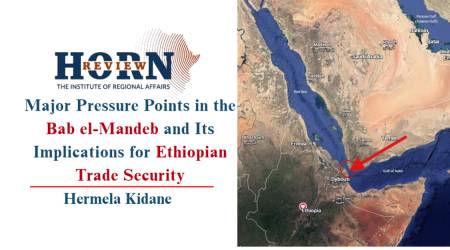
Major Pressure Points in the Bab el-Mandeb and Its Implications for Ethiopian Trade Security
The southern entrance to the Red Sea has entered a...
19
Nov
The Fragile Thaw Between Kenya and the SAF
After more than a year of strained relations, Kenya and...
19
Nov
Egypt’s Influence in Sudan Runs Deeper Than Burhan’s Command of the SAF
Egypt’s relationship with Sudan is frequently reduced to Cairo’s support...
19
Nov
Saudi Arabia, RSF and the Shadow of The Yemen War
A chain of high-profile defections has begun to fray the...

19
Nov
Why the SAF–Houthi Relationship Matter Beyond Sudan
The Century Foundation has published a detailed report...
19
Nov
The Structural Autopsy of the 1991 London Talks and Its Lasting Legacy
The current Ethiopian state establishment is engaged in a comprehensive...
19
Nov
Is the Historic Ethio-Djibouti Port Diplomacy Set to Deepen Over the Quest for Sea Access?
Nearly three decades of bilateral agreements have proven that Djibouti...