When Education Cannot Wait closed its Geneva replenishment conference on 5 November, it had secured US$541.6 million against a US$600 million target, and none of the announcements name a government from the Horn of Africa among the pledgers. Switzerland hosted, and Germany, Britain, Norway, Canada, Ireland, the European Union and Japan were singled out for leadership despite tightening aid budgets. The campaign reached 90 percent of its goal and left a US$58.4 million gap.
That ledger answers question regional institutions have deferred for years. The schooling of a generation in Sudan, South Sudan, Ethiopia and Somalia now depends, to the extent it is secured at all, on money raised in outside the continent, while the African Union (AU) and the Intergovernmental Authority on Development (IGAD) issue communiqués. A region fluent in the language of “African solutions to African problems” has handed the financing of its own classrooms to outside donors, and with it much of its control over educational continuity.
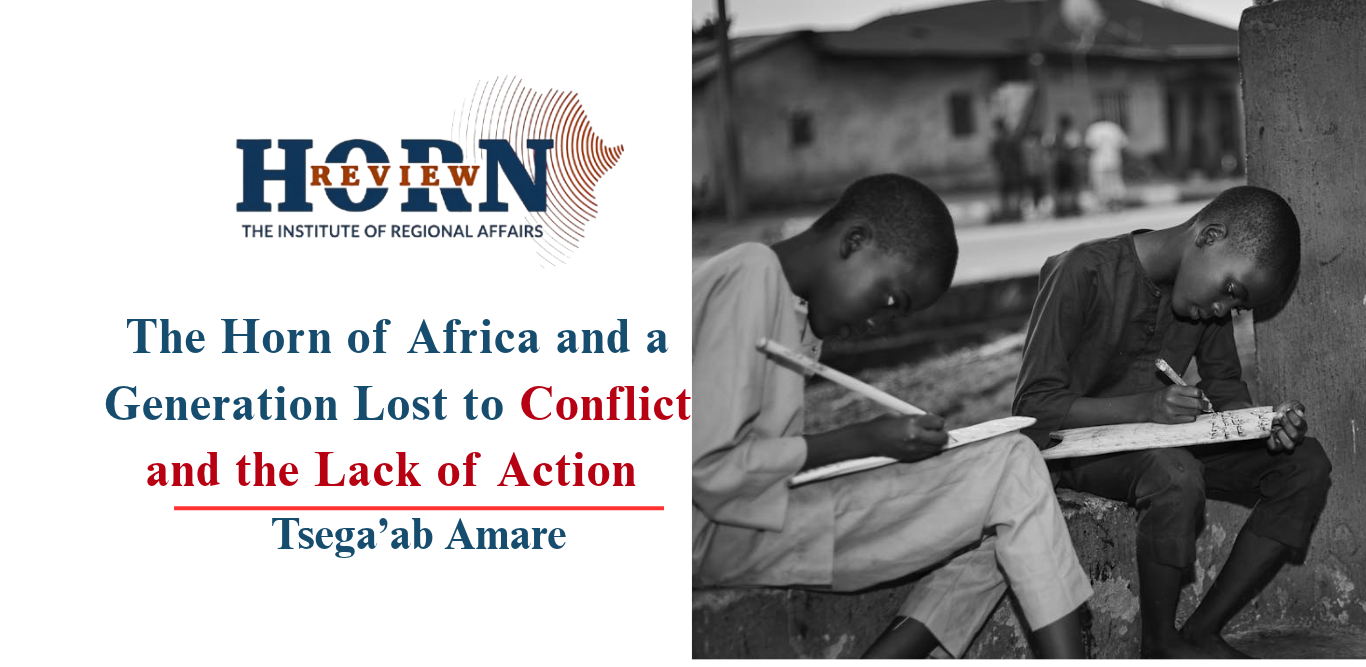
The collapse of schooling across the Horn amounts to a security liability with a maturity date. Although missing school does not automatically produce violence, it compounds economic exclusion, removes protective institutions and erodes trust in the state.
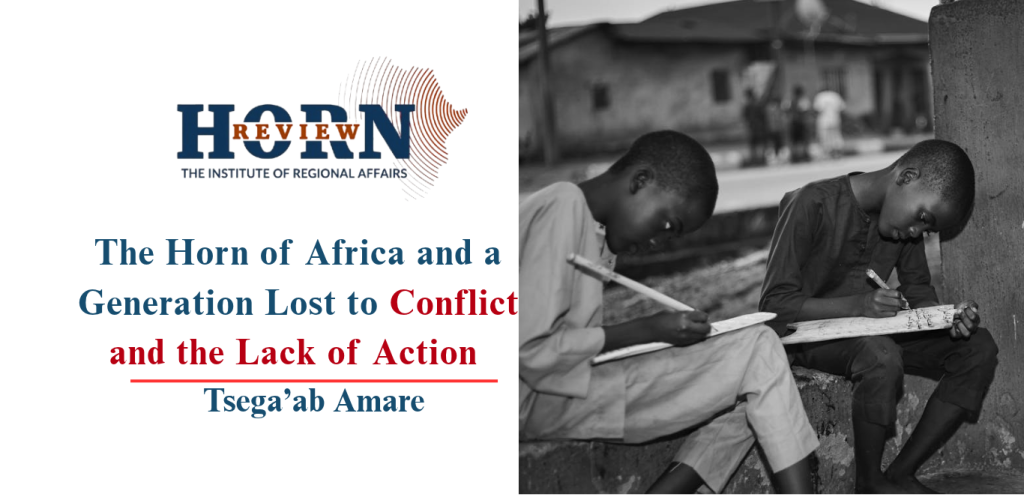
Sudan sets the scale with at least eight million of its 17 million school-age children out of school, including 4.1 million girls, and nearly half of the country’s school buildings no longer function. In Darfur, more than three million of nearly four million school-aged children are out of the classroom and 81 percent of schools remain closed. The pattern repeats across the border. UNICEF puts South Sudan’s out-of-school children at more than 2.8 million, 60 – 70 percent of the school-age population, among the highest rates in the world. Girls make up 53 per cent of them. The figure has not fallen since 2020, and nearly 1.3 million refugees and returnees from Sudan are adding pressure to the system. On the other, UNICEF reported in January 2025 that more than nine million Ethiopian children were out of school, with 4.4 million in Amhara, 3.2 million in Oromia and 1.2 million in Tigray, and more than 6,000 schools closed. Several responses saw major funding reductions for education in 2025 compared with 2024; reported humanitarian funding for education in Ethiopia fell by 75%. In Somalia, UNICEF’s 2026 appeal says two thirds of children are out of school, and by August more than 78,000 had dropped out as aid cuts took hold, with another 660,000 at risk.
Hunger has removed the second support. Famine conditions, in Sudan, were confirmed in El Fasher and Kadugli in November 2025, a UNICEF survey in Um Baru found more than half of children under five acutely malnourished, and UN agencies project 825,000 Sudanese children with severe acute malnutrition in 2026. A child who loses the school meal and the classroom loses the two institutions best placed to interrupt the damage of early undernutrition.
The route from deprivation to renewed violence is neither automatic nor universal, but cross-national research finds that societies with more schooling face a lower risk of civil war. Where schooling collapses, children face greater exposure to trafficking, child marriage and armed recruitment, and UNICEF has verified more than 1,500 grave violations against children in El Fasher alone since April 2024. Armed groups recruit through ideology, kinship, coercion and inducement. The European Union Agency for Asylum records more than 900 children recruited and 663 abducted by Al-Shabaab in 2022.
Where recruiters rely on inducement, they offer a meal, a stipend and protection, which are the goods a functioning school system supplies through feeding programs, paid teachers and protected buildings. A treasury that funds the security apparatus while treating school meals and teacher pay as discretionary has misclassified the expense.
Continental and regional bodies have assembled the vocabulary of a response without the budget. The AU Peace and Security Council held its annual open session on education in conflict in August 2026, a Special Envoy on Children Affected by Armed Conflict took up the post in February, and an Education in Emergencies and Resilience Cluster launched in September, none of them with a dedicated fund on the public record reviewed. The 1357th communiqué reports US$8.8 million allocated across 19 states, while a single multi-year Education Cannot Wait program for three Sudanese states totals US$22 million. The same communiqué directs its financing appeal to outside partners and makes no call on the Assembly of Heads of State and Government, the only organ able to appropriate funds.
IGAD carries a closer obligation, yet the statements reviewed from its heads-of-state summits center on ceasefires and mediation and leave schooling off the agenda. Its 2017 Djibouti Declaration paired refugee inclusion with financing, but a 2024 UNHCR evaluation found that no state had fully integrated refugee schools, that governments lack fiscal space and that no system tracks international pledges. Education also remains absent from peace instruments, since ceasefire monitoring rarely records the military use of schools and transitional arrangements seldom guarantee teacher salaries.
Closing the gap requires a shift from declarations to verifiable fiscal accountability at three levels. The AU would need to create a transparent education-in-emergencies financing mechanism, whether as a Peace Fund window or a standalone fund, place the subject on the Assembly’s standing agenda and publish annual spending by country. IGAD would need to write school protection, teacher pay and refugee enrollment into ceasefire monitoring and reconstruction frameworks and attach a financing tracker to the Djibouti Declaration. Horn governments would need to announce named pledges against the US$58.4 million Geneva gap, commit domestic funds to teacher stipends and school meals as security expenditure and, in the case of Ethiopia and Eritrea, endorse the Safe Schools Declaration.
Today’s out-of-school cohort will reach adulthood within the decade its leaders claim to plan for. Whether it emerges as citizens of rebuilding states or as recruits for the next round of wars depends on budget decisions taken now. Geneva recorded who paid, and the US$58.4 million still open gives the Horn a dated opportunity to put its own name on the ledger.
By Tsega’ab Amare, Researcher, Horn Review