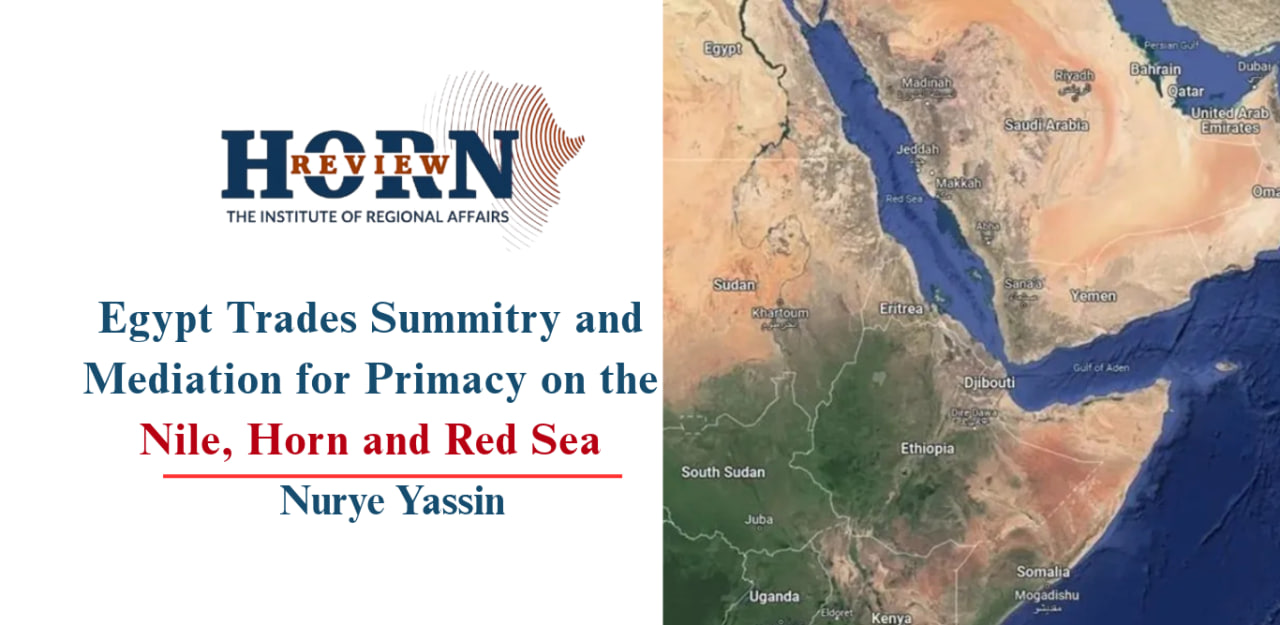
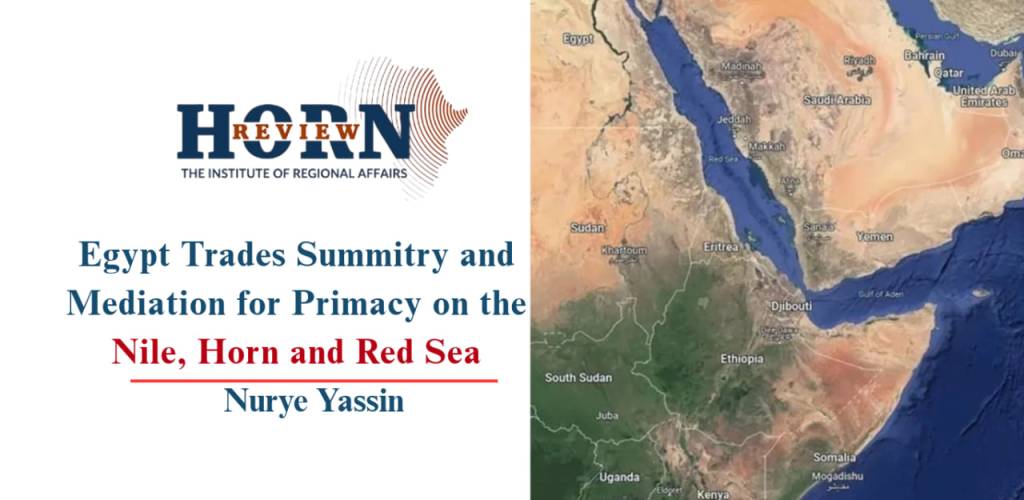
The competing visions of world order advanced by established and ascending powers are determined in one of the critical regions of the world—Northeast Africa—consisting energy, vital sea lanes, critical corridors, and strategic resources that are set to re-configure the geo-economic and geo-technological map of the world.
In a world beset by chokepoint, energy, resource, trade and tech wars, Northeast Africa faces colliding models of regional structure. Ethiopia’s new hydraulic breakthrough over the Nile River (GERD) and its return to the Red Sea is turning the geo-politicized geography into a geo-economic one built around open regionalism. Ethiopia’s model of a regional structure designed to organize the countries of the region into an open economic regionalism helps the strategic region negotiate with the powerful economic blocs and ultimately emerge as an autonomous economic node in the emerging world order.
The hydraulic and maritime hegemonic hangover incapacitates Egypt’s foreign and national security establishment to make peace with a new re-organization of power in Northeast Africa that is witnessing a sea change in regionalism built around the logic of geo-economic openness. Egypt’s failure to adjust to a new distribution of power across the Nile, Red Sea and Horn of Africa is manifested in insular geopolitical interventions putting a premium over bloc politics.
Egypt frustrated with the new geostrategic reality is now scrambling for allies in the face of Ethiopia’s emergence as a regional enabling power re-territorializing the geo-economically dormant and geopolitically hot space of Northeast Africa, making the strategic region vital to regional and international affairs.
Egypt competes with regional actors for the attention of great powers to find a role in their respective regional peace plans and models of security architecture for the Horn, Red Sea, Gulf and Middle East so as to decide the fate of these strategic regions of the world according to its regional design. Cairo presents itself as a capital for mediation, peace proposals and regional policies minted by major powers in exchange for their diplomatic and material support to its core interests–determining the future of the Horn, Nile and Red Sea without the say of Ethiopia.
The Egyptian leadership, marketing Egypt as an interlocutor and peace broker in Arab and African affairs, is making direct appeals to the US, Russia, China, European Union and middle powers to be supportive of Cairo’s insular and closed hydro-political and maritime regionalism in order to reclaim its dominant position on the Nile, Red Sea and Horn.
Nevertheless, Egypt publicly supporting competitive models of regional security architecture and regional peace plans put forward by major and middle powers practically leverages these same security architectures and peace proposals to advance its exclusive economic and security agenda. That is, Egypt converts summit diplomacy, mediation, peace proposals, and international partnerships into strategic advantage to suspend the post-GERD geostrategic reality and bar Ethiopia from the Red Sea.
The Egyptian foreign and national security establishment continues to use summitries, fora and conferences as methodologies of advancing Cairo’s wider regional geopolitical design built on insular hydro political and maritime regionalism that is intended to maintain the dictatorship of a singular hydro-political and maritime hegemon.
President El-Sisi instrumentalizes summitries as a pathway to vilify Ethiopia while imploring the world to be sympathetic towards Egypt’s mono-centric water and maritime agenda. Egyptian President attending the Third Russia-Africa, the 52nd G7 and China-Egypt Summits in 2026 in addition to the 2025 Egypt-European Union Summit made the same request for Russian, American, Chinese and European help regarding Cairo’s vision on the Nile, Red Sea and Horn regions built on exclusive and closed regional architecture.
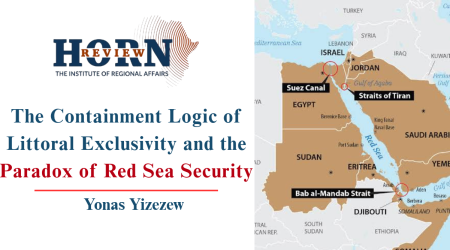
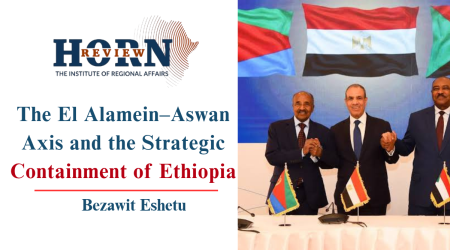
Likewise, Egyptian Foreign Minister who was recently on a tour in Washington presents Egypt as a force for regional de-escalation talks in Africa and Middle East. However, what Egypt does in the Northeast Africa and Middle East is not regional de-escalation. It is a desperate move to subcontract great power diplomacy, including the US, against Ethiopia in regional affairs. It is about mobilizing alliances including El-Alamein and other minilaterals in which Egypt is the brain and firepower while the coastal states of the Horn offer the geography for a quadrilateral forward-basing built on a containment strategy–embroiling Ethiopia in perpetual conflict and keeping it non-coastal.
Egypt talks of regional de-escalation, but reaches for military as a regional and international policy instrument of choice to advance its regional project. This regional project that devalues diplomacy and privileges the military front and center in the management of the Nile, Red Sea and Horn affairs makes Egypt an unreliable interlocutor as its regional de-escalation effort is the cover story, not the motive. The messier situation across the Nile, Horn and Red Sea is heavily influenced by Egyptian geopolitical machinations aimed at making Ethiopia unable to use the waters of the Nile and decouple it from the Red Sea.
The recent flurry of Egyptian diplomatic activities for possible American, Chinese, Russian and European assistance is a frantic attempt by Egyptian policy makers to keep pressure on Ethiopia. Egypt’s diplomatic and military posturing going hand in hand with some of the coastal states of the Horn does not preclude Ethiopia from its utilization of Abbay River (Blue Nile) and its pursuit of reliable, secure, sustainable and mutually beneficial access to the sea through peaceful negotiations, commercial arrangements and regional cooperation, as Addis is comfortable interacting, partnering and working with Americans, Chinese, Russians and other international partners in various domains that geo-economically and geopolitically enable the Northeast Africa pairing security with development.
International partners are encouraged to approach developments in the Nile Basin, the Horn of Africa and the Red Sea with objectivity, impartiality and a balanced appreciation of the legitimate interests and concerns of all countries in the region. A nuanced understanding of the perspectives of all stakeholders is essential to avoiding unintended consequences, deepening regional divisions and safeguarding international trade, peace and security. International partners should be mindful of Egypt’s diplomatic machinations as Cairo uses its mediation, brokerage and convening role as tools for leadership on these regions. They should view Egypt’s approach within this broader regional context and are encouraged to contribute to inclusive dialogue, mutual understanding and cooperative approaches that advance the shared interests of the region.
It is also clear that Egypt is no longer the only power that writes the rules of the game in Northeast Africa where regional security structure cannot solely be negotiated by Egypt on behalf of the countries across the Nile, Horn and Red Sea. The lesson that has been unlearnt by Egyptian strategists is that regional security does not run through faraway capitals and Cairo. The answer lies within the region as Addis Ababa makes it clear that no major regional issue, including the Nile, Horn and Red Sea security, can be addressed and settled without Ethiopia.
Open regionalism is an Ethiopian initiative for the Northeast Africa that cultivates inclusive, open developmental and indivisible security architecture for Northeast Africa founded on openness, transparency, flexibility and mutual respect. Put simply, Ethiopia seeks security “with” the countries of the Northeast Africa rather than against them, recognizing development as a foundation for lasting peace and collective security. This regional vision framing “development as the new security” strives for regional geo-economic openness and regional strategic autonomy as foundations for a sustainable regional security architecture and integrated regional development.
This vision upholds the sovereign equality and legitimate interests of all countries in the region. It promotes the equitable and reasonable utilization of shared water resources, negotiated and mutually beneficial maritime access, and inclusive Red Sea governance that recognizes the interests of both littoral and affected non-littoral states. It also prioritizes interconnected infrastructure, energy cooperation, trade and investment, supported by stronger regional institutions, particularly the African Union and IGAD. Ultimately, open regionalism offers a cooperative alternative to exclusive alliances and geopolitical rivalries, advancing shared prosperity and sustainable regional stability.
On the other hand, Egypt clings to the logic of bloc politics that seeks security “against” non-members of the bloc. This doctrine weaponizes mediation, peace summits, peace plans and international partnerships as instruments to legitimize and reclaim Egypt’s mono-centric hydro, maritime and geopolitical primacy in Northeast Africa. Egypt projects an image of indispensable interlocutor while acting as a driver of regional insecurity. These geopolitical interventions underpinned by bloc politics or zero-sum security architecture would make Northeast Africa a militarized space in a contested world order.
International partners that have leverage and stakes over these strategic regions should push Egypt to be cognizant of the fact that a new region exists where rules-by-few, littoral-centrism, bloc politics, insular regionalism and rival security structures on Northeast Africa would not serve its interests taking the region in the direction of war and fragmentation. The same partners with influence should press Egypt to delink itself from the logic of bloc politics and subscribe to the idea of inclusive security architecture as a foundation for integrated regional development.
By Nurye Yassin, Researcher, Horn Review