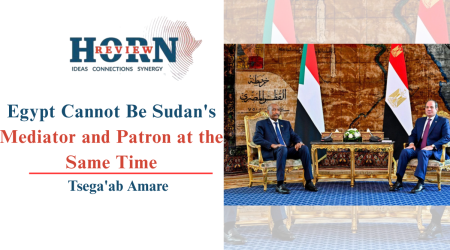
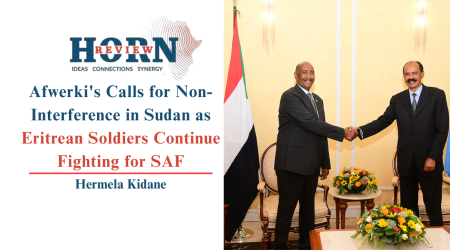
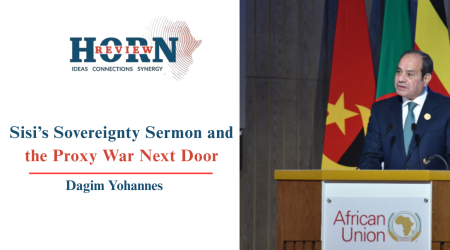
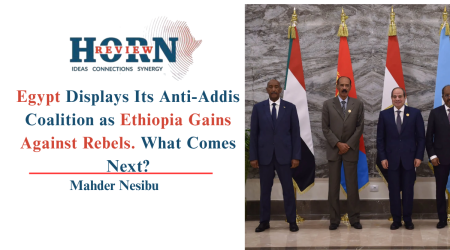
The contradiction was laid out almost perfectly at El Alamein. On 4 October 2026, Egypt, Eritrea, Somalia and Sudan issued a declaration that, within two consecutive provisions, appeared to apply two different understandings of geography and regional responsibility. On the Red Sea, the four states declared that its governance was the exclusive responsibility of littoral states. On the Nile, however, they insisted on international law, the principle of no harm, prior notification, consultation and consensus, while rejecting unilateral actions affecting the existing water uses of downstream Egypt and Sudan.
That juxtaposition exposes the central problem in Egypt’s regional posture. When Egypt is geographically vulnerable, geography becomes a source of interdependence. Sovereign borders are not enough; states must consider the consequences their actions create beyond their territory. Yet when Ethiopia raises its own geographic vulnerability, the logic changes. The coastline becomes the decisive boundary, littoral status becomes the qualification for participation, and Ethiopia’s dependence and proximity carry far less diplomatic weight.
Egypt’s Nile doctrine rests on the argument that absolute territorial sovereignty is inadequate for governing shared geography. Cairo describes water security as an existential issue and argues that resources crossing borders cannot be managed through unilateral decisions. In September 2026, Egyptian policy toward the Nile Basin was framed around “cooperation, development, shared interests and mutual benefit”, while transboundary waters were presented as a field for cooperation and integration rather than rivalry. Later that month, Egypt again maintained that shared resources cannot be managed through unilateral measures.
Egypt’s downstream dependence is real, but it is important to distinguish that vulnerability from the dispute Cairo has constructed around it. Ethiopia has never sought to deny Egypt access to the Nile, nor has it argued that the river’s Ethiopian origins extinguish legitimate downstream interests. Its position has been fundamentally different: that a shared river cannot remain governed by arrangements that preserve preferential downstream claims while constraining an upstream state’s right to development and equitable utilization. Ethiopia’s claim is therefore not one of exclusion, but of inclusion on fairer terms. It accepts the Nile as a shared resource while rejecting the proposition that sharing must indefinitely reproduce an order weighted toward Egypt’s historical advantages. The dispute is not over whether Egypt should benefit from the Nile, but over whether Egypt can treat its existing position as a permanent entitlement against Ethiopia’s equal right to use the river.
That makes Egypt’s Red Sea position considerably harder to defend.
When the discussion moves eastward, Cairo’s vocabulary changes from interdependence to exclusion. In October 2025, Egypt’s foreign minister declared that Ethiopia had “no right” to participate in Red Sea governance because it was landlocked. Egypt subsequently repeated that Red Sea governance should remain confined to littoral states, and the principle was eventually written into the El Alamein Declaration.
The contrast is striking. Ethiopia has not told Egypt that because the Abay rises inside Ethiopia, Cairo should have no say in issues affecting the river. Yet on the Red Sea, Egypt comes close to advancing precisely that territorial logic against Ethiopia: no coastline, therefore no meaningful place in the maritime order immediately beyond it. Cairo demands that Ethiopia look beyond sovereign territory when Egyptian vulnerability is at stake, but relies on the coastline as a hard political boundary when Ethiopian vulnerability is at stake.
Addis Ababa’s 5 October statement placed this inconsistency squarely at the center of the debate. It brought the Abay and the Red Sea into the same geographic argument, insisting that discussion of either must account for Ethiopia’s geographical realities and legitimate national interests. Ethiopia is the source of the Abay and lies only around thirty miles from the Red Sea at its nearest point. The two spaces are not legally identical, but the political question is difficult to avoid: why should geography create legitimate interests for Egypt beyond its borders while being treated as largely irrelevant when Ethiopia invokes its own dependence?
The economic reality strengthens that argument. Ethiopia is not seeking relevance to the Red Sea because of historical nostalgia alone. Its economy is structurally dependent on maritime trade. More than 95 percent of Ethiopia’s import and export trade by volume has moved through the Addis Ababa Djibouti corridor. Fuel, fertilizer, industrial inputs, exports and access to global markets depend on corridors passing through other states. Maritime access is therefore not a peripheral commercial matter but a strategic question of economic resilience. For a state of Ethiopia’s demographic and economic weight, dependence on a single external corridor is itself a national security concern.
This is where Egypt’s position becomes especially difficult to reconcile with its own Nile logic. Cairo asks Ethiopia to recognize that dependence on geography outside national borders can rise to the level of national security. Yet when Ethiopia makes the same basic argument about access to the sea, Egypt favors a regional architecture built around exclusion from governance rather than accommodation.
There is an important legal distinction, and Ethiopia does not need to blur it. The Nile is an international watercourse, and the Nile Basin Cooperative Framework Agreement incorporates principles such as equitable and reasonable utilization and the obligation not to cause significant harm. Ethiopia’s maritime dependence, by contrast, does not automatically create sovereignty over another state’s coastline.
But that distinction does not justify pretending that landlocked states have no legitimate maritime interests. Article 125 of the Law of the Sea Convention provides that landlocked states have a right of access to and from the sea and freedom of transit, while requiring that practical arrangements respect the sovereignty and legitimate interests of transit states. Ethiopia has consistently presented negotiated access as the means through which its maritime interests should be pursued. The legal framework therefore points toward accommodation through agreement, not exclusion.
The Ethiopia Somalia Ankara Declaration demonstrates the same principle in practice. Ethiopia and Somalia reaffirmed Somali sovereignty and territorial integrity while recognizing the value of Ethiopia obtaining reliable access to the sea. They envisaged commercial arrangements including contracts, leases and similar modalities under Somali sovereign authority. That framework dismantles the false choice between Ethiopian exclusion and Ethiopian ownership of another state’s coast. Port agreements, leases, transit corridors, infrastructure partnerships and regional consultation can expand Ethiopian access without erasing anyone else’s sovereignty.
This is why Egypt’s insistence on an exclusively littoral Red Sea order goes beyond a simple defense of coastal sovereignty. Sovereignty can be protected while Ethiopia’s legitimate interests are accommodated. Egypt itself asks for precisely this kind of accommodation on the Nile.
The historical background needed to understand the dispute is limited. Ethiopia became landlocked following Eritrea’s secession in 1993. In the Nile Basin, Addis Ababa has long opposed arrangements that privilege inherited downstream uses over equitable utilization. The common thread is not a desire to erase borders. It is resistance to regional systems that profoundly affect Ethiopia while treating Ethiopian interests as secondary.
El Alamein made that asymmetry unusually visible. Egypt convened Eritrea, Somalia and Sudan and produced a declaration dealing with Red Sea governance, Somali territorial integrity and downstream Nile interests in the same document. The declaration cannot be reduced entirely to an anti Ethiopian instrument, but from Addis Ababa’s perspective the cumulative message is clear: Egypt expects Ethiopian restraint where Egyptian vulnerability is involved, while supporting exclusion where Ethiopian vulnerability is involved.
Ethiopia therefore does not need to deny Egypt’s legitimate Nile concerns. Its stronger argument is to hold Cairo to the principle Cairo itself invokes. Geography does create interdependence. Extreme dependence can create legitimate interests beyond a state’s borders. Only making legal remedies differ. Egypt does not acquire sovereignty over Ethiopian water merely because it depends on the Nile, just as Ethiopia does not acquire sovereignty over a neighbor’s coastline because it depends on maritime access. But if cooperation, integration, consultation and sensitivity to dependence are principles Cairo considers essential on the Nile, it must explain why exclusivity becomes the preferred principle on the Red Sea.
That is the contradiction Egypt has yet to resolve. Ethiopia has not sought to shut Egypt out of the Nile. It has argued for a more equitable order within a shared basin and for its own development rights to be recognized alongside those of downstream states. Cairo, by contrast, is defending a Red Sea architecture in which Ethiopia’s lack of coastline is used to narrow its place in a maritime system crucial to its economy and security. The result is a difficult double standard to disguise: the Nile is treated as a shared regional space when Egypt needs accommodation from geography, while the Red Sea becomes an exclusive space when Ethiopia asks for accommodation from the same geography.
By Makda Girma, Researcher, Horn Review