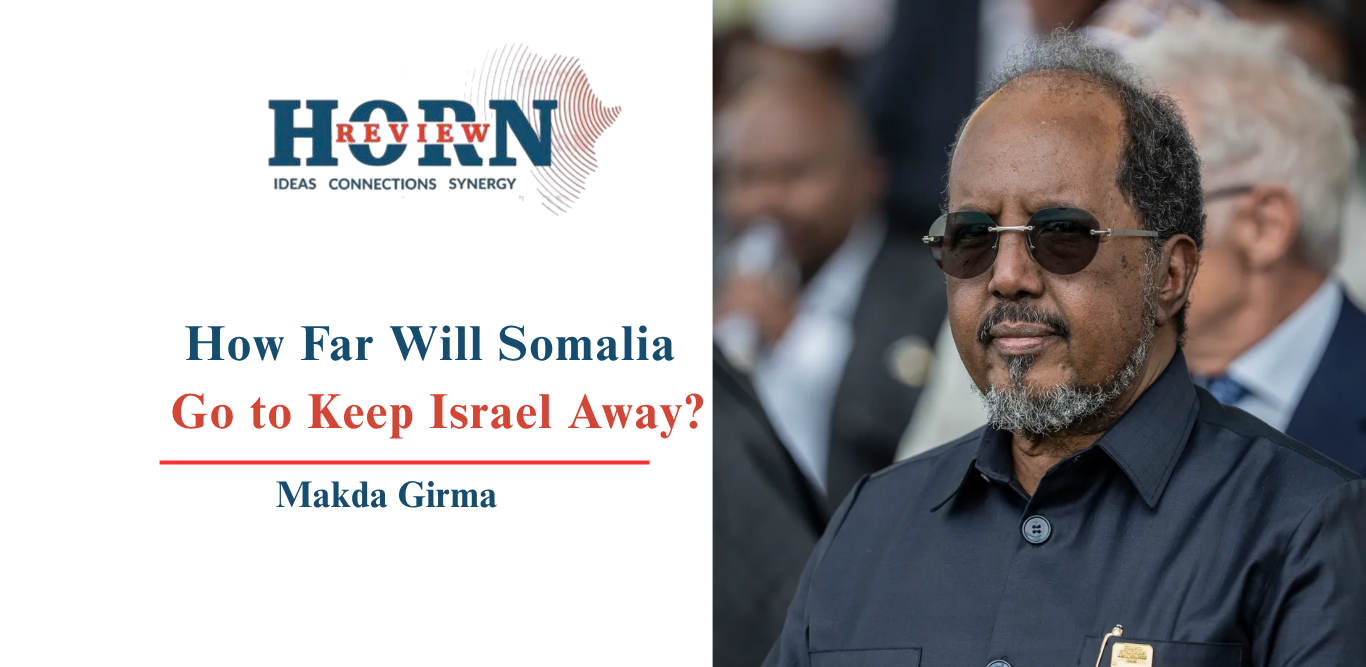
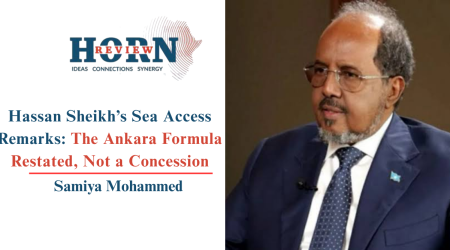
Somali President Hassan Sheikh Mohamud’s declaration that his country will not accept an Israeli military presence “under any circumstances” raises a question more complicated than the statement itself: what is Somalia actually prepared to do to prevent one? Mohamud has alleged that Israel seeks access to Berbera’s port and airport in Somaliland, potentially giving it a strategic position across the Gulf of Aden from Yemen. Israel has not publicly confirmed the specific military plans described by the Somali president, meaning the prospect of a base remains contested. Still, the political dispute surrounding the possibility is already significant because it touches on Somalia’s territorial claims, Somaliland’s pursuit of recognition and the wider competition over the Red Sea.
At first glance, Somalia’s position appears straightforward. Mogadishu considers Somaliland part of its sovereign territory, and most of the international community continues to recognize Somalia within those borders. Israel, however, formally recognized Somaliland as an independent state in December 2025, becoming the first UN member state to do so. The decision opened a new diplomatic chapter for Somaliland after more than three decades of functioning separately from Mogadishu while failing to secure broad international recognition. For Israel, the relationship can be understood through a combination of diplomatic, economic and strategic interests. For Somaliland, recognition itself carries exceptional political value.
The difficulty for Somalia is that international recognition and territorial control are not the same thing. Mogadishu possesses the stronger legal claim internationally, but Hargeisa controls Berbera. This creates the central contradiction behind Hassan Sheikh’s warning. Somalia can reject an Israeli military presence as a violation of its sovereignty, but preventing such a presence would require considerably more than asserting that sovereignty. It would require converting legal legitimacy into political, diplomatic and strategic leverage capable of influencing decisions made in territory that Mogadishu does not currently administer.
Diplomacy is therefore Somalia’s most immediate instrument. Mogadishu does not necessarily need to physically prevent every foreign engagement with Somaliland if it can instead make such engagement politically expensive. Israel’s recognition matters not simply because one state changed its position, but because of the precedent it could create. Somaliland’s diplomatic objective is unlikely to be satisfied by a single recognition. Its broader interest is demonstrating that one breakthrough can be followed by others. Somalia consequently has a strong incentive to ensure that Israel remains an exception rather than the beginning of a wider shift in how Somaliland is treated internationally.
This helps explain why Mogadishu has worked to internationalize the territorial question. Following Israel’s recognition, the African Union reaffirmed Somalia’s territorial integrity, while several regional governments also opposed the decision. Somalia’s advantage lies precisely in this international system. Somaliland may possess the strategically valuable coastline and control the territory itself, but Somalia possesses membership in the institutions through which state sovereignty and territorial integrity are normally defended. Mogadishu can therefore attempt to prevent Somaliland from turning Israeli recognition into a wider diplomatic chain reaction.
Yet diplomatic statements alone may not be enough if relations between Israel and Somaliland deepen. Somalia therefore has an additional incentive to embed its position inside a broader regional framework. The El Alamein Joint Declaration issued on 4 October by Egypt, Somalia, Eritrea and Sudan reaffirmed principles of sovereignty, independence and territorial integrity while also strengthening political and security coordination and rejecting recognition of Somaliland.
It would be premature to describe this grouping as an alliance constructed specifically against Israel. Egypt, Eritrea, Sudan and Somalia each have separate interests, and their cooperation extends beyond Somaliland. Nevertheless, the arrangement gives Mogadishu something it cannot easily generate on its own: greater regional weight. Somalia may therefore be attempting a form of strategic denial through coalition building. It does not have to match Israel’s military capabilities directly if it can create an environment in which establishing a lasting presence in Berbera becomes diplomatically and strategically more complicated.
Egypt is particularly important in this calculation. Cairo has repeatedly supported Somalia’s territorial integrity and opposed external recognition of Somaliland. The issue also intersects with Egypt’s wider concern with Red Sea security. An Israeli presence in Berbera would therefore not exist in isolation but would become another element in an already crowded strategic space stretching from the eastern Mediterranean through the Red Sea and into the Gulf of Aden. From Somalia’s perspective, cooperation with countries such as Egypt increases the political consequences attached to decisions taken in Somaliland.
Türkiye adds another layer. Ankara maintains substantial political, economic and security relations with Somalia and has consistently supported Somalia’s territorial integrity. Following Israel’s recognition of Somaliland, Türkiye explicitly reaffirmed that position and stated that decisions concerning Somalia and Somaliland should reflect the will of Somalis as a whole. Although these close relations do not guarantee Turkish support for Somalia in the event of a direct confrontation, they provide Mogadishu with a wider diplomatic and strategic environment in which it does not have to confront the Somaliland question entirely on its own. Türkiye has already joined broader diplomatic efforts supporting Somalia’s sovereignty and territorial integrity while backing diplomatic and legal measures intended to defend them.
The relationship becomes more consequential because Türkiye and Israel are already navigating competing strategic interests across several regional theatres. Their overlapping military interests in Syria have required deconfliction mechanisms intended to prevent unintended escalation, while their wider competition increasingly extends into areas connected to the Red Sea and Horn of Africa. An Israeli strategic presence in Somaliland could therefore introduce another point of friction in a region where Türkiye already has significant security interests. This does not make a Turkish-Israeli confrontation over Somalia inevitable, but it could raise the stakes by linking the Somaliland dispute to a broader competition over military access, influence and regional positioning, increasing the possibility that a largely territorial dispute acquires a wider geopolitical dimension.
Hassan Sheikh’s phrase “under any circumstances” is politically forceful, but it doesn’t mean that Somalia intends to use military force. Somalia also has strong reasons to avoid opening another armed front. The country continues to face serious internal security challenges, while the wider Horn of Africa is already affected by several overlapping disputes. Military escalation around Berbera could create costs far beyond the immediate question of Israeli access.
There is also a contradiction that Somalia would have to manage carefully. Mogadishu argues that it does not want conflicts from the Middle East imported into Somali territory. Yet preventing an Israeli foothold may require Somalia to draw more deeply on Middle Eastern and Red Sea partnerships. The more it mobilizes Egypt, Türkiye, Arab institutions and other regional actors, the more internationalized the Somaliland dispute becomes. Somalia could therefore find itself relying on the very regional competition it hopes to keep from taking root on its territory.
Somaliland’s own interests further complicate the picture. Hargeisa has spent decades trying to transform effective autonomy into international recognition. Israeli recognition therefore provides something of enormous political value. At the same time, Berbera gives Somaliland something valuable to outside powers. Its port, airport and location opposite Yemen make it strategically significant beyond the immediate Somali political dispute. Somaliland possesses geography but seeks legitimacy, while Israel possesses diplomatic recognition and may see value in closer ties with a strategically placed partner. Their relationship therefore contains a degree of mutual utility even if the exact military dimension remains uncertain.
For Somalia, this means that keeping Israel away from Berbera cannot ultimately be achieved only by confronting Israel. Mogadishu must also consider why Somaliland has incentives to deepen relationships with outside powers in the first place. Somalia can persuade foreign governments not to recognize Somaliland while still leaving unresolved the political dispute that has allowed Somaliland to operate separately since 1991. The more strategically valuable Berbera becomes, the more opportunities Hargeisa may find to use access, infrastructure and diplomatic cooperation to strengthen its international position.
This creates a difficult question for Somalia’s long term strategy. Diplomatic pressure can narrow Somaliland’s external options, but it cannot by itself resolve the underlying relationship between Mogadishu and Hargeisa. A durable reduction in Somaliland’s incentive to seek recognition through outside powers would probably require some form of political arrangement between the two sides. That is a far more difficult task than blocking an individual diplomatic initiative, but it may ultimately matter more.
Israel also faces its own calculations. Berbera’s location could offer strategic value because of its proximity to Yemen, the Gulf of Aden and major maritime routes. At the same time, greater involvement there could expose Israel to another complicated political space. Strategic access can create opportunities, but it can also produce obligations and opposition. A presence intended to improve Israeli security could generate new diplomatic tensions across the Red Sea and potentially attract attention from actors hostile to Israel.
Whether that strategy can succeed remains uncertain. Somalia possesses considerable international legitimacy, Somaliland possesses the geography, and Israel possesses the capacity to pursue relationships that serve its own regional interests. None of these advantages is absolute. The more important question is therefore not simply how far Somalia is willing to go to keep Israel away, but how far it can transform sovereignty on paper into influence on the ground without contributing to the wider regional confrontation it says it wants to prevent.
By Makda Girma, Researcher, Horn Review