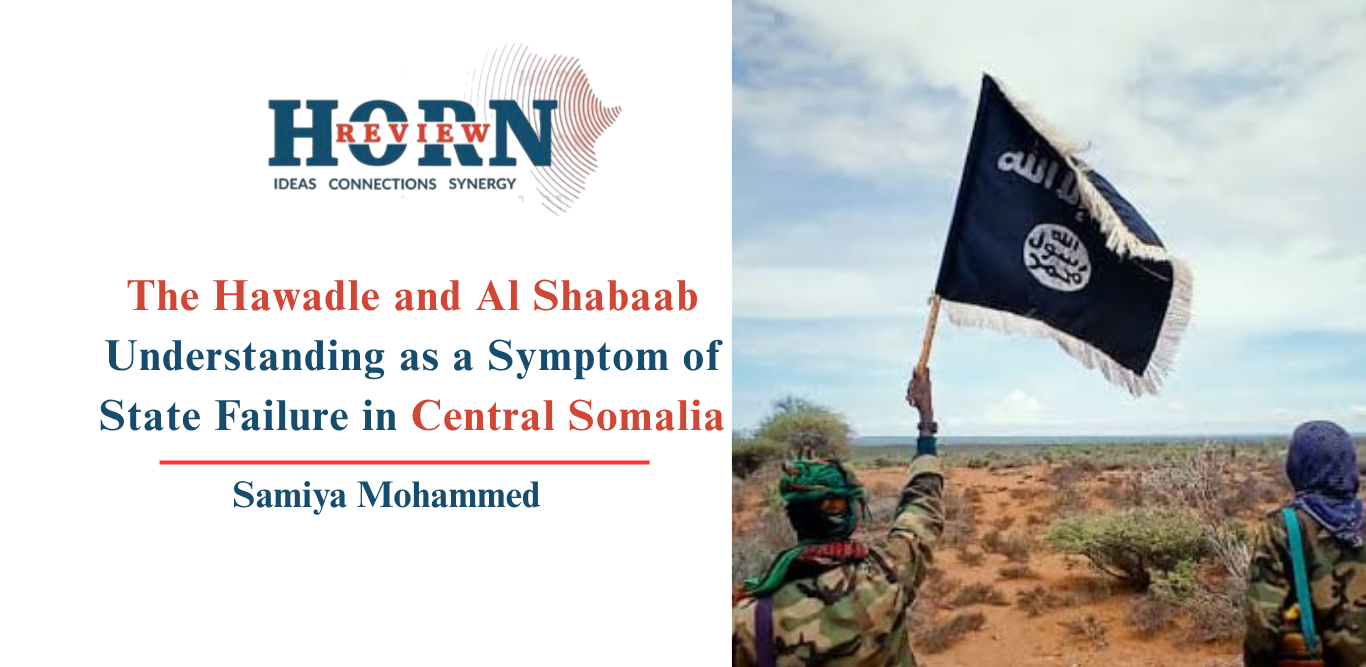
The agreement between Al Shabaab and sections of the Hawadle clan in Hiiraan region is a political rupture of the first order. This framing however overstates the ideological dimension and understates the structural one. The developments are consequential but they are local in origin, limited in scope and reversible in nature. What has taken shape is neither a conversion of the Hawadle to Al Shabaab’s project nor a wholesale realignment of the clan. It is an accommodation produced by the convergence of three structural failures those being the failure to institutionalize military gains, the failure to distribute political power and the failure to sustain the material conditions of allied militias. The communiqué sets out commitments to end Macawiisley activity, close certain points and extend support against the Federal Government and African Union forces. These provisions are administrative and territorial rather than doctrinal. They reflect a local authority seeking the least costly available order not a community embracing a new political project.
The Hawadle Macawiisley formed the operational core of the 2022 central Somalia offensive. They cleared large parts of Hiiraan with Somali National Army support and American airstrikes dislodging Al-Shabaab from territory it had held for years. The model appeared to offer a locally rooted alternative to foreign led counter insurgency and that model was never consolidated. Al Shabaab’s 2025 push reversed much of the 2022 gains and recovered ground that had been under government or allied control since the 2014 African Union operations. Maxaas fell in July 2025 after years under government control. The fighters who conducted the clearing operations went unpaid. Tax and point disputes accumulated and Mogadishu did not convert reclaimed territory into administered territory. The gains depended on the continued willingness of local militias to fight and that willingness was never matched by sustained financial, logistical or political support. A military success that is not institutionalized is a temporary condition not an outcome.
The political dimension compounds the military one. Hawadle leaders state that President Hassan Sheikh Mohamud promised them the Hirshabelle presidency then backed Ali Guudlawe an Abgaal from the same broader Hawiye family as the president. The Hawadle boycotted the process, staged protests in Beledweyne and elsewhere and blocked Hirshabelle officials from Hiiraan airports until a power sharing arrangement was reached. The election results nonetheless delivered a decisive outcome for the ruling party. The structural implication is that the state demanded sacrifice from a clan and then excluded it from the distribution of political authority. When a central authority extracts military service without extending political inclusion or material support local leaders reassess the terms of their alignment. Al Shabaab has long operated on this terrain. It applies pressure to a clan, offers a local truce administered through its courts and taxation and converts former adversaries into passive or active collaborators. The mechanism is not novel and what is notable is the depth of the exhaustion and the breadth of the politics that make the mechanism work.
The Violence between Hawadle militias and Al Shabaab in rural Hiiraan can be expected to decline. This is a gain for the militant group. It releases fighters for other fronts, reduces the local intelligence and point pressure that made the 2022 offensive possible and allows Al Shabaab to present itself as the authority capable of delivering order where Mogadishu cannot. Hiiraan already largely contested or lost moves further toward de facto Al Shabaab administration. Beledweyne and a small number of garrison towns can remain under government or mixed control in the near term but the connective geography between them becomes more difficult to secure. The map of government control already thin contracts further.
The counter insurgency model that depended on clan militias sustains another blow. The 2022 campaign functioned only while Hawiye sub clans, Hawadle in particular treated the fight as their own. If segments of the Hawadle stand down or tilt toward accommodation, pressure on Al-Shabaab’s supply lines and rear areas in central Somalia eases. Other communities observing the same sequence of promises, abandonment and political exclusion now have a precedent. Al Shabaab does not require the adherence of every clan. It requires a sufficient number to cease active resistance. That threshold is lower and it is one the group is increasingly able to meet.
Clan structure not ideology is the organizing factor. Many of the individuals involved in these discussions are weighing survival and local influence not doctrinal commitment. Some senior Al Shabaab figures are themselves Hawadle in which a kinship channel that facilitates co option and simultaneously generates internal factional incentives within the militant group. The Abgaal and Hawadle tension inside Hirshabelle predates this agreement. Inter clan clashes along the Hiiraan Middle Shabelle border have recurred over time. A Hawadle tilt toward Al Shabaab can be interpreted in Mogadishu as both a security concern and a clan power move which increases the likelihood of heavy handed responses that deepen alienation.
The timing is deliberate with the announcement coincided with federal promotion of Hirshabelle election results. Al Shabaab is signalling that political outcomes in Mogadishu do not determine control on the ground. The group lacks the capacity to take Beledweyne but it possesses the capacity to make the countryside ungovernable for its rivals. That is a form of leverage the Federal Government has not been able to neutralize.
The risk is cumulative rather than sudden. A single localized agreement does not collapse the state. A series of such agreements unfolding alongside African Union mission drawdown pressures and an uneven Somali National Army steadily contracts the territory on which the government can claim to govern without permanent foreign air support. Mogadishu treated the Hawadle Macawiisley as expendable auxiliaries and the Hirshabelle presidency as an Abgaal entitlement. Al Shabaab offered the exhausted remainder a less costly local order. Central Somalia’s security now depends more than before on whether the federal government can pay, arm and politically include the clans that reside there or whether it continues to manage the map while the countryside negotiates around it.
The agreement is a symptom because the underlying condition is the repeated failure to convert tactical clan mobilization into durable administration. The 2022 offensive was a tactical success that was never translated into a political settlement. The Hawadle were asked to fight and they fought. They were promised a share of authority and they were denied. They were left with unpaid fighters contested points and a government unable to shield them from Al Shabaab’s return. In that setting, a local truce with the militants is not a rejection of the state in principle. It is an adaptation to the state’s absence in practice.
The Federal Government cannot assume that clans which fought Al Shabaab will continue to fight because they once did. Loyalty in this environment is transactional and local. When the state does not deliver security, payment and political inclusion, local authorities will seek alternative arrangements. Some of those arrangements will involve Al Shabaab. Not because the clan has adopted the group’s project but because the group is the only actor offering a functioning local order. That is an indictment of the federal project and it is not one that election results can answer. The Hawadle and Al-Shabaab understanding is not a seismic ideological conversion. It is clan politics in its most practical form. The agreement may hold for a period. It may collapse if the local balance shifts. But even if it does the conditions that generated it will persist. Those conditions including military failure, political exclusion, unpaid allies and governance conducted at a distance are the substance of the matter. Until they are addressed, central Somalia will continue to move, one local arrangement at a time away from the state and toward whichever actor can supply the least costly local order.
By Samiya Mohammed, Researcher, Horn Review