
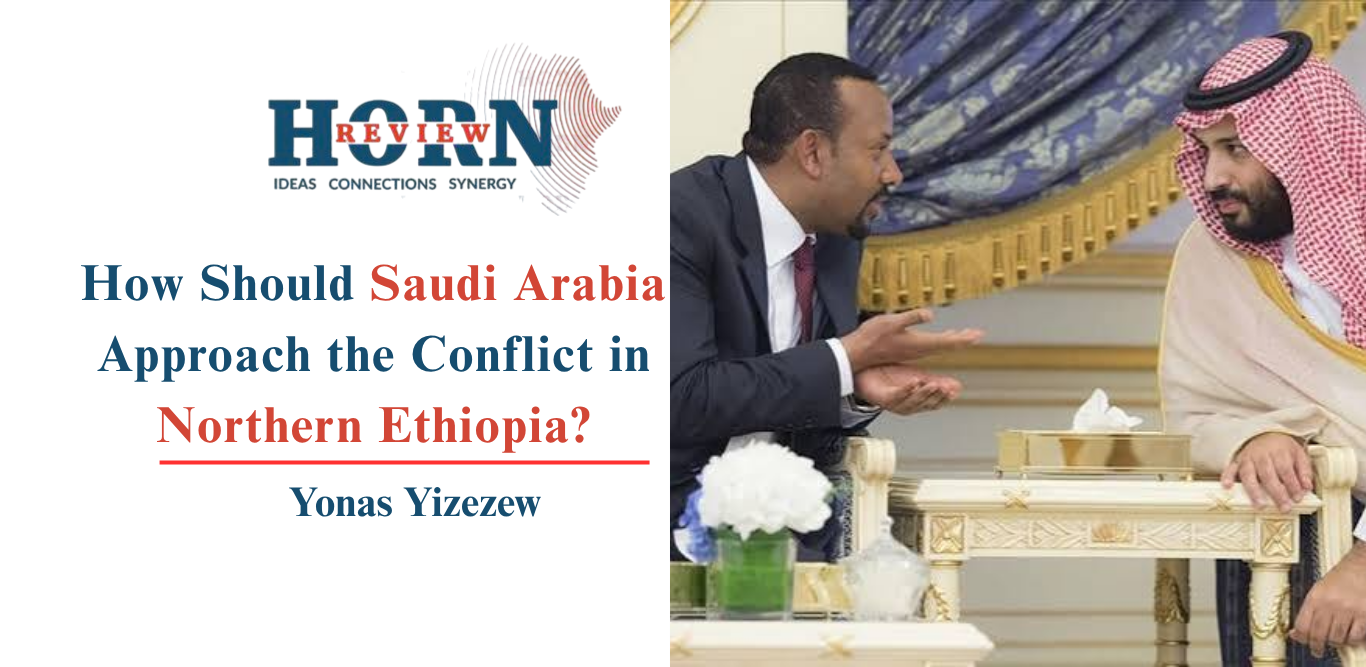
How Should Saudi Arabia Approach the Conflict in Northern Ethiopia?
Saudi Arabia’s position toward the renewed conflict in northern Ethiopia is increasingly shaped by a wider strategic problem extending across the Red Sea, the Horn of Africa and the Sudanese civil war. Riyadh has interests on both sides of the Red Sea, maintains a strategic relationship with Egypt, has invested heavily in relations with Ethiopia, retains ties with Eritrea and continues to manage its relationship with other regional actors.
The renewed confrontation between Ethiopia and the ‘opposition alliance’ therefore presents Riyadh with a complicated regional equation in which developments inside Ethiopia can affect maritime security, regional power balances and the security architecture of the western Red Sea coast, as it would not be confined within Ethiopian territory. The renewed conflict has developed within an increasingly regionalized security environment, with Ethiopia facing an ‘opposition alliance’ whose activities have coincided with growing tensions with Eritrea, Sudan and Egypt. Additionally, the deterioration with Asmara has culminated in the closure of Ethiopia’s embassy in Eritrea and Eritrea’s subsequent severing of diplomatic ties. Ethiopia and Egypt have also exchanged diplomatic expulsions, although their relations have not been formally severed. The central question for Riyadh is how to preserve its strategic interests in the Red Sea without allowing Ethiopia’s confrontation with Eritrea, Egypt and other actors to become another area of regional competition.
The current security environment around the Bab el-Mandeb has also deteriorated sharply. Houthi forces have expanded their presence along Yemen’s Red Sea coast and have threatened shipping connected to Saudi Arabia, while attacks on Saudi territory and infrastructure have added a direct security dimension for Riyadh. Saudi Arabia has also had to rely increasingly on alternative routes and infrastructure to protect its energy exports. The strategic importance of the African side of the Red Sea consequently becomes greater when the security of the Yemeni side is deteriorating.
This is the context in which the renewed war in northern Ethiopia should be understood. The fighting that intensified in September has already moved beyond a purely internal Ethiopian political confrontation. Tigrayan forces have resumed fighting federal forces, an alliance of Ethiopian armed groups has emerged, Eritrea continues to violate Ethiopia’s territorial integrity, and Egypt and Sudan are deepening ties with Ethiopia’s regional rivals.
For Riyadh, the significance of this escalation lies in the possibility that several separate conflicts could begin interacting with one another. The Ethiopian conflict is geographically connected to Eritrea, eastern Sudan and the Afar corridor, while the wider Red Sea is already under pressure from the Yemen war. The principal risk is that these fronts become increasingly interconnected, allowing regional actors to exploit one arena to alter the balance of power in another.
Saudi Arabia has already encountered this problem in Sudan, where the war has become deeply internationalized and where the involvement of external actors has further complicated the regional environment. A further conflict involving Ethiopia and Eritrea would add another major state-level confrontation to a region that is already experiencing the interaction of Sudan’s war, instability in Somalia, the Nile dispute and the continuing struggle over the security of the Red Sea.
The Saudi role in Ethiopia-Eritrea relations is particularly important since Riyadh helped create one of the most important diplomatic openings between the two countries in decades. In 2018, Saudi Arabia and the United Arab Emirates played an important facilitating role in bringing the two governments together. The September 2018 Jeddah Peace Agreement was signed under the patronage of King Salman, with Crown Prince Mohammed bin Salman present and with the UAE Foreign Minister Sheikh Abdullah bin Zayed attendance.
The broader Saudi-Emirati role was part of a larger Gulf attempt to reshape the political and security architecture of the Red Sea following the outbreak of the Yemen war. Both countries had developed extensive relations with Eritrea and were interested in the strategic geography surrounding the Bab el-Mandeb. Eritrea’s Assab port became particularly important during the Yemen campaign, while Saudi Arabia and the UAE sought broader political and security relationships across the western Red Sea coast. At the same time, Ethiopia represented the largest political and economic center in the Horn and therefore could not be treated simply as a peripheral state. Contemporary analysis therefore viewed the Ethiopia-Eritrea rapprochement as part of a broader Saudi-Emirati effort to strengthen their influence and shape the emerging political and security order in the Horn and the Red Sea.
This history matters as the current deterioration represents, in some respects, the erosion of an arrangement that Saudi Arabia and the UAE had helped facilitate. However, the subsequent factors have contributed to the deterioration of the relationship. Eritrea has maintained a military presence in parts of northern Ethiopia, including areas of Tigray, while reports indicate its forces have also been active along the Afar front as the conflict has intensified. At the same time, Eritrea has developed political and strategic ties with armed and political actors opposed to the federal government, including the TPLF, creating a cross-border security relationship with direct implications for Ethiopia’s internal conflict. Asmara has also deepened its strategic alignment with Egypt at a time when Cairo is seeking to constrain Ethiopia’s growing regional influence, particularly over the Nile, the Red Sea and the wider Horn. The convergence of these interests’ places Eritrea within a broader regional alignment that increasingly operates against Ethiopia’s strategic position.
Even though Eritrea is important to Saudi Arabia given its geography and position along the Red Sea opposite the Bab el-Mandeb, geographic utility should not automatically be equated with strategic reliability. President Isaias Afwerki’s positions on regional conflicts and shifting alignments have at times diverged from Saudi Arabia’s interests, making Asmara an unpredictable partner in Riyadh’s broader Red Sea strategy. The 2010 U.S. diplomatic cable indicates that Saudi concerns about Eritrea extended beyond its geographic importance, with the Saudi ambassador in Asmara expressing concerns over Eritrea’s support for neighboring opposition groups, suspected links to the Houthis, Iranian military activity and the regime’s treatment of Saudi diplomatic personnel.
Its confrontational posture toward Ethiopia has increasingly converged with the interests of other regional actors seeking to constrain Ethiopia’s regional influence. These alignments are adding to existing strategic tensions and could further destabilize the Horn and the wider Red Sea region. This is particularly important for Saudi’s perception towards these factors, given its own experience of managing the competing interests of Egypt and Ethiopia.
The Nile dispute illustrates this tension most clearly. Riyadh’s close strategic relationship with Cairo has shaped aspects of its public position on the Grand Ethiopian Renaissance Dam. In 2020, the Saudi Cabinet declared that the water security of Egypt and Sudan was part of Arab national security and expressed support for their Nile interests. In 2022, Saudi Arabia again affirmed support for Egyptian water security and called on Ethiopia to avoid unilateral measures concerning the GERD’s filling and operation.
For Ethiopia, such positions can create the perception that Riyadh approaches key Ethiopian strategic questions through an Egyptian regional framework. This does not mean Saudi policy is determined by Cairo because Riyadh has independent interests in the Nile basin, the Red Sea and the Horn. The strategic problem is that sustained alignment with Egypt on the Nile, combined with closer Saudi engagement with Eritrea, could reinforce an emerging regional configuration that Ethiopia perceives as constraining its strategic space.
Saudi Arabia therefore has an interest in preventing its relationship with Egypt from becoming the lens through which it manages Ethiopia. Egypt remains an important Saudi partner because of various reasons. At the same time, Ethiopia’s size, regional influence and growing importance to the Red Sea security architecture make its strategic relationship with Riyadh increasingly consequential. For Saudi Arabia, recognizing Ethiopia’s agency and maintaining room for an independent Ethiopia policy is consequently important to preserving its ability to manage competition across the Red Sea and the Horn without becoming absorbed into the regional alignments surrounding Ethiopia.
Furthermore, Ethiopia has become too consequential for Riyadh to approach primarily through other regional actors’ needs. In addition to its size, regional influence, and importance to Red Sea security, the transformation of Ethiopia’s own foreign policy since 2018 is an important part of this calculation. The arrival of Prime Minister Abiy Ahmed coincided with a significant opening toward Gulf countries and a broader attempt to diversify Ethiopia’s external partnerships. The UAE provided a major economic package to Ethiopia in 2018, while Saudi Arabia and the UAE became increasingly important diplomatic and economic partners.
For Saudi Arabia, the most concerning development would be the emergence of a regional alignment in which the northern Ethiopian conflict becomes connected simultaneously to Eritrea, Egypt, Sudan and other external actors’ with interests in the region. Such a configuration could turn the Ethiopian conflict into another regionalized war at the time when Saudi Arabia is attempting to protect the Red Sea from the expanding Houthi threat.
The geography is strategically significant, with northern Ethiopia bordering Eritrea and Sudan, while Afar extends toward Djibouti and the Red Sea, linking Ethiopia’s northern security fronts directly to the wider Red Sea security environment. Any sustained Ethiopia-Eritrea confrontation would therefore take place close to a maritime corridor already under pressure. The renewed Houthi offensive has demonstrated how quickly instability on the Arabian side of the Red Sea can affect shipping, energy infrastructure and regional military calculations.
For Riyadh, this makes preventing further militarization of the African side of the Red Sea increasingly important, particularly as instability and competition intensify across the Yemeni side. The immediate Saudi objective should consequently be to prevent the northern Ethiopian conflict from becoming regionalized. The Kingdom does not need to determine the internal political outcome of Ethiopia, nor would it be in its interest to become directly involved in the country’s internal power struggle.
For the kingdom, the central strategic calculation should be the preservation of the wider Red Sea system. The Kingdom’s immediate security concerns are already concentrated around the Bab el-Mandeb, Yemen and the vulnerability of maritime energy routes. Allowing northern Ethiopia to become another arena in which Eritrea, Egypt, Sudan and Gulf actors compete would increase the number of variables that Saudi Arabia has to manage simultaneously.
Saudi Arabia should develop a clearer understanding of Ethiopia’s strategic calculations and the restraint Addis Ababa has exercised despite mounting regional pressure. Ethiopia has repeatedly sought diplomatic and political channels to manage disputes over the Nile, the Red Sea and its relations with neighboring states, while the strategies of actors seeking to constrain Ethiopian influence have become increasingly assertive and proved to be confrontational. A more differentiated reading of these dynamics would allow Riyadh to distinguish Ethiopia’s stated strategic interests from the interests and calculations of other regional actors and avoid treating Ethiopian responses in isolation from the pressures shaping them.In particular, Saudi Arabia needs a capable partner across the Red Sea that contributes to peace, security, and stability in the Red Sea, as enshrined in its 2030 vision.
Riyadh should also preserve strategic space between its relationships with Egypt, Eritrea and Sudan as their interests increasingly converge when it comes to limiting Ethiopia’s regional influence. Deeper engagement with Ethiopia would give Saudi Arabia greater room to manage these competing relationships and reduce the risk that tensions in the Horn become interconnected with the wider Red Sea security environment. This would strengthen Riyadh’s ability to act as a stabilizing regional power while protecting its interests in maritime security, the Bab el-Mandeb and the broader Red Sea order.
By Yonas Yizezew, Researcher, Horn Review

RELATED
Posts
3
Oct
The possibility of Sudan’s War Converging with Ethiopia’s Renewed Conflict
Saudi Arabia’s position toward the renewed conflict in northern Ethiopia...
3
Oct
Government-Humanitarian Coordination for Effective Humanitarian Response in Northern Ethiopia
Saudi Arabia’s position toward the renewed conflict in northern Ethiopia...
3
Oct
Al-Shabaab's Monitoring of Ethiopian Politics and Why the TPLF's Moves Matter
Saudi Arabia’s position toward the renewed conflict in northern Ethiopia...
3
Oct
Egypt’s Denial of Intervention in Ethiopia Does Not Survive Scrutiny
Saudi Arabia’s position toward the renewed conflict in northern Ethiopia...
3
Oct
Kisha in Cairo: Eritrea's Money Man in Egypt's Calculations
Saudi Arabia’s position toward the renewed conflict in northern Ethiopia...
3
Oct
Ethiopia and Libya Rebuild a Bilateral Channel
Saudi Arabia’s position toward the renewed conflict in northern Ethiopia...
3
Oct
Why the Ethiopian Prime Minister and Sudanese Armed Forces Commander Must Meet
Saudi Arabia’s position toward the renewed conflict in northern Ethiopia...
3
Oct
Ethiopia Expels Egyptian Diplomatic Staff Member as Regional Tensions Escalate
Saudi Arabia’s position toward the renewed conflict in northern Ethiopia...
3
Oct
Ethiopia Closes its Embassy in Asmara, What Could this Mean?
Saudi Arabia’s position toward the renewed conflict in northern Ethiopia...
3
Oct
From Djibouti to Lamu: Ethiopia’s Push for Strategic Connectivity
Saudi Arabia’s position toward the renewed conflict in northern Ethiopia...