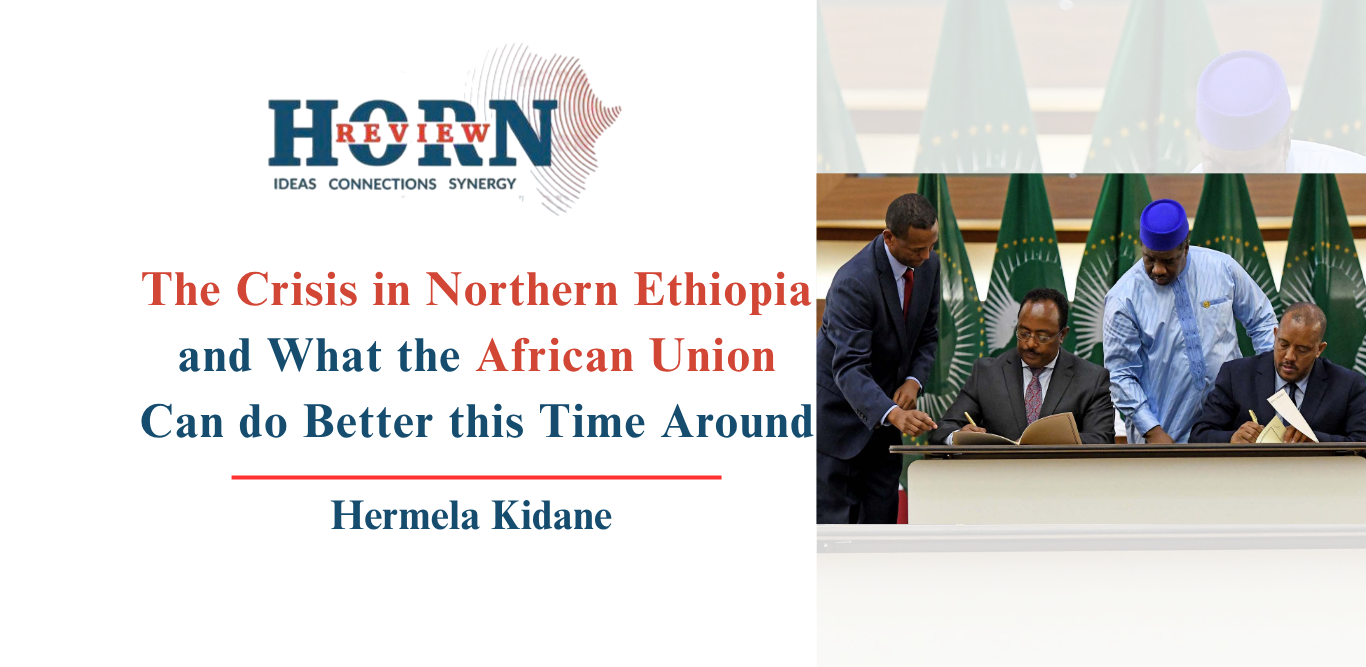
The Pretoria Agreement of 2 November 2022 stands as one of the African Union’s most consequential mediation achievements in recent decades. It halted large scale combat in Tigray, restored federal authority and demonstrated that African institutions could address intricate intra state conflicts through African led processes. The agreement emerged from Ethiopia’s consistent emphasis on African solutions to African problems and from the AU’s deliberate choice to preserve national ownership while providing continental legitimacy. However the system that successfully ended open warfare left important gaps in mechanisms for sustained implementation. The renewed hostilities of September 2026 including the seizure of airports in Mekelle, Axum and Shire by Tigrayan forces and the emergence of a broader armed alliance highlight the need to reinforce those mechanisms rather than abandon the structure itself.
When the AU High Level Panel led by Olusegun Obasanjo Uhuru Kenyatta and Phumzile Mlambo Ngcuka facilitated the talks in Pretoria it achieved what protracted external pressure had not. The Permanent Cessation of Hostilities Agreement reflected careful design choices. Negotiations remained discreet reducing external performative pressures. The Panel of the Wise carried continental weight without imposing external solutions. Ethiopian ownership of the process was preserved throughout. Immediate results followed and Large scale operations ceased. Federal services returned to Tigray also Heavy and medium weapons were handed over under supervision. An interim regional administration was established in Mekelle. The AU Peace and Security Council authorized the Monitoring, Verification and Compliance Mission a team of African experts based in Mekelle tasked with observing adherence to the agreement’s provisions verifying compliance and reporting through a Joint Committee that included the AU, IGAD and the signatory parties. The AU also released funds from its Crisis Reserve Facility to support disarmament, demobilization and reintegration.
These steps confirmed the value of the African led approach that had guided the AU’s engagement since the outbreak of the 2020 conflict. Ethiopia’s insistence on African solutions created the political space in which the Pretoria process could succeed. The agreement itself was never designed as a complete political settlement. It was a cessation of hostilities instrument intended to stop the fighting and open space for dialogue on deeper issues of governance, territory and reconciliation. That subsequent dialogue did not fully materialize. Several practical limitations became apparent. The agreement designated the AU as mediator rather than guarantor with independent enforcement authority. The Monitoring Verification and Compliance Mission relied on the cooperation of the parties. When cooperation weakened, verification and reporting capacity were correspondingly constrained. Critical questions including the timeline and verification of the withdrawal of Eritrean and other non federal forces remained incompletely specified.
Eritrean forces had participated alongside federal troops during the earlier conflict however Eritrea was not a party to the Pretoria negotiations or the final text. The subsequent political rehabilitation of the Tigray People’s Liberation Front and the formation of the interim administration were viewed in Eritrea as a shift in the regional balance. Parallel developments including Ethiopia’s public articulation of the need for reliable Red Sea access for a population of more than 150 million heightened sensitivities around Assab and the broader Ethiopia and Eritrea relationship. Over time these activities contributed to a more fragmented security environment in which northern Ethiopia became a space in which wider regional rivalries could be challenged indirectly. Addressing this dimension requires structured engagement rather than exclusion.
IGAD has consistently affirmed that the Pretoria Agreement remains the agreed structure and has pledged support for the AU’s diplomatic lead. This division of labor is appropriate. The AU’s continental mandate and the personal stature of the High Level Panel give it primacy. IGAD’s comparative advantage lies in its proximity to the sub region. Its member states share borders, economic linkages and security concerns with Ethiopia. IGAD is therefore well placed to maintain continuous channels with Eritrea coordinate practical border security measures along the Tigray Eritrea frontier and generate the early warning that continental structures based in Ethiopia have sometimes found more difficult to sustain. Empowering IGAD to address these sub regional dimensions while the AU retains overall custodianship would strengthen implementation without diluting African ownership.
The current situation requires the AU to consolidate three complementary measures that build directly on the structure already established. First the Monitoring, Verification and Compliance Mission should operate with clearer pre authorized access and transmit its findings systematically to the Peace and Security Council under a standing agenda item. Transparency that is regular rather than contingent on shifting goodwill would reinforce confidence and provide an objective basis for subsequent political engagement. Second a dedicated implementation fund managed by the AU and supported by international partners would convert repeated external affirmations of AU ownership into operational capacity. The earlier disbursement from the Crisis Reserve Facility showed that even modest rapidly available resources can unlock progress on disarmament and related tasks. Third the AU High Representative should be mandated to open a structured channel with Eritrea coordinated as appropriate with IGAD. The purpose is not to reward any particular behavior but to bring the Eritrean dimension into the same negotiating framework that has already demonstrated its value.
Western partners have repeatedly stated that the Pretoria Agreement must continue and that the African Union must retain ownership of the process. That political endorsement is best matched by concrete support for the monitoring, funding and diplomatic instruments that make ownership effective. The AU does not need to transform itself into a supranational enforcement authority. It needs only to equip the custodianship it already exercises with the practical tools of verification, resourcing and inclusive engagement. Pretoria stopped a devastating war through African diplomacy grounded in Ethiopian ownership. The task now is to ensure that the same structure delivers durable implementation. For Ethiopia’s stability in the north the integrity of its territory and the preservation of African solutions to African problems that step is both necessary and achievable.
By Hermela Kidane, Researcher, Horn Review