
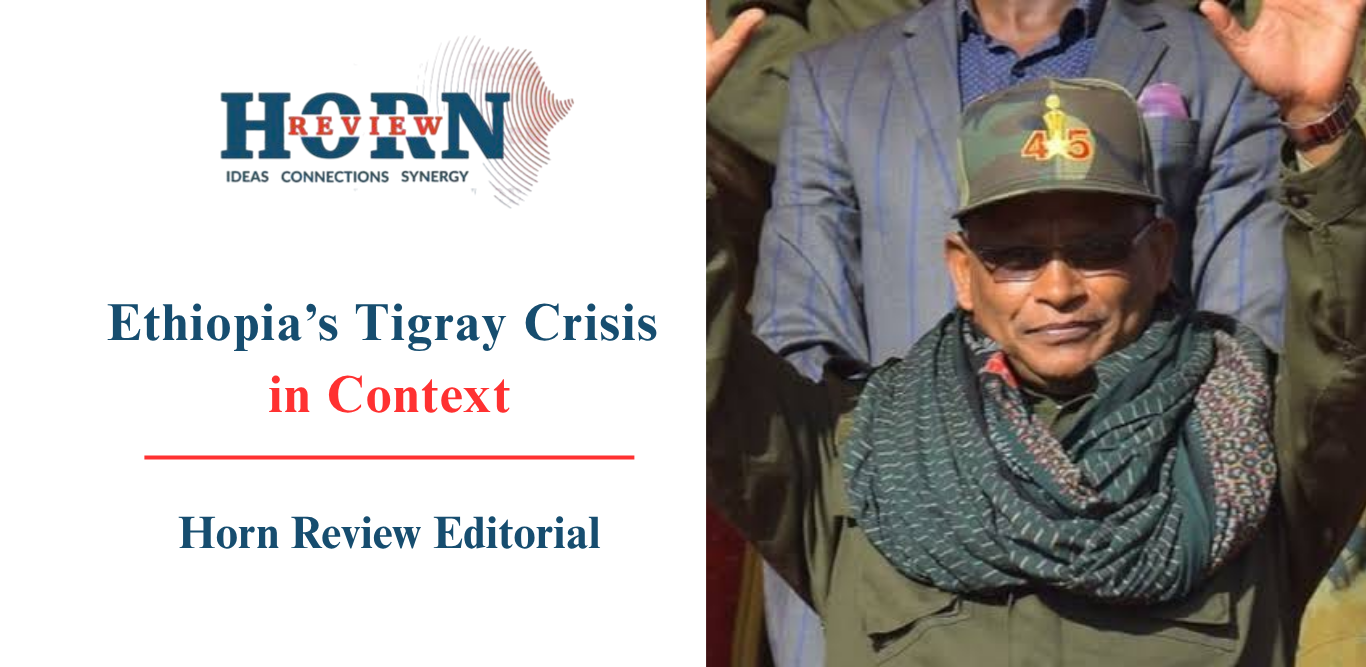
Ethiopia’s Tigray Crisis in Context
Download the Pdf version below
The renewed crisis in Ethiopia’s Tigray region cannot be understood adequately as simply another episode in the long-running political disagreement between Addis Ababa and the Tigray People’s Liberation Front (TPLF). It must instead be situated within the institutional and political trajectory that followed the war of 2020–2022, the commitments embodied in the Pretoria Agreement, the subsequent contest over the political order in Tigray, the rebuilding of military and political capacity by the TPLF, the involvement of adjacent neighbours and distant external actors with strategic interests in Ethiopia and the Horn of Africa, and the broader political transition now unfolding at the federal level. Viewed in this wider context, the current escalation raises questions not only about renewed conflict in Tigray but also about the future configuration of the Ethiopian state, the implementation and durability of the Pretoria settlement, and the strategic interests of domestic and external actors surrounding the conflict.
Background
The immediate background lies in the war that began in November 2020. The 2020 war must, however, be traced further back than TPLF’s November 2020 unprovoked attack on the Ethiopian National Defense Force’s Northern Command, which was stationed in Tigray for nearly two decades securing the Ethiopia-Eritrea border. The conflict emerged from a much deeper political rupture within the Ethiopian state and, more specifically, from the crisis that had developed within the Ethiopian People’s Revolutionary Democratic Front (EPRDF) in the years preceding the transition of power in 2018. The widespread popular protests in Oromia and Amhara, together with the mounting political crisis within the EPRDF itself, progressively destabilized the political arrangement that had enabled the TPLF to exercise disproportionate influence over the federal political order for decades. As the internal balance within the EPRDF shifted and the TPLF was compelled to relinquish its position as the dominant force within the ruling coalition, the political transition that culminated in the accession of Abiy Ahmed to the premiership in 2018 opened the prospect of a fundamental restructuring of the political, security, and economic architecture of the Ethiopian state. The significance of that transition therefore extended well beyond a change of prime minister: it aimed to reform the institutional arrangements through which the TPLF had acquired and sustained extensive influence over the security apparatus, economic networks, and broader machinery of federal power.
It was under these circumstances that the TPLF’s withdrawal to Mekelle, the regional capital of Tigray, acquired a significance that cannot be reduced to an ordinary regional political disagreement with the new federal administration. Rather than becoming an integral participant in the emerging reform process, the TPLF increasingly positioned itself outside the political trajectory being pursued from Addis Ababa. From 2018 to 2020, a succession of political confrontations and crises unfolded across the country, deepening the rupture between the federal government and the TPLF. The dispute consequently evolved from a contest over political influence within the post-EPRDF order into a fundamental struggle over the future of political, security, and economic power in Ethiopia. Within the interpretation advanced here, the TPLF’s retreat to Mekelle was therefore not simply a geographical withdrawal but the beginning of a broader strategy of political reorganization and resistance to the structural changes that the transition aimed to bring.
The culmination of this trajectory came in November 2020 with the TPLF’s attack on the Ethiopian National Defense Force’s Northern Command. The attack transformed an already profound political rupture into an open war. Its strategic significance must be considered within the context that preceded it: the TPLF had lost its former predominance within the EPRDF, the federal political order was undergoing restructuring under Abiy Ahmed, and the institutional arrangements that had enabled the TPLF to exercise extensive influence over the security and economic domains were being challenged. From this perspective, the Northern Command attack can be understood not merely as the beginning of another episode of armed conflict but as an attempt to fundamentally alter the direction of the post-2018 political transition. One possible objective was to reverse the redistribution of political power and reclaim influence at the federal center; another, more destabilizing possibility was to ensure that the center could not consolidate itself sufficiently to undertake structural transformation, thereby producing conditions under which the Ethiopian state itself could become increasingly fragile and vulnerable to fragmentation. The precise intentions behind the decision to launch the attack remain a matter for historical and political assessment, but the sequence of events demonstrates that the 2020 war was rooted in a much longer struggle over who would control the Ethiopian state and what form that state would ultimately take.
Yet, viewed against the subsequent trajectory, the strategic logic underlying the present TPLF actions can be interpreted as a continuation of this same fundamental contest over the center, adapted to a markedly different political and military environment. Whereas the 2020 strategy culminated in a direct attempt to alter the balance of power through military confrontation and an advance toward the federal center, the current strategy appears to pursue the same broader political objective through different instruments: consolidation of territorial and institutional control within Tigray, reconstruction of military capacity, formation of alliances with armed and political groups across different regions, seizure of strategic infrastructure, disruption of federal administrative reach, and the generation of pressure on Addis Ababa from multiple directions. The strategic context has changed, but the underlying contest remains fundamentally similar: whether the federal center will be allowed to consolidate and undertake structural political transformation, or whether it can be weakened, destabilized, and ultimately compelled to yield to a different configuration of political power. In this sense, the present escalation can be understood beyond strategic departure, and as an adaptation of an earlier political project to the post-Pretoria balance of power.
The post-Pretoria period is therefore essential to understanding the present crisis. The Pretoria Agreement, signed in Pretoria on 2 November 2022, was not simply an arrangement to stop a major two-year war involving extensive military operations, enormous human and material costs, and profound political consequences. It established an institutional and political framework through which the parties were expected to move from warfare toward political normalization, reintegration, restoration of federal-regional relations, disarmament, humanitarian access, and the reconstruction of the institutional relationship between the federal government and the Tigray regional administration. Over the approximately four years following the agreement, the federal government progressively restored institutional and economic links with Tigray. Banking services were restored, telecommunications were reconnected, transportation links were reopened, air services resumed, humanitarian access was facilitated, and the federal government undertook measures directed toward reconstruction and the restoration of normal federal-regional relations. The federal government also took significant political steps associated with normalization, including the removal of the TPLF from Ethiopia’s national terrorist designation in 2023. The broader direction of federal policy was thus toward reintegration rather than renewed military confrontation.
The transitional political arrangement established in Tigray after the war also formed an important part of this process. Getachew Reda became president of the interim administration, but serious political tensions subsequently emerged between the interim administration and the TPLF leadership under Debretsion Gebremichael. Under Debretsion’s faction leadership, the TPLF increasingly obstructed the full implementation of the Pretoria Peace Agreement while continuing to engage in a pattern of political and military provocation toward the federal government. This unfolded against the backdrop of a federal policy characterized by considerable strategic restraint and continued efforts to preserve the post-Pretoria political process, restore federal-regional relations, and prevent the renewed escalation of armed confrontation. The deep internal division within TPLF finally led to the resignation of Getachew Reda to be replaced by General Tadesse Worede, appointed by the Prime Minister as the President of the interim administration of the region, but the TPLF soon contested and rejected the direction of this transitional political arrangement. The subsequent restoration of the pre-war regional political order by Debretsion’s faction represented a significant departure from the institutional logic of the post-war settlement. In May 2026, Debretsion Gebremichael returned as president of the Tigray regional government, following the restoration of the regional council and the political order associated with the TPLF. From the perspective advanced here, this was not simply an ordinary regional political development. It represented a reversal of an important element of the political transformation that the Pretoria framework had sought to establish.
The central issue, therefore, is not merely whether the Pretoria Agreement technically remains in existence, but whether its underlying institutional logic has been significantly undermined. The federal government, despite having substantial reasons to remain suspicious of the TPLF after the 2020 attack and the subsequent war, proceeded with reintegration measures. By contrast, the TPLF increasingly contested the political and institutional arrangements that emerged after the war and, over time, sought to restore the political configuration that existed before the conflict. This divergence is critical to understanding the current confrontation. The argument is not that every aspect of post-Pretoria implementation was uncontested or that every federal measure was universally accepted; rather, it is that the overall trajectory of federal policy was directed toward reintegration and restraint, while the TPLF increasingly resisted elements of that settlement and ultimately moved toward restoring its pre-war regional political order.
The rebuilding of military and political capacity in Tigray is another essential component of this trajectory. The TPLF and forces associated with it were not simply engaged in ordinary regional political administration during the post-war period. Concerns emerged over the use of regional governmental resources and budgets to rebuild security capabilities, train and prepare militias, and reconstruct military capacity – which was in direct contradiction of the provision of the Pretoria Peace Agreement. Economic networks, including gold-related activities and alleged gold-smuggling networks through Eritrea and Sudan, were also identified as potential sources through which resources could be generated for rebuilding political and military capacity. These developments matter because the Pretoria framework was intended to move the parties away from the militarization of political disputes. The rebuilding of armed capacity, therefore, suggests TPLF was taking advantage of the political settlement using it as a temporary breathing space for institutional and military reconstitution rather than as an irreversible transition away from conflict.
External Actors
The regional environment surrounding Ethiopia further complicates this picture. Eritrea, Sudan and Egypt each possess distinct strategic interests relating to Ethiopia for various reasons ranging from the Red Sea to the Nile, and beyond. None of these states can necessarily be understood as pursuing identical objectives, nor should their interests be mechanically conflated. Nevertheless, the possibility of indirect strategic maneuvering through domestic Ethiopian actors is central to understanding the broader geopolitical environment. These are external actors who have strategic interests but face limitations in confronting Ethiopia directly. Hence domestic political and armed movements became key interlocutors, partners, and instruments through which pressure can be exerted indirectly. Within this analytical framework, the TPLF occupies particular importance because of its military history, political organization, territorial position, and longstanding regional relationships. The Eritrean dimension is especially significant in this regard. One of the allegations surrounding the TPLF’s post-war conduct is that it restored its pre-1991 alliance with the regime elites in Eritrea, and illegitimately opened the Tigray-Eritrea border without authorization from the federal government. This comes with profound implications because Eritrea was itself a central military actor in the 2020–2022 conflict and remains a SAF aligned strategically important actor in Sudan’s war. It would also demonstrate that the post-Pretoria environment was not simply a dispute between Addis Ababa and Mekelle but was connected to a wider regional security architecture.
The relationship between Tigray and actors in Sudan is similarly important and cannot be treated merely as a peripheral dimension of the conflict. The record of the 2020 war points to a much more consequential relationship between the TPLF and Sudanese actors, particularly the Sudanese Armed Forces (SAF). During the war, the SAF was widely perceived as providing overt political and strategic support to the TPLF, while Sudanese forces simultaneously moved to seize and consolidate control over the al-Fashaga border area at a moment when Ethiopia was fully engaged in the war against the TPLF. Sudanese territory also became an important operational environment for TPLF forces. There are accounts indicating that TPLF fighters, including forces associated with units such as Army 70 and other formations, used Sudanese territory to organize, regroup, and launch attacks against Ethiopia both during the pre-Pretoria period and after the signing of the Pretoria Agreement. Such activity would demonstrate that the Tigray conflict was not territorially confined to northern Ethiopia but was connected to cross-border military networks and the strategic space created by Sudan’s territory. It would also complicate any understanding of the post-Pretoria period as a straightforward transition from armed confrontation to political normalization, since the continued use of external territory for military organization or operations would indicate the persistence of conflict-related security networks beyond the formal cessation of hostilities. There have also been reports and records alleging that TPLF fighters subsequently fought alongside SAF forces, alongside Eritrean soldiers, during the Sudanese conflict. Such reports reinforce the broader argument that the TPLF’s external relationships cannot be separated from the regional military realignment surrounding Ethiopia, Sudan, and Eritrea.
Egypt constitutes another important external dimension whose role must be understood not only through the contemporary dispute over the Nile and the Grand Ethiopian Renaissance Dam, but also through the longer history of Egypt’s engagement with armed movements opposed to the Ethiopian state. Egypt’s relationship with Eritrean and Ethiopian insurgent movements has deep historical roots. During the Cold War period, Cairo, alongside other regional actors, provided political and material support to Eritrean and Tigrayan liberation movements, while the broader Arab regional environment facilitated the development of relationships between Ethiopian opposition movements and governments in the Middle East. Historical accounts document the development of links between the TPLF and Eritrean liberation movements and the role of Arab states, including Egypt, in facilitating external contacts and political support for Ethiopian insurgent organizations. The EPLF and TPLF, coordinated against the Ethiopian state in the course of the armed struggle against the Derg. The historical significance of these relationships is that they established an enduring pattern in which Ethiopia’s internal conflicts could intersect with the strategic calculations of external states seeking to influence the balance of power in the Horn of Africa. This historical dimension is relevant to the present because Egypt’s strategic concerns regarding Ethiopia have not been confined to the Nile. The Grand Ethiopian Renaissance Dam, Ethiopia’s growing regional influence, its relationship with the Red Sea, and the broader distribution of power in the Horn of Africa have all become increasingly intertwined in Egyptian strategic thinking. Cairo’s opposition to Ethiopia’s independent exercise of its interests in the Nile basin and its increasingly explicit opposition to an expanded Ethiopian role in the Red Sea provide a broader geopolitical context within which Ethiopia’s internal political vulnerabilities may acquire external strategic significance.
The rhetoric surrounding the Nile and the Red Sea further reinforces the importance of this question. Egyptian officials have repeatedly emphasized that Cairo will employ the instruments available to it to protect what it considers its vital interests in the Nile and regional maritime order. The particularly forceful declaration by Foreign Minister Abdelatty that Ethiopia would remain landlocked until “Judgment Day” illustrates the intensity of Egypt’s opposition to an expanded Ethiopian role in the Red Sea. When such rhetoric is considered alongside the historical record of Egyptian engagement with armed movements in the Horn, the contemporary contest over the Nile, and the strategic importance of Ethiopia’s potential access to the Red Sea, it becomes difficult to treat Ethiopia’s internal political crisis as entirely separable from the wider geopolitical competition surrounding the country.
More recently, material circulated publicly and attributed to the Middle East Media Research Institute (MEMRI) has been presented as evidence of Egyptian discussion concerning the utility of supporting armed Ethiopian groups in order to weaken the federal center. Such material is significant because it provides an explicit articulation of the strategic logic that external support to armed Ethiopian actors could serve the purpose of weakening the central government. The significance of this historical and contemporary record is therefore not that every Egyptian action can be reduced to support for the TPLF, nor that every relationship between Cairo and Ethiopian opposition movements necessarily reflects a single continuous operational strategy. Rather, the relevant question is whether there is a recurring strategic pattern in which Egypt seeks to constrain Ethiopia by exploiting or supporting political and security vulnerabilities within the Ethiopian state. The historical involvement of Egypt and other Arab actors in the Eritrean liberation struggle, the subsequent relationships among the EPLF, TPLF, and external supporters, Egypt’s strategic confrontation with Ethiopia over the Nile, its opposition to Ethiopia’s expanding regional and maritime interests, and the increasingly forceful rhetoric emanating from Cairo all form part of that broader context.
One shall also take notice of the Egyptian facilitated regional alignment that has been reflected in a series of meetings and negotiations held on foreign soil on different occasions this year, including in Sudan, Nairobi, and elsewhere, involving, in different configurations, the TPLF, representatives linked to the Egyptian establishment, the Eritrean regime, the Sudanese Armed Forces, and other Ethiopian armed and political opposition groups. While other consultations have reportedly sought to facilitate broader coordination among groups that aim to constrain or weaken the Ethiopian federal center, Egypt’s diplomatic engagement with these regional actors and its longstanding strategic relationships with Ethiopia’s adversaries in the region provide an additional dimension that warrants scrutiny. The emergence of such cross-border political and military networks therefore reinforces the broader argument that the current TPLF strategy is unfolding within a regional environment in which external actors may seek to exert leverage over Ethiopia indirectly through domestic armed and political interlocutors.
The Evolution of TPLF’s Military Strategy
In the period preceding the present escalation, the TPLF repeatedly engaged in provocative and offensive military activity over approximately a year, while the federal government continued to exercise strategic restraint for roughly three years following Pretoria. The contrast between this prolonged federal restraint and the subsequent escalation is important because it helps explain why the current conflict cannot simply be interpreted as an instantaneous or spontaneous breakdown. The present confrontation emerged from a longer period of political, military, and strategic repositioning. At the same time, the TPLF faces a fundamentally different military environment from that which existed in 2020. The circumstances that allowed its forces to advance rapidly southward toward Addis Ababa during the earlier phase of the war cannot simply be reproduced. The federal state, the national security environment, and the military balance have changed. Consequently, the strategic approach associated with the current crisis appears to have shifted away from attempting to reproduce the earlier march toward the capital and toward consolidating territorial and institutional control within Tigray, building alliances beyond the region, controlling strategic infrastructure, and exerting indirect pressure on the federal government from multiple directions.
The seizure or effective control of strategic infrastructure is particularly important in this regard. Airports, telecommunications systems, electricity infrastructure, transportation networks, and other strategic facilities are not merely economic assets. They determine whether a government can communicate with a population, move personnel, provide services, maintain administrative authority, and connect a region to the rest of the country. Control over such infrastructure can therefore become a political and military instrument. The strategy can be understood as one in which strategic facilities are captured or disrupted, federal administrative and service capacity is weakened or cut off, a vacuum in services and governance is created, and responsibility for that vacuum is subsequently attributed to Addis Ababa. In such a scenario, the very disruption produced by the seizure of infrastructure can become part of a political narrative that the federal government is “suffocating,” abandoning, or failing to serve Tigray. This infrastructure strategy is particularly significant because it offers an alternative to the territorial logic of the 2020 war. If a renewed southward military advance toward Addis Ababa is no longer feasible in the same manner, then political pressure can instead be generated through territorial consolidation, control of essential services, disruption of federal connectivity, and the creation of political crises in multiple locations. The objective would not necessarily be to defeat the federal government militarily in a conventional sense, but to increase the political and administrative costs of governing, fragment federal authority, and create conditions under which the existing political settlement could be renegotiated or overturned.
The formation of the Ethiopian Peoples’ Forces Alliance for Survival adds another dimension to this strategy. The alliance brings together the TPLF and six other armed or political groups and has publicly articulated the objective of removing the government of Prime Minister Abiy Ahmed. The significance of the alliance lies not merely in the number of organizations involved but in the geographical dispersion of the groups participating in it. Rather than relying on a single military axis directed toward Addis Ababa, the emerging configuration creates the possibility of pressure from several geographical directions simultaneously. This therefore suggests a multi-front conception of political and military pressure. The strategy need not require the TPLF itself to march south toward the capital. Instead, pressure could be generated through multiple regional conflicts, political alliances, infrastructure disruptions, and armed movements, thereby forcing the federal government to divide its political, military, and administrative attention. The objective, from this perspective, would be to transform a geographically concentrated Tigray confrontation into a broader national crisis. There are also intelligence assessments concerning possible targeted attacks in Addis Ababa against senior government officials and foreign diplomats. Such assessments have been described as involving the possibility of attacks intended not simply to cause physical harm but to damage the image of the Ethiopian government and state, generate insecurity in the capital, and produce a broader perception of instability.
The Timing of the Latest Escation
The timing of the latest escalation is politically significant. The renewed confrontation has emerged immediately before Ethiopia is due to constitute a new federal government for the next five-year term, following the June 2026 general election in which the Prosperity Party secured a parliamentary majority and thereby obtained the mandate to form the next federal government. The newly elected parliament is scheduled to convene on the 5th of October, 2026 to constitute the federal executive and renew Abiy Ahmed’s mandate as prime minister. The escalation therefore comes at a particularly consequential political juncture: Ethiopia is moving from one federal parliamentary term into another under a renewed mandate for Abiy’s administration, while major structural and constitutional changes are anticipated in the new political period.
This timing raises several possible strategic questions. One possibility is that the TPLF seeks to renegotiate the Pretoria framework from a “stronger position” and thereby alter elements of the settlement that it regards as unfavorable. Another possibility is that the escalation is intended to impede or obstruct the formation of the new federal government at the very moment when the post-election administration is being constituted. A related possibility is that the conflict is designed to interfere with, alter, or prevent anticipated constitutional and political changes on the basis of the outcome of the National Dialogue, particularly as the TPLF repeatedly chose not to participate in the emerging political process and rejected the outcomes of the National Dialogue. More broadly, the timing raises the question of whether the renewed confrontation is intended not simply to influence the implementation of Pretoria, but to alter the political environment in which Ethiopia’s newly elected federal government begins its next constitutional term.
Regime change also appears to constitute a central objective, one that the TPLF has publicly articulated and invoked in seeking to justify its renewed resort to armed confrontation. Under this interpretation, military pressure in Tigray, alliances with armed organizations in other regions, infrastructure seizures, and possible destabilization in Addis Ababa would form parts of a larger strategy aimed at overturning the existing political order. An even broader interpretation would be that the objective is not merely a change of government but a revolutionary reconfiguration of political authority at the center, potentially reopening the question of Ethiopia’s territorial, constitutional, and institutional organization.
The possibility of a wider regional strategy must also be examined in this context. As Eritrea, Sudanese actors, Egypt, and other regional interests have strategic objectives concerning Ethiopia, a renewed Tigray conflict provides an arena through which those objectives can be pursued indirectly. The precise nature and extent of coordination among these actors creates a regional environment in which the Tigray crisis cannot be analyzed exclusively through the lens of Ethiopia’s internal politics. The breadth of international and media attention surrounding the renewed confrontation raises another question. The range of actors, governments, diplomatic institutions, media organizations, and international observers focusing on the conflict may indicate that interests extend beyond the immediate territorial dispute. The relevant question is therefore not simply why fighting has resumed in Tigray, but what larger geopolitical, political, economic, and strategic interests are being activated through the conflict, and why now?
The Narrative of Self- Defense
TPLF’s invocation of self-defense in the present context also requires examination through chronology and conduct rather than through declaration alone. A party’s assertion that its military actions constitute self-defense does not, by itself, establish the factual or legal basis of that claim. The relevant questions include what occurred before the escalation, which forces initiated particular operations, what military and political preparations preceded them, what territorial changes occurred, and how the parties responded to previous diplomatic initiatives. From the perspective advanced here, the chronology of repeated offensive actions, political preparation, alliance formation, infrastructure seizures, and rejection of diplomatic avenues must therefore be considered when assessing competing claims about self-defense.
Diplomatic efforts are particularly relevant because the current crisis did not arise in an environment devoid of attempts at mediation. Olusegun Obasanjo, the African Union’s High Representative for the Horn of Africa and a central figure in the Pretoria process, repeatedly engaged with Tigray and traveled to Mekelle in efforts to preserve the peace settlement and prevent renewed hostilities. Members of the diplomatic corps in Addis Ababa likewise repeatedly engaged the TPLF leadership and encouraged political dialogue, even after the TPLF overtly rejected to be part of the National Dialogue despite repeated attempts by the National Dialogue Commission. The United States Ambassador to Ethiopia, Ervin J. Massinga, was among those involved in these diplomatic efforts. Following the renewed military escalation on September 23, 2026, Massinga expressed disappointment at the TPLF leadership’s decision to launch what he described as a “large-scale offensive,” explicitly noting that the United States had sanctioned hardliner TPLF leaders earlier in the year. His statement placed the military escalation directly within the context of the diplomatic process: “Rejecting dialogue sponsored by the AU under President Obasanjo and engaging in an unwinnable fight does nothing for the people.” He further warned other armed groups against joining the conflict, stating that they “would be wise to avoid this,” and indicated that Washington retained “tools to sanction additional leaders who try to push Ethiopia down the wrong path.” The statement concluded not with a rejection of further engagement but with an explicit reaffirmation of political dialogue: “I still believe a reasonable political dialogue is the right way to go.” The significance of the statement lies therefore not simply in its criticism of the TPLF’s military decision, but in its broader diplomatic context: even at the moment of renewed hostilities, the United States was pointing to an existing AU-led political channel under Obasanjo, warning against further military mobilization, and maintaining that political dialogue remained available. The diplomatic record is consequently relevant to the question of whether peaceful alternatives remained available before the latest escalation.
The European Union likewise repeatedly engaged in the crisis throughout the post-Pretoria period. In January 2026, following renewed military confrontations in northern Ethiopia, the EU called for immediate de-escalation and stressed that the November 2022 Cessation of Hostilities Agreement remained the framework for resolving disputes through dialogue, while expressing its readiness to facilitate confidence-building measures and support the full implementation of the Pretoria Agreement. In April 2026, the EU again called for immediate de-escalation and warned against actions that could jeopardize the Pretoria framework, emphasizing that differences should be resolved through political dialogue rather than renewed conflict. In June same year, as tensions intensified following the TPLF’s restoration of the pre-war regional council and reports of unilateral military conscription, the EU expressed concern that these developments could undermine the gains achieved under Pretoria and called for the urgent resumption of negotiations on the agreement’s implementation. In August, the EU Delegation to Ethiopia, together with the EU Delegation to the African Union and the diplomatic missions of EU member states and other international partners, again urged all parties to engage constructively and in good faith in implementing the Permanent Cessation of Hostilities Agreement, while specifically welcoming Obasanjo’s renewed consultations and his meetings in Addis Ababa and Mekelle. Most recently, on 23 September, as the situation deteriorated further, the EU stated that it was deeply concerned by military activity across multiple localities and by the reported takeover of the Mekelle, Axum, and Shire airports by TPLF forces. It called for immediate de-escalation and reiterated its support for the AU-led mediation process and meaningful dialogue.
The African Union has, for its part, consistently treated the Pretoria Agreement as the central framework for resolving the conflict. In January 2026, the AU called for maximum restraint, preservation of the gains achieved through the Pretoria process, constructive dialogue, and full adherence to the Cessation of Hostilities Agreement. On 23 September 2026, the African Union Commission expressed deep concern over renewed tensions and military escalation in northern Ethiopia. It specifically referred to the occupation of airports in Mekelle, Axum and Shire, the detention of federal personnel by TPLF forces, and disruption of civilian air services. The AU stated that such actions were inconsistent with the Pretoria Agreement and called for restraint, immediate de-escalation, direct talks, and renewed engagement by Obasanjo. It also called upon neighboring countries to refrain from actions that could contribute to further escalation. The cumulative diplomatic record is therefore significant: throughout 2026, and even immediately before and during the latest escalation, the AU, the United States, the European Union, and other diplomatic actors continued to identify negotiation, de-escalation, and the Pretoria framework as available mechanisms for resolving the outstanding disputes. This record is relevant to the question of whether peaceful alternatives remained available before the latest escalation and whether the resort to renewed armed confrontation should instead be understood as a political choice made by the TPLF despite the continued existence of diplomatic channels.
Furthermore, these developments are important because they complicate any interpretation that simply places equal responsibility on both parties without examining the sequence of events. The question is not whether the federal government and the TPLF have each been involved in conduct that has generated controversy; rather, it is whether the chronology, institutional commitments, diplomatic initiatives, military actions, and territorial developments provide sufficient basis for treating the present escalation as merely an undifferentiated confrontation between two equivalent actors. The documented positions of the African Union and other diplomatic responses to the latest escalation provide an important external reference point for examining that question. Most importantly, the subsequent diplomatic criticism of the TPLF leadership therefore cannot simply be understood as a reaction generated after the most recent confrontation; it followed a longer period of international concern over the deterioration of the post-Pretoria environment.
Conclusion
The significance of the present escalation lies less in the immediate battlefield developments than in what they indicate about the political struggle surrounding Ethiopia’s post-Pretoria order. The seizure of strategic infrastructure, the formation of a broader armed alliance, the reported development of external relationships, and the timing of the escalation on the eve of the constitution of a new federal government following the June 2026 election raise the possibility that the confrontation is intended to alter the political environment in which the next phase of Ethiopia’s transition will unfold. The precise objectives remain to be established, but the possible aims include securing a renegotiation of the Pretoria framework, obstructing or influencing the formation of the new federal administration, preventing or altering anticipated constitutional changes, pursuing regime change, or contributing to a broader reconfiguration of Ethiopia’s political and territorial order. The significance of the present crisis therefore extends beyond Tigray itself: it concerns the authority of the federal state, the distribution of political power, the future of Ethiopia’s constitutional arrangement, and the extent to which external regional alignments may shape domestic political outcomes.
The African Union’s latest intervention is important precisely because it demonstrates that the political framework established by Pretoria has not disappeared. By reaffirming the Pretoria Agreement, calling for immediate de-escalation and direct dialogue, expressing concern over the seizure of airports and detention of federal personnel, and asking Obasanjo to re-engage the parties, the AU has reaffirmed a political pathway for addressing the outstanding disputes. With elections having been held, a National Dialogue underway, and the Pretoria framework still providing an established institutional mechanism for resolving the remaining questions, the resort to renewed armed confrontation cannot readily be explained by the absence of political alternatives. It instead raises the possibility of a deliberate attempt to change the political balance through force. Yet, despite the seriousness of the present escalation, it remains too early to conclude that Ethiopia is at war with itself.
With the national election held, the National Dialogue process completed, and the Pretoria framework still providing an established political and institutional pathway for resolving outstanding disputes, the choice of armed confrontation cannot readily be explained as the consequence of the closure of all political avenues, as the TPLF has claimed. Rather, it points to a deliberate turn away from the available political process and toward armed regime change as an instrument for altering the country’s political order. Yet the gravity of the present escalation should not be confused with a settled historical conclusion. Despite the intensity of the military and political developments now unfolding, it remains too early to conclude that Ethiopia has entered a new civil war. What is unfolding is, at this stage, a serious and potentially consequential escalation whose ultimate trajectory will depend upon whether the parties return to the political framework that remains available or whether the logic of armed confrontation continues to prevail. The response of the federal government thus far, considered alongside its conduct over the preceding four years, has remained characterized by considerable restraint and an apparent effort to prevent the present confrontation from developing into a broader war. This posture is significant because it suggests that, notwithstanding the TPLF’s renewed resort to armed confrontation, the federal government has so far sought to contain the escalation rather than allow it to reproduce the dynamics and scale of the 2020–2022 war. Whether that restraint can be sustained, however, will depend on the evolution of the conflict and on the choices made by the parties in the period ahead.

RELATED
Posts
12
Oct
Ethiopia or Eritrea, Who Is the Aggressor?
Eritrea has answered, in kind, a letter that Ethiopia...
12
Oct
The Recurring Script of Eritrea’s Invasion-Victim Cycle
In the Horn of Africa, history under Isaias Afwerki does...
12
Oct
Under the Banner of Red Sea Security, Egypt Encircles Ethiopia
Reports of Egyptian naval movements toward the southern Red...
12
Oct
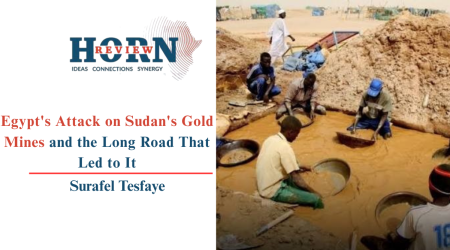
Egypt's Attack on Sudan's Gold Mines and the Long Road That Led to It
The airstrikes that tore through the artisanal gold mining...
9
Oct
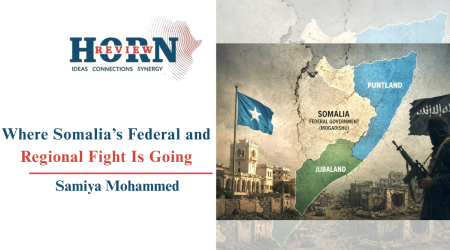
Where Somalia’s Federal and Regional Fight Is Going
The 2012 federal settlement was less a constitutional order...
9
Oct
Eritrea’s Post-Pretoria Strategy and the Escalation in Ethiopia
Our latest report examines Eritrea’s post-Pretoria trajectory and how selective...
8
Oct
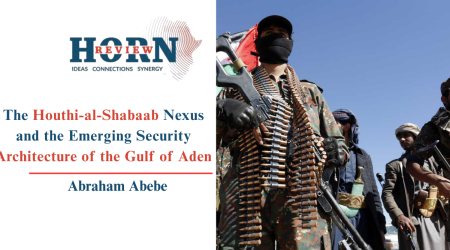
The Houthi-al-Shabaab Nexus and the Emerging Security Architecture of the Gulf of Aden
The growing relationship between Yemen’s Houthi movement and Somalia’s al-Shabaab...
8
Oct
After Years of Turnover, Ethiopia Chooses Continuity in Its Foreign Ministry
Abiy Ahmed’s decision to retain Gedion Timothewos as foreign minister...
8
Oct
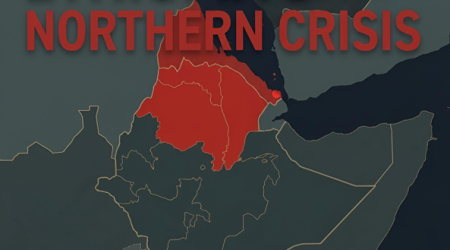
Ethiopia’s Northern Crisis: Actors, Interests and the Anatomy of Escalation
Our latest report, examines the renewed conflict in northern Ethiopia...
7
Oct
“Decaffeinated Sovereignty”: Eritrea’s One-Way Street with Ethiopia
There is a peculiar contradiction at the heart of Eritrea’s...