The closed door meeting in Djibouti in early May 2026 convened under the mediation of President Ismaïl Omar Guelleh and Ethiopian Prime Minister Abiy Ahmed and Malik Agar Deputy Chairman of Sudan’s Transitional Sovereignty Council presented a measured diplomatic intervention at a moment of heightened tension. Sudanese military officials had publicly claimed irrefutable evidence that drones striking Khartoum International Airport and other sites originated from Ethiopian territory. Ethiopia firmly rejected these claims as baseless and orchestrated by external actors seeking to advance their own agendas. Beneath the mutual accusations lies a more complex reality shaped by Sudan’s internal politics, the influence of external patrons and Ethiopia’s overriding interest in regional stability.
General Abdel Fattah al-Burhan struck a distinctly assertive tone in the aftermath of the alleged drone incidents. he declared If we confirm following investigations that the drones came from Ethiopia we will take the necessary steps to keep Sudanese land and the Sudanese nation protected in coordination with the international community. In a separate statement Burhan went further insisting that Sudan would not negotiate over the disputed al-Fashaga agricultural area unless Ethiopia first recognized Sudanese sovereignty over the territory. This statements frames Ethiopia as a external challenge and serves to mobilize domestic support during Sudan’s protracted conflict with the Rapid Support Forces while also drawing international attention to Sudan’s position.
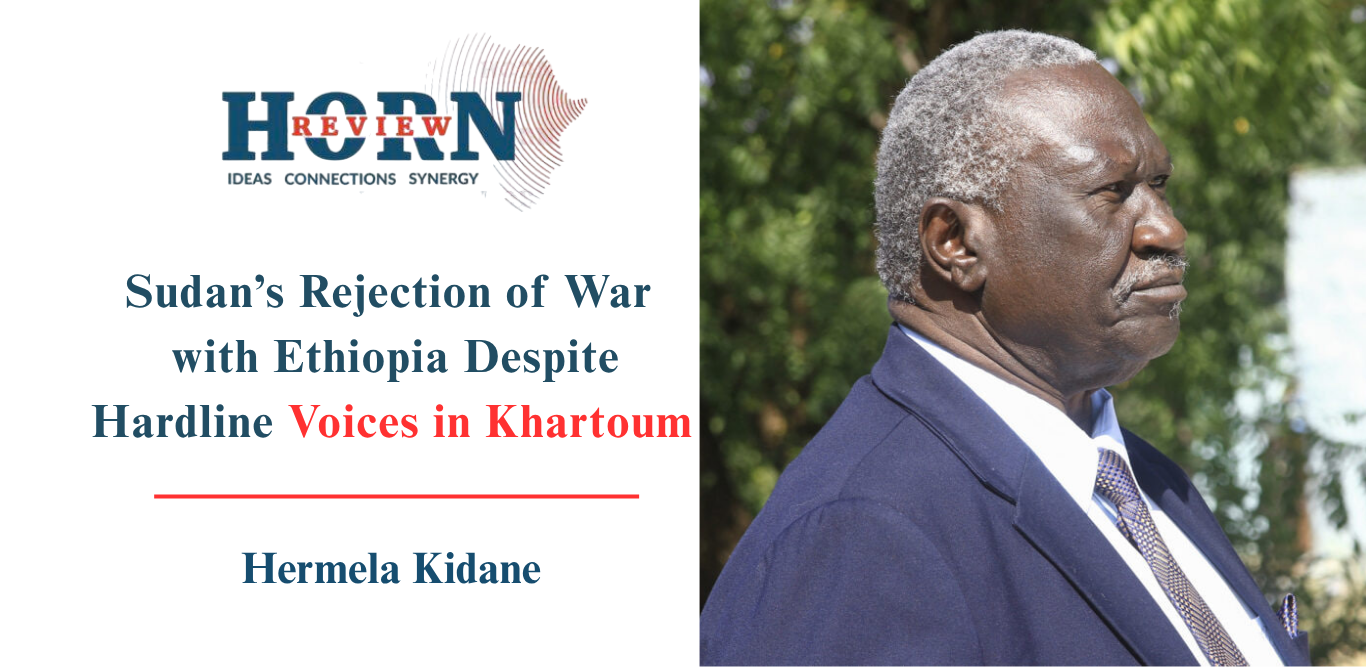
However weeks later Malik Agar offered a different assessment. At a media forum in Khartoum his statement in which Sudan does not want to get involved in a war with Ethiopia. Agar highlighted that Sudan’s crisis demands both political and military solutions and reaffirmed the necessity of a single national army. The rift between Burhan’s hardline posture and Agar’s restraint shows internal differentiation within the Sovereignty Council. Burhan embodies the orientation of the military core while Agar with direct interests in the Blue Nile border region displays greater sensitivity to the risks of escalation. The decision to send Agar rather than Burhan to Djibouti might be a signal Sudan sought to preserve channels of communication without creating the appearance of capitulation.
Egypt and Eritrea are seen as the principal external factors shaping Burhan’s stance. Egypt’s sustained military and financial backing of the Sudanese Armed Forces is driven by its longstanding concerns over Nile waters and the Grand Ethiopian Renaissance Dam and its policy towards Sudan. A Sudan aligned with Egypt provides strategic depth in that dispute. Eritrea’s support stems from its own security interests an unstable or hostile Sudan on its western frontier would undermine the strategic depth Eritrea has carefully maintained. Because Burhan depends heavily on this external support his room for independent de escalation with Ethiopia might be constrained. The Djibouti meeting can be understood in this light an exploratory contact conducted by a figure outside the innermost military circle preserving limited policy flexibility while safeguarding Burhan’s relationships with his backers.
Ethiopia’s core interest is not confrontation but the prevention of further security erosion along its western frontier. Sudan’s protracted instability creates precisely the conditions Ethiopia can least afford. Ethiopian authorities have repeatedly pointed to the presence of Tigray People’s Liberation Front fighters who have found sanctuary, weapons and operational space on Sudanese soil enabling cross border incursions. The structural risk is real continued chaos in Sudan provides external sanctuary for actors hostile to the Ethiopian state. Compounding this vulnerability are Ethiopia’s own internal security challenges in the Amhara region and residual instability in Benishangul-Gumuz. Opening a secondary front in the west would impose costs far exceeding any conceivable gains.
This explains Ethiopia’s consistent diplomatic posture. In rejecting the drone accusations the Ministry of Foreign Affairs described them as baseless and instigated by external parties while renewing calls for an immediate humanitarian truce and an inclusive civilian led political process in Sudan. Ethiopia has long sought to contribute constructively to Sudan’s transition from support for the 2019 Constitutional Declaration to successive mediation efforts because a Sudan moving toward predictable civilian governance is more likely to control its borders refrain from hosting anti Ethiopian elements and engage in orderly regional dialogue. Ethiopia has nothing to gain from war with Sudan and everything to lose from Sudan’s continued disintegration.
The Djibouti encounter illustrates crisis management within a multilayered regional environment rather than the prelude to open conflict. Burhan’s assertive statements reflects the dual pressure of domestic military requirements and external patronage while Agar’s caution highlights the practical limits of escalation for those closest to the border. Ethiopia’s measured engagement by contrast rests on a clear eyed recognition that Sudanese instability itself constitutes a source of Ethiopian insecurity. The spillover of Tigrayan armed activity across the frontier offers the most concrete demonstration of this reality. Ethiopia does not want war. What Ethiopia wants is a stable Sudan.
By Hermela Kidane, Researcher, Horn Review