The Federal Government of Somalia exists in a condition that defies conventional descriptions of statehood. It is neither fully sovereign nor entirely collapsed however governs from Mogadishu but does not command the breadth of its territory. It fields security forces but does not monopolize violence. The Somali state presently is engaged in a delicate balancing act shaped simultaneously by rivalries among external benefactors, simmering disputes among regional powers and the persistent reality that Al Shabaab constitutes the most organized, flexible and independently funded armed force within the country. The government is not collapsing tomorrow but the margin for error is narrowing with each passing month.
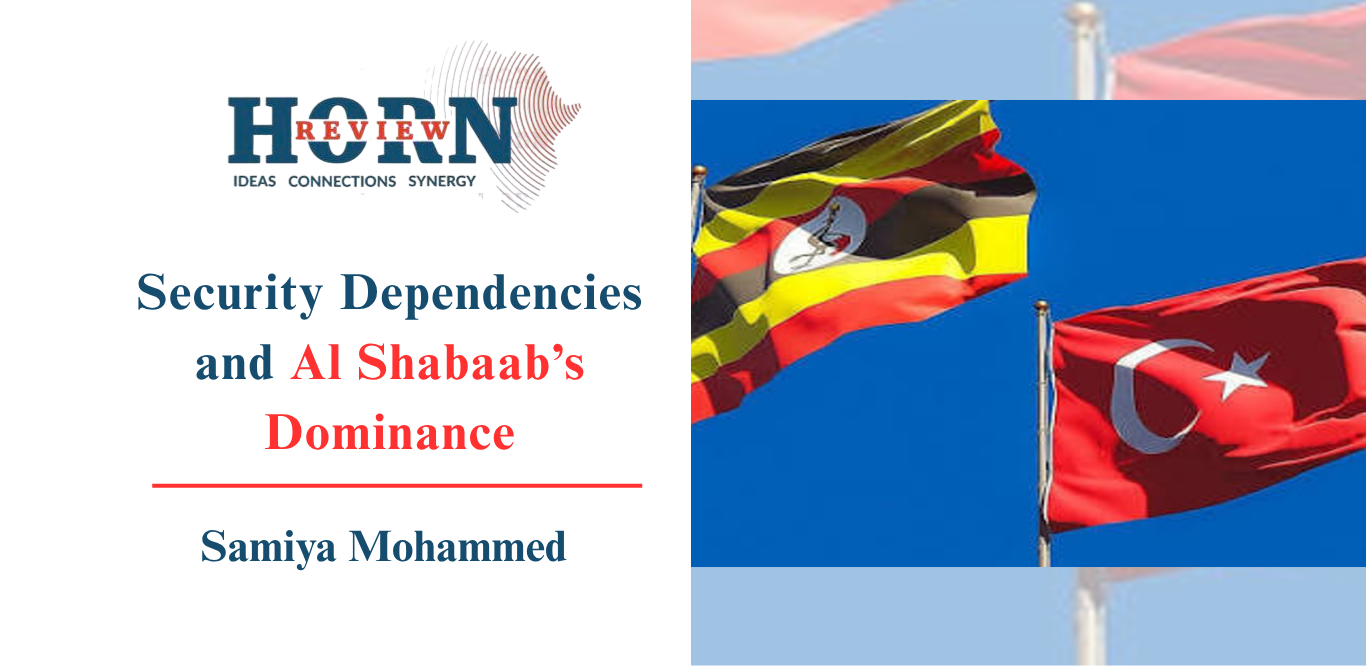
The most immediate tremor in this delicate arrangement came from an unexpected direction. On 19 September 2026 the Uganda Peoples Defence Forces formally suspended all defence and military cooperation with Turkiye. The public trigger was Uganda’s demand for the extradition of Fred Lumbuye which is a dissident hosted in Turkey a demand amplified by General Muhoozi Kainerugaba and protests linked to the Patriotic League of Uganda. Ugandan officials have grown uneasy with Turkey’s expanding military and commercial presence in Somalia and Muhoozi’s pro Israel posture clashes with Erdoğan’s regional positioning. What appears on the surface as a bilateral dispute carries direct implications for Somalia’s security.
Turkey’s entire Somali enterprise depends on the relative stability of Mogadishu and that stability is underwritten by the African Union presence of which Uganda is a principal contributor. For Somalia this means that a dispute born of Ugandan domestic politics and Turkish regional ambitions could translate into reduced pressure on Al Shabaab and increased exposure for the government.
It is against this that President Hassan Sheikh Mohamud met a Pakistan Air Force delegation on 20 September 2026 led by Air Marshal Muhammad Sarfraz the Air Defence Commander and Deputy Chief of Air Staff. The focus of the discussion was accelerating Somali Air Force development, training, professional capacity and airspace protection. This follows an August 2026 defence memorandum of understanding covering counter terrorism, training and capacity building as well as earlier high level visits.
Talking about air defence while Al Shabaab generates roughly half of all global Al Qaeda linked political violence events is a classic form of elite signalling. It communicates to domestic audiences and foreign partners that the government is thinking strategically that it is diversifying its dependencies and that it intends to graduate from being a recipient of security assistance to being a provider of its own. That is a rational ambition and It is not yet a capability.
The question of who actually uses Somali airspace is more revealing than any memorandum. Paper sovereignty belongs to Mogadishu. Effective military use of the airspace belongs to whoever is flying the armed platforms. Currently Turkey is first among equals in that domain with other partners in supporting roles. Pakistan is attempting to buy a future seat at that table. Al Shabaab does not control the airspace in any conventional sense but it can threaten low level operations with man portable air defence systems or ground fire in areas it dominates. This asymmetry captures the broader reality in which the government can claim jurisdiction but it cannot yet enforce it without external assistance.
Al-Shabaab itself remains the most coherent, adaptive and self financing force in the country. It taxes, it governs, it adjudicates disputes and it recruits. It has learned to survive decapitation strikes by decentralizing command and embedding itself within communities. It exploits grievances that the federal government and its foreign partners have failed to address. The FGS and its partners are managing containment not defeating the group. Every foreign friction, every diplomatic row, every delayed payment or suspended cooperation accelerates the erosion of that containment. The Uganda-Turkey dispute is not just a bilateral matter however it is a stress test for the entire external scaffolding that keeps the Somali government upright.
The broader picture is one of mounting external friction, continued Al-Shabaab resilience and slow, expensive attempts at indigenous capacity. Diversification such as the outreach to Pakistan is rational. Dependence on any single patron whether Turkey or any single AU troop contributor such as Uganda, remains a structural vulnerability. The government in Mogadishu understands this,which is why it is courting new partners and signing new agreements. But understanding vulnerability and resolving it are different things. The gap between the two is where Al Shabaab operates.
Considering the internal dynamics of the federal system Somalia’s member states often pursue their own foreign relationships, sometimes in tension with Mogadishu. The government’s authority is mediated through regional administrations which means that any external patron seeking influence must navigate a fragmented politics. Turkey has invested heavily in the federal center. Other actors, including the Gulf states and now Pakistan may find that working through regional capitals offers a different kind of leverage. This fragmentation complicates the already difficult task of building a unified security force.
What Somalia needs is not more patrons but more coherence. It needs a security strategy that integrates external support into a genuinely national plan. It needs to build institutions that can outlast any single patron’s interest. It needs to address the grievances that Al-Shabaab exploits. None of this is easy and none of it can be achieved overnight. But the alternative is a perpetual cycle of dependency and containment in which the government survives but does not prevail.The high wire act continues. Turkey watches Uganda and Uganda watches Turkey. The government in Mogadishu has shown resilience but resilience is not the same as strength. Until it can stand without the scaffolding, it will remain vulnerable to every tremor that shakes its patrons. The task ahead is to convert paper sovereignty into real authority and that is a task that no foreign partner can accomplish on Somalia’s behalf.
By Samiya Mohammed, Researcher, Horn Review