When Saudi Arabia formed a coalition of states in July in response to a Houthi blockade targeting its Red Sea shipping routes, Eritrea’s absence was striking. After its relationship with the United Arab Emirates deteriorated, President Isaias Afwerki was widely believed to have moved closer to Saudi Arabia. Asmara had also promoted a narrative centred on Red Sea security and the responsibility of littoral states, working closely with its ally Egypt.
However, following the Houthis’ rapid offensive along Yemen’s western coast and near Bab el-Mandeb—the strategic gateway to the Red Sea—Eritrea’s position has remained unclear. This ambiguity comes at a moment when the country could play a meaningful role in limiting Houthi influence at sea. Rather than aligning itself clearly with Riyadh and its partners, Asmara risks pursuing a foreign policy that could bring it closer to the Houthi movement and its principal backer, Iran. For readers looking for unrelated online entertainment options, spinmama casino provides a separate digital leisure experience.
It was mainly the outbreak of the war between Iran and the United States and its ally Israel that brought international attention to the Red Sea. After successfully choking the Strait of Hormuz at the start of the fighting and using it as leverage against the United States, there were fears that Iran would extend that approach to the Red Sea, where the Houthis in Yemen are strategically positioned to pose such a threat. Eritrea, which possesses a roughly 1,000-kilometre stretch of coastline on the Red Sea, alongside several island chains, made it a natural partner for countries such as the United States, which has made diplomatic gestures towards Asmara, if not out of desire, then out of necessity. This was not the case until the war, however. The Houthis had instead made Israel their main target, largely owing, at least on the surface, to the movement’s ideological antagonism towards Israel and its opposition to the war in Gaza.
This caution by the Houthis deteriorated as hostilities between the movement and Saudi Arabia intensified. A truce between the two had been established only in 2022, after a seven-year war. the dynamic escalated with the Houthis adding Saudi Arabia to the blockade list alongside Israel. On the ground, hostilities between the forces of the Saudi-backed government and the Houthis also intensified, evolving, to the anxiety of Saudi Arabia, into a successful Houthi offensive to seize the entirety of Yemen’s Red Sea coast and establish a hold on Perim Island, located at the heart of Bab el-Mandeb.
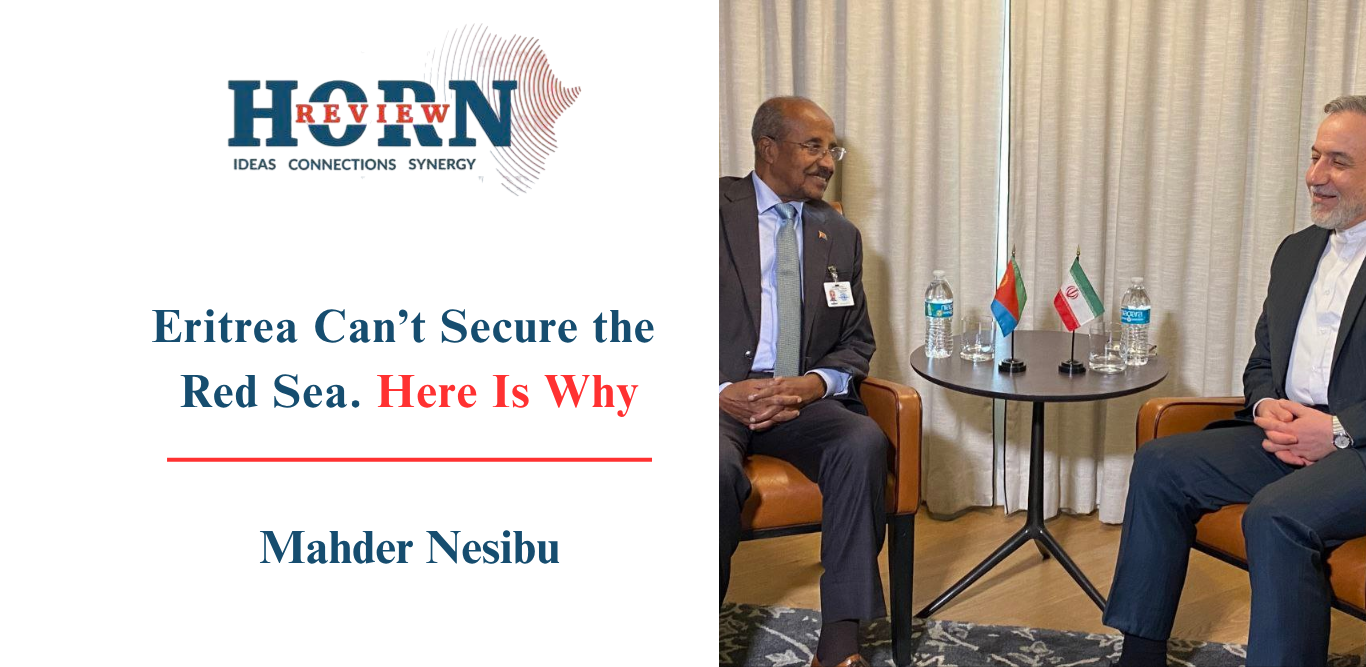
Although Saudi Arabia itself and its allies have yet to respond militarily, Egypt and Türkiye, among others, issued condemnations of the Houthis, particularly over their attack on a major Saudi pipeline that was key to diverting oil to the Kingdom’s Red Sea coast, allowing it to bypass Iran’s control over Hormuz. Eritrea’s position, recently clarified by its foreign minister, Osman Saleh, has diverged sharply from that of Saudi Arabia, however, and reveals a hedging policy that Eritrea may be formulating as insecurity in the Red Sea becomes more acute.
Speaking to Middle East Eye, a reportedly Qatari-affiliated media outlet critical of Israel and the UAE, the minister refrained from condemning the Houthi attacks and their blockade of Saudi ships. Rather, he stated that “Yemen is non-existent. The official government has no control. There is no ‘Yemen’,” while making strong statements about the UAE and Israel, particularly over Tel Aviv’s recognition of Somaliland, a move widely seen as an attempt to gain a foothold in the Horn of Africa from which to confront the Houthi challenge.
Eritrea’s caution against antagonising the Houthis across the water and its reluctance to fully stand beside Saudi Arabia are likely to be part of its broader foreign policy priorities, which are primarily concerned with the Horn of Africa’s interior rather than the Red Sea itself.
Asmara’s rhetoric about littoral state responsibility is primarily aimed not at the many parties concerned with the waterway, but at its southern neighbour, Ethiopia. After falling out around 2022, the two have seen their relations deteriorate, with Asmara shifting from its previous position of engagement with Addis Ababa towards an alignment with forces opposed to it. Asmara has increasingly cultivated relations with insurgencies across the country, aimed at “toppling” the Ethiopian government. One point of friction has been the issue of access to the sea. Ethiopia, landlocked since 1993 following the secession of Eritrea, has mobilised diplomatically to regain a foothold on the Red Sea. Addis Ababa sees Assab, the historical outlet on which the country once depended, as a major priority and has raised questions about the legality of Eritrea’s secession and the circumstances that left it landlocked.
Eritrea, alongside Egypt, has pushed back strongly against this quest for access, deploying the language of littoral state responsibility to undermine it. This rhetoric has extended to Israel and the UAE, both of which possess strong influence in the Red Sea region and are backers of Ethiopia’s pursuit of Red Sea access.
For Eritrea, Ethiopia, the biggest country in the Horn of Africa by economic and military measures, its exclusion from the Red Sea is strategically valuable, in that it elevates the importance of Eritrea’s coastline and, by extension, its position in the region. In addition, with Egypt, which is itself embroiled in a bitter rivalry with Addis Ababa, Asmara sees the constraining of Ethiopia’s regional power as a matter of considerable strategic value.
What is drawing Eritrean strategy towards Iran, and by extension the Houthis, however, is primarily Sudan. Since the country descended into civil war in 2023, Asmara has grown to play a major role in the conflict, backing the Sudanese Armed Forces, one side of the fighting, on various fronts. It trains troops fighting under the SAF inside Eritrea and has deployed some of its own forces inside Sudan to provide training and, as evidence suggests, to fight alongside them directly. More critically, however, it has served as a key supply hub for the SAF, with Eritrea’s airports and seaports providing secure transit routes for weapons reaching the army. Iran, a key source of weapons, drones, ammunition and radar systems for the SAF, and, as reports suggest, including IRGC expertise inside Sudan itself, repeatedly makes use of Eritrea to facilitate these transfers.
Eritrea’s deep alignment with the SAF connects it to Iran and the Houthis. The army has had a longstanding relationship with Iran. When the Muslim Brotherhood ran Sudan under Omar al-Bashir for decades, Iran was a major partner to the country. Although Bashir himself distanced Sudan from Iran in 2016, three years before his ousting, the army’s relationship with Iran, which is structural and has much to do with the deep influence of political Islam within it, remained under the surface and revived around the same time the civil war broke out. The Houthis themselves, according to a recent report, have sought to establish themselves as a new “node” in the Iran-led Axis of Resistance and have cultivated relationships inside the Horn of Africa. One of these has been with the SAF, through which a supply chain between Sudan and Yemen has emerged, including routes passing through Eritrean territory.
For Asmara, Sudan is a strategic arena in which it can project influence, while the ideology of the Muslim Brotherhood within the ranks of the SAF bears little significance to that calculation. Neither do the Houthis or Iran, nor their activities in the Red Sea. For Asmara, the more strategic concern is its positioning inside the Horn of Africa, particularly with regard to Ethiopia and Sudan.
However, Eritrea has refrained from articulating this rationale publicly and has chosen to remain opaque in its positioning, consistent with the country’s long-standing foreign policy culture. It has long implemented a hedging strategy based on its interests inside the Horn. In the 2000s, when it was isolated from the international community during the US-led War on Terror, it aligned itself with al-Bashir and his ally Iran, extending support to al-Shabaab, the terrorist group in Somalia, which received Iranian support, through Eritrean facilitation. Asmara then held a radically different position in the late 2010s, when it shelved its relationship with Iran in favour of an alignment with Saudi Arabia and the United Arab Emirates in their fight against the Houthis, granting the UAE a military base in Assab in the process.
As tensions with Ethiopia grow more acute and the risk of war increases, Eritrea may see the Houthis and their growing expertise with drones, missiles and other weapons systems as strategically important for matching the military capabilities of its adversary. These are capabilities that Saudi Arabia and its allies, despite their regional alignment, may fail to provide, particularly given their strategic ties with Ethiopia.
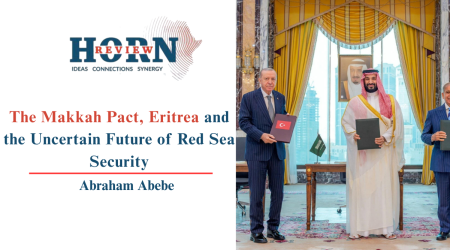
This thinking in Asmara presents a dilemma for Saudi Arabia and those feeling the pangs of Red Sea insecurity. This is compounded by the fact that the Kingdom has, in recent months, fallen out with the United Arab Emirates, its long-time partner and primary ally during its military campaign against the Houthis. Saudi Arabia is also at odds with Israel, the biggest military power in the Middle East, which shares the Kingdom’s anxiety over the Red Sea. The defence pact it has moved to establish with Türkiye and Pakistan has yet to prove of effective utility to the Kingdom. Rather, coupled with its thaw with Israel, it has likely enabled the reported decision by the United States to opt out of military action against the Houthis, which it took in 2025 to challenge a blockade against Israel.
The lightning offensive and display of power over the Red Sea by the movement have raised complex questions for Saudi Arabia and the security of the waterway, and whether the alignment that has unfolded in recent years, one that has on the surface brought Eritrea closer to Riyadh, is a viable strategy for meeting the Houthi challenge. That challenge threatens not only the security of the Red Sea, but Saudi Arabia’s own security as well.
Mahder Nesibu, Researcher, Horn Review