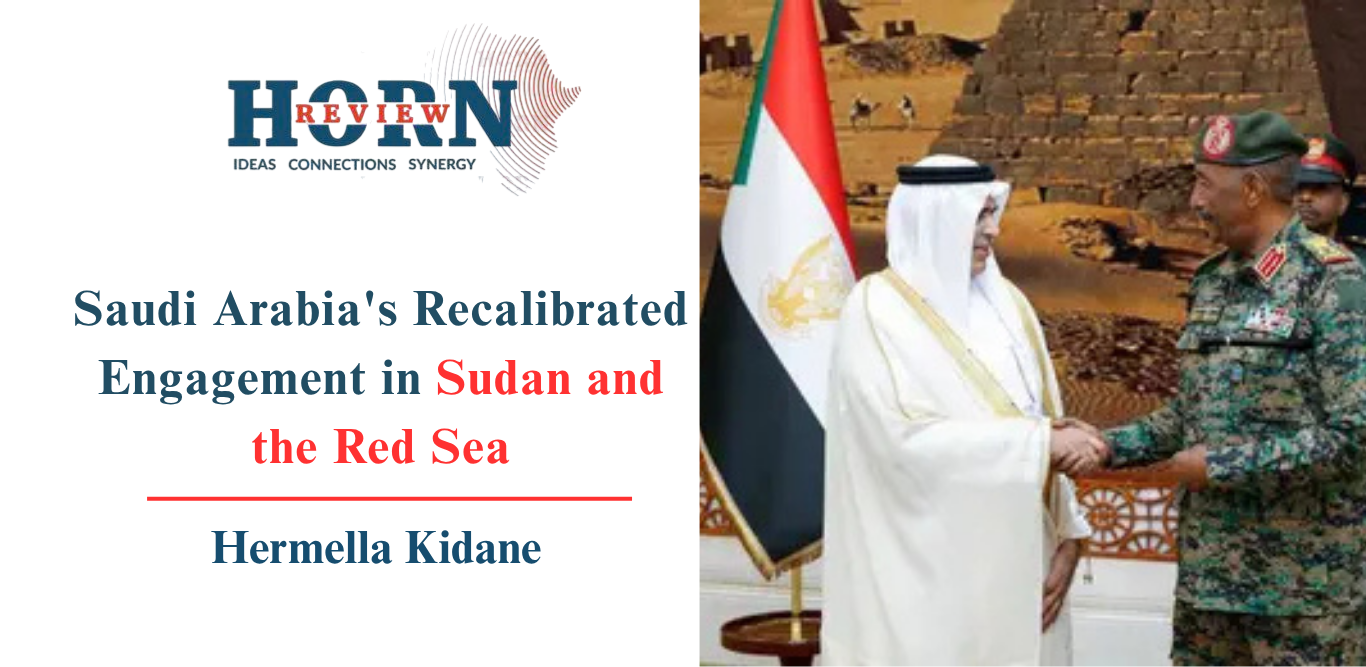
The presentation of diplomatic credentials is ordinarily a procedural formality in international relations. In the fragmented politics of contemporary Sudan however the arrival of Dr. Zaid bin Mukhlad Al Harbi at the Republican Palace in Khartoum in August 2026 and his reception by General Abdel Fattah al-Burhan carries importance. This offers insight into evolving approaches by external actors toward the Sudanese conflict, Red Sea security considerations and regional activities involving multiple Gulf states. The selection of an envoy with prior experience in the Sahel region suggests a recalibration that places greater emphasis on sustained diplomatic and security engagement alongside existing channels of support.
The venue and timing of the credential’s ceremony themselves warrants examination. Since the outbreak of hostilities in April 2023 control of territory and symbols of state authority has remained contested between the Sudanese Armed Forces and the Rapid Support Forces. The ability of General al-Burhan to receive the Saudi ambassador at the Republican Palace an emblem of central authority reinforces a narrative of continuity in state institutions. By proceeding with the formal accreditation process in this setting Saudi Arabia participates in affirming the interlocutor status of the authorities based in Port Sudan and Khartoum. This step contributes to shaping perceptions of legitimacy without resolving the underlying military contest. At the same time Saudi Arabia has maintained public statements emphasizing Sudan’s sovereignty, territorial integrity and the importance of stability while continuing humanitarian assistance through established channels such as the King Salman Humanitarian Aid and Relief Centre. Such dual tracks diplomatic recognition paired with relief efforts illustrate the multifaceted nature of external engagement in internal conflicts.
The professional background of Dr. Al-Harbi forms a central element. His earlier service as ambassador to Niger and advisory roles within the Saudi foreign ministry equip him with familiarity in environments characterized by porous borders, non state actors and intricate regional networks. Reports describe him as possessing experience in security related diplomacy and communications. This profile indicates that his responsibilities may extend beyond conventional bilateral presentation to include coordination on practical matters of mutual concern. The appointment reflects a preference for personnel capable of navigating complex operational environments a pattern observed in other protracted conflicts where diplomatic presence intersects with security and logistical considerations.
In earlier phases of the conflict when the Sudanese Armed Forces faced pressures engagement with a range of partners were reported. The introduction of certain military technologies associated with that relationship generated concern among regional states regarding potential shifts in the balance along the Red Sea. From a Saudi perspective the prospect of expanded influence by external actors on the western shore of this maritime corridor appears to have prompted a reassessment. Saudi Arabia appears to have concluded that more direct support for the Sudanese Armed Forces better serves its security interests in the Red Sea than allowing other external actors greater influence. Publicly framed agreements on trade and security cooperation concluded around the period of the credential’s ceremony have been interpreted by some observers as mechanisms for enhancing coordination on maritime and economic matters. These arrangements are best understood as efforts to align interests rather than as unilateral impositions of control.
Importantly all external actors publicly affirm commitments to Sudan’s stability and the welfare of its population while advancing their respective national interests. Recognizing this common structure helps avoid reductive characterizations of any single party and highlights the structural incentives that shape foreign policy in contested spaces.
The potential regional ramifications extend beyond Sudan’s borders particularly toward Ethiopia. Eastern Sudan adjacent to Ethiopia and Eritrea has long featured unresolved border questions cross border movement and localized tensions including in the Al-Fashaga area. Should enhanced external support enable the Sudanese Armed Forces to consolidate territorial control more effectively the possibility of increased military or administrative activity near these frontiers constitutes a potential risk rather than a predetermined outcome. For Ethiopia such developments counsel continued vigilance regarding spillover effects. The risk is not primarily one of direct confrontation but of secondary pressures arising from shifting balances of power and the activities of external patrons. Careful monitoring and diplomatic communication remain prudent responses in this context.
Taken together the accreditation of Dr. Al Harbi marks a noticeable evolution in Saudi Arabia’s posture. It signals a move toward more consistent diplomatic and practical engagement with the authorities associated with the Sudanese Armed Forces motivated by considerations of Red Sea security the management of competing external influences and the desire to shape outcomes favorable to long term stability on its maritime periphery. This recalibration does not eliminate ambiguity or guarantee rapid resolution of the conflict. Instead it highlights lessons of contemporary geopolitics legitimacy in states is co produced through recognition and material support external actors rarely remain pure mediators when core security interests are engaged and internal wars readily become arenas in which regional rivalries are contested indirectly.
The choice of diplomatic personnel can itself convey priorities and should be read alongside formal statements. maritime such as the Red Sea elevate the geopolitical weight of nearby instability drawing in distant stakeholders who might otherwise limit their involvement. The coexistence of humanitarian assistance with security oriented diplomacy is a recurring feature of governance in civil conflicts reflecting the need to address both immediate human needs and longer term concerns. Finally the Sudanese case demonstrates that the pursuit of influence by multiple external parties each claiming to advance stability can prolong complexity even as it alters the resources available to local actors. Understanding these requires sustained attention to both the formal rituals of diplomacy and the practical alignments that develop beneath them.
By Hermela Kidane, Researcher, Horn Review